مركز سوث24 للأخبار والدراسات
مركز سوث24 للأخبار والدراسات



AQAP leaders Riyadh al-Nahdi and Abu al-Bara al-Sanaani recently appeared calling for fighting against the Southern forces (Activistes)
آخر تحديث في: 12-12-2025 الساعة 8 مساءً بتوقيت عدن
“The real danger, therefore, lies not only in potential military escalation but in AQAP’s attempts to reinsert itself into local consciousness through sophisticated propaganda techniques.”
*Ibrahim Ali (South24 Center)
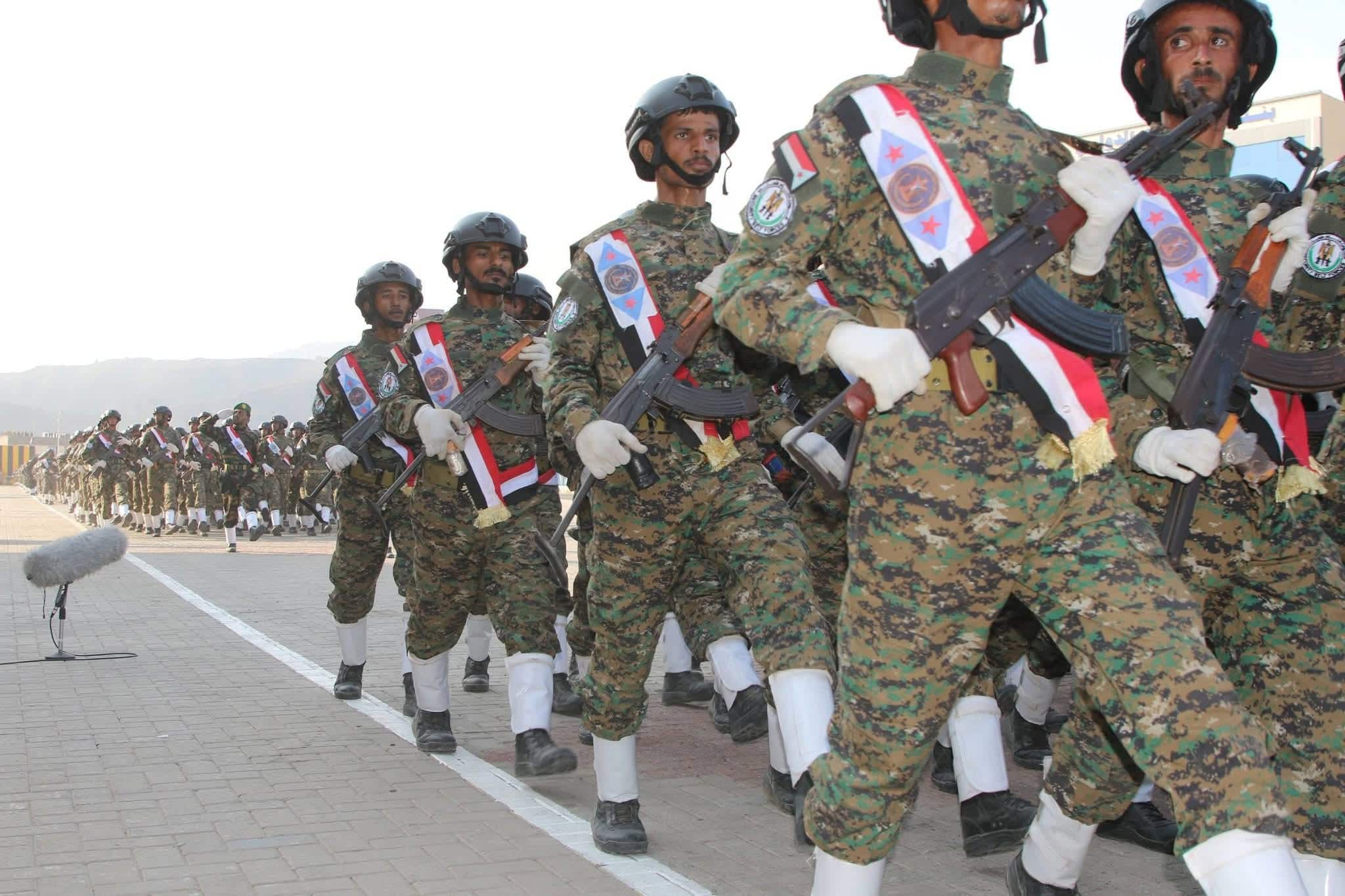
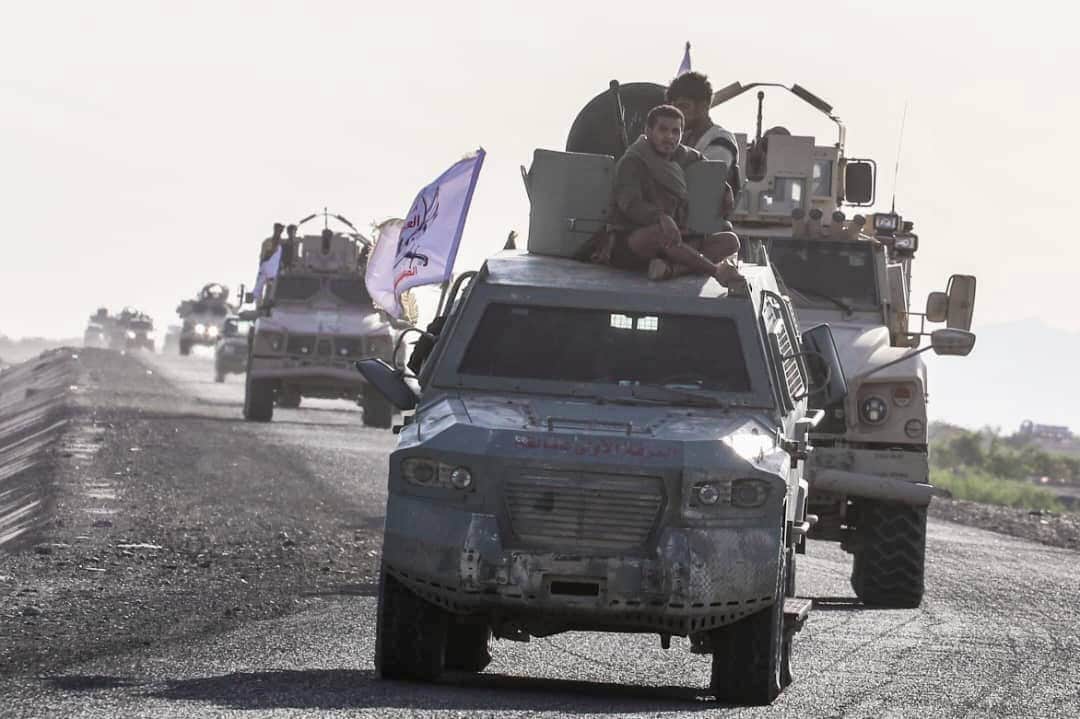
Since the Southern Armed Forces assumed control of Ataq, the capital of Shabwa, in 2022, ending years of security dominance by units aligned with the Islah Party (the Yemeni branch of the Muslim Brotherhood), Al-Qaeda in the Arabian Peninsula (AQAP) has attempted to frame the shift as a direct assault on the organization. Shortly afterward, senior AQAP figure Abu Ali al-Hadhrami issued an escalatory statement that went beyond criticizing South forces, leveling accusations against Saudi Arabia and the United Arab Emirates and vowing to expand the group’s operations across all South Yemeni governorates.
More significant than the military threats was the organization’s attempt to exploit the shift as a propaganda opportunity. Al-Hadhrami sought to inflame tribal sentiment through a religious narrative portraying the development as part of an “external conspiracy” targeting Islam, casting AQAP as the sole defender of faith and identity. By magnifying the ideological dimension, the group aimed to drive a wedge between local communities and the Southern forces, hoping any tribal tension could evolve into a supportive environment for its activities. These efforts, however, yielded no meaningful results on the ground.
Just as AQAP framed the events in Shabwa as a propaganda tool rather than a genuine military shift, the organization now views developments in Wadi Hadramout through the same lens. To the group, these changes pose a serious threat to its supply routes and several of its desert strongholds. In response, AQAP is recycling its familiar rhetoric, not to pursue immediate territorial gains, but to reinforce its narrative and revive its diminishing influence following its setbacks in Shabwa and Abyan.
In this context, the group appears convinced that a broad segment of the local population resents the expanding presence of the Southern forces in Wadi Hadramout. AQAP is attempting to exploit this “imagined grievance” through emotionally charged messaging aimed at amplifying anger and presenting it as validation of the group’s narrative. The organization may also feature leaders from Hadramout in audio or video statements to strengthen its local appeal. A commander speaking in the regional dialect or tied to a local tribe carries greater credibility and helps soften perceptions of AQAP as an external or foreign actor.
This strategy reflects a deeper crisis: the group has struggled for years to maintain influence within local communities. It is now attempting to revive its discourse by re-framing its old narrative, one rooted in grievance, revenge, and the defense of land, using events in Wadi Hadramout as an opportunity to reintroduce itself in a new form.
It is also noteworthy that AQAP maintained a suspiciously calm operational posture during the First Military Region’s control of Wadi Hadramout, refraining from any attacks, a situation that raises questions about the nature of that relationship. The arrival of the Southern Armed Forces ended this period of quiet. Since then, the group has carried out a series of attacks, including the “al-Abr” attack in Hadramout, another operation in Shabwa, and two attacks in Moudiyah district in Abyan. This pattern signals a new phase in which AQAP may seek to exploit the complex dynamics surrounding the crisis.
Visual Materials: AQAP’s Most Potent Propaganda Tool
AQAP treats visual content not simply as documentation, but as a carefully engineered tool for psychological mobilization. The group recognizes that an image, even when cropped or removed from context, can have a far greater impact than any written statement. Accordingly, it selectively extracts clips showing isolated mistakes or moments of tension involving the Southern forces and presents them as deliberate policy, omitting all temporal and contextual details.
In the next stage, these clips are enhanced with emotional triggers, written captions or audio overlays invoking themes of dignity and local identity, such as “humiliation,” “violation,” and “targeting.” The goal is not to convey truth, but to manufacture a perception: that what is shown is personal, immediate, and threatening the viewer’s community. This shifts audiences from passive sympathy to actionable anger. Ultimately, the material is used to justify AQAP’s operations, framing attacks as “legitimate retaliation” rather than “terrorism.” In this way, imagery becomes a tool to generate public legitimacy, facilitate recruitment, and broaden support networks.
Paradoxically, political rivals of the South Armed Forces, including political groups, activists, and others, have unintentionally bolstered AQAP’s agenda by widely sharing unverified or anonymously sourced videos amid their own political disputes with the Southern forces. As competition escalates, verifying these materials becomes a lower priority, and simple circulation grants AQAP immediate credibility with the public. In this way, the organization gains free publicity without needing to provide any proof.
This widespread dissemination reinforces the perception that “the violations are real and cannot be denied,” enabling AQAP to swiftly justify its operations and portray them as a natural response. In effect, political conflict becomes raw material that feeds the group’s propaganda machinery.
Conclusion
AQAP does not view the security shifts in Wadi Hadramout solely as an existential threat, it sees them as a propaganda opportunity. As its military influence wanes and its messaging loses traction, the group seeks to compensate by amplifying isolated errors, exploiting local tensions, and weaving these incidents into a broader narrative of grievance and revenge.
The real danger, therefore, lies not only in potential military escalation but in AQAP’s attempts to reinsert itself into local consciousness through sophisticated propaganda techniques.
Confronting this threat requires coordinated efforts across security, media, and community channels, supported by genuine credibility from local authorities and leaders. Southern forces and local administrations must respond swiftly and transparently to any incident, clarifying details and holding offenders accountable where necessary. Clear, documented official narratives reduce AQAP’s ability to decontextualize events and use them to justify its claims.