مركز سوث24 للأخبار والدراسات
مركز سوث24 للأخبار والدراسات


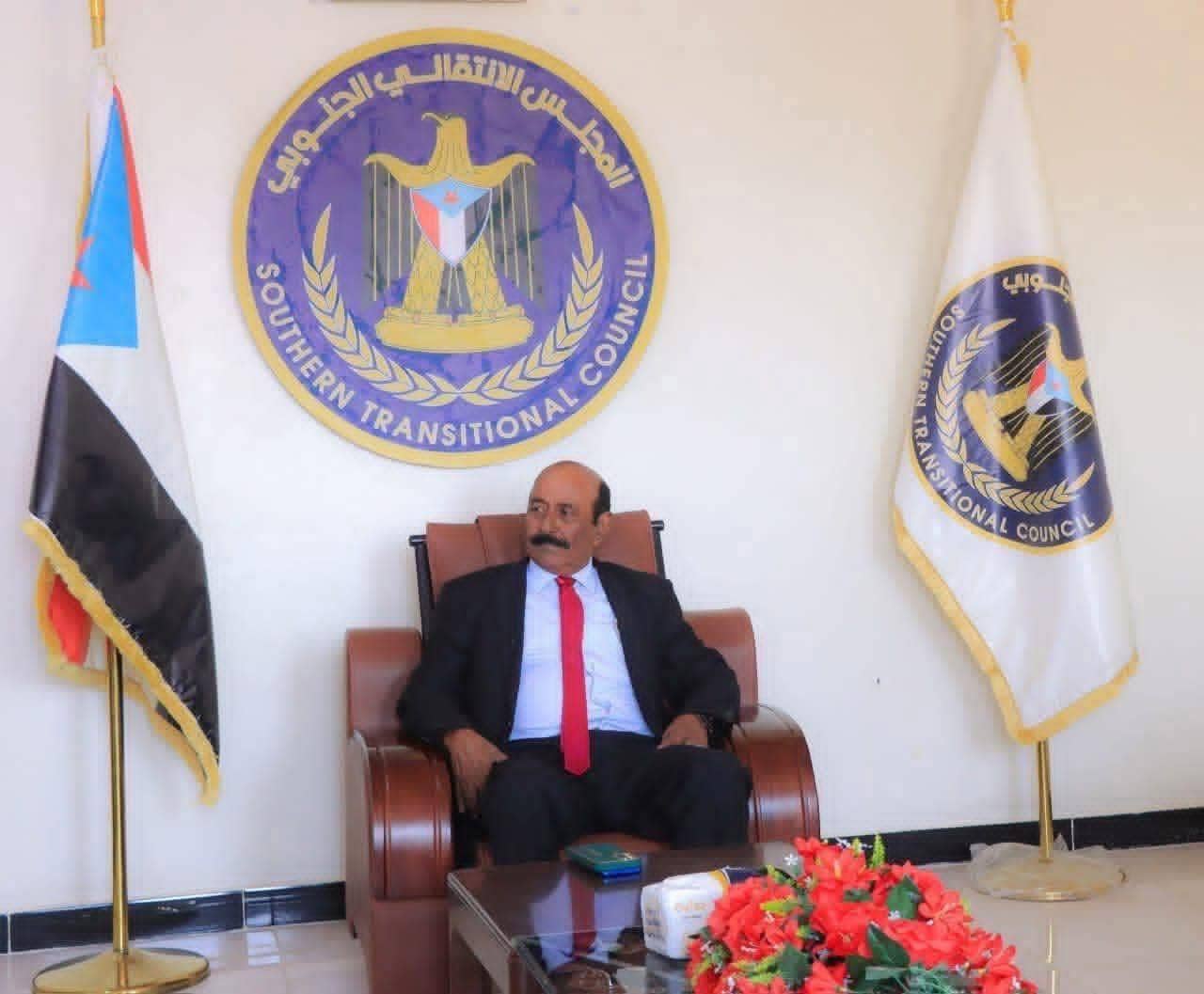
Head of the Executive Authority of the Southern Transitional Council (STC) in Shabwa governorate, Lahmar Ali Laswad (STC)
08-03-2026 الساعة 1 صباحاً بتوقيت عدن
Shabwa (South24 Center)
On Friday, March 6, the Public Prosecution, at the request of the Ministry of Interior, issued an order for the forcible arrest of the head of the Executive Authority of the Southern Transitional Council (STC) in Shabwa governorate, Lahmar Ali Laswad.
The directives from the Interior Ministry and the Public Prosecution to detain the STC’s Shabwa leader by force were issued on allegations of incitement. Southern political circles described the move as a dangerous political and security escalation targeting the stability and security of the governorate.
Sources told South24 Center that the orders came days after the STC leader in Shabwa rejected a request to travel to the Saudi capital, Riyadh. Laswad confirmed this in a statement issued in his name on Saturday, March 7.
Laswad said the coercive order against him was directly linked to his refusal to travel to Riyadh, as well as his rejection of financial offers to remain silent or leave the country and withdraw entirely from political and national activities.
He added that these measures aim to silence voices demanding the rights of the South, stressing that he would not compromise on national principles or respond to external pressure that could undermine the Southern cause.
The Executive Authority of the STC in Shabwa said in a statement that its institutions would continue operating, reiterating its firm commitment to restoring a fully sovereign state of South Yemen and rejecting all decisions issued by the current de facto government in Aden and neighboring governorates.
The statement also called for the swift accountability of security and military leaders involved in the events of “Martyrs’ Day” on February 11, which resulted in the killing of seven people and the injury of 43 others.
It further described the coercive orders as an unacceptable political escalation rejected by the people of the South as a whole.
Commenting on the developments, STC spokesperson Anwar Al-Tamimi said the measures taken against the STC leader in Shabwa reveal what he described as “the suspicious approach through which the de facto authorities are running the country.”
Al-Tamimi added that “threats of prosecution and the fabrication of charges against STC leaders are reckless actions that will not lead to dialogue but will instead deepen the crisis.”
He also noted that several STC leaders had faced similar situations in recent weeks, describing the pattern as part of increasing political pressure on the council’s leadership.
According to Al-Tamimi, figures affiliated with the Muslim Brotherhood have become part of the political, military, and security administration in southern governorates, while individuals allegedly aligned with the Houthis have been empowered in key positions in some provinces.
In a related development, on Saturday, March 8, the Southern Transitional Council in Al-Mahra governorate condemned the reappointment of military and security leaders from outside the governorate, describing it as a clear violation of the rights of local residents to manage their own security, military, and civil institutions.
The STC in Al-Mahra said the appointments reproduce the influence of forces that have dominated the region since the 1994 war, calling for the cancellation of the assignments made without regard for the rights of the governorate and its qualified local cadres.
These developments come after STC offices were closed on February 21, in what the council described as part of an escalating power struggle among factions within Yemen’s Presidential Leadership Council in the capital, Aden, and across the southern governorates.
The escalation also follows the “Million-Person Rally of Steadfastness” held in Aden on February 27, during which participants rejected calls for dissolving the Southern Transitional Council, condemned the targeting of its president, Aidarous Al-Zubaidi, and denounced the continued closure of the council’s offices. The rally also reaffirmed popular support for the STC leadership and what participants described as the Southern cause.


قبل شهرين
قبل 1 شهر
قبل شهرين