مركز سوث24 للأخبار والدراسات
مركز سوث24 للأخبار والدراسات


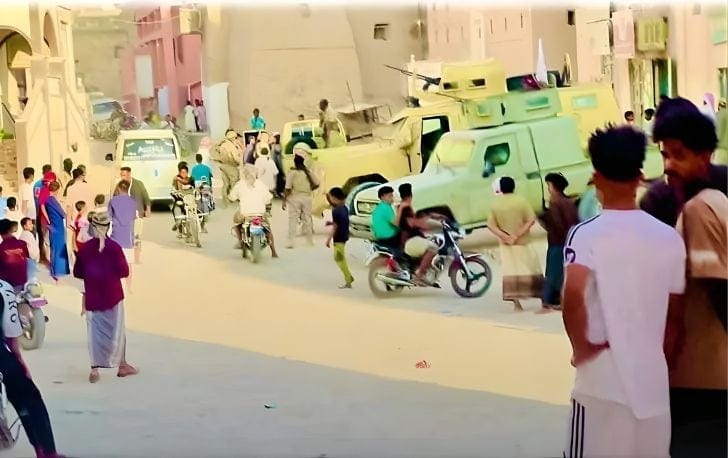
A military force carries out an arrest campaign in Seiyun, Wadi Hadramout, following a protest in support of the Southern Transitional Council on February 6, 2026, Hadramout (activists).
17-03-2026 الساعة 8 مساءً بتوقيت عدن
Aden (South24 Center)
Human Rights Watch said that forces aligned with the Yemeni government used “excessive force” against protesters supporting the Southern Transitional Council (STC) during demonstrations in the governorates of Aden, Shabwa, and Hadramout in February, resulting in deaths, injuries, and the arrest of dozens.
In a report released on Tuesday, March 17, the organization stated that it had documented the killing of at least six people and the injury of dozens more during the dispersal of the protests. It added that government forces opened fire at multiple locations and arbitrarily detained protesters without due process, with some held for more than two weeks without being brought before a judge or formally charged.
According to the report, the organization relied on interviews with 12 individuals, including protesters, witnesses, and local leaders. It also analyzed videos and photographs from protest sites and reviewed local and international media reports, including materials published by the South24 Center for News and Studies, to support its documentation.
In Aden, Human Rights Watch reported that security forces opened fire on protesters attempting to approach the presidential palace perimeter on February 19, killing at least one person and injuring more than 25 others. Around 28 protesters were arrested, some of whom were transferred to Mansoura prison after being held at the Maashiq Palace.
In Hadramout, specifically in Seiyun, the report stated that “Nation’s Shield” forces opened fire on demonstrators gathered near the airport on February 6, arresting approximately 35 individuals. Some detainees were reportedly held in unofficial facilities under what were described as poor conditions, including lack of access to water and sanitation.
In Shabwa, the city of Ataq witnessed the most violent confrontations on February 11. Five people were killed and 39 others injured during clashes between government forces and protesters, some of whom were armed. The organization said it could not determine which side initiated the gunfire but noted the use of medium and heavy weapons during the events.
The organization quoted its Yemen and Bahrain researcher, Niku Jafarnia, as saying that the Yemeni government “claims to defend freedom of expression, but its actions do not match its rhetoric,” urging authorities to ensure respect for fundamental rights and to investigate the violations.
For their part, Yemeni authorities said security forces handled the protests with “the utmost restraint,” describing some of the actions as involving “armed mobilization” and attempts to storm sovereign facilities, which they said necessitated intervention to protect security and stability.
The report noted that the STC had called for the protests, with several of its leaders participating. Council officials denied responsibility for armed elements that appeared during some demonstrations, describing them as “infiltrators.”
Human Rights Watch emphasized that Yemen, as a party to the International Covenant on Civil and Political Rights, is obligated to protect freedom of expression and peaceful assembly, stressing that any restrictions on these rights must be “necessary and proportionate.”
The organization called on the Yemeni government to open “speedy and effective” investigations into the shootings of protesters and to hold accountable those responsible for any unlawful use of force, warning against the continuation of what it described as a “cycle of violations” by various parties to the conflict in recent years.


قبل شهرين
قبل 1 شهر
قبل شهرين