مركز سوث24 للأخبار والدراسات
مركز سوث24 للأخبار والدراسات


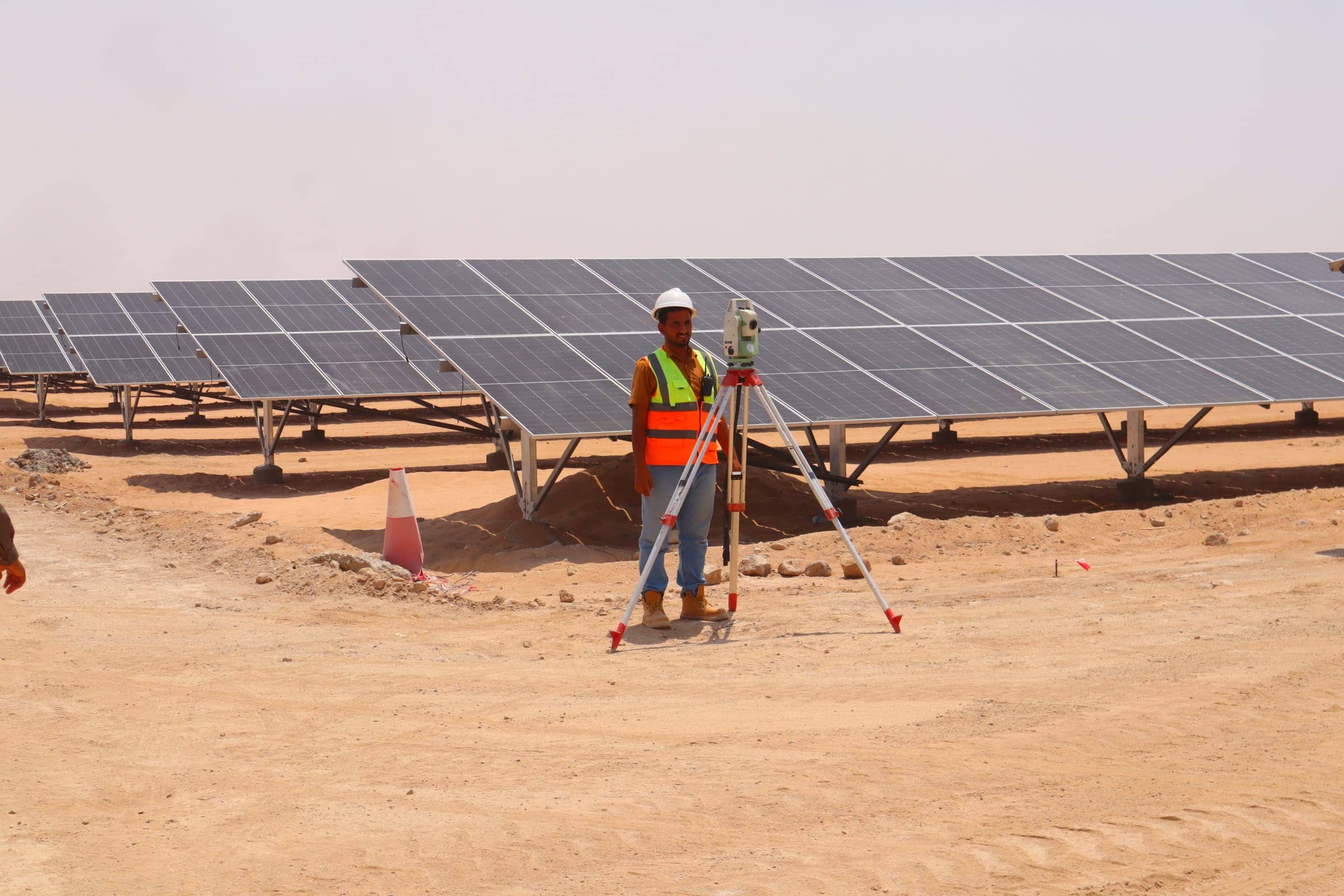
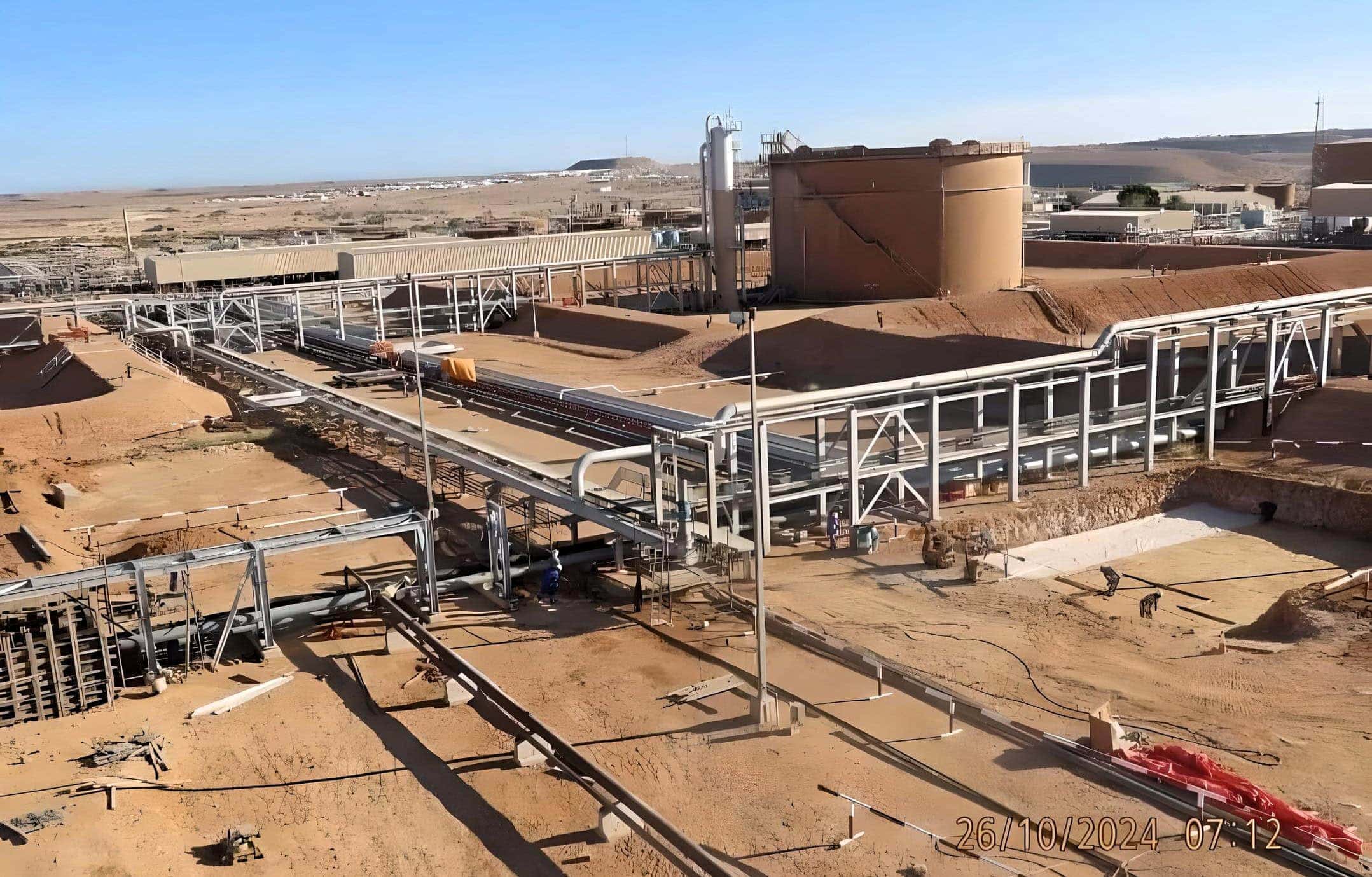
Shabwa Solar Power Plant, June 18, 2025 (South24 Center)
آخر تحديث في: 30-03-2026 الساعة 9 صباحاً بتوقيت عدن
Abdullah Al-Shadli (South24 Center)
A series of development projects supported by the United Arab Emirates (UAE) in South Yemen, particularly in the energy and water sectors, has entered a phase of uncertainty and stalemate following the political and military shifts in the country since December 2025. These shifts included the departure of Emirati companies from operational sites and the suspension of expansion plans and new initiatives originally proposed to address chronic crises in basic services.
While some projects completed in recent years continue to operate at a minimum level of stability, field data and sources in the Public Electricity Corporation (PEC) indicate that projects under preparation or expansion have effectively entered an unannounced "freezing" phase. This raises questions regarding the future of this development path as a whole and the ability of the Yemeni government and its international partners led by Saudi Arabia, whose influence and presence have recently increased, to fill the resulting vacuum.
These projects include solar power plants in Aden and Shabwa, as well as new projects in Abyan, Lahj, and Dhalea., Additionally strategic projects in the water and agriculture sectors, such as the Hassan Dam in Abyan governorate, which were seen as direct interventions to alleviate pressure on deteriorating infrastructure and improve service levels.
In the absence of comprehensive official clarifications defining the status of these projects, this report monitors the most prominent initiatives, analyzes the impact of their suspension, and examines the options available to the Yemeni government and Saudi Arabia to compensate for this void.
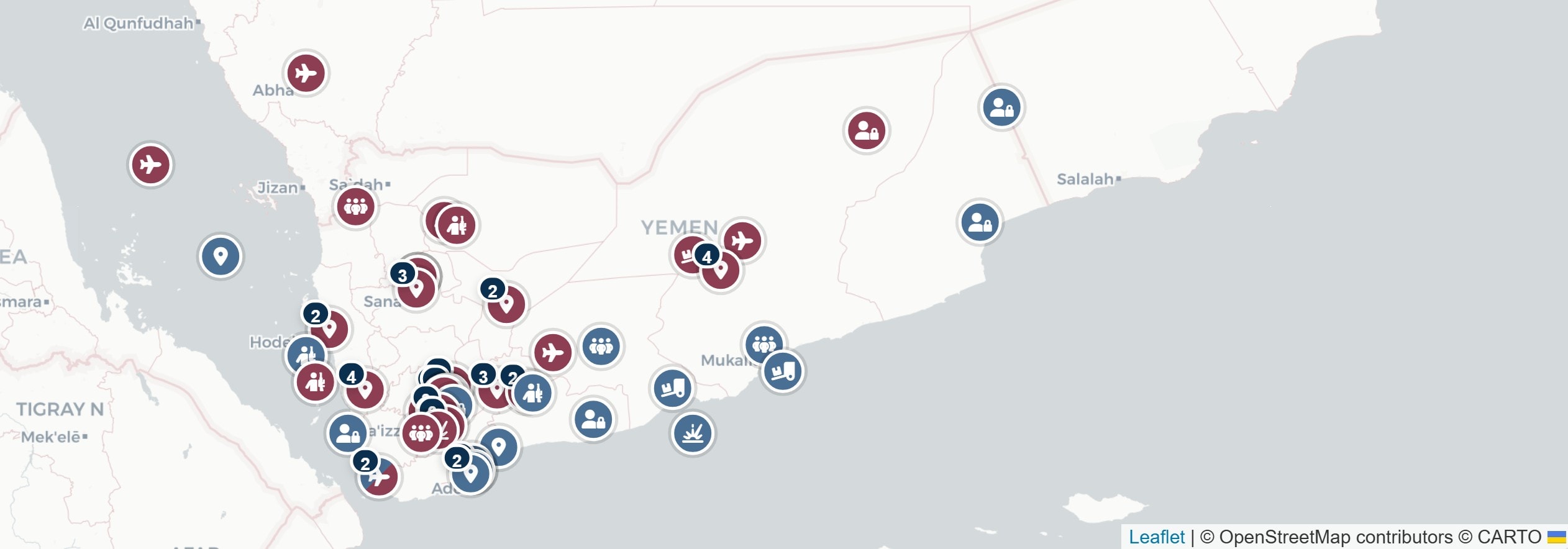
Map of Projects Between Operation and Freezing
Available data reveals that Emirati projects in South Yemen have not stopped completely, but they have lost their cohesion as an integrated development package. They have effectively split into projects that have been completed and continue to operate, others whose expansions have stopped, and a third group that has entered a freezing phase following the developments of December 2025.
At the forefront of the projects that are still operating are the solar power plants in Aden and Shabwa. These facilities were subject to a temporary halt in early January following the departure of technical teams belonging to the operating company at the request of the Yemeni government, before returning to service days later under the management of the Public Electricity Corporation. Available information indicates that their operations have since stabilized without recording technical malfunctions related to the handover process, reflecting that the disruption was a direct result of changing operational arrangements rather than a technical collapse.
In this context, the director of the solar power plant in the city of Ataq, Shabwa governorate (53 MW), Engineer Ahmed Al-Rabbash, stated to South24 that the current situation of the plant, which entered service on August 28, 2025, is "stable." He confirmed that it returned to work after a short period of suspension following the withdrawal of technical teams belonging to the Emirati company Global South Utilities (GSU), and that the PEC was able to restart it under new technical and organizational arrangements.
However, this stability remains limited in the scope of current operation. Al-Rabbash points out that the project included an expansion plan supported by the UAE to raise production capacity to about 100 MW, however, no clear information is available regarding the fate of this expansion, reflecting the state of ambiguity surrounding the next stage of these projects.
Similarly, a source in Aden Electricity told South24 that the city’s 120 MW solar plant, which entered service on July 15, 2024, returned to service after a brief halt earlier this year following the departure of the technical team belonging to the Emirati GSU company. However, the expansion project (Phase II, 120 MW) for the plant, for which the foundation stone was laid last August with Emirati funding, has stopped, according to the same source.
As for new solar energy projects, they appear to be the most severely impacted. Solar energy projects in Abyan, Lahj, and Dhalea, for which foundation stones were laid last December with a total capacity of nearly 70 MW, have shown no significant progress since then, indicating they have entered a “freezing” phase linked to recent political and operational shifts.
An Emirati investment package valued at $1 billion, announced on November 26, 2025, during the First National Energy Conference in Aden, was intended as a comprehensive framework for rebuilding Yemen's electricity sector. This framework included renewable energy projects, storage solutions, and the development of transmission and distribution networks. According to what was presented at the conference, the "Global South Utilities" company was scheduled to implement this portfolio as part of a plan aimed at expanding production capacity and providing stable power to millions of beneficiaries, reflecting a transition from crisis management to building a sustainable energy system.
However, the path of this investment package has become shrouded in ambiguity following the developments after December 2025. It remains unclear whether the solar energy projects in Lahj, Al-Dhalea, and Abyan represent part of this $1 billion portfolio or if they are separate initiatives.
South24 reached out to the Public Electricity Corporation in Aden for clarification but received no response.
This climate of uncertainty extends beyond the electricity sector to other strategic development projects, most notably the Hassan Dam project in Abyan governorate.
Despite rumors of shutdown, the Deputy Minister of Agriculture and Project Director, Engineer Ahmed Al-Zamki, denied these reports to South24, confirming the project is ongoing and has reached advanced stages of implementation (75-80% completion), and the withdrawal of some equipment is due to the project entering its final stages, rather than a suspension of work.
However, this clarification, despite its importance, does not negate the fact that the project is now operating within a more fragile environment in terms of the sustainability of external support, amid declining certainty that generally surrounded Emirati projects.
Fate of Projects and Impact of Suspension
The developments following December 2025 reflect a clear shift in the trajectory of Emirati projects. They have moved from being part of an expansionist plan to address the chronic electricity crisis toward a status closer to managing minimum operational levels. This changes the nature of the role these projects played within the service system in South Yemen.
While solar energy projects were being introduced as a gradual alternative to reduce fuel dependency by integrating stable generation capacities during peak hours, the halt of expansions and new projects has diminished this role. This role is now confined to maintaining current production without adding new capacities capable of absorbing the continuous increase in demand.
In this context, Engineer Ahmed Bahakim, an economic expert and energy researcher, noted that these projects represented an "opportunity to enhance the production capacity of the electrical grid and alleviate pressure on traditional power plants." Speaking to South24 Center, he explained that solar energy was expected to contribute to reducing reliance on high-cost fuel, especially during peak periods, and that its setback means the continuation of existing imbalances in the electrical grid.
Practically, this means the electrical system will remain largely dependent on traditional power plants, which face ongoing challenges related to fuel supply and maintenance. This makes any improvement in service limited and prone to reversal, particularly during periods of high demand.
Furthermore, the absence of anticipated expansions deprives the grid of additional capacities that would have improved load distribution and reduced outage periods, especially in governorates that relied on the entry of new projects, such as Abyan, Lahj, and Dhalea, to bolster service stability.
The impact of this cessation is not limited to the technical side but extends to the financial dimension. Continued reliance on fuel increases the burden on the government amid rising operational costs and the difficulty of securing stable supplies issue that solar projects aimed to mitigate by reducing fuel consumption during daylight hours.
In parallel, the broader developmental dimension emerges, as these projects are not limited to improving electricity but extend to other sectors, particularly regarding water resource management and supporting agricultural activity.
The Hassan Dam project, which has reached advanced stages of execution, was viewed as a strategic intervention to enhance food security and improve water utilization in the Abyan Delta. This means that any slowdown in its completion or a decline in the associated support could impact the stability of agricultural activity and the local communities that depend on it.
Moreover, an additional financial dimension arises, involving the potential inflation of operational costs after the departure of foreign technical teams and the transition of management to local entities in an environment suffering from weak oversight. Press sources highlighted the case of the Aden solar plant, where operational allocations of approximately $2 million per month were approved via a local company despite the plant already being functional. These allocations were later halted by an official decision, and the plant continued to operate efficiently with negligible costs, raising questions about the nature of such expenditures and the possibility of them turning into channels of waste.
Can the Yemeni Government and Saudi Arabia Fill the Vacuum?
The setback of Emirati projects places the Yemeni government and Saudi Arabia before a practical test regarding their ability to contain the vacuum left by the halt of a track that was seen as one of the most prominent long-term solutions to the electricity and basic services crisis in South Yemen.
On an immediate level, the Public Electricity Corporation succeeded in restoring the operation of the Aden and Shabwa plants after the departure of technical teams, reflecting an initial operational capacity to maintain completed projects and prevent their immediate collapse. However, this success is limited to current operations management and does not extend to addressing challenges related to long-term maintenance or completing planned expansions.
In the absence of an external operator, these projects are gradually transforming from developable developmental assets into facilities requiring continuous management to maintain efficiency. This imposes additional technical and administrative burdens on a corporation already suffering from limited resources and expertise.
Regarding expansions and new projects, there are no clear indicators yet of a ready alternative plan to compensate for frozen initiatives, whether through government adoption or re-offering them through other funding agencies.
This places the Saudi side, as the most prominent actor in the Yemeni file at the current stage, a presence that has grown at the expense of the Emirati presence since last December, under an increasing responsibility. This role is not limited to providing financial support or fuel but extends to adopting a more sustainable developmental path that compensates for the absence of projects based on the infrastructure investment model.
Existing support, which focuses on financing oil derivatives and covering the deficit, maintains service continuity in the short term but does not address the structural imbalances that renewable energy projects aimed to alleviate.
Conversely, relaunching solar energy projects or completing halted expansions requires a stable political and operational framework that ensures continuity of implementation and minimizes the impact of discrepancies between active parties—indicators of which remain unclear so far.
It is worth noting that shifts in the track of Emirati projects coincided with the strengthening of the Saudi presence in Aden in early 2026. A Saudi military and security delegation arrived in the city, followed by Riyadh's announcement, via the Saudi Development and Reconstruction Program for Yemen (SDRPY), of a support package worth approximately 1.9 billion Saudi riyals. This package includes dozens of projects in the energy, water, transport, and infrastructure sectors, with a focus on southern governorates, including Aden, Abyan, Lahj, Dhalea, and Shabwa.
Financial support was also announced to cover government salaries and the budget deficit. However, despite the size of these packages, the progress of the announced projects on the ground remais unclear, and whether they have actually entered the implementation phase or remain within the planning framework. This raises questions about their ability to compensate for the decline in Emirati projects or to rebuild a similar developmental dynamic.
Between the ability to maintain what has been accomplished and the need to resume what has stopped, the Yemeni government and its partners face a complex equation where technical considerations overlap with political calculations. At this time, these projects appear to be more than just infrastructure; they are a test of the possibility of transforming external support into a stable developmental path unaffected by the fluctuations of regional balances.