مركز سوث24 للأخبار والدراسات
مركز سوث24 للأخبار والدراسات


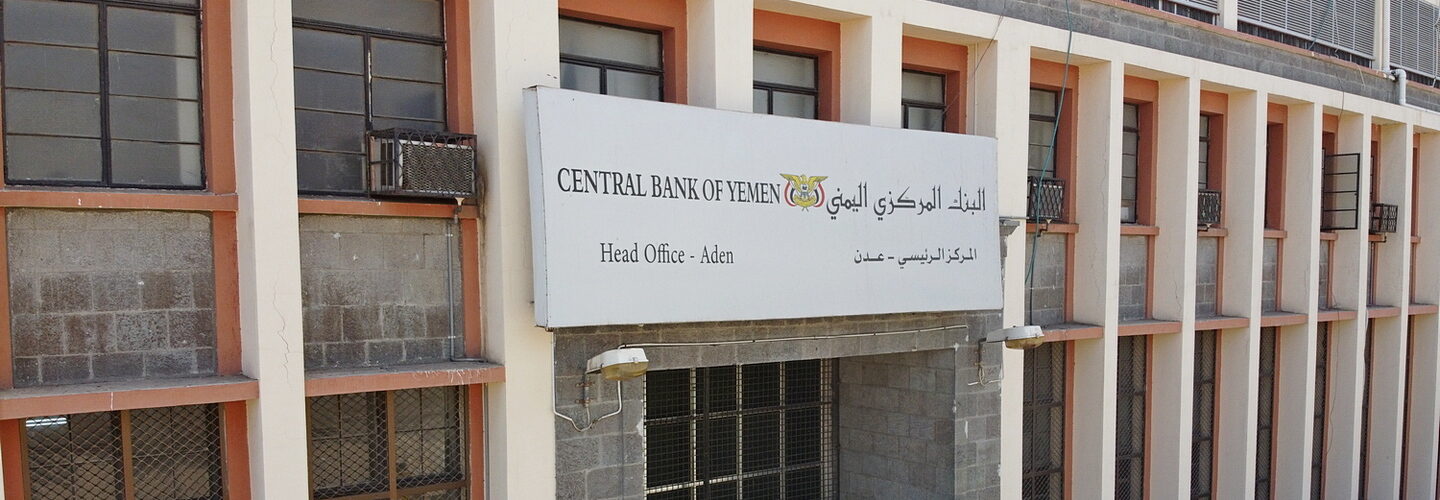
Central Bank of Aden (Official Bank Website)
آخر تحديث في: 21-04-2026 الساعة 1 مساءً بتوقيت عدن
Aden (South24 Center)
A liquidity crisis is worsening as several governorates refuse to remit revenues to the Central Bank in Aden, according to a Reuters report citing Central Bank officials on Monday (April 20).
Officials revealed that governorates under the control of the Yemeni government, including Marib, Hadramout, Al-Mahra, and Taiz, have withheld revenues. This move is cited as a primary driver behind the severe cash liquidity crisis affecting southern Yemen.
According to Reuters, officials said the government is facing its worst liquidity crisis since 2015 due to resource scarcity and declining revenues. This follows the suspension of oil exports since October 2022, formerly the backbone of the general budget.
They explained that the failure of local authorities to remit revenues has exacerbated the deficit and weakened the government’s ability to meet its obligations, including paying salaries and providing fuel for power plants.
These developments intersect with the economic reform plan approved by the Presidential Leadership Council in late October 2025, which primarily aimed to recalibrate public resources and enforce financial centralization by requiring governorates to remit revenues to the Central Bank in Aden.
However, the ongoing refusal to remit funds reveals a fundamental challenge to the plan’s implementation and undermines its prospects for success on the ground.
Economic experts believe that the plan, despite its importance, focused heavily on the revenue side without adequately addressing spending rationalization, as current resources cover only about 25% of public expenditures.
Experts point out that the plan’s success is contingent upon the government’s ability to enforce its decisions in the governorates, control financial channels, and combat corruption that consumes a large portion of resources.
The plan includes sensitive measures such as unifying revenues, abolishing illegal levies, and liberalizing the customs dollar exchange rate in an attempt to bolster public revenues.
In parallel, the liquidity crisis in the markets reflects a more complex reality. Experts emphasize that the problem does not lie in a lack of cash itself, but in its poor distribution and its exit from the banking cycle.
Estimates, according to the Reuters report, indicate that there are trillions of riyals outside the banking system, held by traders and exchange companies for speculation purposes, creating an “artificial” liquidity crisis within banks.
At the level of living standards, this crisis has led to a near-total paralysis in exchange operations. Citizens complain that exchange shops refuse to convert foreign currencies or impose low daily limits.
In an attempt to address the imbalances, the Ministry of Finance announced on April 4 the launch of a comprehensive financial and structural reform program. It focuses on enhancing revenue collection, abolishing illegal levies, and improving spending efficiency, in parallel with activating consultations with the International Monetary Fund.
Economic experts warn that the continuation of this situation may lead to further inflationary pressures and increased hardship for the population, at a time when the economic file remains the government’s greatest challenge, amid anticipation of the impact of external support—particularly the recent Saudi grant—on market stability and liquidity improvement.



قبل شهرين

قبل 1 شهر

قبل شهرين