مركز سوث24 للأخبار والدراسات
مركز سوث24 للأخبار والدراسات


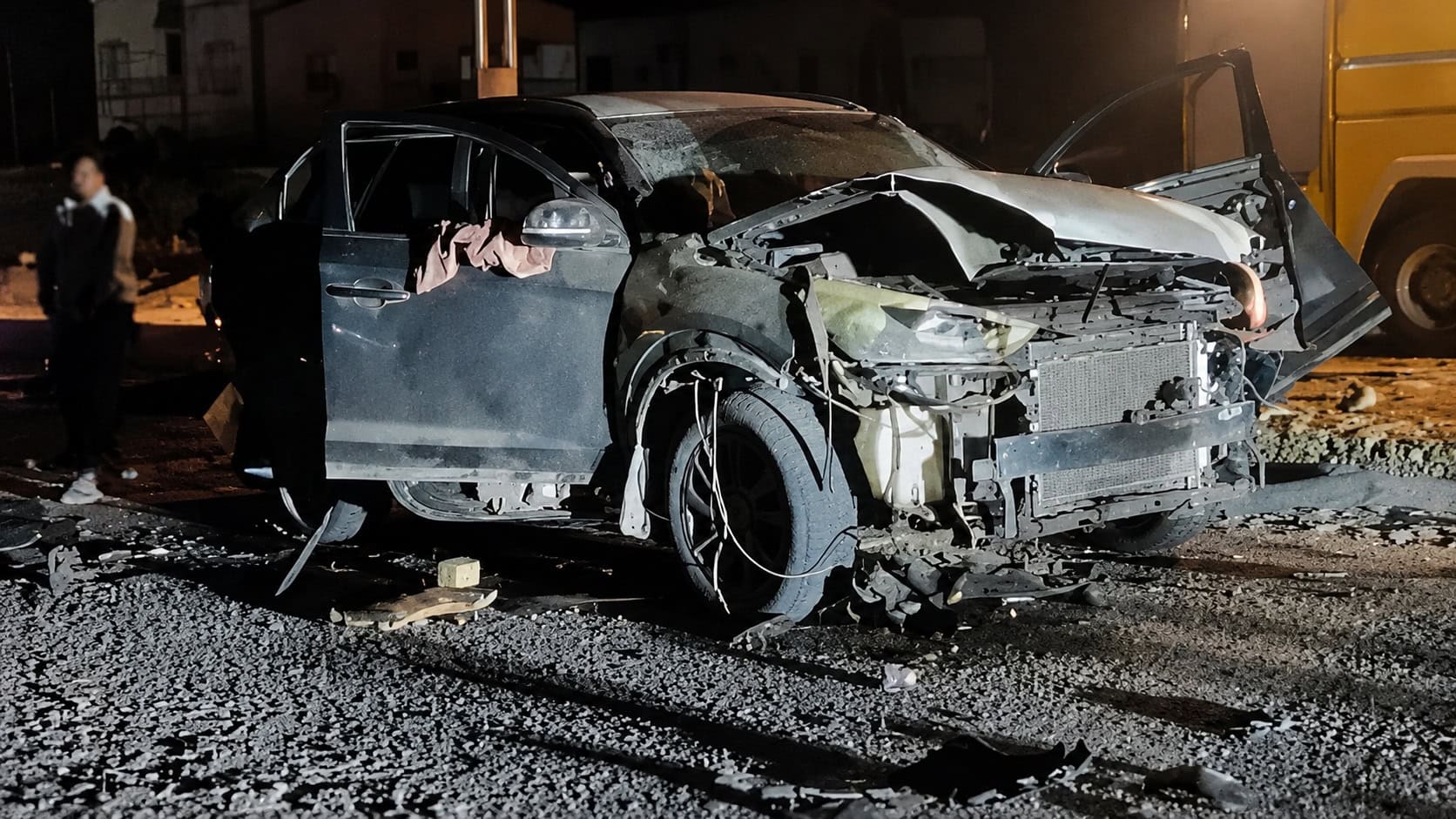
Journalist Al-Aidha’s car after the explosion that killed him in Mukalla, June 24, 2026. (Activists)
آخر تحديث في: 25-06-2026 الساعة 4 مساءً بتوقيت عدن
Mukalla (South24 Center)
The killing of Yemeni journalist Mohammed Al-Aidha, a correspondent for Al-Arabiya and Al-Hadath in Hadramout, has raised new concerns over the security situation in the coastal city of Mukalla, amid warnings by the Southern Transitional Council (STC) that the city and the wider Hadramout coast are once again becoming vulnerable to terrorist activity.
Al-Aidha was killed on Wednesday evening, June 24, when an explosive device detonated in his car in Mukalla, the capital of Hadramout Governorate. Al-Arabiya said the journalist was alone in the vehicle after dropping his family off at home.
Local and media accounts said the blast took place on Sixty Street in central Mukalla. Some reports indicated that the explosive device had been planted beneath the driver’s seat, causing the car to catch fire. His body was transferred to Ibn Sina Hospital after the explosion.
No group has claimed responsibility for the attack so far.
The local authority in Hadramout mourned Al-Aidha and said Governor Salem Al-Khanbashi had instructed security services to open an urgent and comprehensive investigation into the circumstances of the attack, identify those responsible, and take legal action against them.
Later, Chairman of the Presidential Leadership Council Rashad Al-Alimi ordered the formation of a high-level joint investigation committee comprising representatives from the Ministry of Interior, the State Security Agency, and Military Intelligence, in coordination with the committee formed by the Hadramout local authority.
Security authorities in Hadramout also announced the arrest of two suspects accused of involvement in Al-Aidha’s killing, while operations were continuing to pursue a third suspect linked to the case.
Al-Arabiya reported that security officials in Mukalla had warned Al-Aidha about a month earlier of threats against his life and had urged him to take them seriously.
The channel said Al-Aidha had worked as a cameraman and correspondent in eastern Yemen since 2019. He had previously worked with local and regional media outlets before joining Al-Arabiya and Al-Hadath.
The assassination has renewed concerns over the safety of journalists in Yemen, where media workers have faced killings, enforced disappearance, detention, threats, and targeted attacks throughout the years of war.
The method of attack also recalled previous incidents in Aden in which journalists were targeted with explosive devices planted in their vehicles.
In June 2022, journalist Saber Al-Haidari was killed when an explosive device targeted his car in Aden’s Al-Mansoura district. In November 2021, journalist Rasha Al-Harazi was killed in a car bombing in Aden’s Khor Maksar district while traveling with her husband, journalist Mahmoud Al-Atmi, who survived the attack with serious injuries. Al-Harazi was pregnant at the time.
Another prominent case was the killing of award-winning photojournalist Nabil Hasan Al-Quaety, an AFP contributor, who was shot dead by unidentified gunmen outside his home in Aden’s Dar Saad district on June 2, 2020.
According to the Committee to Protect Journalists, men in military uniforms attempted to hit Al-Quaety with their car as he left his home, then opened fire as he ran, shooting him in the head, chest, and hand. He died on the way to hospital. His killing remains one of the most high-profile unresolved attacks on journalists in southern Yemen.
For its part, the Southern Transitional Council condemned Al-Aidha’s killing, describing it as a “treacherous terrorist operation.”
In a statement issued on June 24, STC spokesperson Anwar Al-Tamimi said the targeting of Al-Aidha in Mukalla indicated that the city and the Hadramout coast had “become a theater for terrorist groups.”
Al-Tamimi added that Hadramout had witnessed a decade of relative security after the liberation of its coastal areas from Al-Qaeda in the Arabian Peninsula in 2016 and the deployment of the Hadrami Elite forces.
He said Al-Aidha’s assassination recalled the years between 1994 and 2016, during which, according to the STC, Hadramout lost more than 300 military and security figures in assassinations carried out by Al-Qaeda.
The STC spokesperson accused previous security, military, and civilian structures that controlled Hadramout after 1994 of creating the conditions that allowed those assassinations to take place.
He also said the latest attack was an indicator of the growing threat posed by terrorist groups “under various names,” including the Houthis, Al-Qaeda, and ISIS.
Al-Tamimi accused forces and individuals linked to Al-Qaeda, ISIS, and the Houthis of being enabled within security and military institutions. He said thousands of armed men affiliated with extremist organizations had been deployed in Hadramout, Al-Mahra, and other parts of the south under official designations within what he described as the Yemeni “National Army.”
These accusations could not be independently verified. No official party has so far announced the identity or affiliation of the suspects arrested in connection with Al-Aidha’s killing.
Coastal Hadramout had seen a notable decline in assassinations and armed attacks after Al-Qaeda was expelled from Mukalla in 2016. The Hadrami Elite forces, backed by the UAE and supported by a local base, played a central role in securing the area during that period.


قبل شهرين
قبل 3 أشهر