مركز سوث24 للأخبار والدراسات
مركز سوث24 للأخبار والدراسات


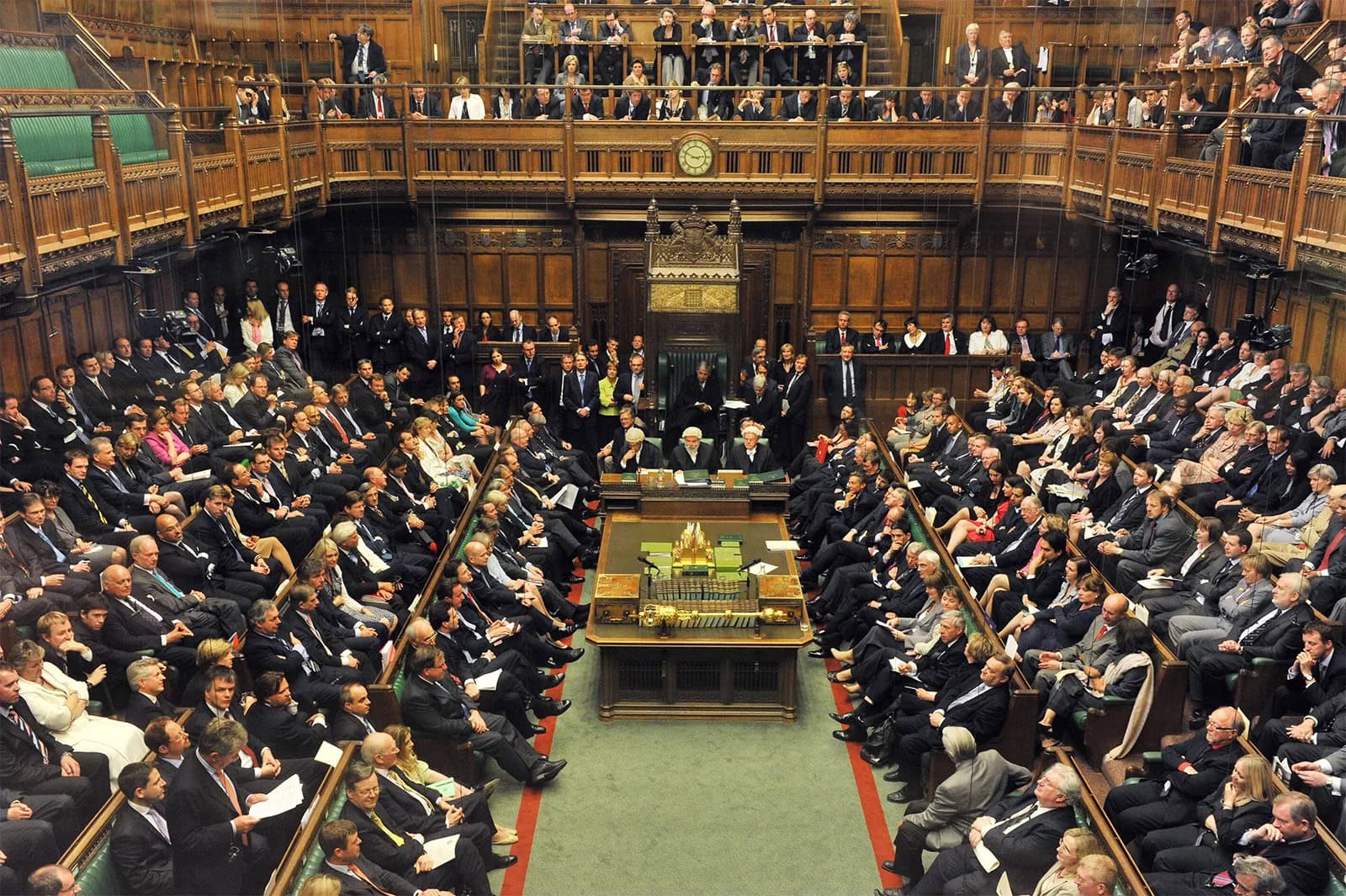
The House of Commons during a parliamentary session at the Palace of Westminster in London, United Kingdom. (Source: Britannica)
27-06-2026 الساعة 2 مساءً بتوقيت عدن
Aden (South24 Center)
A British parliamentary motion has called on the UK government to support an independent and transparent investigation into the killing of protesters in South Yemen, following reports of violence against peaceful demonstrations in Aden, Shabwa, and Hadramout.
Early Day Motion No. 435, titled “South Yemen”, was tabled in the House of Commons on June 23 and published on June 26. It has been signed by seven MPs: Clive Betts, Jim Shannon, Gill Furniss, Siân Berry, Ellie Chowns, Hannah Spencer, and Adrian Ramsay.
The motion expressed “grave concern” over reports of violence against peaceful Southern protesters in Aden, Shabwa, and Hadramout, saying they were demonstrating for their political rights, the principle of self-determination, and support for the Southern Transitional Council.
It condemned the killing, injury, and arbitrary detention of protesters and activists, stressing that the rights to peaceful protest, freedom of expression, and political participation must be protected in accordance with international law.
The motion called on His Majesty’s Government to work with international partners to support an independent and transparent investigation into the killing of protesters in Aden, Shabwa, and Hadramout, and to ensure accountability for those responsible.
It also urged the UK government to engage with regional partners in the Gulf and the wider international community to promote dialogue, de-escalation, and a peaceful political solution that reflects the democratic aspirations of the people of South Yemen. The motion further called on all parties to commit to a process that safeguards human rights, stability, and the right of Southern people to determine their future peacefully.
On June 10, Aden witnessed popular protests over the collapse of electricity services. The unrest included roadblocks in Crater and Maala, reports of gunfire, and the arrest of protesters.
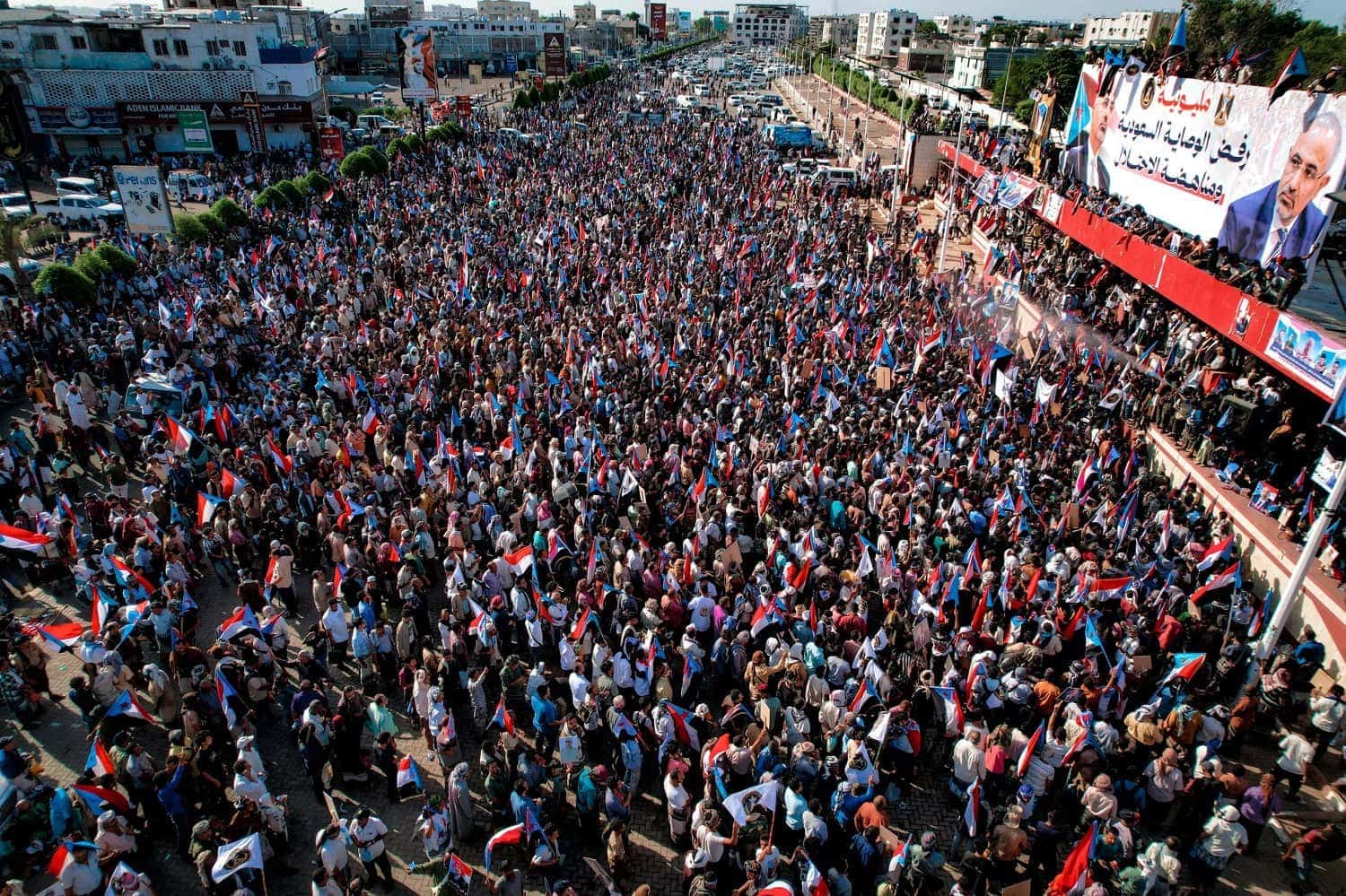
On June 20, Aden and Hadramout saw mass rallies in response to a call by the Southern Transitional Council. Participants raised slogans rejecting what they described as “Saudi guardianship” over the South, while denouncing the deterioration of services, particularly electricity and fuel.
Those events were accompanied by tight security measures in Aden and Hadramout. Southern statements and activists reported gunfire around Al-Aroud Square in Aden, arrests of protesters and activists, and attempts to block crowds and disperse gatherings in Hadramout.
In Shabwa, seven protesters were killed and around 28 others injured on February 11 after security forces opened fire to disperse a pro-Southern Transitional Council gathering in Ataq, the provincial capital, in one of the deadliest protest-related incidents in recent years.
Local and medical sources said at the time that live ammunition was fired near the rally site on Ataq’s main street.
Local authorities, however, presented a counter-narrative, saying that gunmen had attempted to storm the local government headquarters. The Southern Transitional Council rejected that account, describing it as a pretext for using force against protesters.
In Aden, one protester was killed and 11 others were injured on February 19 near the gate of Al-Maashiq Palace, the headquarters of the Yemeni government, after security forces opened fire on peaceful protesters linked to the Southern Transitional Council.
In Mukalla, the capital of Hadramout, two protesters were killed on April 4 during protests linked to the Southern Transitional Council. The incident triggered widespread Southern criticism before local mediation later intervened to reduce tensions.
In Geneva, the Independent Southern Group told the UN Human Rights Council on Friday, June 26, that the threat of terrorism had escalated following Saudi intervention in the South, arguing that UN Security Council resolutions do not grant any country a mandate to attack civilians.
The group also said it had met with the German and US delegations, as well as the Office of the High Commissioner for Human Rights, to discuss human rights developments in South Yemen, including the suppression of protests, detentions, and violations linked to recent events.


قبل شهرين
قبل 3 أشهر