مركز سوث24 للأخبار والدراسات
مركز سوث24 للأخبار والدراسات


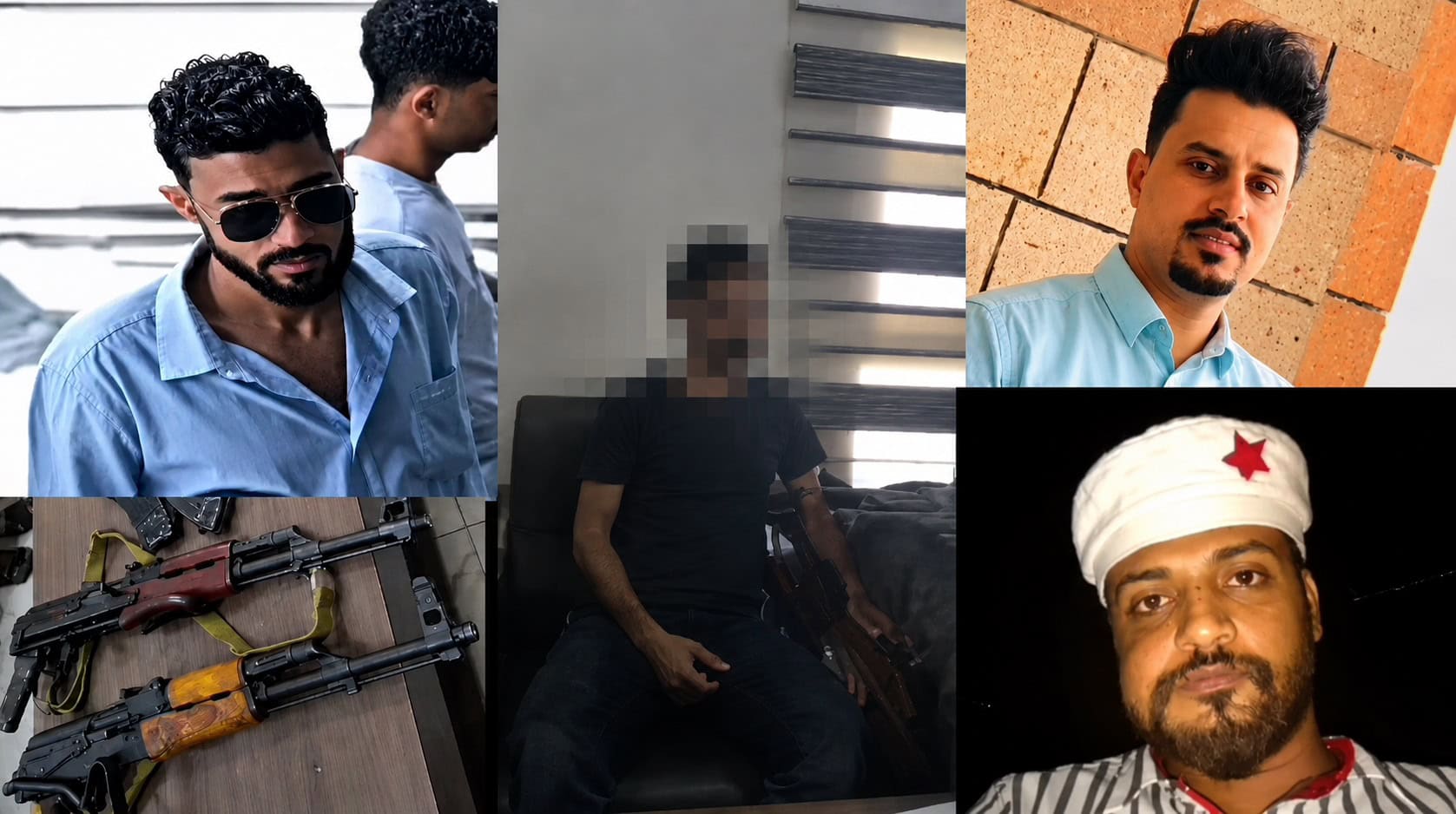
Members of the cell that carried out the kidnapping and assassination of Wissam Qaed. A still image from a video broadcast by Aden Security, June 27, 2026.
آخر تحديث في: 28-06-2026 الساعة 1 مساءً بتوقيت عدن
Aden (South24 Center)
Security authorities in the capital Aden announced the arrest of suspects involved in the kidnapping and assassination of Engineer Wissam Qaed, the Acting Executive Director of the Social Fund for Development (SFD), saying initial confessions point to a cell operating on behalf of the Houthi group.
The Aden Security Directorate published video recordings containing the confessions of one of the suspects, identified as Omar Nasser Saleh. In the recording, the suspect provided details that authorities said were related to his logistical role in the operation, from transporting and sheltering cell members in Aden to monitoring Qaed’s movements before his kidnapping and killing.
Qaed was kidnapped on May 3 from outside his home in Inma city in Aden, before being found dead hours later inside his vehicle in the Al-Haswa area. The crime sparked broad local and international condemnation, given Qaed’s position in one of Yemen’s most important development institutions.
According to Aden Security, the suspect said he transported several members of the cell, including Saleh Wadih Haddad, to Aden on his bus. He added that he first sheltered them at his sister’s house in the Al-Katheeri area, before they later moved to another house in Bir Fadl.
The suspect said his assigned role was to track Qaed’s daily movements, monitor the time he left his home, and gather information about his vehicle and route. He added that he passed these details to the rest of the cell members before the kidnapping and killing were carried out.
In the recording, the suspect denied directly participating in the killing. However, he said that, after the operation, he helped gather the perpetrators, hid the weapon used in the crime inside his home in Al-Mualla district, and later attempted to help move the cell members toward Houthi-controlled Sana’a.
The suspect also admitted, according to the published recording, that he received small sums of money in exchange for surveillance and logistical assistance, including 100 Saudi Riyals for each task, and a later remittance of 1,000 Saudi Riyals after the crime, which he said was intended to repair his bus and facilitate the move to Sana’a.
The Aden Security Directorate said the confessions revealed the identities of those involved and the party accused of ordering the assassination, noting that investigations are continuing to arrest the remaining suspects and uncover the full chain of command behind the operation.
The case carries broader significance because of Qaed’s position at the Social Fund for Development, an institution established in 1997 and long considered one of Yemen’s most prominent mechanisms for development and poverty reduction. The SFD works with international donors and UN agencies on projects related to livelihoods, infrastructure, food security, and strengthening the resilience of local communities.
UN Special Envoy for Yemen Hans Grundberg, along with several international ambassadors to Yemen, condemned the assassination and called for accountability.
Additional details published after the confessions linked Saleh Wadih Haddad, one of the names mentioned in Wissam Qaed’s case, to previous files investigated by security authorities in Aden. Haddad had previously been named by the Aden Security Committee as part of a network it said was directed and funded by the Houthis.
The renewed mention of Haddad has reopened the file of what Aden authorities describe as the “Amjad Khaled network,” a cell accused by authorities of involvement in a series of bombings, assassinations, and intelligence operations that began to surface prominently in 2021.
On October 10, 2021, Aden Governor Ahmed Hamed Lamlas and then Minister of Agriculture and Fisheries Salem Al-Soqatri survived a car bomb attack that targeted their convoy in Al-Tawahi district of Aden. The attack killed several of the governor’s escorts and civilians, including members of his media and security team.
Less than three weeks later, on October 30, 2021, another explosion targeted the perimeter of Aden International Airport, causing dozens of deaths and injuries.
Later, security and judicial authorities in Aden linked the airport bombing to the attempted assassination of Lamlas and Al-Soqatri within a broader file involving suspects they said were operating within Amjad Khaled’s network.
On May 15, 2022, southern military commander Major General Saleh Al-Dharhani survived another assassination attempt by a car bomb in Al-Mualla district of Aden. This case was later included among the files examined by the Specialized Criminal Court in Aden, alongside the Aden airport bombing and the attempted assassination of Lamlas and Al-Soqatri.
On January 11, 2024, the Specialized Criminal Court in Aden held sessions to try defendants accused of involvement in these operations. The cases included the previously mentioned incidents, and some defendants admitted at the time that the operations had been planned and directed by Amjad Khaled and funded by the Houthis.
On May 28, 2024, the Specialized Criminal Court in Aden issued a death sentence in absentia against Amjad Khaled and several of his aides in cases linked to bombings and assassination attempts in Aden.
Khaled is the former commander of the Transport Brigade affiliated with Yemen’s Ministry of Defense. He fought against southern forces in Aden in 2019 before being defeated and fleeing the city.
He was later based for a period in Al-Turbah area of Taiz Governorate, in an area controlled by forces of the Taiz Military Axis affiliated with the Yemeni government, despite being declared a highly dangerous wanted figure by security authorities in Aden.
On June 28, 2025, Chairman of the Presidential Leadership Council Rashad Al-Alimi chaired a meeting of the Supreme Security Committee in Aden that reviewed intelligence reports on a cell the committee said was led by Amjad Khaled and directly linked to the Houthis and extremist groups.
Read more at: Yemeni Government Pursues Amjad Khaled After Years of Southern Appeals
According to information published after the meeting, the cell was accused of carrying out assassinations, bombings, and espionage for the Houthis, including providing them with coordinates and sensitive security information to target southern and civilian leaders.
The Supreme Security Committee said Khaled’s cell had taken Al-Turbah in Al-Shamayatayn district of Taiz Governorate as its main base, prepared car bombs and explosive devices inside residential houses, and used the filming of assassinations and killings as a tool to spread chaos and undermine internal security.
The committee also pointed to alleged direct support from senior Houthi figures, including Abdulqader Al-Shami and Mohammed Abdulkarim Al-Ghamari, the Houthi Chief of Staff whom the group announced had been killed in an Israeli airstrike last October.
In the same context, the committee accused the cell of involvement in the assassination of Moayad Hameidi, the World Food Programme’s office head in Al-Turbah, Taiz Governorate, in July 2023. It said the operation was aimed at undermining international organizations’ confidence in security arrangements in areas controlled by the internationally recognized government.
In early June 2025, Amjad Khaled appeared in a controversial video in which he threatened leaders of the Islamist Islah Party with releasing what he described as recordings, agreements, and pledges between him and political and military leaders in the party.
According to local reports, that video was viewed as an indication of the extent of the political cover he had continued to enjoy despite a judicial ruling issued against him in Aden.
On November 16, 2025, security agencies in Aden announced the dismantling of a new cell they said had been recruited and trained in Houthi-controlled areas under the direct supervision of Amjad Khaled.
According to the security statement, members of the cell received training in Al-Hawban area of Taiz Governorate on the use of light and medium weapons, RPGs, and the manufacture and planting of explosive devices, in addition to training related to drone technologies.
Authorities said the cell had been tasked with monitoring security and military leaders in Aden. Investigations, according to the statement, also found that the cell had received regular financial and logistical support, including monthly salaries in Saudi Riyals and coverage of transportation and housing expenses.
After the announcement that the cell had been thwarted, a video circulated on November 18, 2025 showing Amjad Khaled speaking from Sana’a about an alliance with the Houthis, or what he called the “Sana’a government.”
The assassination of Wissam Qaed has become one of the most sensitive security cases in Aden in 2026. It combines three major concerns: the targeting of civilian development institutions, the reactivation of assassination networks in the city, and the alleged use of local cells by the Houthis to destabilize areas outside their control.


قبل شهرين
قبل 1 شهر
قبل شهرين