مركز سوث24 للأخبار والدراسات
مركز سوث24 للأخبار والدراسات


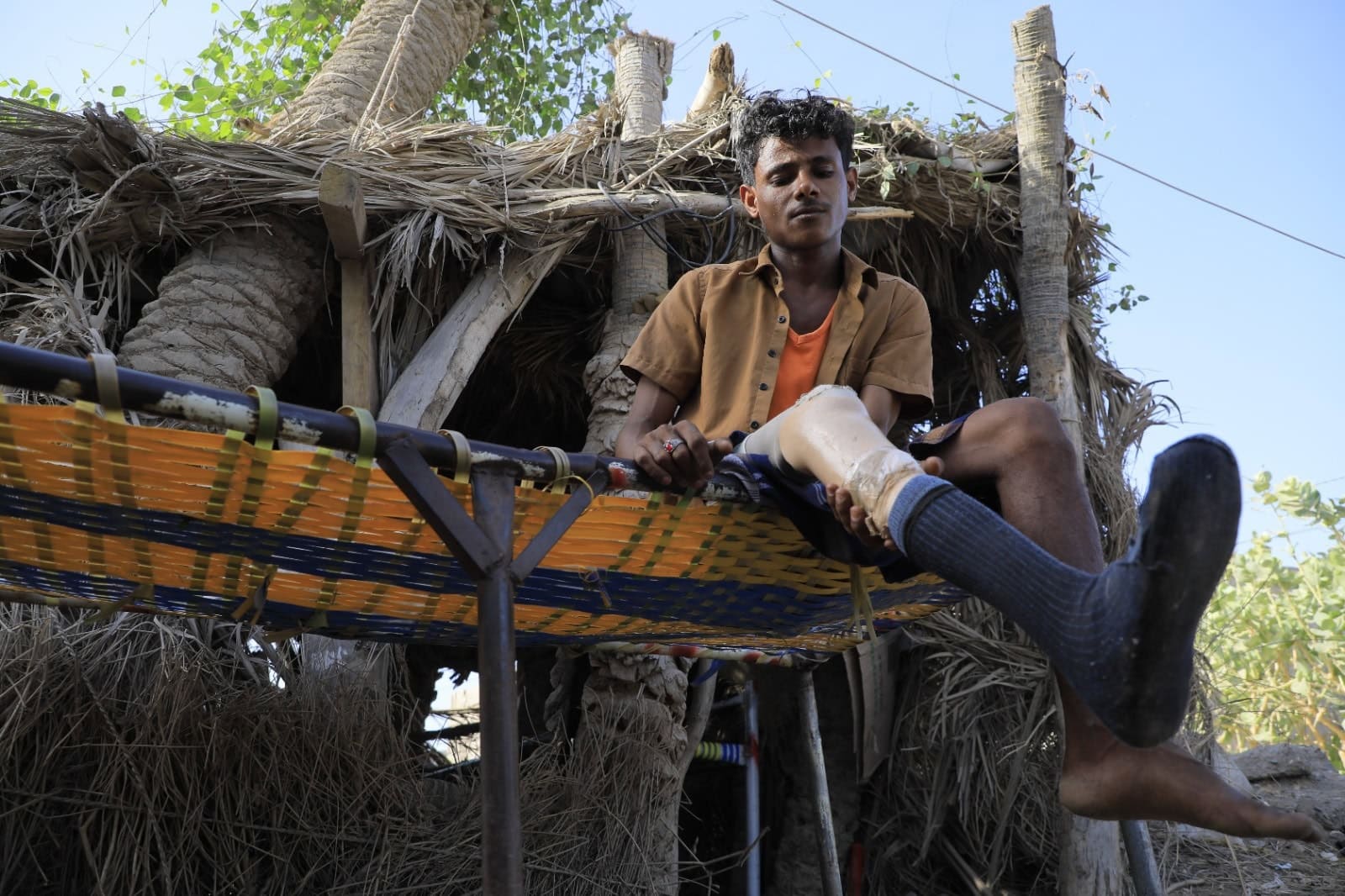
A Yemeni youth who lost his leg in a landmine explosion and received a prosthetic limb, in Al-Khoukha, Hodeidah (For South24, by the Saudi Masam Project for Mine Clearance)
30-06-2026 الساعة 7 مساءً بتوقيت عدن
Aden (South24 Center)
A report by the Office of the United Nations High Commissioner for Human Rights said Yemen was among the countries that recorded high numbers of casualties from landmines and explosive remnants of war (ERW) in 2024, amid the continuing humanitarian impact of the war and the spread of mine-contaminated areas.
The report, submitted to the 62nd session of the Human Rights Council, said Yemen was among the countries that recorded more than 200 casualties in 2024, alongside Ukraine, Nigeria, Mali, and Burkina Faso. Myanmar, Syria, and Afghanistan topped the list.
In a recent report, the UN office said landmines and ERW in Yemen continue to cause long-term harm to civilians. Survivors, particularly those who were breadwinners for their families, suffer lasting psychological, economic, and social consequences, while persons with disabilities face greater difficulties during displacement, return, and access to basic services and humanitarian assistance.
The report added that land contaminated by mines restricts people’s access to farms, grazing areas, and firewood collection sites, directly affecting food security and livelihoods. Some residents are also forced to enter contaminated areas to meet their basic needs, despite the risks to their lives.
It noted that children in Yemen are among the most affected groups, especially in areas where mines and ERW are present near or inside schools, limiting their access to education and undermining their right to play and live safely.
The High Commissioner called on states to halt the use, production, and transfer of anti-personnel mines, accelerate clearance operations, and ensure the rights of victims and survivors, including access to healthcare, rehabilitation, and social protection. The report also called for investigations into the use of mines, accountability for those responsible, and sustainable funding for mine-clearance programs.
According to the UN report, civilians accounted for around 90% of recorded global casualties from mines and ERW in 2024, while children have represented more than 40% of all civilian casualties since 1999. The figures reflect the indiscriminate nature of these weapons and their lasting impact on the most vulnerable groups.
South24 Center previously published a report examining Yemen’s landmine crisis and its deep humanitarian and health consequences.
Read more: Landmines Are Creating a New Generation of Disabled Survivors in Yemen
The report highlighted how indiscriminately planted mines in villages and farms have created a new generation of permanently disabled civilian survivors, including herders, farmers, children, and women who lost limbs or eyesight in areas including Al-Hodeidah, Lahj, Taiz, Shabwa, and Marib.
At the time, the Managing Director of the Saudi Project for Landmine Clearance in Yemen, “Masam,” Ousama Al-Gosaibi, told South24 Center that the project’s teams had cleared 502,736 mines, unexploded ordnance (UXO), and improvised explosive devices (IEDs) by the end of June 2025. He added that the project had cleared around 67.9 million square meters of contaminated land. Taiz topped the list of the most affected governorates, followed by Shabwa, Al-Jawf, Al-Hodeidah, and Lahj.



قبل شهرين

قبل 3 أشهر