مركز سوث24 للأخبار والدراسات
مركز سوث24 للأخبار والدراسات


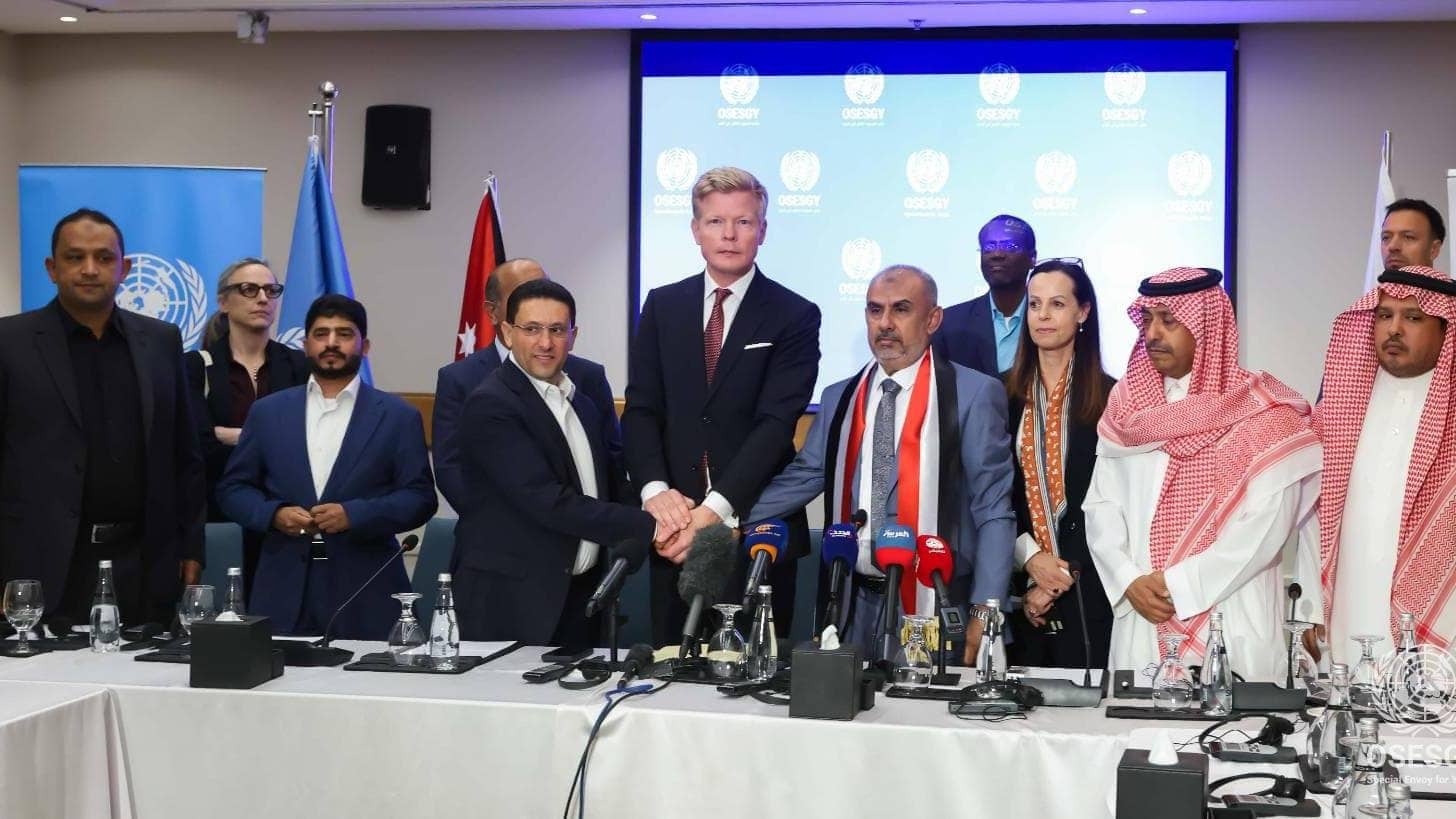
Representatives of Yemen’s internationally recognized government, the Houthi group, Saudi Arabia, and the United Nations pose after signing a detainee release agreement covering 1,728 people in Amman, Jordan, May 14, 2026. (Office of the UN Special E
12-07-2026 الساعة 5 مساءً بتوقيت عدن
Aden (South24 Center)
A revelation by a senior Yemeni security official that suspects and convicts in drug-related cases were included in the lists for a prisoner exchange between the Yemeni government and the Houthi group has sparked controversy, amid escalating protests in South Yemen demanding the exclusion of individuals convicted of or charged with terrorism, assassinations, and bombings from the agreement.
Brigadier General Abdullah Al-Lahmadi, Director-General of Anti-Narcotics at the Ministry of Interior, said the lists include individuals detained in connection with drug trafficking and smuggling cases, despite having no direct link to the war or to the file of conflict-related detainees.
In a Facebook post that was later deleted, Al-Lahmadi said that including such individuals in a UN-sponsored deal was “difficult to accept and deeply surprising,” adding that it raised serious questions about the criteria used to select the names.
Sources told South24 Center that the post was deleted following pressure from the Saudi Special Committee. However, the Center was unable to independently verify the circumstances surrounding its removal.
Al-Lahmadi called on the government to review the exchange lists and verify the legal status of every individual, ensuring that the deal remains limited to those detained in connection with the conflict and is not used to release people held over separate criminal cases.
His remarks came as objections widened over reports that individuals convicted of or charged with assassinations targeting southern military, security, and political figures had also been included. The government, the United Nations, and the International Committee of the Red Cross have not yet published the full lists of those covered by the agreement.
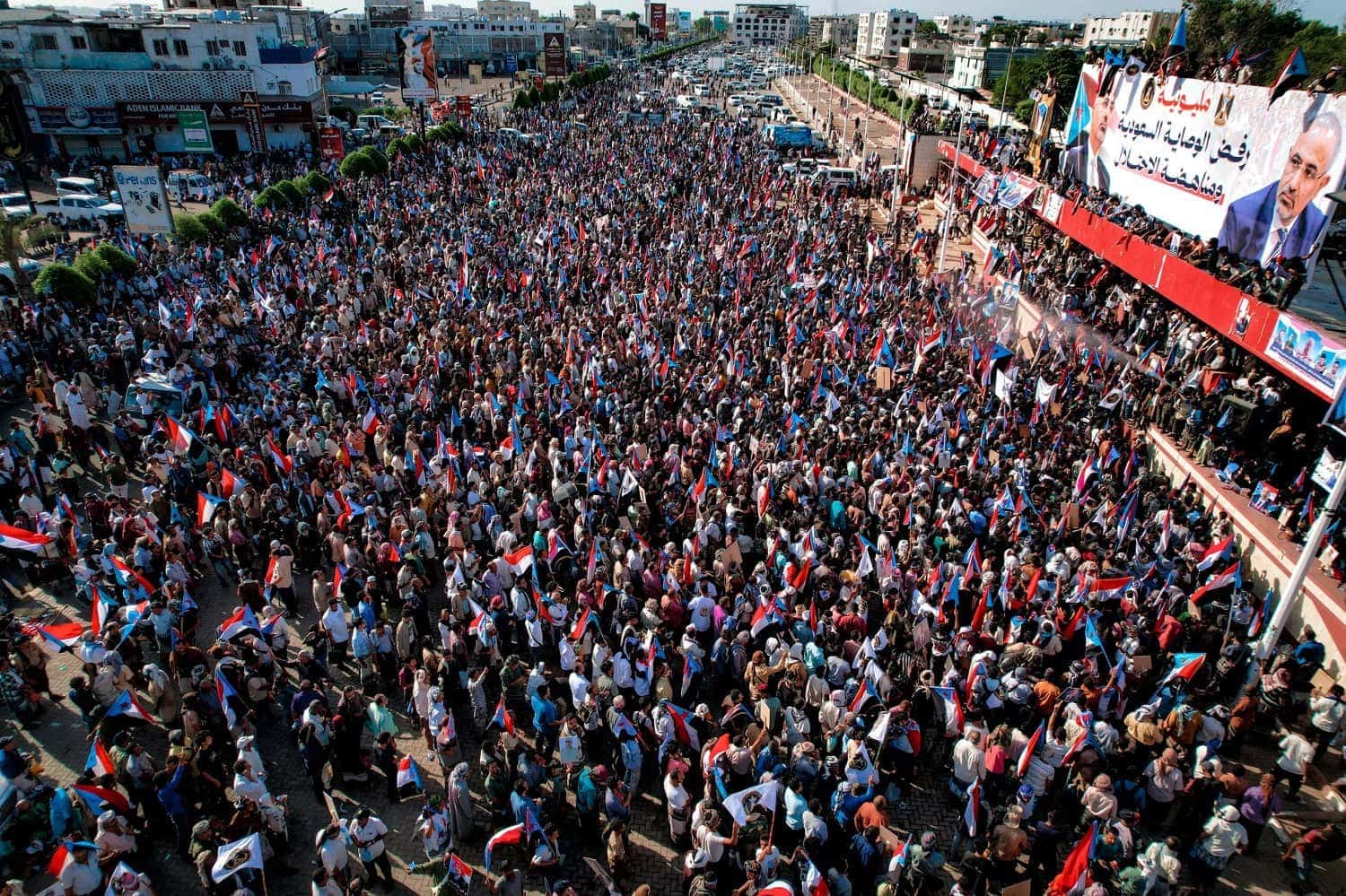
Several southern governorates witnessed protests and marches on Sunday, July 12. Photos and videos obtained by South24 Center documented demonstrations in Shabwa and outside the judicial complex in Mukalla, Hadramout.
A march was also held in Zinjibar, the capital of Abyan, in support of the Radfan tribes’ rejection of the inclusion of prisoners, some of whom have been sentenced to death. Protesters also marched through Aden to denounce attempts to include individuals facing criminal and security-related charges in the deal.
Families of victims of terrorist attacks had launched the protest campaign on July 7 with a demonstration outside the gates of Al-Maashiq Presidential Palace in Aden. They warned that releasing people convicted of or charged with killing their relatives could directly endanger them and undermine security in government-controlled areas.
The families called on the government, the judiciary, the United Nations, and the ICRC to exclude individuals convicted of or charged with terrorism, assassinations, bombings, and other criminal offenses unrelated to the conflict.
The following day, residents and tribesmen from Radfan held an armed tribal gathering in Aden after reports that individuals convicted in the assassination of Al-Anad Military Axis Commander Major General Thabit Muthanna Jawas and several of his companions had been included in the exchange lists.
Jawas, his son, and several of his escorts were killed on March 23, 2022, in a bombing that targeted his convoy in the Green City area north of Aden. In November 2024, the Specialized Criminal Court in Aden issued verdicts against several defendants in the case.
The gathering gave the authorities 24 hours to clarify their position and warned of tribal escalation.
A South24 Center correspondent said armed tribesmen later gathered near the central prison in Al-Mansoura before withdrawing after southern security commander Fahd Al-Marfadi pledged that no individuals convicted in terrorism cases would be released.
The protests later spread to Shabwa, Al-Dhalea, Hadramout, and Abyan. Demonstrators in Shabwa referred to cases including the killing of Mubarak Awad Dheiban Al-Razqi and the October 10, 2021 attack on the convoy of Aden Governor Ahmed Hamed Lamlas.
The current exchange arrangements trace back to negotiations held in Muscat in December 2025, which produced an understanding to release around 2,900 detainees. Implementation later stalled because of disagreements over the lists, names, and practical arrangements.
Negotiations subsequently moved to Amman, where the government, Saudi Arabia, and the Houthis reached a new agreement on May 14, 2026, after 14 weeks of talks. The deal covers the release of more than 1,600 conflict-related detainees.
According to the Houthis, the agreement requires the government to release around 1,100 Houthi-affiliated detainees in return for the release of 580 detainees held by the group, including seven Saudis and 20 Sudanese nationals. Government officials, however, have put the total number at around 1,728.
The ICRC is responsible for the humanitarian and logistical aspects of the operation, including identity verification, medical checks, and the organization of safe transfers. The selection of names, however, remains the responsibility of the negotiating parties.
Implementation had been scheduled to begin on July 11, but the operation was postponed shortly before the deadline, with both sides trading blame.
The government said it had completed all technical and administrative preparations, while the head of the government negotiating team, Hadi Haig, blamed the Houthis for obstructing the process.
Another government account linked the postponement to a Houthi demand that its delegation in Tehran be returned to Sanaa aboard an Iranian aircraft.
The Houthis denied responsibility for the delay. Abdulqader Al-Mortada, head of the group’s prisoner affairs committee, said they remained ready to implement the agreement and accused the government of refusing to add further names to the lists.
On July 11, UN Special Envoy for Yemen Hans Grundberg said he had received “renewed commitments” from both the government and the Houthis to implement the May agreement. He called on the parties to complete the remaining technical and operational arrangements, but no new date for implementation was announced.


قبل شهرين
قبل 3 أشهر