مركز سوث24 للأخبار والدراسات
مركز سوث24 للأخبار والدراسات


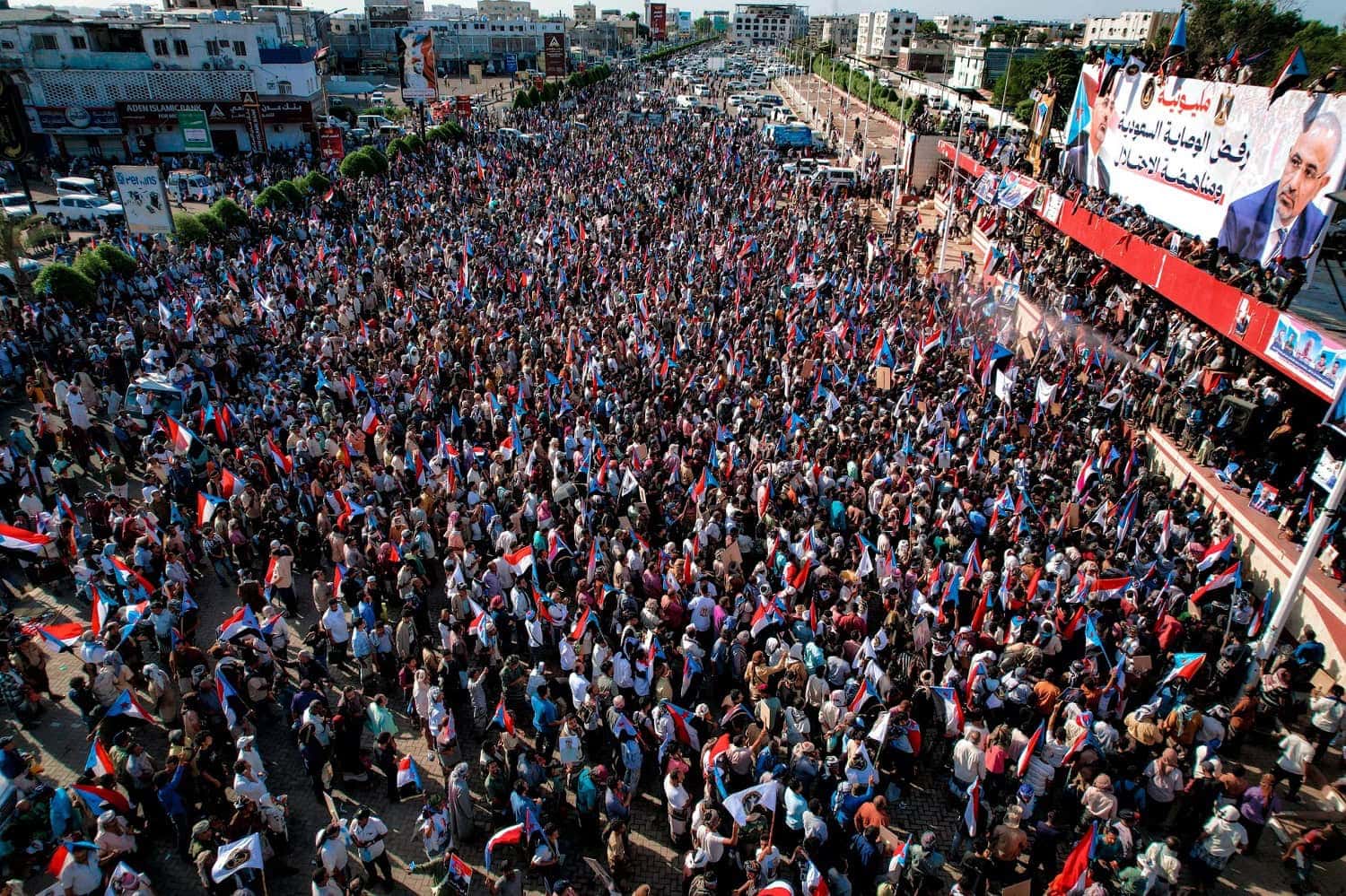
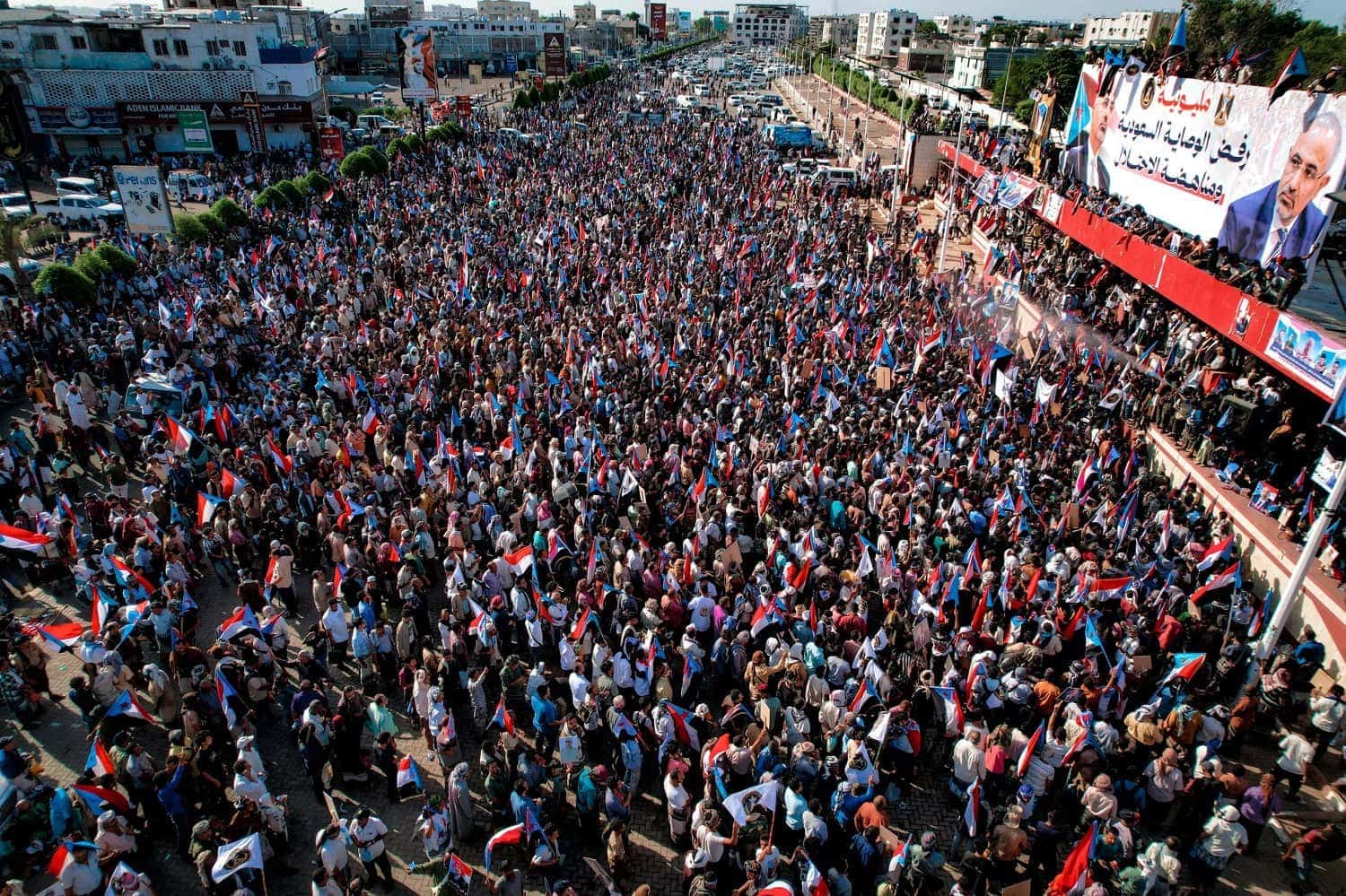
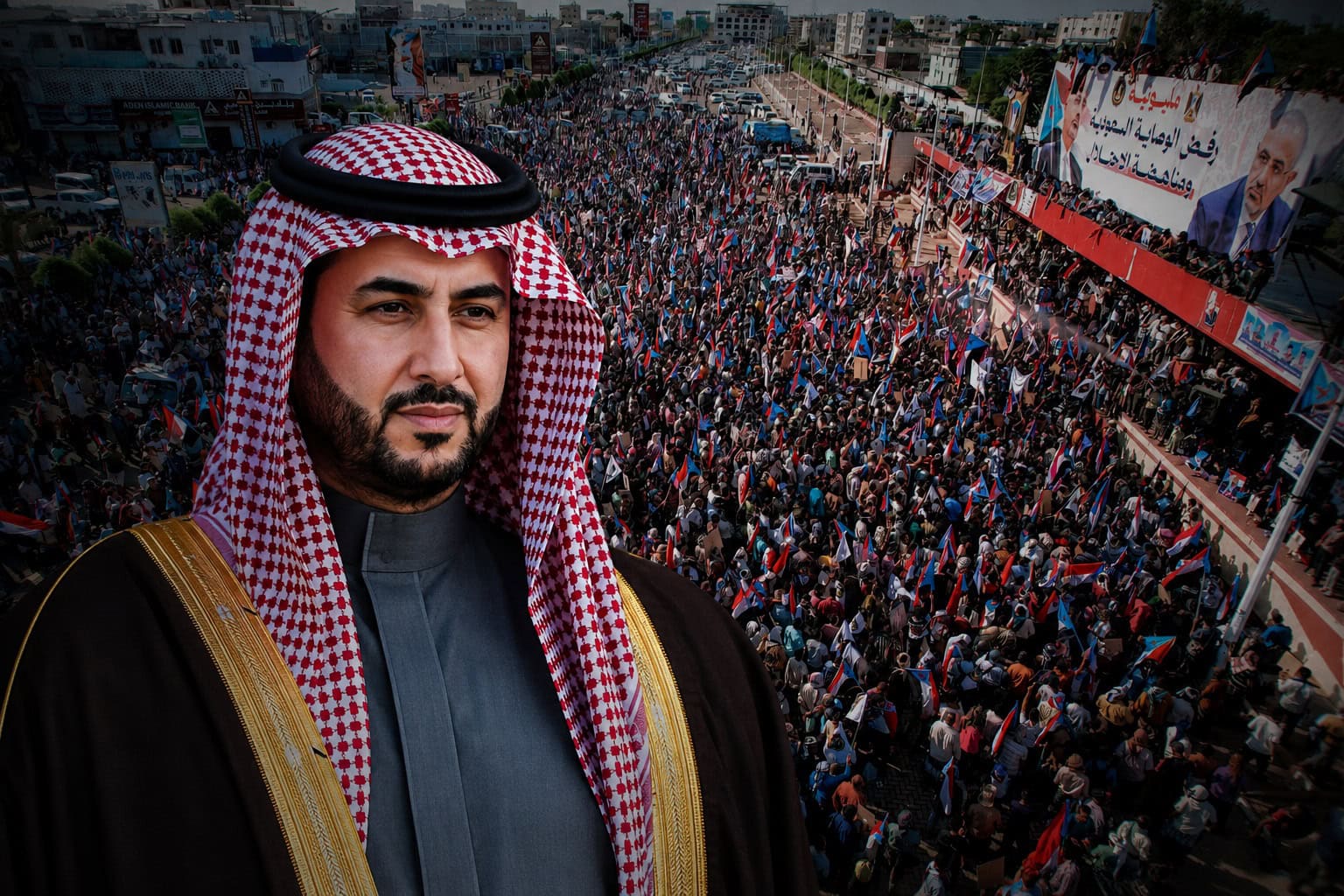
Mass rally against tutelage and occupation in Aden, South Yemen, June 20, 2026 (Southern Transitional Council Media)
27-07-2026 الساعة 10 مساءً بتوقيت عدن
Karen Dabrowska (South24 Center)
A bloody and protracted civil war in South Yemen is likely if Saudi forces and the Saudi-controlled Internationally Recognised Government (IRG) continue their violations of the human rights of the people of the South.
In 2019, the Southern Transitional Council (STC), which seeks the independence of South Yemen (described as South Arabia), signed the Riyadh Agreement – a power-sharing deal between the STC and the IRG. Distrust and conflict among IRG members themselves and between them and the STC made it impossible to implement the agreement.
There was no development of the South. Salaries of civil servants were paid late or not at all, the electricity supply was intermittent, water shortages were common, and inflation was rampant. Today, the humanitarian situation in Yemen remains dire in areas controlled by the IRG. The United Nations assessment is that 1.4 million people are now facing emergency food insecurity, and almost five million, half the population, are in need.
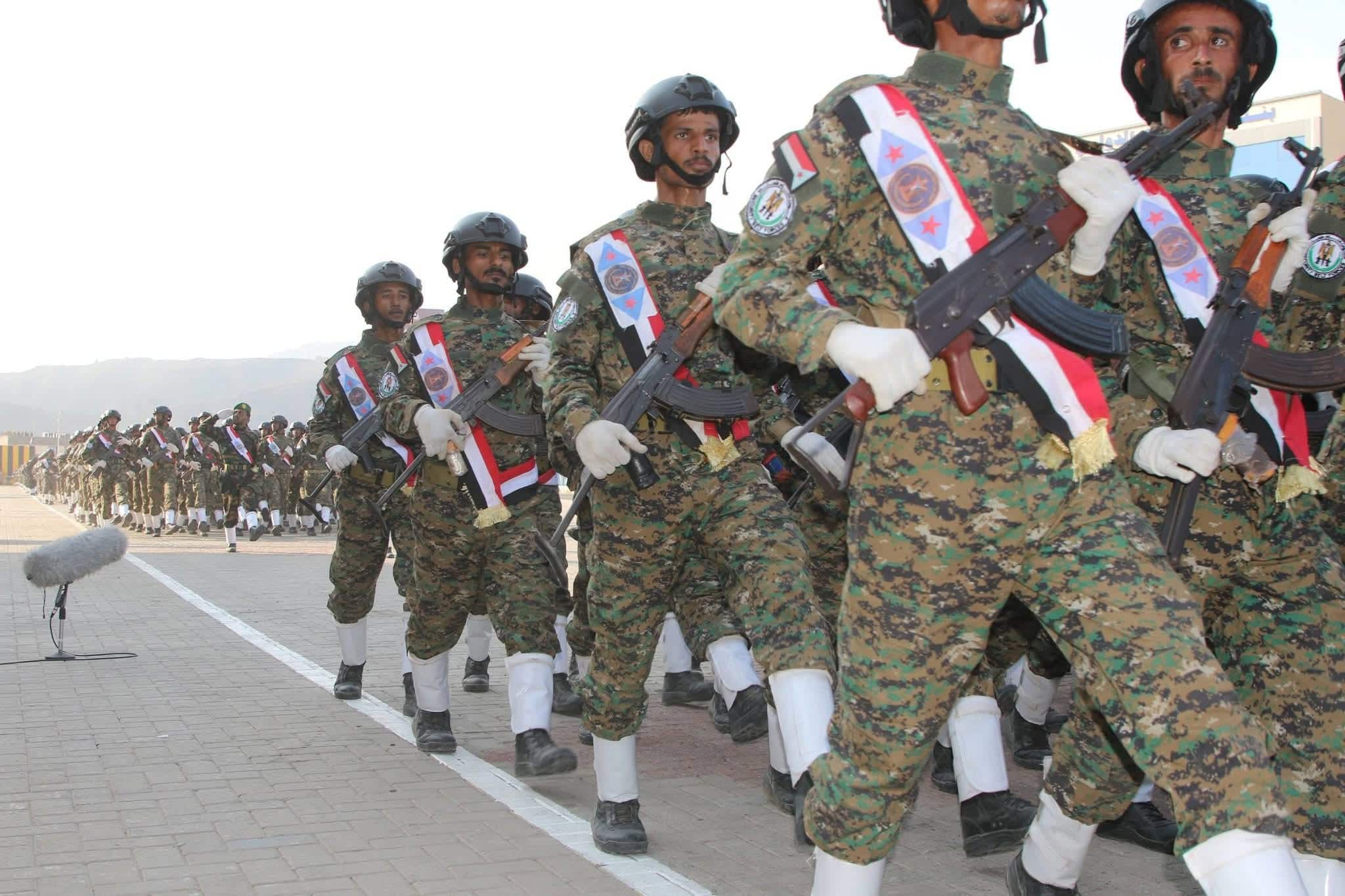
After seven years of conflict and infighting between IRG members and a total failure to address the needs of the southerners, the STC launched a major military offensive codenamed Operation Promising Future on December 3, 2025, which saw its forces sweep virtually unopposed through the eastern provinces of Hadramawt, Al-Mahra, and Shabwa and take control of the whole of South Yemen.
The military operation was also prompted by concerns that southern ports were being used to smuggle Iranian weapons to the Houthis, a Shia sect with its own militias, which has become the de facto government of North Yemen after overthrowing the government in 2014. Al-Qaeda in the Arabian Peninsula was also becoming increasingly active in South Yemen.
“We thought we had succeeded in re-establishing the southern state, which was independent from the North between 1967 and 1990,” said Abdul Galil Shaif, a former Chairman of the Aden Free Zone and now Chairman of Friends of South Yemen (FOSY).
According to Manisha Shrivastava of the Next Century Foundation, a London-based conflict-resolution think tank, Operation Promising Future was a calculated attempt to force the southern question onto the peace framework before negotiations between Saudi Arabia and the Houthis produced a settlement that excluded the South entirely.
Saudi Arabia responded with airstrikes, and by early January 2026, all the STC’s territorial gains had been reversed. The Saudis summoned a 50-member STC delegation to Riyadh. STC President Aidarous Al-Zubaidi refused to travel to the Saudi capital, where the delegates had their mobile phones confiscated and were held under what amounted to house arrest. Some are still being held in Riyadh against their will, and Dr Saleh Mohsin, a British citizen, has not been allowed to leave the country for urgent medical treatment.
The delegation announced the dissolution of the STC on 9 January. Shaif believes the Saudis would have killed Al-Zubaidi, who, according to South24 Center for News and Studies, is either in hiding in South Yemen or the UAE, if he had travelled to Riyadh. The dissolution statement was immediately rejected by an STC spokesperson, who emphasised that it was made under duress. A new Saudi-endorsed Yemeni government was formed in February 2026 under Prime Minister Shaya Mohsen Al-Zindani. But the IRG’s Presidential Leadership Council remains fractured.
The people of the South have rejected Riyadh's direct political, military, and economic control over the region. Since December 2025, demonstrations opposing both the Saudi military presence and the Saudi-backed IRG have continued across the southern governorates.
According to the Human Rights Watch report Yemen: Apparent Excessive Force Against Protesters, published on 17 March 2026, security forces fired live ammunition at peaceful demonstrators, killing at least six people and injuring dozens in Aden and Shabwa during early 2026. In addition, a joint report by seven non-governmental organisations documented 801 alleged human rights violations across the southern governorates, including arbitrary detention, enforced disappearance, and serious restrictions on press freedom.
Saudi Arabia is promoting what has been described as a Southern Consultative Process while excluding the Southern Transitional Council, civil society organisations, women's organisations, youth movements, and community leaders who claim to represent significant sections of southern society.
During the United Nations Security Council briefing of 16 June 2026, Yemen's Permanent Representative accused STC President Aidarous Al-Zubaidi of high treason, and the Security Council was urged to include him and his aides on the international sanctions list for undermining the political process.
Against this background, 60 South Yemeni NGOs and civil society organisations wrote a letter to UN Secretary-General António Guterres and Hans Grundberg, the UN Special Envoy for Yemen, calling for the UN to establish a genuine consultative process on the future of South Yemen.
The letter requested the UN to:
- Intensify efforts to address the humanitarian crisis affecting IRG-controlled areas of Yemen, including encouraging member states to fully fund the 2026 Humanitarian Response Plan and ensure that southern governorates receive equitable access to humanitarian assistance.
- Establish or support an independent investigation into the documented human rights violations in Aden, Hadramout, Al-Mahra, Al-Dhalea, and Shabwa from December 2025 to the present, and promote accountability for those responsible.
- Refrain from using sanctions as a substitute for political dialogue and ensure that any measures adopted by the Security Council contribute to peace, civilian protection, and inclusive political engagement.
“We further believe that unless the political aspirations of many people in the South are addressed through peaceful means, there is a serious risk that growing frustration could contribute to renewed armed conflict involving the Saudi-backed IRG, Saudi forces, and southern actors,” Shaif said.
He pointed out that during protests rejecting Saudi guardianship, demonstrators chanted bara bara yastamar (“out, out colonialism”) – the chant of the protesters against 128 years of British colonialism. The conflict, known as the Aden Emergency (1963–1967), involved demonstrations, riots, assassinations, bombings, and guerrilla warfare.
If the UN and the international community do not address the genuine aspirations of the people of South Yemen for self-determination, we could see the start of another Aden Emergency and a protracted civil war
Note: The views expressed in this article are those of the author and do not necessarily reflect the views of South24 Center for News and Studies.


قبل شهرين
قبل 3 أشهر