مركز سوث24 للأخبار والدراسات
مركز سوث24 للأخبار والدراسات


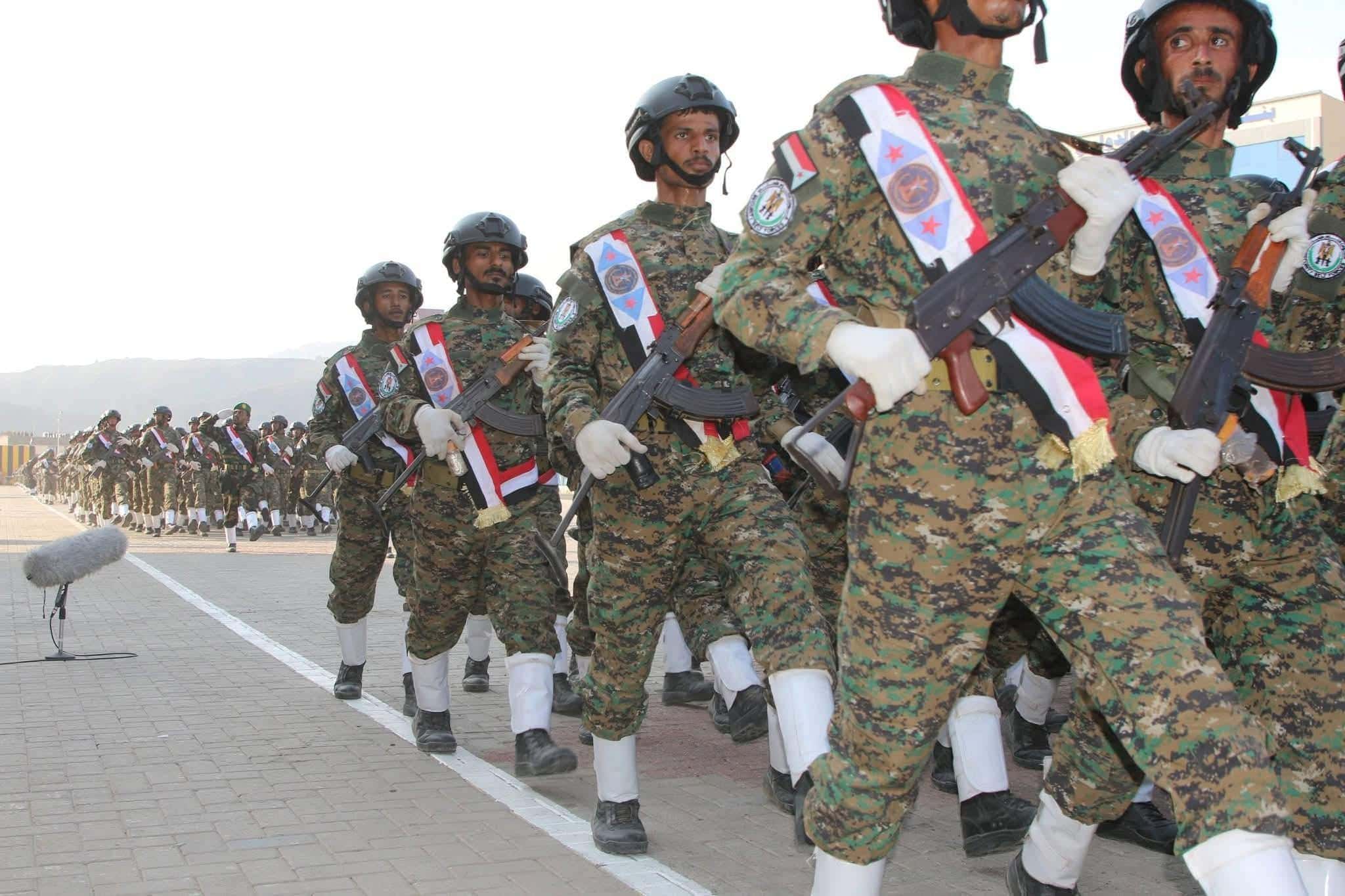
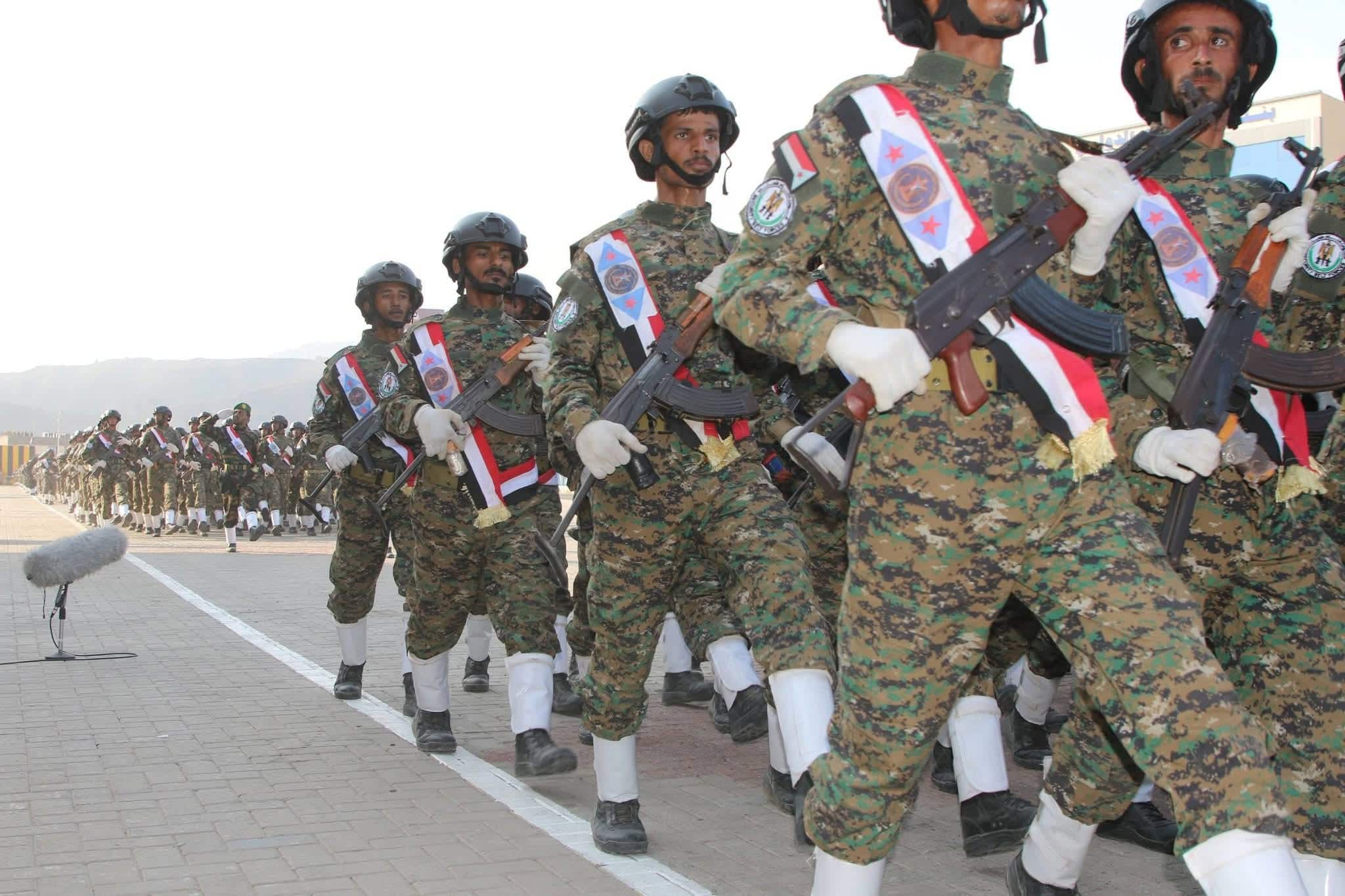
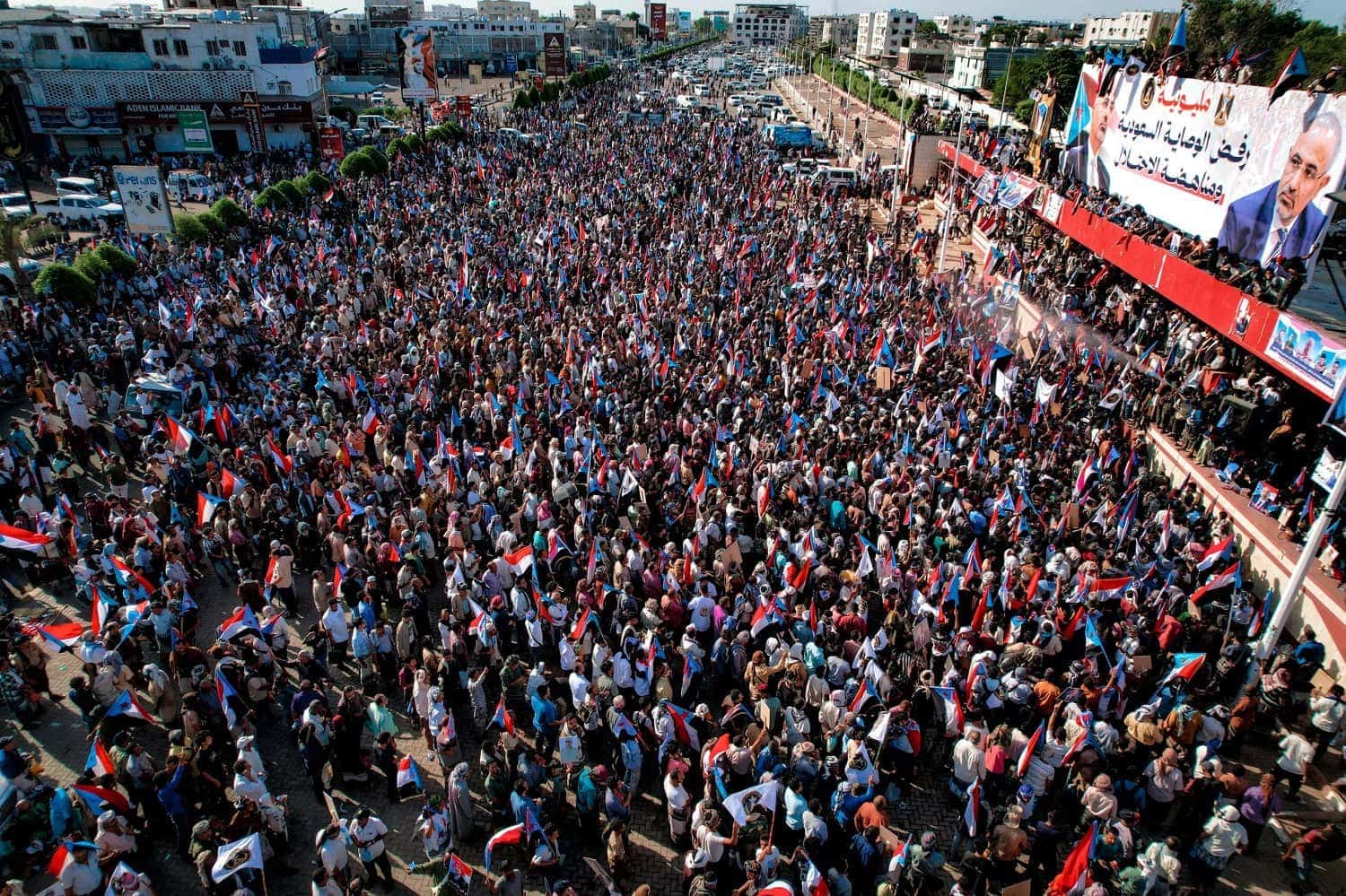
Southern armed forces parade in Aden to mark the anniversary of South Yemen’s independence from Britain, November 30, 2025. (Fawaz Al-Hanashi/South24 Center)
آخر تحديث في: 22-08-2026 الساعة 11 مساءً بتوقيت عدن
Abdullah Al-Shadli (South24 Center)
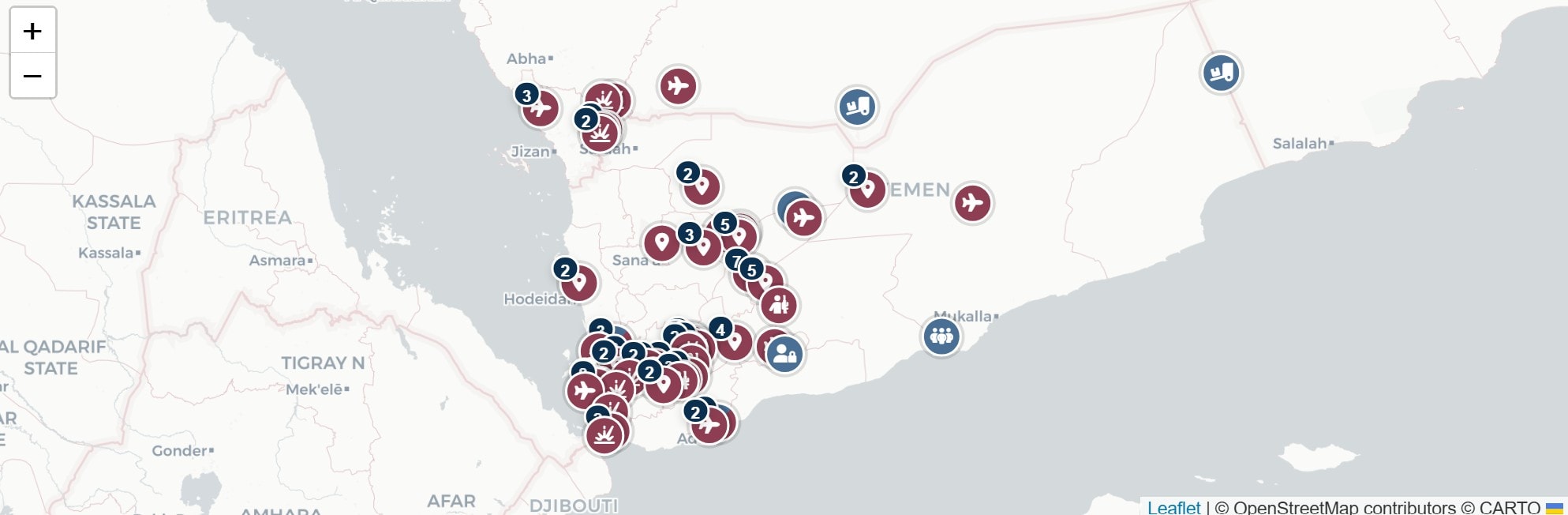
Since the expiration of the UN-brokered truce in October 2022, Yemen has remained under an unofficial de-escalation framework. That balance began to erode in July 2026 with the resumption of cross-border attacks between the Houthis and Saudi Arabia, alongside an escalation of operations in the Red Sea and inside Yemen. The escalation reached a new level in August, with Houthi attacks targeting military positions in Marib and Hadramout, as well as the port of Mocha, while forces aligned with the Presidential Leadership Council raised their state of readiness and deployed along several front lines.
On August 7, UN Special Envoy Hans Grundberg warned that Yemen was at risk of sliding back into a broader conflict on a scale not seen since the 2022 truce. The Associated Press also reported that Saudi Arabia and the Yemeni government had reinforced their forces along the front lines in preparation for a possible ground offensive against the Houthis.
For South Yemen, the question is not whether the Houthis should be confronted. Southern forces are already fighting them on fronts directly linked to the security of the South and its borders. The question is whether it is in their interest to advance deep into northern governorates in a war whose ultimate objective remains unclear, particularly following the Saudi airstrikes on southern forces in Hadramout earlier this year and the subsequent breakdown in relations between Riyadh and the Southern Transitional Council.
Questions have also emerged over who currently has the authority to deploy southern armed forces amid the latest developments. It remains unclear whether a potential campaign would be intended to decisively defeat the Houthis, as Saudi Arabia may be seeking, or whether it would instead serve as a pressure campaign aimed at forcing them to halt attacks on Saudi vessels and critical infrastructure and return to the roadmap mediated by Oman between Riyadh and Sana’a over the past several years. The Yemeni government and the Southern Transitional Council have been excluded from those consultations.
Who Commands Southern Forces Today?
Since early 2026, a broad process to reorganize military and security structures has been underway under Saudi supervision. The process has focused on significantly reducing the Southern Transitional Council’s control and influence over southern armed forces, which had generally remained under its authority until December 2025. Although many southern military and security commanders have remained in their positions, Riyadh has used a combination of incentives and pressure to reshape these formations according to its vision.
These measures have included withholding salaries from forces directly aligned with Southern Transitional Council President Aidarous Al-Zubaidi, including brigades that withdrew from Aden toward neighboring governorates in early January, and pressuring them to comply with Saudi directives. Riyadh has also appointed military commanders aligned with its approach and removed others affiliated with the Southern Transitional Council in several governorates. Saudi Arabia has further placed all military formations in the anti-Houthi camp, including southern forces, under a biometric registration system while monitoring heavy weapons held at military camps.
On January 10, Rashad Al-Alimi, Chairman of the Presidential Leadership Council, based in Riyadh, issued a decision establishing the Supreme Military Committee, tasked with reorganizing and equipping the armed forces and unifying their command. Officially, the committee operates under the supervision of the Saudi-led coalition, which previously included Saudi Arabia and the UAE before Abu Dhabi withdrew its remaining forces from Yemen in January amid the Hadramout crisis. It does not operate within the traditional chain of command of Yemen’s Ministry of Defence.
The Southern Security Belt Forces were renamed the National Security Forces, while other security units in Aden and Lahj were incorporated into the new structure as part of a process aimed at gradually integrating them into the Ministry of Interior’s framework. The restructuring has also included changes to the leadership of other units and formations, including the Nation’s Shield Forces, which already operate under direct Saudi supervision despite formally being designated as reserve forces under a decision issued by the Chairman of the Presidential Leadership Council when the force was established.
However, the reorganization process has not yet produced a unified military structure encompassing all formations. The Southern Giants Forces, led by Abdulrahman Abu Zaraa Al-Muharrami, the Southern Transitional Council’s second-ranking military figure after Aidarous Al-Zubaidi, as well as the STC’s deputy chairman and a member of the Presidential Leadership Council, have become more closely coordinated with government forces. Other Southern formations, including ground forces, continue to maintain varying degrees of independence in their command structures and deployments.
In this context, military expert Brig. Gen. Thabet Hussein Saleh says southern forces suffered a setback that weakened them early this year, while subsequent measures further fragmented their command, control, and unified decision-making structures. He told South24 Center that he does not believe there is currently a unified field command. The Southern Giants Forces, he noted, have their own command, while the actual decision-making authority over other formations remains unclear. He also argues that the Nation’s Shield Forces, despite having southerners among their ranks, cannot be considered to have “exclusively Southern” loyalties.
Southern political analyst Nasr Al-Essai offers a somewhat different assessment. He believes southern forces have become more organized and now operate within a military structure under the command of Brig. Gen. Abdulrahman Abu Zaraa Al-Muharrami, the overall commander.
At the same time, Al-Essai distinguishes between having an overall command and achieving unified decision-making. He told South24 Center that the existence of an overall commander does not mean that all political and military levels operate fully through a single decision-making center. He considers the remaining challenge to be completing the unification of political and military decision-making and determining which authority has the power to decide matters of war and peace.
From within the Southern Transitional Council, Shukri Ba Ali, acting head of its Political Body, offers an assessment focused on the origins and purpose of these forces. He stresses that southern forces were established through “a Southern national will” and trained and equipped to defend the South. Their primary mission, he says, remains protecting its territory and population from external aggression and security threats.
Ba Ali told South24 Center that there are regional interventions and attempts by actors within what he described as the “guardianship government” to push these forces into other battles. However, he said military and field commanders understand the risks involved and, in his assessment, are capable of maintaining the independence of their decision-making and continuing their mission to defend the South. He added that instructions not to participate in battles that do not serve the interests of the South are “clear,” and that military commanders at various levels understand the nature of their assigned missions.
A Strategic Blunder?
The sensitivity surrounding southern forces participating in a war inside the northern governorates does not stem from a refusal to confront the Houthis. Southern forces are already fighting the group on fronts directly linked to the security of the South. In recent weeks, southern positions in Dhalea, Lahj, and Shabwa have come under attacks involving drones and mortar fire, as well as attempted Houthi incursions, alongside the mobilization of Houthi fighters along these fronts.
These developments mean that the South is not a threat-free rear area from which forces can be redeployed without cost. Any decision to advance northward would therefore be consequential and carry the risk of turning into a strategic blunder.
Brig. Gen. Thabet Hussein Saleh says the prevailing position in the South is to avoid sending southern forces into battles in the north under northern command. He points to their previous experience with what is known as the “National Army,” the official designation for forces affiliated with the Islamist Islah Party that are deployed in parts of the north that have not fallen under Houthi control. However, he does not reject supporting the war against the Houthis outright. He stresses that defeating the group also serves southerners' interests, provided there are agreements that safeguard southern independent decision-making and the distinct nature of its forces.
According to Thabet Hussein, the liberation of northern governorates should primarily be carried out by northern forces, while southern forces could provide support if credible arrangements and clear understandings are in place, as they have previously done in Hodeidah, Marib, and Taiz.
Nasr Al-Essai shares this assessment regarding the priority of protecting the South. He argues that the deployment of southern forces to northern fronts should not be automatic or driven simply by a regional decision to escalate. Instead, it should be based on a clear political and military decision, defined objectives, and guarantees that protect southerner’s interests and prevent their forces from being drawn into an open-ended war without a political horizon.
Shukri Ba Ali takes a firmer position, saying that southern forces “have no interest in engaging in battles that do not serve the goals and aspirations of the people of the South.” He says the priority is to protect the South and its population from terrorism and external aggression. He warns against involvement in what he describes as “futile wars” that could expose the South to risks and repercussions. In his view, the forces stationed in Marib should be the first to confront the Houthis, rather than turning southern forces into an instrument for carrying out that mission.
Ba Ali notes that the Southern Transitional Council had previously been among the strongest advocates of launching a campaign to liberate Sana’a under the agreements that had been signed. According to him, however, this position faced opposition from regional actors and other forces on the grounds that it conflicted with the roadmap. He argues that developments following the events in Hadramout have reinforced the importance of preserving southern forces and avoiding their deployment in new battles, particularly amid what he describes as attempts by northern forces and external actors to weaken the southern political project and reshape the balance of power in the South.
Ba Ali also links this position to the current relationship between the Southern Transitional Council and Saudi Arabia. He told South24 Center that relations between the two sides have become “almost severed or suspended” following what southern forces experienced during the January events.
He added that the Southern Transitional Council had previously been among the actors most closely aligned with what he described as the “Arab project.” However, he said the agendas have since changed, arguing that Riyadh has moved in recent years toward containing the Houthis and laying the groundwork for a peace roadmap. In his view, this approach contributed to the current escalation, while the January events have negatively affected how segments of the southern public view Saudi Arabia.
According to Ba Ali, building a stable relationship between Saudi Arabia and southerners requires respecting their will and refraining from imposing agendas on them or dealing with them through a guardianship approach. He noted that continued political disagreements between the two sides make any potential participation by southern forces in a war led or supported by Riyadh particularly sensitive.
U.S. Yemen researcher Fernando Carvajal adds another dimension concerning the southern forces’ own capacity to enter a large-scale confrontation. He told South24 Center that he does not currently see forces in South Yemen prepared to fully engage in an open-ended war with the Houthis. Even if such forces existed, he believes Saudi Arabia could not afford to allow them to enter an open-ended confrontation whose course and repercussions inside Yemen and on Saudi territory would be difficult to predict.
Carvajal expects southern forces with Salafi leadership to be at the forefront of any potential military move. At the same time, he believes forces affiliated with the Islah Party in Taiz and Marib would prefer not to risk losing additional territory to the Houthis. He also sees Saudi Arabia facing a dilemma over arming the various forces. In his assessment, Riyadh cannot fully arm southern forces, while some actors would not agree to provide Islah-affiliated forces with a larger arsenal.
Carvajal does not consider participation on northern fronts an appropriate way for the Southern Transitional Council to compensate for its recent political losses. He argues that Riyadh cannot afford the consequences of a military escalation that spirals out of control, and that the council currently lacks sufficient incentive to engage in a conflict beyond the governorates of the South. He believes the priority for the Southern Transitional Council and southern forces should instead be the Dhalea front, pushing the Houthis beyond the city of Damt toward Ibb Governorate without advancing farther north.
Decisive War or Pressure Campaign?
Brig. Gen. Thabet Hussein Saleh says the Yemeni government lacks a clear political decision or the will to enter an all-out war, and he sees no such intention on Saudi Arabia’s part either. In his assessment, Riyadh appears more inclined toward de-escalation, and government military moves may remain largely reactive to the Houthis, who initiated the latest escalation against Saudi Arabia, rather than serving as a prelude to a decisive war.
Fernando Carvajal offers an assessment that the Houthi escalation is aimed at exerting maximum pressure on Saudi Arabia along two tracks: pushing Riyadh to respond to the group’s demands and expanding Iran’s leverage in its dealings with the administration of U.S. President Donald Trump. He believes the limits of the confrontation will remain tied to Saudi Arabia’s position, the level of costs Riyadh is prepared to bear, and the degree of risk it is willing to accept.
According to Carvajal, Saudi Arabia lacks the capacity to significantly degrade Houthi capabilities, which could make renewed U.S. intervention against the group necessary, similar to Operation “Rough Rider” in 2025. However, he currently considers this scenario unlikely. He also raises the possibility of Israel becoming militarily involved against the Houthis at a pace similar to previous U.S. operations but believes Israel could demand significant concessions from Saudi Arabia in return, at a time when Riyadh does not appear prepared to move toward establishing relations with Israel.
Nasr Al-Essai identifies three possible paths: a return to the roadmap and political process; a military resolution from within Yemen if the Houthis reject that path; or broader international intervention if Houthi threats to maritime security and regional and international security continue. He considers the political track the least costly option and therefore the most likely to prevail.
Fears of a renewed war against the Houthis involving South Yemen’s forces also revive memories of the 2018 battle for Hodeidah, when the Joint Forces, led by the Southern Giants Brigades, served as the spearhead of intense fighting against the Houthis. Hundreds of soldiers were killed in the fighting before the Stockholm Agreement halted operations and established redeployment arrangements, as the Houthis came close to losing control of Hodeidah city and port.