مركز سوث24 للأخبار والدراسات
مركز سوث24 للأخبار والدراسات


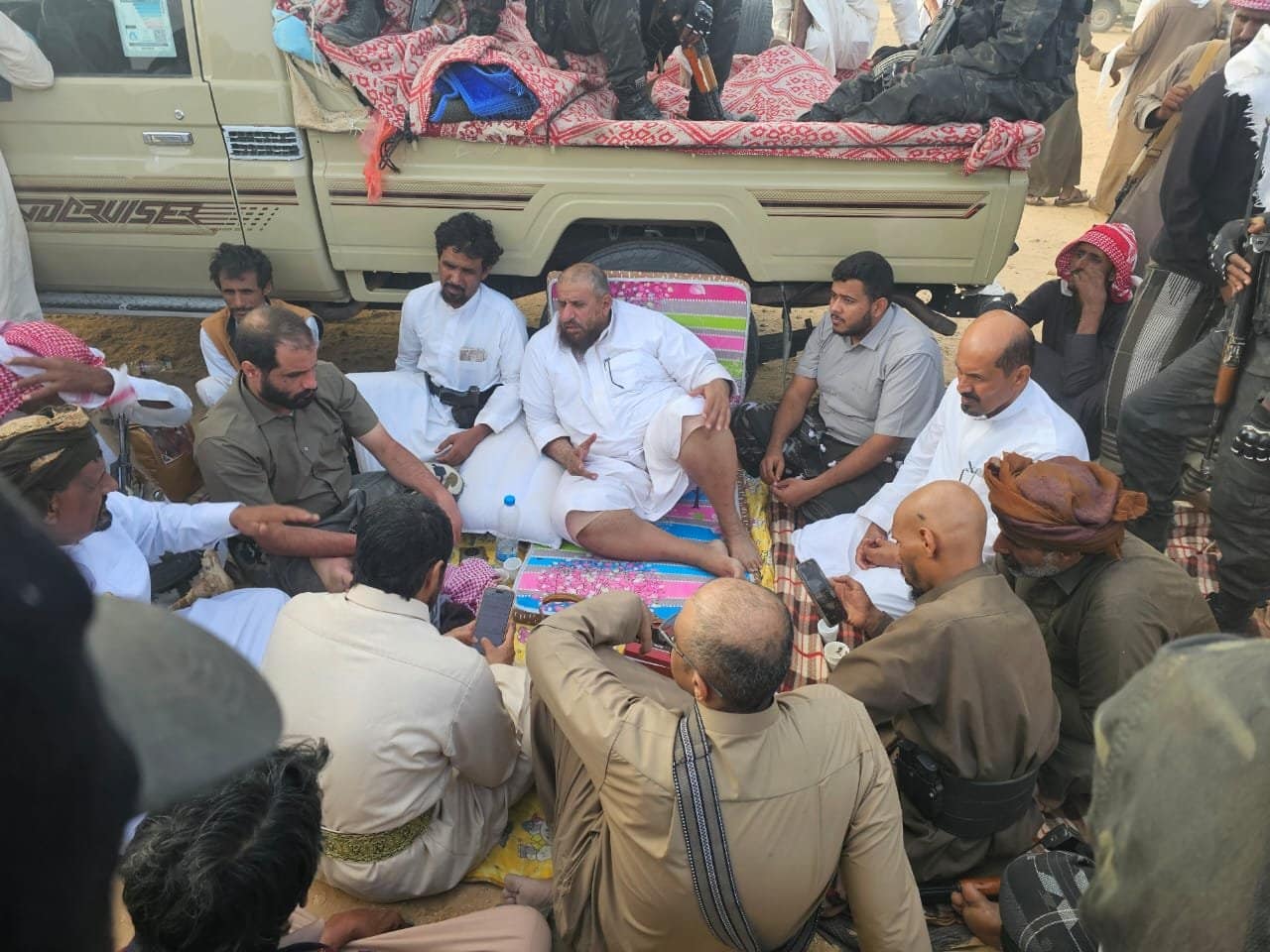
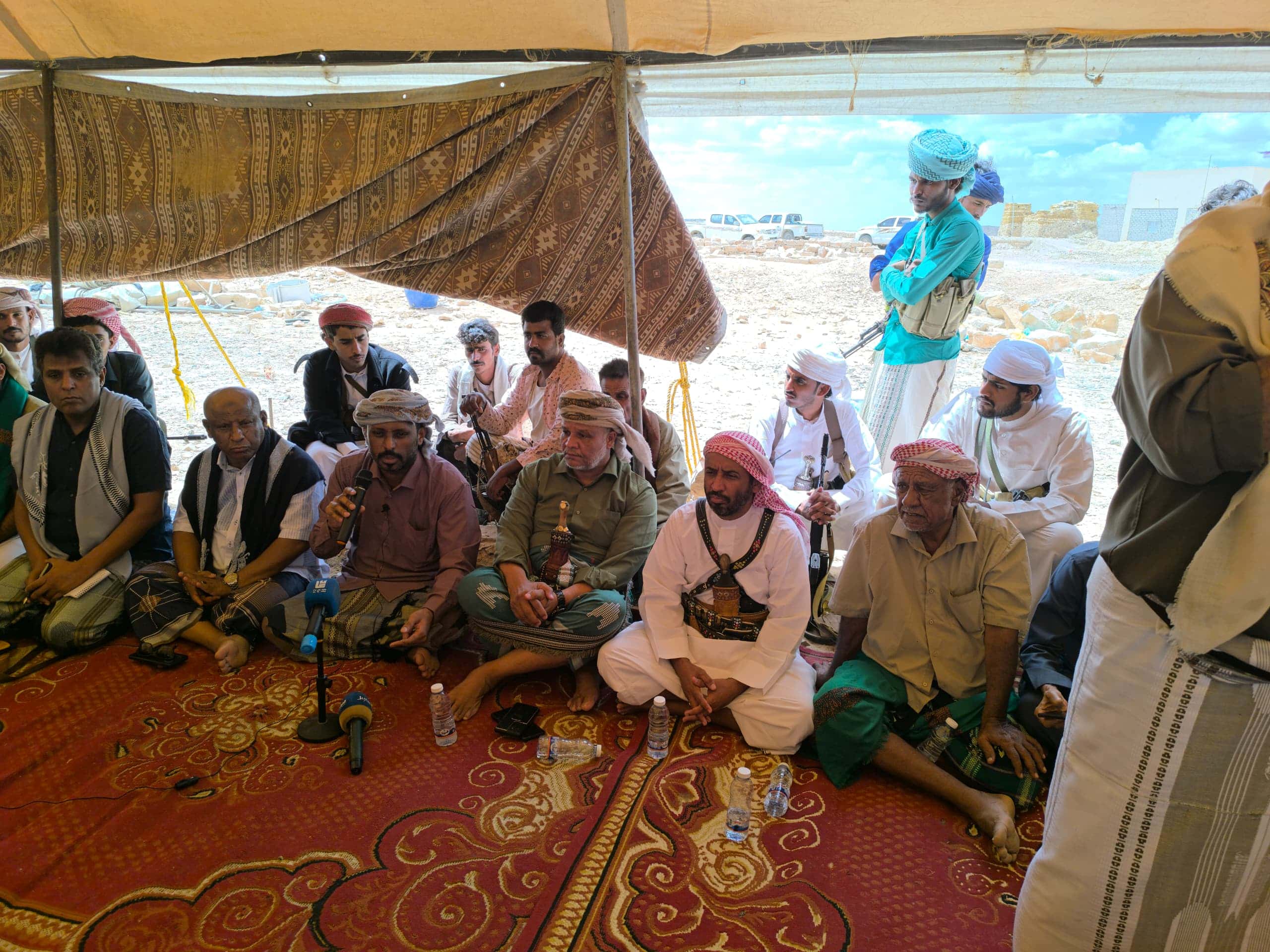
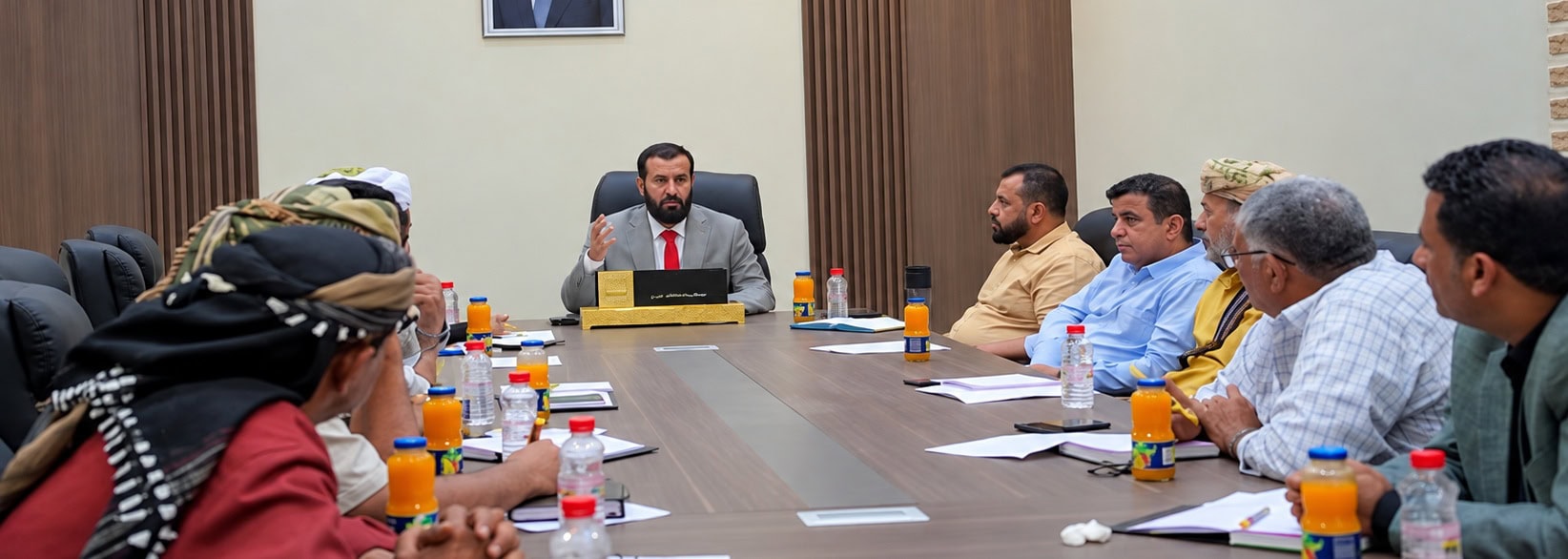
A tribal gathering to discuss a ceasefire following armed clashes between the Al-Manahil and Bait Qumsait tribes along the Hadramout–Al-Mahra border in South Yemen, November 2026. (Photo: Social Media)
15-11-2026 الساعة 3 مساءً بتوقيت عدن
Aden (South24 Center)
Tribal and military mediation efforts have secured a 10-day truce between the Al-Manahil tribe in Hadramout and the Bait Qumsait tribe in Al-Mahra following armed clashes along the border between the two South Yemen governorates, stemming from a longstanding dispute over land ownership and administrative boundaries.
The agreement followed the intervention of Saudi-backed local forces to contain tensions and separate armed members of the two tribes. Both governorates have witnessed changes in military and security deployments in recent months, raising concerns that tribal land disputes could become a new source of instability.
A local source in Al-Mahra told South24 Center that the dispute resurfaced last week in border areas near Ramah District in Hadramout, roughly two years after an earlier settlement under a customary agreement failed to resolve the underlying causes.
The source explained that the dispute extends beyond land ownership to the demarcation of administrative boundaries between the two governorates, with each tribe claiming rights to contested territory amid overlapping tribal lands and previous administrative divisions.
Armed clashes broke out on Thursday (November 12) in areas near Ramah, amid reports of injuries and the detention of several members of the Al-Manahil tribe. No independently verified casualty figures were available.
The source said local authorities in Hadramout and Al-Mahra intervened to contain the fighting, establishing mediation committees involving military commanders, tribal leaders, elders, and other community figures in an effort to halt the escalation and reach a settlement acceptable to both sides.
According to the source, Nation's Shield Forces (Der' Al-Watan) deployed from Al-Mahra to positions previously occupied by the Bait Qumsait tribe and removed newly erected earth barriers. Forces from Hadramout took up positions previously held by the Al-Manahil tribe and carried out similar measures.
The source added that troops remain deployed along the areas of contact to separate the two sides and prevent renewed clashes, while mediators have been given 10 days to address the dispute and negotiate a lasting settlement.
On Saturday (November 14), local sources and media outlets cited a statement attributed to Nation's Shield Forces in Al-Mahra announcing that a ceasefire agreement had been reached between the two tribes.
According to those sources, the agreement calls for an end to hostilities and tribal mobilization, the evacuation of disputed positions, and measures to resolve the issue of detainees. They said Nation's Shield Forces had taken custody of members of the Al-Manahil tribe who had been held by the Bait Qumsait tribe, pending their return to their families.
However, local accounts differed over the extent to which the agreement had been implemented. Some sources reported that mediation efforts had successfully eased tensions, while others said tensions persisted and arrangements concerning the disputed positions remained incomplete.
South24 Center could not independently verify the details of the reported agreement or whether both parties had fully complied with its terms.
The clashes highlight persistent tribal and administrative disputes over land along the Hadramout-Al-Mahra border, despite previous attempts to resolve them through customary tribal mechanisms and local agreements.
Tribal and security mediators intervened roughly two years ago to contain similar tensions between the two sides, reaching understandings on the withdrawal of armed fighters and the removal of military positions. However, the dispute remained unresolved because questions concerning land ownership and administrative boundaries had not been settled.
The latest clashes come amid the deployment of Saudi-backed Nation's Shield Forces in Al-Mahra and Hadramout, alongside other military and security formations, following shifts in the balance of power and changes to security deployments in both governorates since the beginning of the year.
The developments carry added significance given the geographic position of the two governorates in South Yemen and their extensive desert and border areas.