مركز سوث24 للأخبار والدراسات
مركز سوث24 للأخبار والدراسات


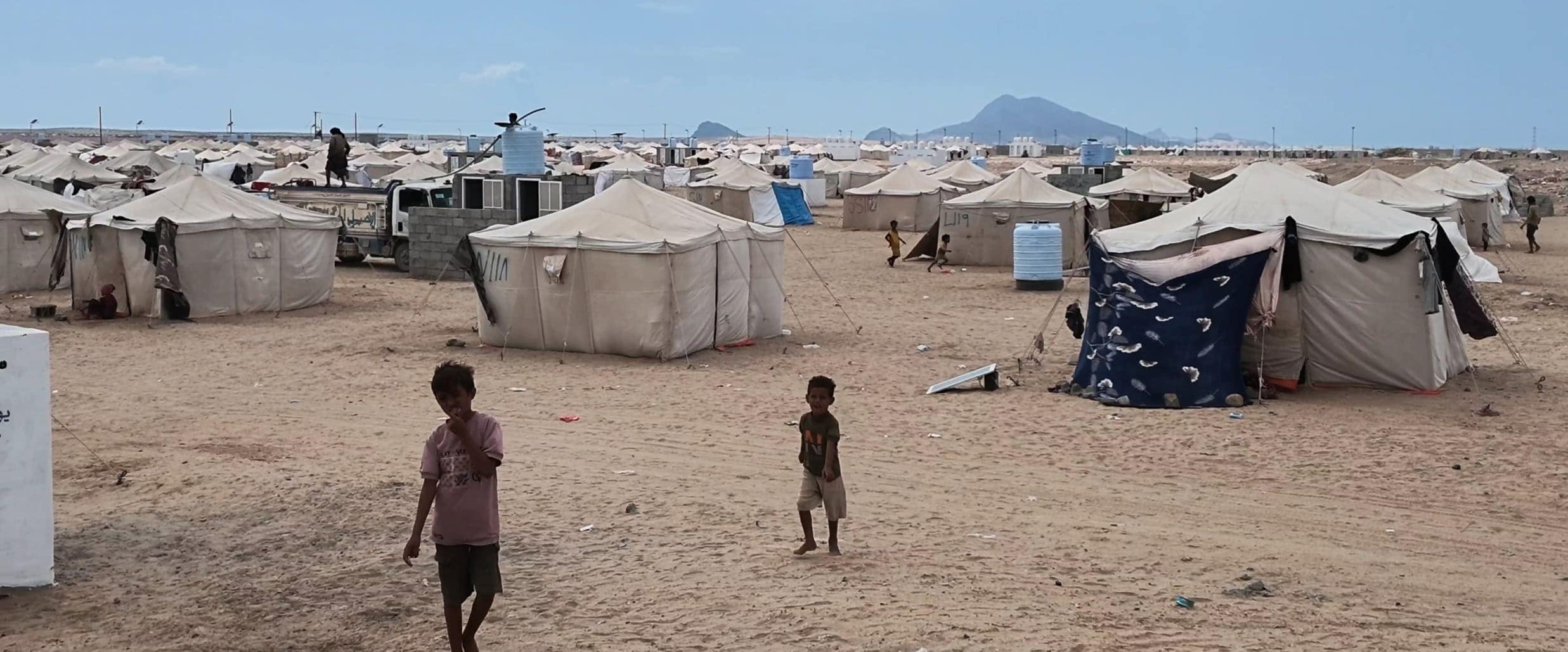
Children among tents at Al-Firdous displacement camp in Ras Imran, west of Aden, during a field visit by the South24 Center team, November 10, 2026 (South24 Center).
آخر تحديث في: 21-11-2026 الساعة 9 مساءً بتوقيت عدن
Ansam Abdullah (South24 Center)
The latest round of conflict in Yemen has sent thousands of families back onto displacement routes and forced others to leave their homes for the first time, as fighting spread from the western coast to areas in Lahj.
In Aden, reception areas across South Yemen, and Taiz, displacement camps are expanding and classrooms are being turned into shelters, while families who have lost loved ones and sources of livelihood arrive in communities that are themselves facing pressure on services and resources.
The new wave began in September 2026, as the Houthis advanced in areas along the western coast and clashes intensified. According to Minister of State for Displaced Affairs Walid Al-Abara, the number of newly displaced people reached approximately 322,000, adding to a crisis affecting more than four million displaced people in total.
During a South24 Center field visit to Al-Firdous camp west of Aden and shelter sites in Lahj, testimonies from displaced people revealed that the years of return following previous waves of displacement had not been enough to restore stability.
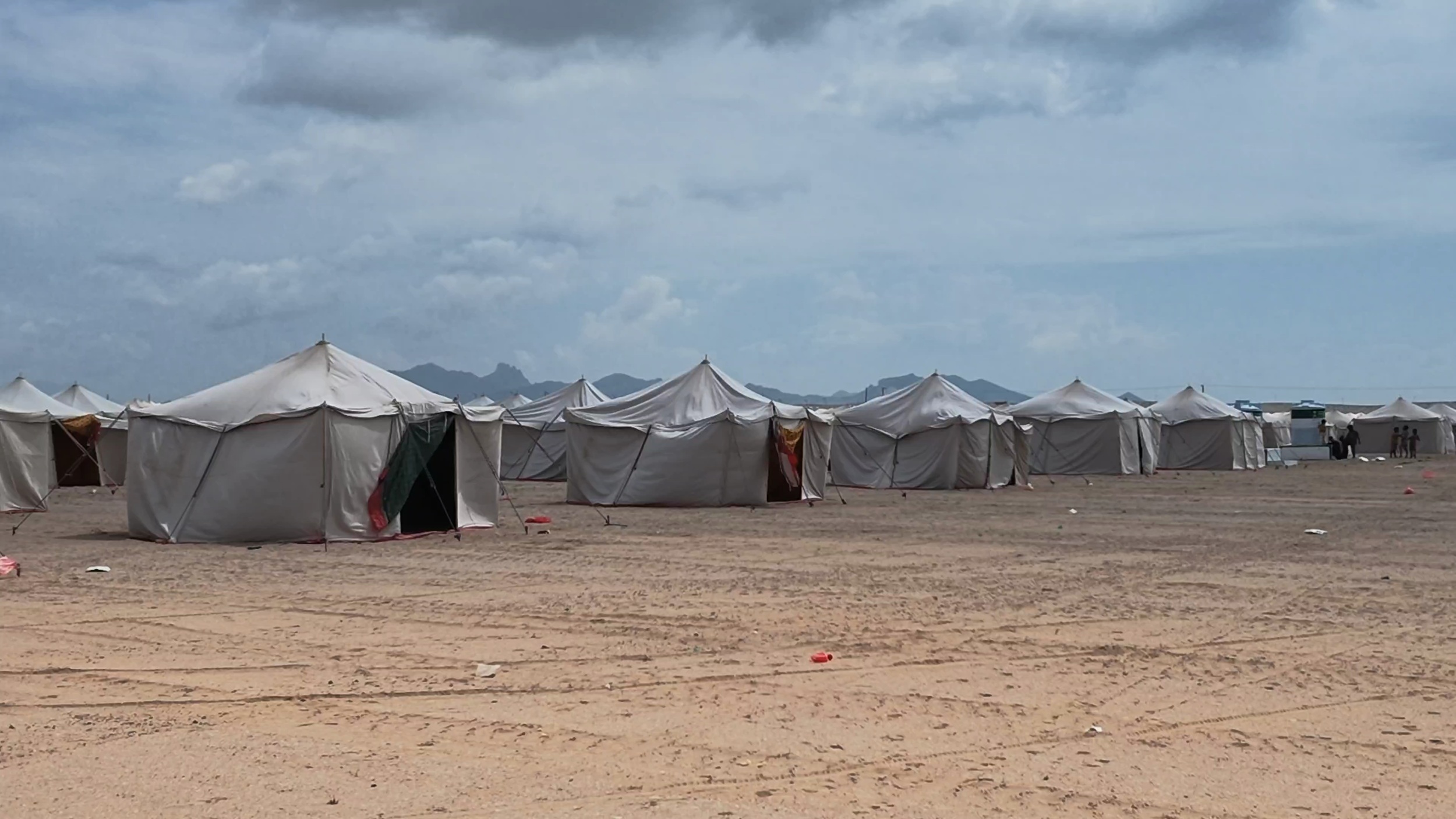
Rows of displaced people's tents at Al-Firdous camp in Ras Imran, west of Aden, November 10, 2026 (South24 Center).
Some families who had returned home found themselves forced to leave again, while others reached safer areas but lost the means they had relied on to support themselves.
The Latest Wave of Displacement
The September displacement wave was linked to Houthi advances into areas around Al-Mokha, Hais, Al-Khokha, Dhubab, Taiz, and border areas in Lahj Governorate. Families from the western coast and areas of Al-Sabihah headed to Aden and various parts of Lahj, while others moved between districts in search of safety and shelter. “On September 13, the International Organization for Migration reported 85,818 displaced people, including more than 82,000 who had been displaced since the beginning of the month.”
Ghadir, 15, left the Al-Ardhi area in Bab Al-Mandab with her family on a journey involving boats and rough roads, passing through Ras Al-Ara before reaching Aden. She describes the fear, exhaustion, and uncertainty about their next destination, as well as people killed by sniper fire while fleeing, according to her testimony to South24 Center.
Ghadir's family left behind their home and livestock before arriving at Al-Firdous camp, established by the local authorities in Aden to receive displaced people. The family remained without the livelihood they had depended on. Access to food and basic necessities remained difficult and dependent on what the local authorities in Aden could provide, even after they had moved away from the fighting.
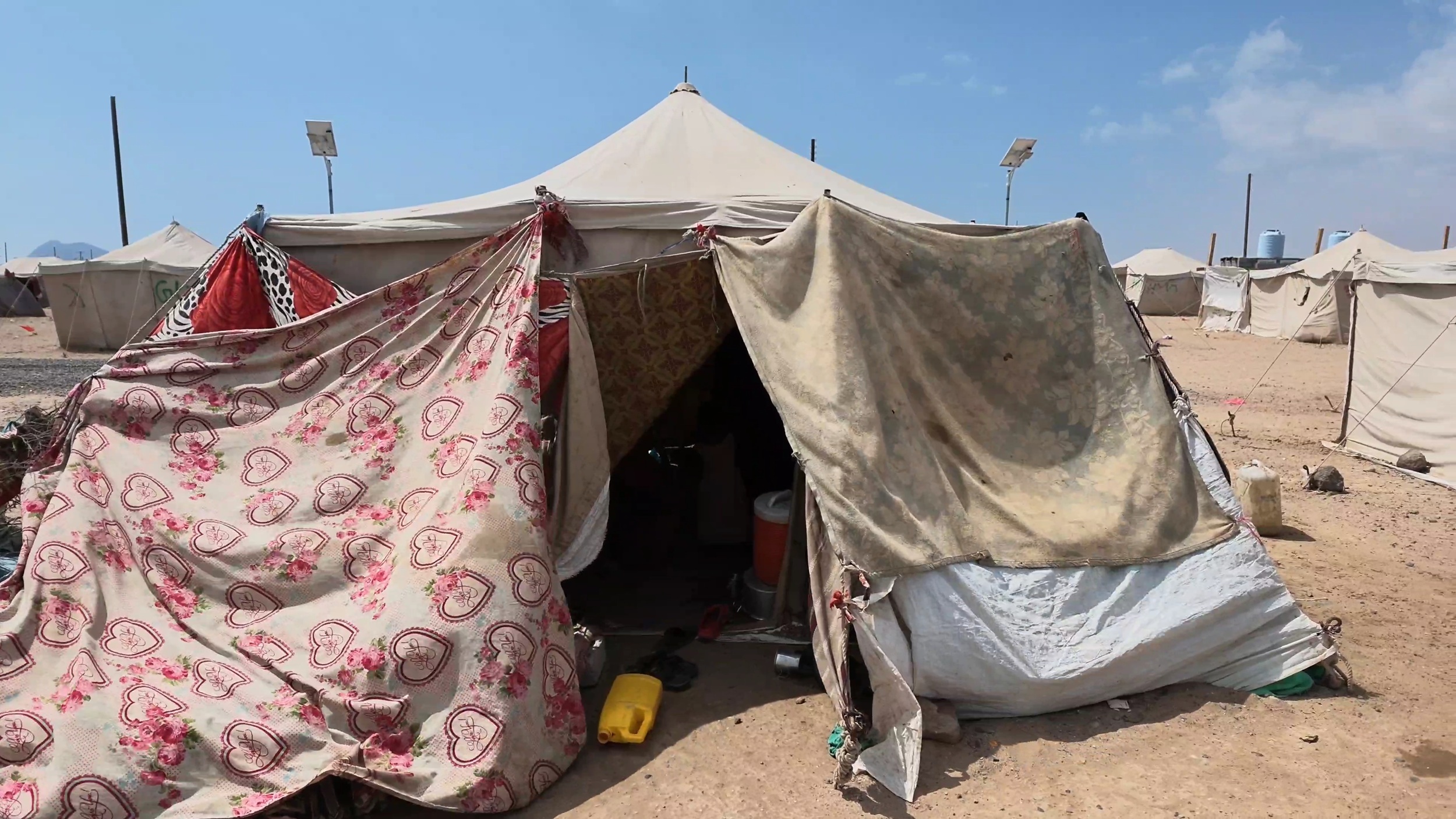
Fabric and blankets surround the entrance to a tent at Al-Firdous displacement camp in Ras Imran, west of Aden, November 10, 2026 (South24 Center).
Meanwhile, 64-year-old Shaabi Saeed Ali told South24 Center that armed men forced residents to leave their areas in Hais District, south of Hodeida Governorate. He walked for a day and a night before paying 40,000 Yemeni rials to reach the displacement camp in Aden.
Holding back tears, he spoke about his land, his life, and the memories he had left behind, as well as his hope of returning whenever circumstances allow. Until then, he relies on aid to meet his needs inside the camp.
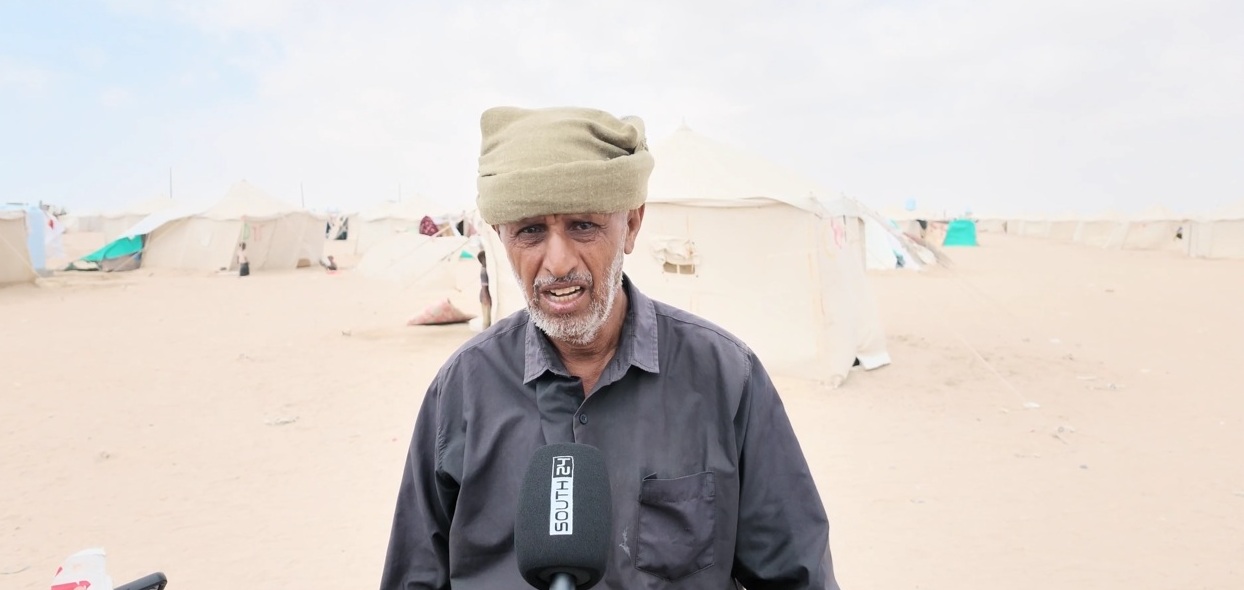
Displaced man Shaabi Saeed Ali speaking to South24 Center at Al-Firdous camp, west of Aden, November 10, 2026 (South24 Center).
According to residents' testimonies and official statements, the routes taken by those fleeing were not spared violence. In a statement dated September 13, 2026, Yemen's Ministry of Human Rights said it had documented attacks attributed to the Houthis in Taiz, Hodeida, and Marib, targeting residential areas, displacement camps, and civilian convoys.
The ministry put the preliminary toll at approximately 150 civilian deaths and more than 200 injured, in addition to the displacement of around 85,000 people. It also reported that civilians had come under shelling while fleeing Hais.
On September 22, the ministry said two ballistic missiles had struck a popular market in the Al-Hajf area of Al-Mudharabah and Ras Al-Ara District in Lahj, injuring civilians and causing property damage.
As clashes spread, displacement extended to Al-Mudharabah and Ras Al-Ara, Tor Al-Baha, and Tuban. Dr. Ahmed Ibrahim, head of the Humanitarian Emergency Committee and deputy governor of Lahj, said the wave began along the western coast before spreading to Al-Mudharabah, Al-Turbah, Al-Maqatirah, Tor Al-Baha, and the eastern parts of Al-Mudharabah and Ras Al-Ara, with families moving according to security conditions and the availability of accommodation.
Speaking to South24 Center, Ibrahim estimated that Tuban and Tor Al-Baha had received around 10,000 families. He also reported the displacement of approximately 300 families within Tor Al-Baha itself, while more than 1,500 families had headed toward Aden.
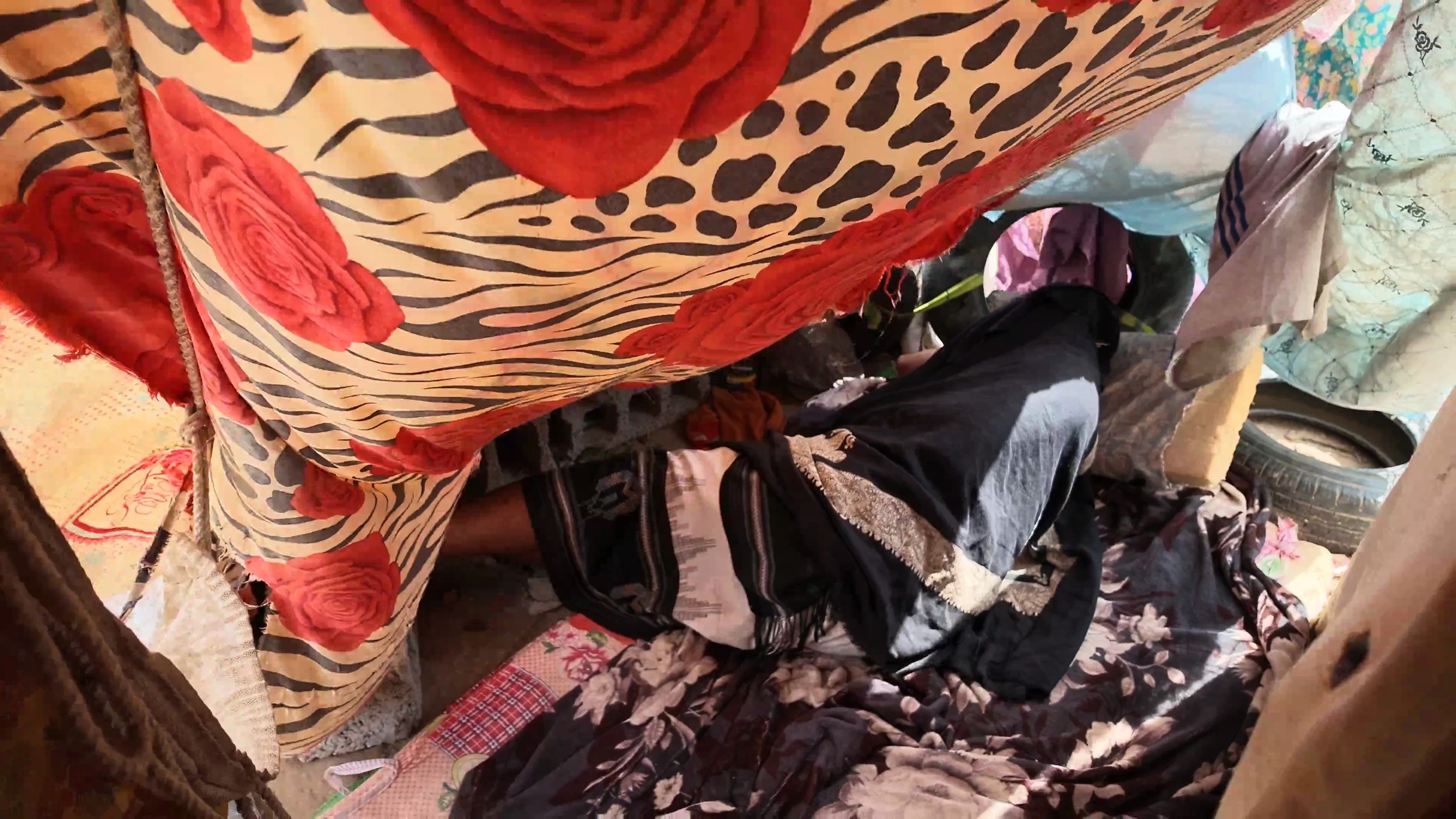
A displaced woman inside a shelter made of fabric and blankets at Al-Firdous camp in Ras Imran, west of Aden, during a field visit by the South24 Center team, November 10, 2026 (South24 Center).
A Return That Did Not Last
For some families, the new wave reopened an experience they thought was over. Since the Houthis took control of Sanaa in 2014 and displacement waves along the western coast began in 2015, displaced people have spent years away from their homes before returning, only to be forced to flee again by the latest clashes.
Husn Abdul Wahab, 57, left Al-Mokha for Aden in 2015, where she stayed for around four years. When she returned to her city, she hoped to reclaim her former life.
During her latest displacement, she lost her 20-year-old son Omar, who was also a father. She told South24 Center that he was killed by missiles as the family attempted to flee, and that she was unable to find his body. She had lost another son during the first war.
Her experience captures the reality of repeated displacement: years away from home, followed by a return that cannot withstand another round of war, and losses that continue to accumulate before a family has had a chance to recover from those that came before.
For Saeeda Mohammed, from Al-Waziya west of Taiz Governorate, reaching the camp was accompanied by the loss of her eldest son and the responsibility of caring for nine children. The 44-year-old woman said her son was killed in shelling as they fled, during a journey that involved four consecutive days of walking.
Saeeda also suffers from an illness accompanied by vomiting blood and says she cannot access the medical services she needs to undergo tests and determine the nature of her condition. Her family also lacks clothing, blankets, and cooking gas, amid cold weather and the absence of a steady income.
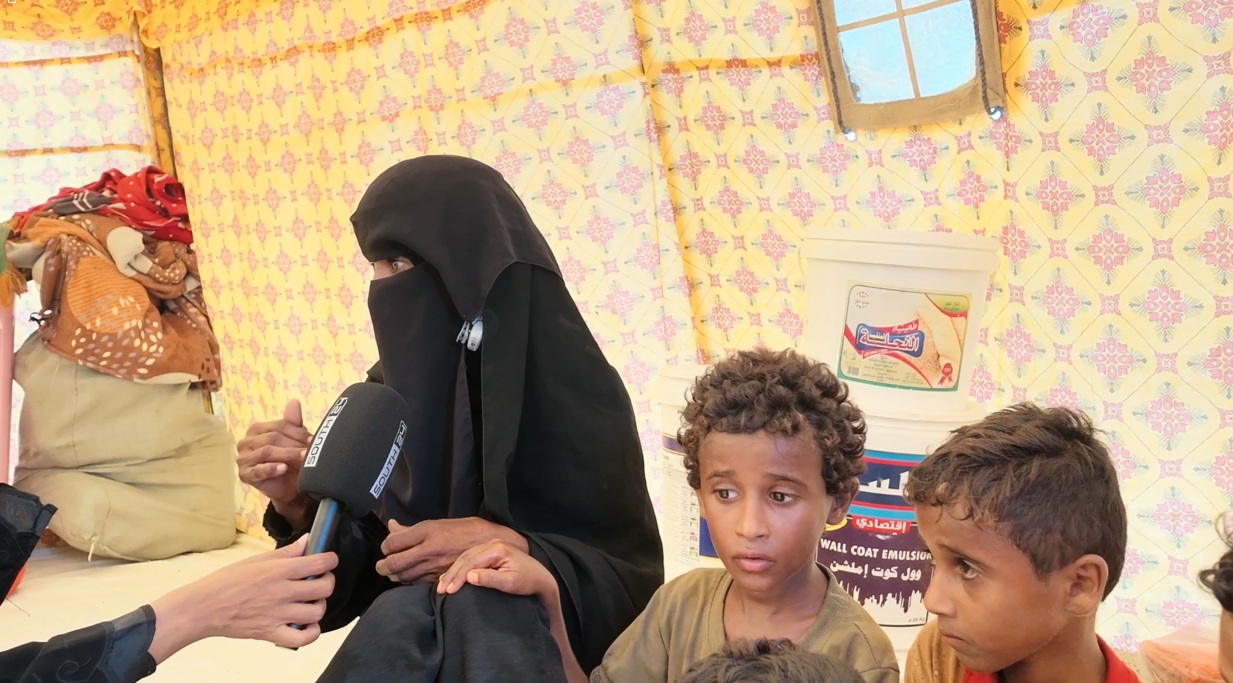
Displaced woman Saeeda Mohammed speaking to South24 Center at Al-Firdous camp, west of Aden, November 10, 2026.
The loss of the ability to support their families has emerged as one of the most significant aspects of the displacement crisis. Salmeen Taha, 58, is staying at Al-Qadisiyah School in the Sabir area of Tuban District. He fled Lower Al-Mudharabah at night because of shelling and lost his livestock, which had been his source of livelihood.
He says the aid is insufficient and that securing food and basic necessities has become difficult. A man who once relied on his own work to support his family is now dependent on relief assistance.
In one of the classrooms at Samia Mabrouk School in Sabir, 68-year-old Rashida is staying. She left Al-Mudharabah with her daughters and several neighbors after conditions there became increasingly dangerous.
She told South24 Center about the cold, hunger, shortages of food aid and shelter supplies. Her advanced age makes access to adequate living conditions and healthcare even more urgent.
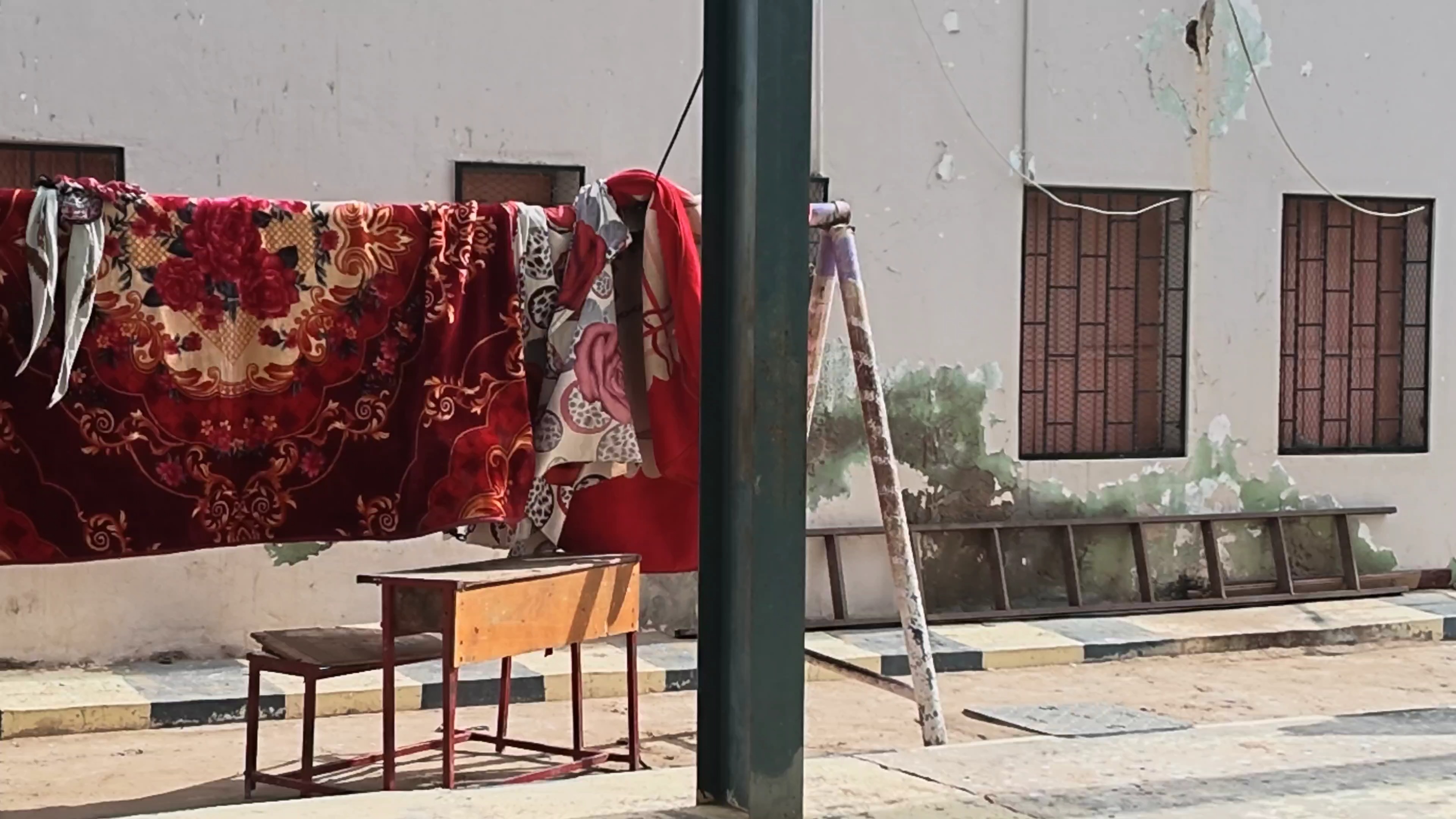
Blankets hanging beside a school desk at Al-Qadisiyah School, which is sheltering displaced people in Tuban District, Lahj, November 12, 2026 (South24 Center).
Schools Become Shelters for Displaced People
Al-Firdous camp was established in mid-September 2026 in Ras Imran, Al-Buraiqa District, west of Aden, to receive families fleeing the western coast and parts of Taiz and Lahj. Mohammed Al-Soufi, director general of the Executive Unit for the Management of Displacement Camps in Aden, said the number of displaced people arriving in the city had reached approximately 10,398.
Speaking to South24 Center, Al-Soufi said the local authorities, led by Governor Abdulrahman Al-Sheikh, oversaw the camp's establishment and equipped it with health and shelter facilities, as well as food, sanitation, and electricity. The camp had previously received 1,138 families, while Al-Firdous 2 camp is being prepared to accommodate around 500 additional families in partnership with local organizations.
A temporary school was established inside the camp with a capacity of approximately 900 students, operating on a two-shift system to help prevent children from dropping out of school.
In Lahj, the response took a different form, with some existing schools being used as shelters. Isar Faisal, principal of Al-Qadisiyah School, said the school had received around 50 families daily and had been forced to allocate parts of the building to accommodate displaced people, while classes continued in the remaining sections.
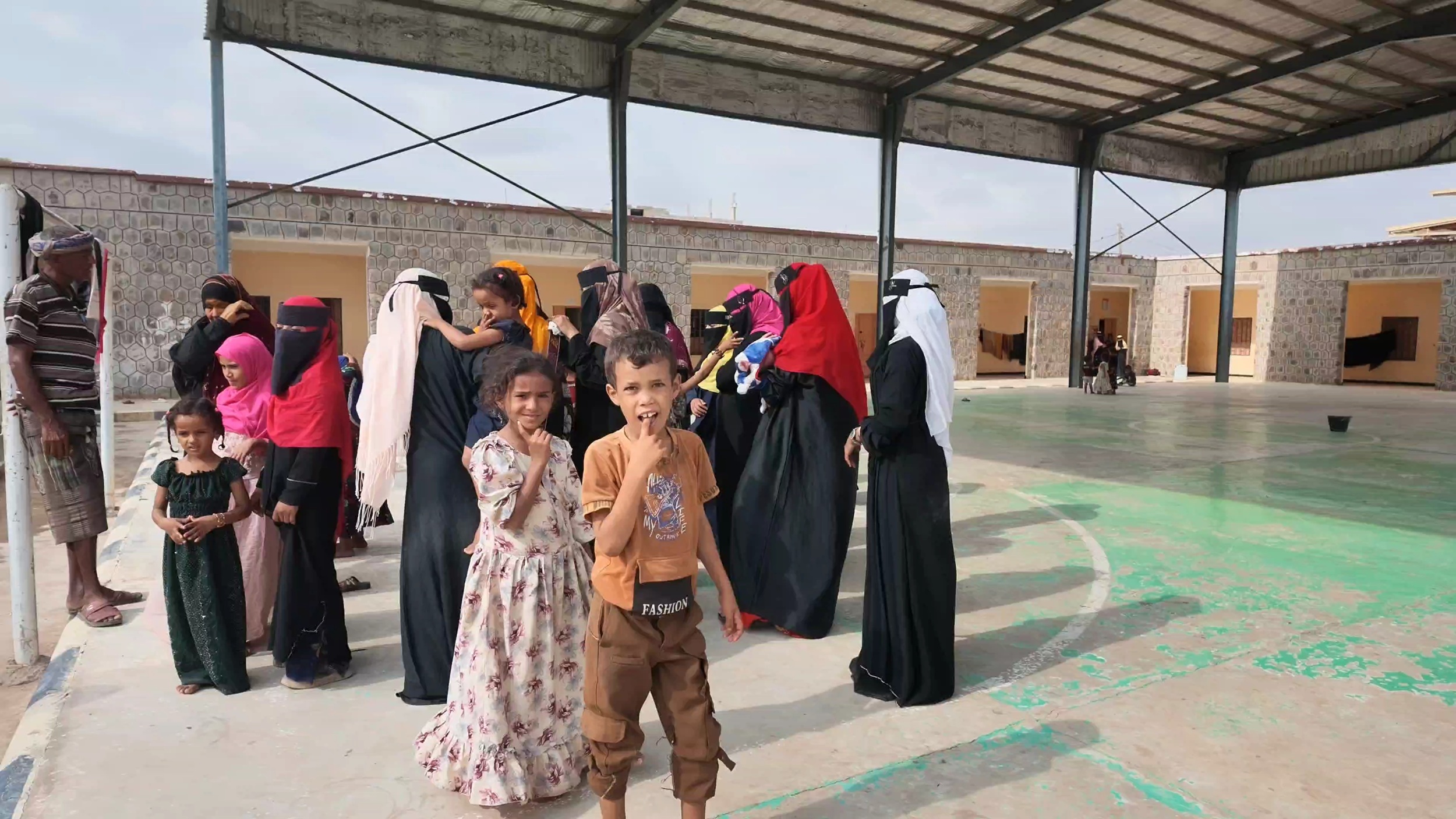
Displaced women and children in the courtyard of Al-Qadisiyah School in Tuban District, Lahj Governorate, November 12, 2026 (South24 Center).
With regular schooling no longer possible, the school administration adopted a rotating schedule, alternating between a school day and a day off. This arrangement has affected attendance and academic achievement, while the school faces shortages of water, food, and shelter supplies.
On September 16, UNICEF announced that more than 137,000 students had been affected by the disruption of classes in 243 schools following the escalation.
Lahj Deputy Governor Dr. Ahmed Ibrahim said the emergency committee and local authorities in Lahj had established the Atirah 1 and Atirah 2 camps in Al-Wahat area of Tuban District, setting up around 100 tents for families unable to find suitable accommodation. Food assistance reached approximately 3,000 families, while an additional 1,500 families still need assistance.
The response becomes more challenging when shelter conditions intersect with health problems. Dr. Samira Omar, a physician with the mobile health clinic operated by Samaritan's Purse, explained that the teams work in coordination with the health office as part of interventions involving medical teams and mobile clinics supported by UNICEF and other organizations.
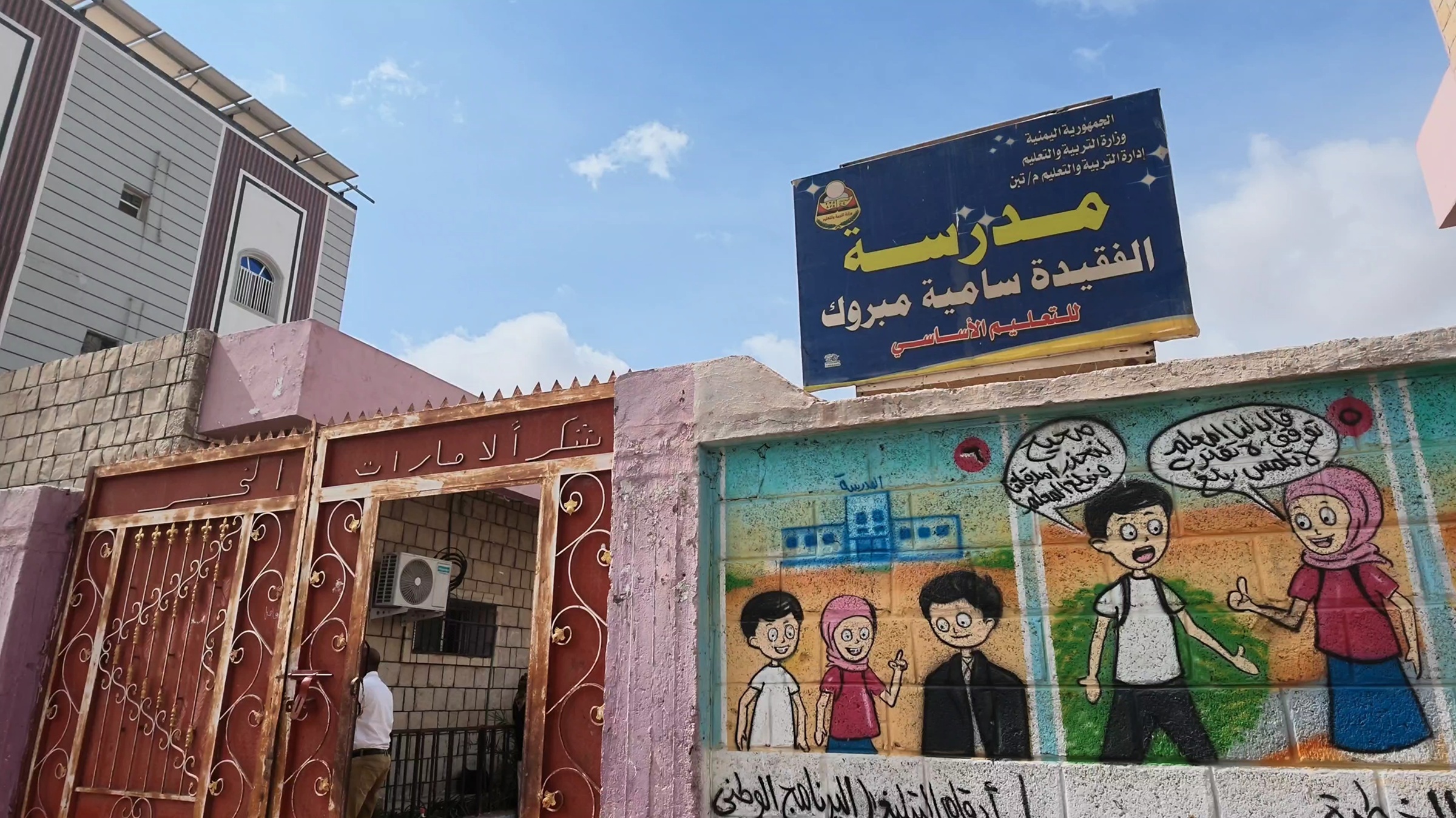
Entrance to Samia Mabrouk School, which is sheltering displaced families in Tuban District, Lahj Governorate, November 12, 2026 (South24 Center).
According to the physician, the teams receive around 200 cases a week, including children, women, and older people. Cases range from diarrhea and psychological trauma to high blood pressure, diabetes, and other illnesses.
She noted that women are suffering from genital and urinary tract infections, partly due to the lack of adequate toilets and privacy. She also warned that cold-related and respiratory illnesses could worsen as winter approaches, as the tents provide insufficient protection from falling temperatures.
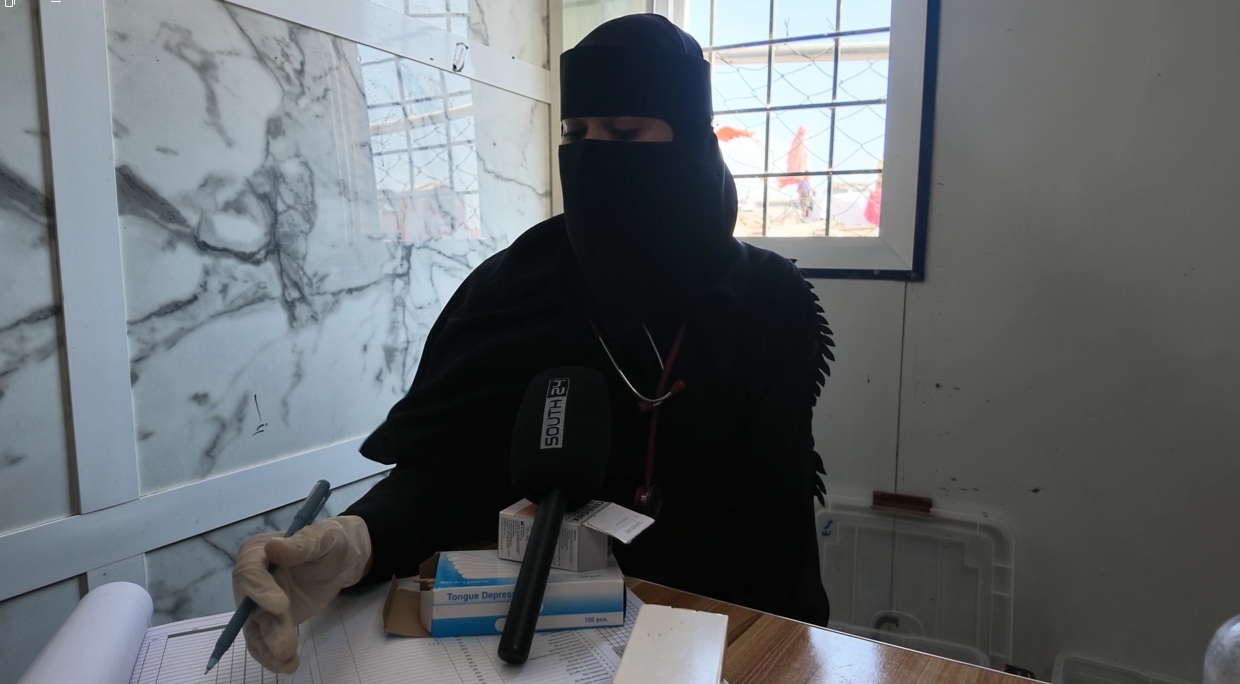
Dr. Samira Omar speaking to South24 Center at Al-Firdous camp, west of Aden, November 10, 2026 (South24 Center).
At the broader level, Minister of State for Displaced Affairs Walid Al-Abara said newly displaced people were distributed across governorates as follows: 53% in Taiz, 35% in Lahj, 7% in Abyan, and 5% in Aden. He explained that the government, in cooperation with partners and the King Salman Humanitarian Aid and Relief Center, had mobilized approximately $65 million, covering only 30% of estimated needs.
Al-Abara described two tracks: an emergency response to meet urgent needs, and a strategic track aimed at facilitating voluntary, safe, and dignified returns, or supporting the integration of displaced people into host communities when returning home is not possible.
However, the gap between emergency relief and the restoration of stability is evident at the sites visited by South24 Center. Expanding tent camps accommodates more families but does not restore their sources of income. Using schools provides displaced people with shelter but puts pressure on education, while healthcare services are left to address illnesses, the effects of loss, and living conditions simultaneously.