SOUTH24 CENTER FOR NEWS & STUDIES
SOUTH24 CENTER FOR NEWS & STUDIES


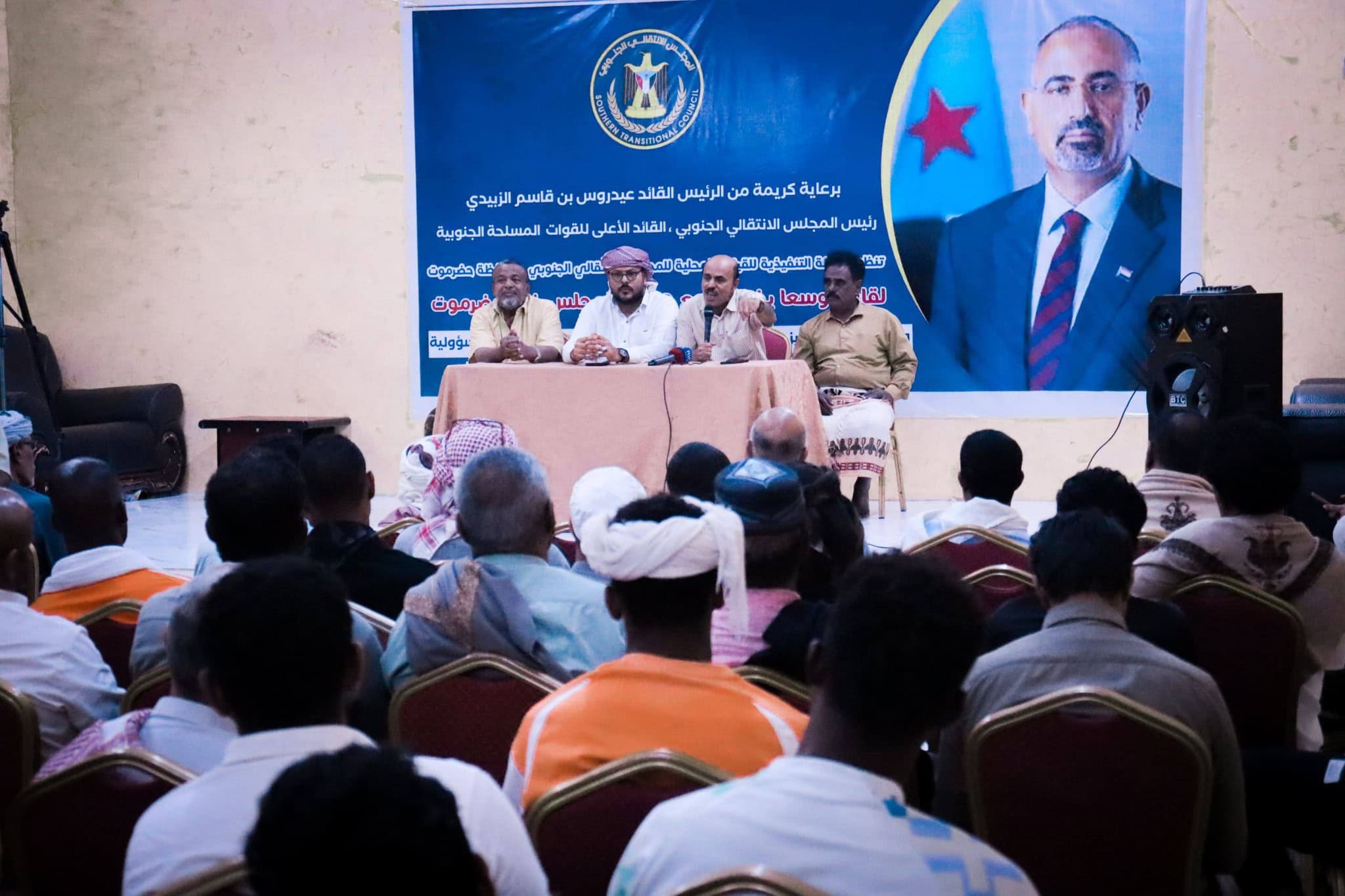
A meeting of the Southern Transitional Council in the Coast of Hadramout, February 25, 2026 (STC Media)
Last updated on: 26-02-2026 at 2 AM Aden Time
Aden (South24 Center)
A senior official of the Southern Transitional Council (STC) has stated that the “Southern National Dialogue is not welcome in Riyadh,” calling for the Council’s delegation to return from the Saudi capital to Aden without preconditions.
Amr Al-Bidh, Special Representative of the STC President for Foreign Affairs, made the remarks during an expanded meeting of the Executive Authority of the Council’s local leadership in the Coast of Hadramout on Wednesday, February 25. He noted that the partnership with the government “was established in 2019,” adding that the current formation represents, in his words, a “de facto government.”
Al-Baid, who participated via video conference, described the city of Mukalla as “the capital of the Arab South’s revolution,” indicating that forthcoming political shifts would originate from there.
His statements coincided with developments in Aden, where the General Assembly of the STC announced the continued closure of its headquarters for the fourth consecutive day. The Assembly said the closure was carried out “under directives from Rashad Al-Alimi,” the head of the Presidential Leadership Council.
It affirmed that its members and staff continue to attend peacefully, holding the relevant authorities responsible for what it described as the “closure and escalation.”
The Assembly also condemned the removal of a portrait of STC President Aidarous Al-Zubaidi from its building, describing the act as “vandalism and a provocation to the sentiments of the people of the South.”
On February 23, a security force reportedly prevented staff of the STC General Secretariat from entering their headquarters in Aden, according to local sources.
STC official spokesperson Anwar Al-Tamimi accused Presidential Leadership Council Chairman Rashad Al-Alimi of issuing the directives, describing the move as a “blatant assault” on national political institutions.
Al-Tamimi stated that preventing the General Secretariat from operating, following the closure of the General Assembly and the Foreign Affairs Authority on February 22, constitutes a “transparent attempt to paralyze the South’s institutions and impose a new reality by force,” warning of escalating political repercussions in the city.
On February 22, Saudi-backed security forces closed the headquarters of the General Assembly and the Foreign Affairs Authority in the Tawahi district. The measures were later expanded to include the General Secretariat, effectively placing the Council’s three principal institutions out of service in a step that has deepened tensions within the anti-Houthi camp in South Yemen.