SOUTH24 CENTER FOR NEWS & STUDIES
SOUTH24 CENTER FOR NEWS & STUDIES


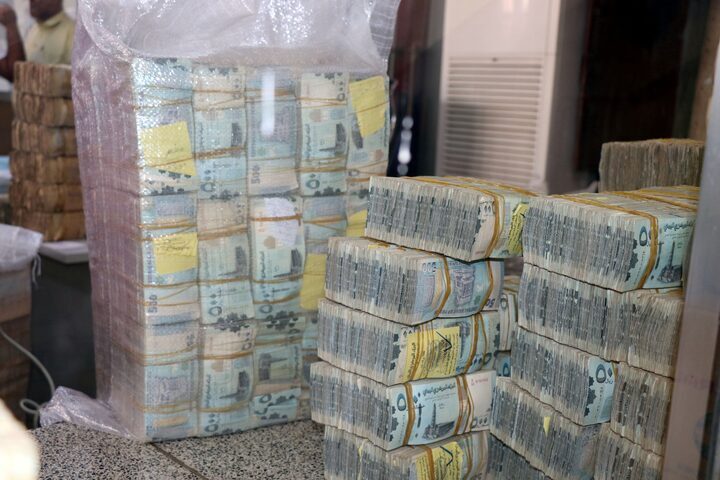
Bundles of Yemeni rial banknotes are pictured at the Central Bank of Yemen in Aden, Yemen December 13, 2018. REUTERS/Fawaz Salman
03-03-2026 at 2 AM Aden Time
Aden (South24 Center)
Financial markets in the city of Aden and other areas under the control of the internationally recognized Yemeni government are facing a severe shortage of local currency liquidity, leading to an almost complete disruption of exchange operations and intensifying living pressures on residents.
Residents in the southern governorates said exchange companies and financial platforms have halted the conversion of foreign currencies into Yemeni rials or imposed a low daily cap equivalent to no more than 100 Saudi riyals per customer. Customer data is reportedly being circulated to prevent individuals from repeating transactions at other exchange outlets.
In many cases, exchange shops have refused to carry out any transactions, citing a lack of liquidity. This has led to crowding outside some branches and widespread public frustration, according to local accounts.
Residents say they are unable to convert their foreign currency savings to cover basic needs, while monetary authorities insist that the situation remains under control.
The Central Bank of Yemen discussed the liquidity shortage during a meeting on February 12, authorizing its board to take measures to address the situation, after previously denying the existence of a crisis threatening financial activity.
#ADEN
— South24 | English (@South24E) March 2, 2026
Exchange rates of the US dollar and Saudi riyal against the Yemeni rial #south24 pic.twitter.com/pCx0mdILyp
The developments come as the Yemeni rial recorded a modest improvement of around 3.65% against foreign currencies in recent weeks. The central bank set the exchange rate for the Saudi riyal at 410 rials for purchase.
However, this improvement has not been reflected in food and essential commodity prices, which have continued to rise, according to traders and consumers, underscoring persistent inflationary pressures and the limited impact of monetary policy on purchasing power.
The new government headed by Shaya Al-Zindani faces significant economic challenges amid a deepening liquidity crisis and deteriorating public services. Observers say the economic file will be the most critical test of its performance in the coming period.
Read more at: The New Yemeni Government: Composition and Prospects
On February 25, Reuters quoted a Saudi official as saying that Saudi Arabia had provided 1.3 billion Saudi riyals (approximately $346 million) to support the salaries of Yemeni government employees and help cover the budget deficit.