SOUTH24 CENTER FOR NEWS & STUDIES
SOUTH24 CENTER FOR NEWS & STUDIES


Panel Discussion
Last updated on: 16-03-2026 at 5 PM Aden Time

Panel Discussion (South24 Center)
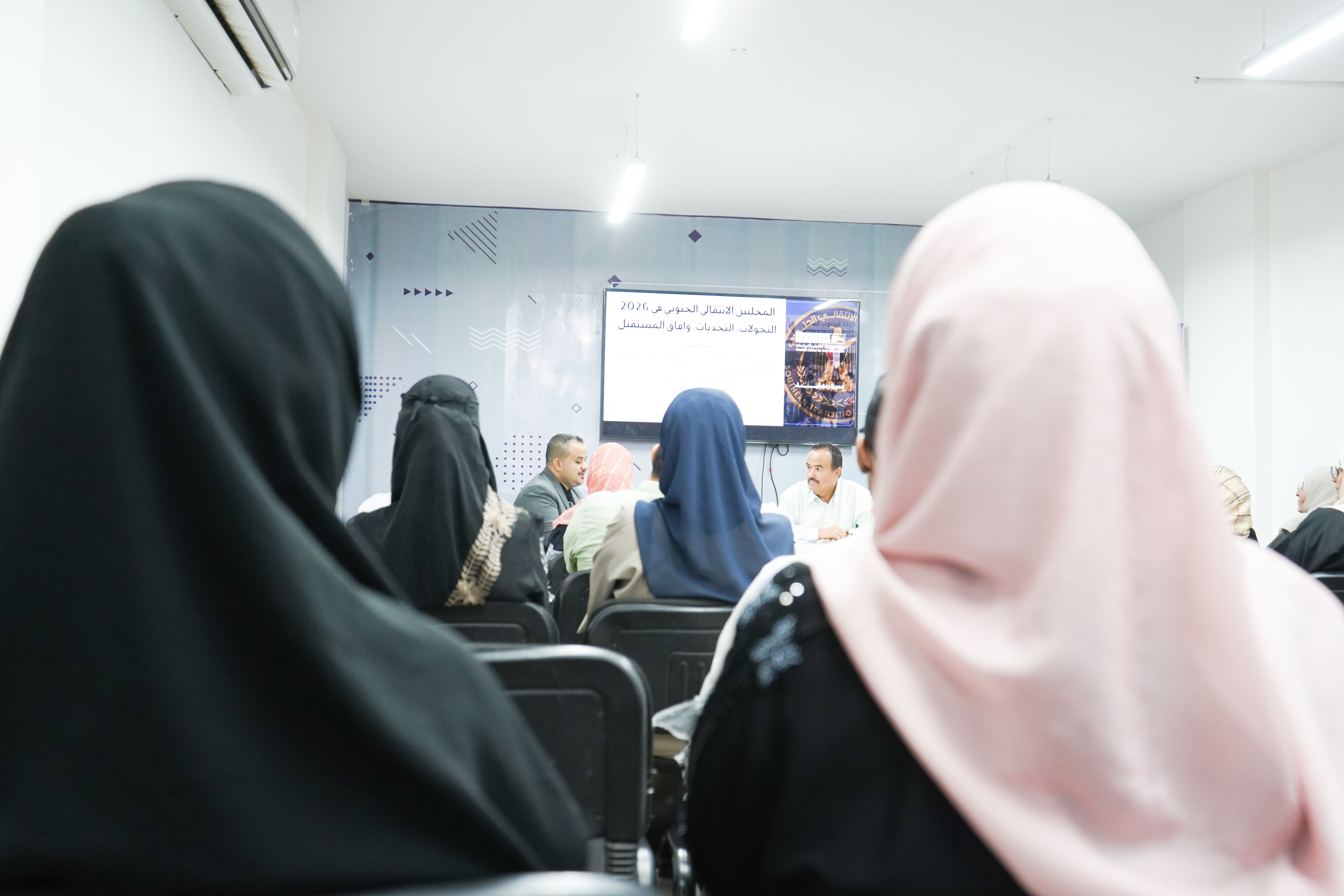
South24 Center for News and Studies Organized a panel discussion titled:"The Southern Transitional Council in 2026: Transformations, Challenges, and Future Prospects," on March 8, 2026, in Aden.
Participant in the Ramadan evening session discussed the status of the Southern Transitional Council (STC) considering the rapid political transformations the South has witnessed since late 2025.
They highlighted the failures of the experience and the challenges of the current stage, as well as potential scenarios for the future of the Council and the South cause.
The evening witnessed a candid discussion among the speakers regarding the causes of the crisis facing the STC, amid recent political and security developments, including the closure of some of its headquarters, the political pressures it faces, and the controversy sparked by the announcement of the Council's dissolution from Riyadh earlier this year.
The panel discussion featured contributions from Dr. Yahya Shaif Al-Shuaibi, head of the STC Coordination at the University of Aden; Dr. Fadel Al-Rubaie, academic and researcher; Dr. Ohad Mohammed, head of the Academic Education Department at the STC’s Education, Youth, and Sports Commission; and journalist Salah Al-Saqladi. The discussion was moderated by Jaqoub Al-Sufyani, Director of the South24 Regional Office in Aden.
The panel discussion addressed three main axes focusing on the failures of the STC experience and the challenges of the current stage, its role in the present context, and the future prospects of the South in light of regional and local political developments.
The Experience Failures and Challenges of the Phase
In the first axis of the panel discussion, speakers focused on evaluating the experience of the Transitional Council since its establishment in 2017, presenting various readings on the causes of the failures it faced over the past years.
Academic and researcher Fadel Al-Rubaie considered that one of the most prominent failures of the experience was the weakness in building intellectual and knowledge institutions linked to the Council. He noted that the Council did not succeed in investing in think tanks and scientific elites capable of influencing regional and international decision-making centers.
Al-Rubaie stated, "The first failure was the lack of focus on intellectual output and minds," explaining that many centers associated with the Council "were dealt with according to calculations of loyalty or personal gain, which alienated many scientific elites capable of influencing decision-makers."
He also pointed out that the duality in exercising power constituted one of the main challenges, explaining that the Council's participation in "Legitimacy" institutions while simultaneously adopting an independent political project created a state of contradiction in its political position.
He added that the inflation of organizational structures within the Council was among the issues that affected its relationship with the grassroots, explaining that the expansion of organizational titles and the distribution of financial resources "led to the weakening of internal criticism and distanced the Council from listening to other opinions."
Al-Rubaie also touched upon the management of regional relations, stressing that the Council needed to achieve a greater balance in its relations with regional powers, especially Saudi Arabia and the UAE, calling for a reconsideration of the nature of these relations.
For his part, Dr. Yahya Shaif Al-Shuaibi rejected the characterization of what occurred as merely internal failures, considering that the challenges faced by the Council are primarily linked to the existence of a "disruptive party" in the Yemeni political scene.
He noted that the Southern cause dates back to the post-1994 war period, emphasizing that the Transitional Council came as a result of a long struggle pursued by the people of the South over the past decades.
Al-Shuaibi said that much of what is described as failures "cannot be evaluated in isolation from the complex political environment in which the Council operates," adding that the political partnership that emerged after the Riyadh Agreement created significant contradictions in managing the stage.
He also considered that the political pressures the Council has been subjected to recently, including the closure of its offices and the pursuit of some of its leaders, represent part of the attempts to weaken the political carrier of the South cause.
In contrast, journalist Salah Al-Saqladi presented a more candid critical reading of the Council's experience, considering that some of the crises it faces today stem from internal errors that accumulated over the past years.
Al-Saqladi said that the problem relates not only to failures but to the existence of political and organizational errors within the Council, noting that some fateful decisions were not discussed within the organizational bodies supposed to participate in decision-making.
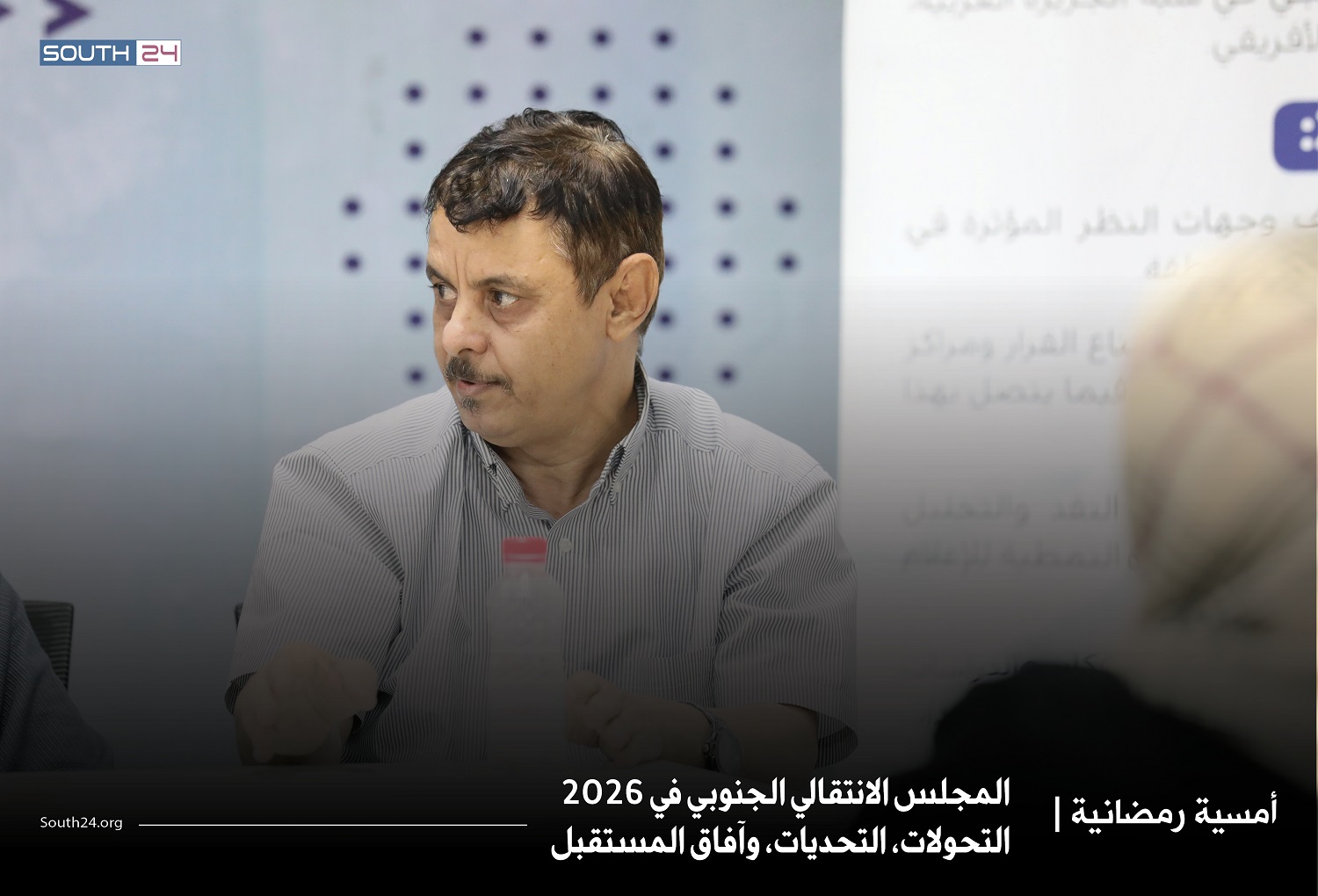
Salah Al-Saqladi
He added that among these issues is nepotism within the decision-making circle, alongside what he described as the spread of regionalist (tribal/zonal) tendencies within some organizational structures, stressing that addressing these problems requires acknowledging them first.
Despite this, Al-Saqladi emphasized that the current targeting of the Transitional Council goes beyond targeting a specific political organization, considering that "targeting the STC is targeting the Southern cause itself."
However, Dr. Ohad Mohammed rejected the narrative that decision-making within the Council is centralized in a narrow circle or by individual decision, asserting that decisions within the STC are made through consultative mechanisms and deliberations among its leadership. She explained that the President of the Council, Aidarous Al-Zubaidi, "does not make his decisions unilaterally," but rather issues are presented for discussion and voting within the leadership bodies.
She touched upon the circumstances that accompanied the travel of some Council leaders to Riyadh, noting that the leaders who participated in that visit had previously discussed the objective of participation, which is the adherence to the demand for the restoration of the Southern State. She added that those leaders "did not expect the imposition of restrictions such as house arrest, the confiscation of passports, or the imposition of certain decisions upon them."
Ohad emphasized that the Transitional Council derives its legitimacy primarily from the popular mandate in the South, considering that the party with the right to determine its fate is the Southern grassroots. She said that the popular reactions and protests witnessed in Southern cities following the announcement of the Council's dissolution reflect the continued popular support for the Council.
The Transitional Council Future and its Role in the Current Phase
In the second axis of the seminar, participants discussed the position of the Southern Transitional Council in the current political landscape, in light of the developments the Southern arena has witnessed in recent months, including the political and security pressures the Council has faced, the closure of some of its headquarters, and the controversy surrounding the announcement of its dissolution from Riyadh.
In this context, Dr. Fadel Al-Rubaie considered that understanding the future of the Council requires reading the scene within the broader context of the Yemeni crisis, stressing that any political movement seeking to lead a national project needs three basic pillars: a political organization capable of mobilization, a military force that protects the political project, and external relations that provide regional and international cover.
Al-Rubaie explained that these pillars were not available to the people of the South before 2015, due to the policies pursued by the Sanaa regime after the 1994 war, which aimed—according to him—to dismantle Southern political organizations, weaken military institutions, and sever any extension of foreign relations.
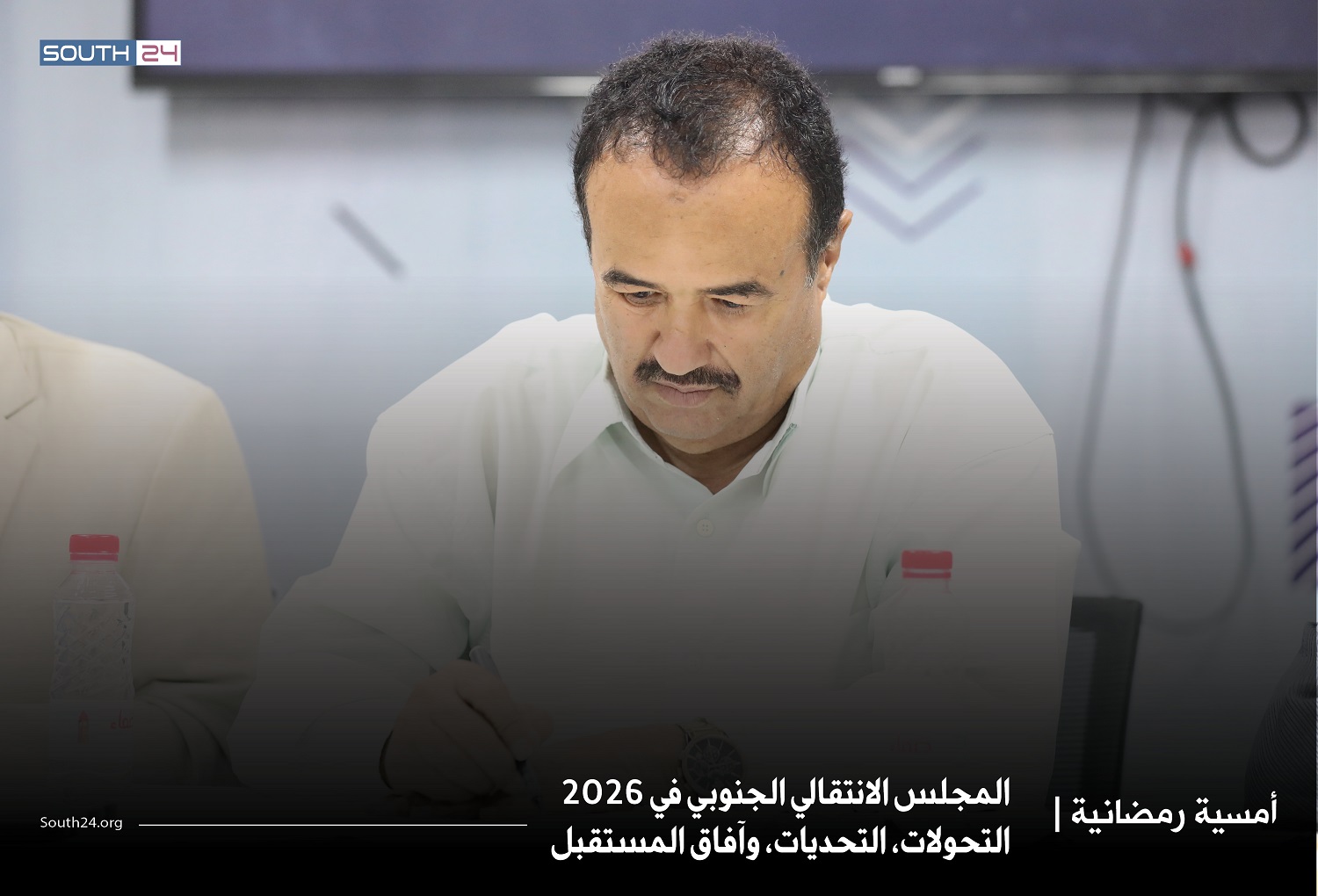
Dr. Fadel Al-Rubaie
He noted that the Transitional Council came essentially as an attempt to rebuild these three elements, but it faces major challenges today that threaten its cohesion, in light of the political pressures it has faced recently.
He said that what is happening cannot be considered the end of the Council, but it represents a moment of temporary setback that could turn, if invested correctly, into an opportunity to rebuild the political project on more solid foundations.
Al-Rubaie also warned of the repercussions of continued regional disputes on the Southern scene, noting that the worsening competition between regional powers might lead to the division of the Southern forces themselves if the balance of foreign relations is not maintained.
For her part, Dr. Ohad Mohammed provided a different reading of the Council's reality in the current phase, emphasizing that the challenges facing the Council, including the closure of headquarters and the delay of salaries for some of its employees, did not lead to the cessation of its activities or a decline in its presence among the grassroots.
She said that the closure of some offices "will not stop the Southern cause," noting that the Council's activities continue in various governorates through political, cultural, and sporting events, alongside the protest vigils organized by its supporters in protest against the closure of its offices.
She added that the delay and reduction of salaries recently did not prevent many of the Council's cadres from continuing their activities, considering that the Southern cause for them transcends material considerations.
She also pointed out that the Council still enjoys broad popular support in the South, emphasizing that this support represents a fundamental element in the Council's ability to remain resilient in the face of current political pressures.
In turn, Dr. Yahya Shaif Al-Shuaibi focused on the popular dimension of the Transitional Council's legitimacy, considering that the pressures the Council faces today have not led to the weakening of its popular base, but rather—in his view—to the strengthening of popular alignment around it.
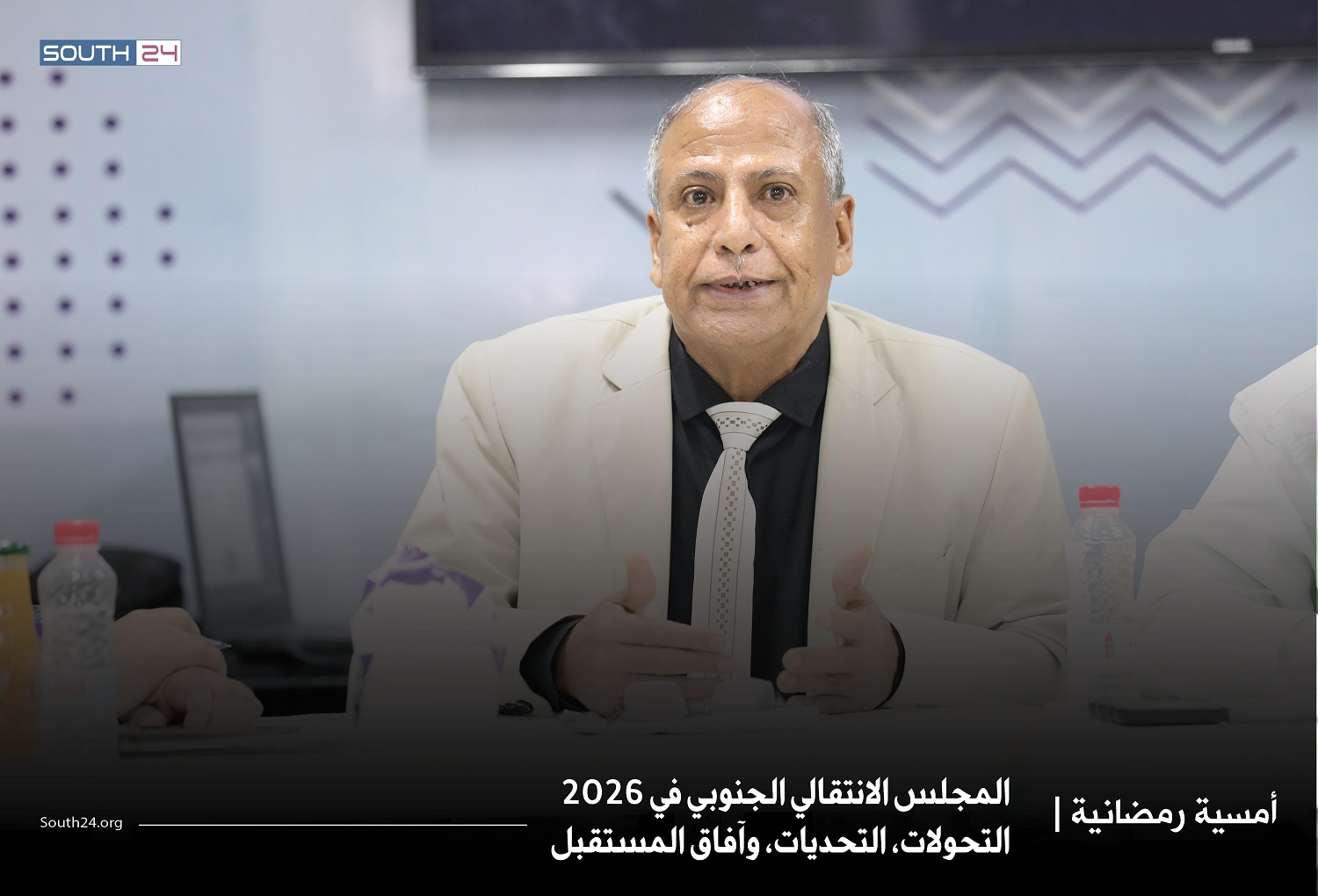
Dr. Yahya Shaif Al-Shuaibi
He said that the Southern people "have proven over the past decades a great capacity for resilience," noting that attempts to target the political carrier of the Southern cause did not lead to its collapse, but rather to increased popular mobilization around it.
Al-Shuaibi considered that the primary battle in the current phase is the battle of political awareness, stressing that maintaining the unity of the South and enhancing awareness of the Southern cause represent decisive factors in determining the future of the Council.
In contrast, journalist Salah Al-Saqladi provided a more cautionary reading of the Council's future, noting that the pressures the Council is facing are not limited to political measures, but also include attempts to polarize some political and military leaders from within it.
He explained that this type of pressure might lead to weakening the Council from within if it is not handled with caution, emphasizing that the greatest challenge lies in maintaining the cohesion of the Council's organizational structure under these circumstances.
Future Prospects of the South (Forecasting and Scenarios)
In the third and final axis of the seminar, the discussion moved to forecasting potential scenarios for the future of the Southern Transitional Council and the South cause in light of current political developments.
Al-Rubaie saw that the current scene remains open to several possibilities, but he warned that the continuation of the current path might lead to attempts to reshape the political scene in the South by dismantling the Transitional Council and producing alternative entities.
He noted that some political indicators and discourses circulating recently suggest a trend toward rearranging the Southern scene under the title of creating an atmosphere for a new Southern dialogue. However, he questioned the feasibility of such steps if they target a specific political party to the exclusion of others.
He said that talking about the dissolution of the Transitional Council under the pretext of preparing for a Southern dialogue raises questions about why this specific entity is being targeted rather than other political forces, warning that dismantling the main political carrier of the Southern cause might open the door to a broader dismantling of the political and social fabric in the South.
Al-Rubaie also noted that the continued tension in the relationship between some regional powers might negatively reflect on the Southern interior if regional disputes turn into internal conflicts between local forces.
For her part, Dr. Ohad Mohammed emphasized that the future of the Transitional Council is linked to its ability to develop its political and organizational tools in the coming phase, noting that the popular protests witnessed in Southern cities during the past period reflect the continued mass presence of the Council.
She said that the current phase requires the STC leadership to adopt strategic steps that go beyond popular protests, by developing clear plans for managing the next stage and enhancing institutional work within the Council.
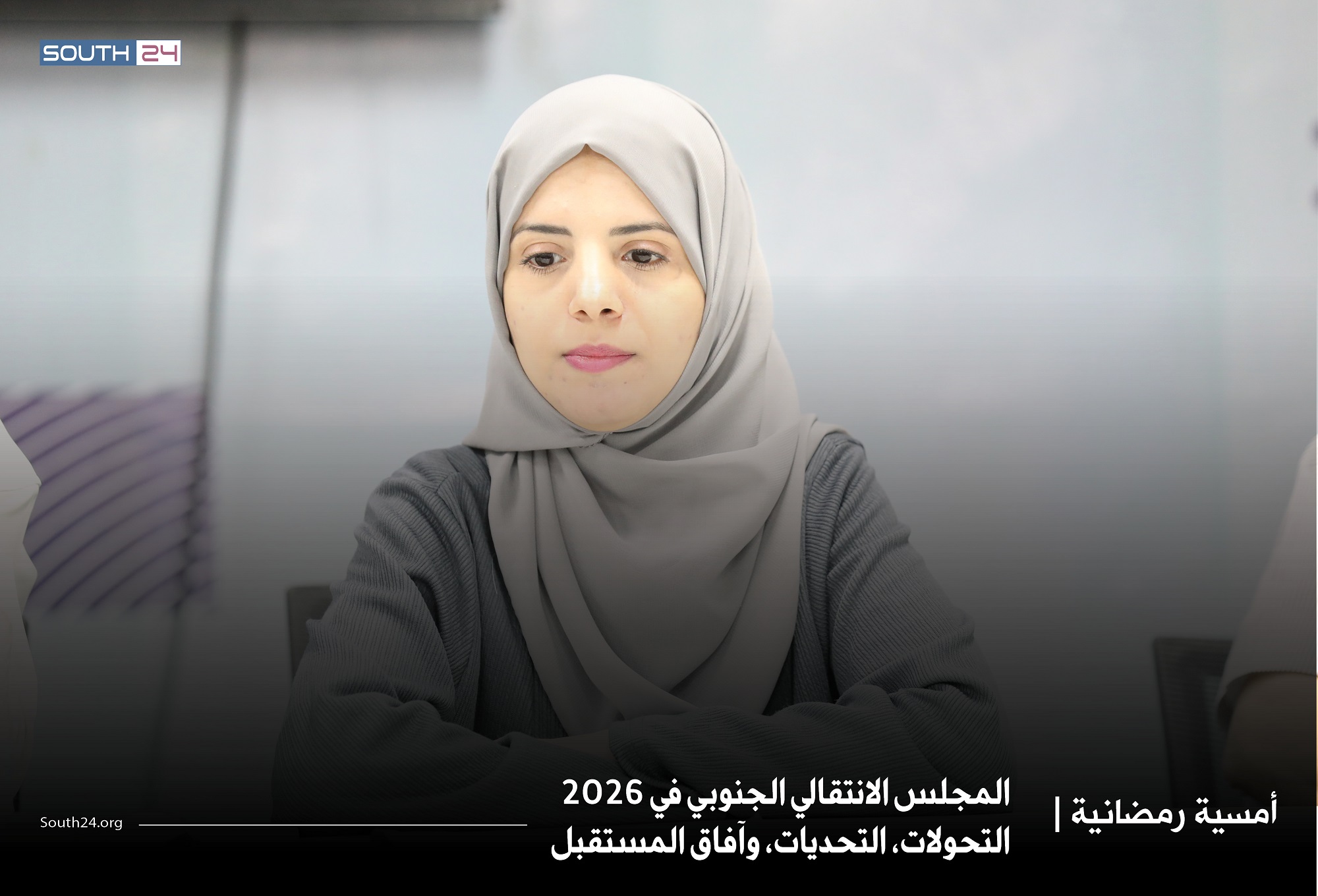
Dr. Ohad Mohammed
As for Dr. Yahya Shaif Al-Shuaibi, he focused in his intervention on the importance of enhancing political awareness in Southern society as a decisive factor in determining the outcomes of the coming stage.
He said that the political experience the South has undergone over the past decades has contributed to forming an advanced political consciousness within Southern society, which appeared—according to him—in the broad popular reactions witnessed in Southern cities during recent months.
He considered that the battle in the next stage is not only military or political but is also a battle of awareness, he emphasised that maintaining unity among Southern ranks and enhancing organized political work represent two essential conditions for preserving the Southern political project.
In contrast, journalist Salah Al-Saqladi warned that the next stage might witness attempts to re-engineer the political scene in the South by polarizing political and military leaders and reshaping the balance of power within the Transitional Council itself.
He noted that this scenario might open the door to the emergence of new political entities or the reproduction of alternative Southern components if the current crisis is not handled with political wisdom.
He added that the greatest challenge facing the Transitional Council in the coming phase lies in its ability to conduct a genuine internal review of its political experience, alongside re-formulating its regional relations to ensure a greater degree of balance in managing alliances.