SOUTH24 CENTER FOR NEWS & STUDIES
SOUTH24 CENTER FOR NEWS & STUDIES


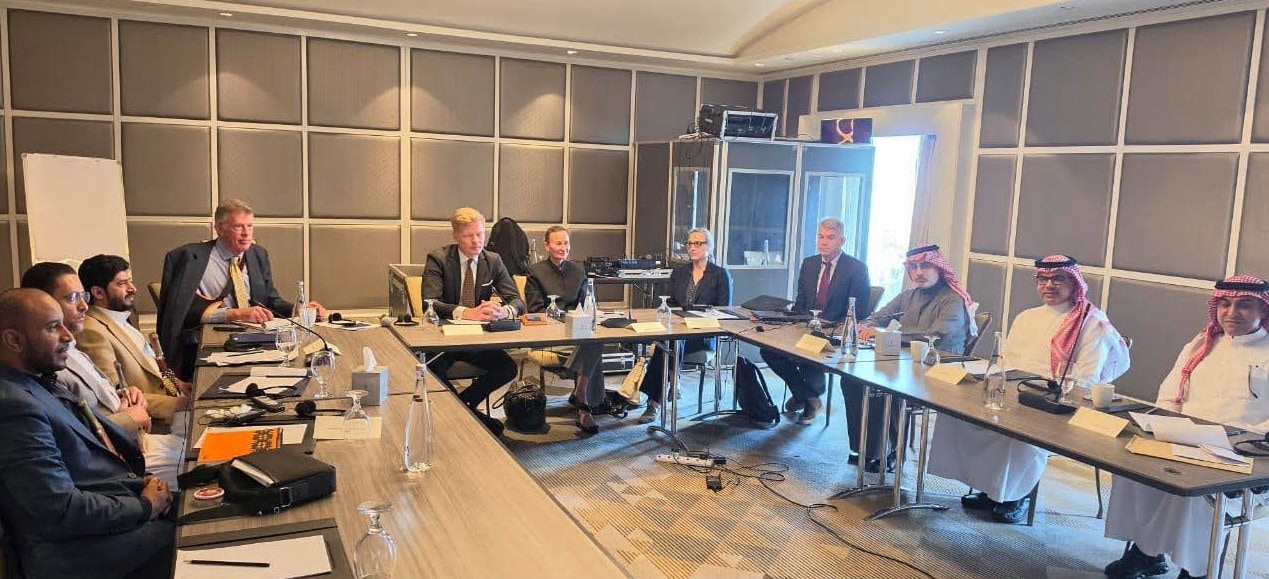
Office of the UN Special Envoy for Yemen
Last updated on: 22-04-2026 at 6 PM Aden Time
Aden (South24 Center)
The Office of the UN Special Envoy for Yemen concluded on Tuesday (April 21) a new round of technical meetings for the Military Coordination Committee in the Jordanian capital, Amman, in a move that has reignited debate over the possibility of reviving the stalled “Roadmap” track.
According to the UN office statement, the meetings were held from April 19 to 20 and brought together committee representatives from Riyadh and Sanaa, building on previous meetings that had included representatives from the Yemeni government and the Joint Forces Command.
Participants discussed the current situation in Yemen and the region, exploring ways to enhance security for Yemenis through de-escalation and continued dialogue, while reaffirming the parties’ commitment to engaging in an ongoing negotiation process.
The statement added that, based on this commitment, the Office of the Special Envoy intends to convene upcoming meetings bringing together the three committee delegations in the coming period, indicating a potential expansion of participation.
In parallel, Houthi-affiliated media outlets framed the consultations as bilateral talks between Riyadh and Sanaa, describing them as a direct negotiation track under UN auspices within broader de-escalation efforts.
Al-Masirah TV reported that discussions addressed ceasefire arrangements and efforts to enhance stability, as well as creating conditions for continued dialogue. It also focused on the Saudi role, arguing that Riyadh’s direct engagement reflects its position as a party to the conflict rather than a mediator.
The Houthi-run channel further stated that the Amman consultations were conducted between Riyadh and Sanaa while excluding what it described as “mercenaries,” in reference to the internationally recognized Yemeni government.
In a related context, Abu Baker al-Qirbi, former Yemeni Foreign Minister, said the meetings represent “an indication of the beginning of implementing the Roadmap understandings” announced by the UN Envoy in December 2023, expressing hope they would lead to negotiations resulting in a comprehensive and sustainable peace.
This development comes amid shifts in South Yemen over recent months that have reshaped the balance of power on the ground, following the withdrawal of Southern Transitional Council (STC) forces from Hadramout and Al-Mahra under Saudi airstrikes, and the deployment of locally-backed formations supported by Riyadh in their place.
In this context, Amr al-Bidh, the Representative of the STC President for Foreign Affairs, said on April 19 that there is a “trend by Saudi Arabia and the Houthis to push the Roadmap forward again,” warning of arrangements that may be imposed without internal consensus.
The Southern Transitional Council continues to oppose the Roadmap, arguing that it does not reflect the actual balance of power and fails to meet Southern aspirations. It has also stressed in previous statements that oil resources in Hadramout and Shabwa “are not subject to bargaining” in any political settlement.
The Roadmap is a framework of understandings on Yemen reached between Saudi Arabia and the Houthis through direct bilateral consultations mediated by Oman, without the participation of the internationally recognized Yemeni government.
The agreement was close to being signed in late 2023 before the Houthis launched a maritime military campaign targeting vessels passing through the Bab al-Mandab Strait amid the Gaza war, leading to its suspension.