SOUTH24 CENTER FOR NEWS & STUDIES
SOUTH24 CENTER FOR NEWS & STUDIES



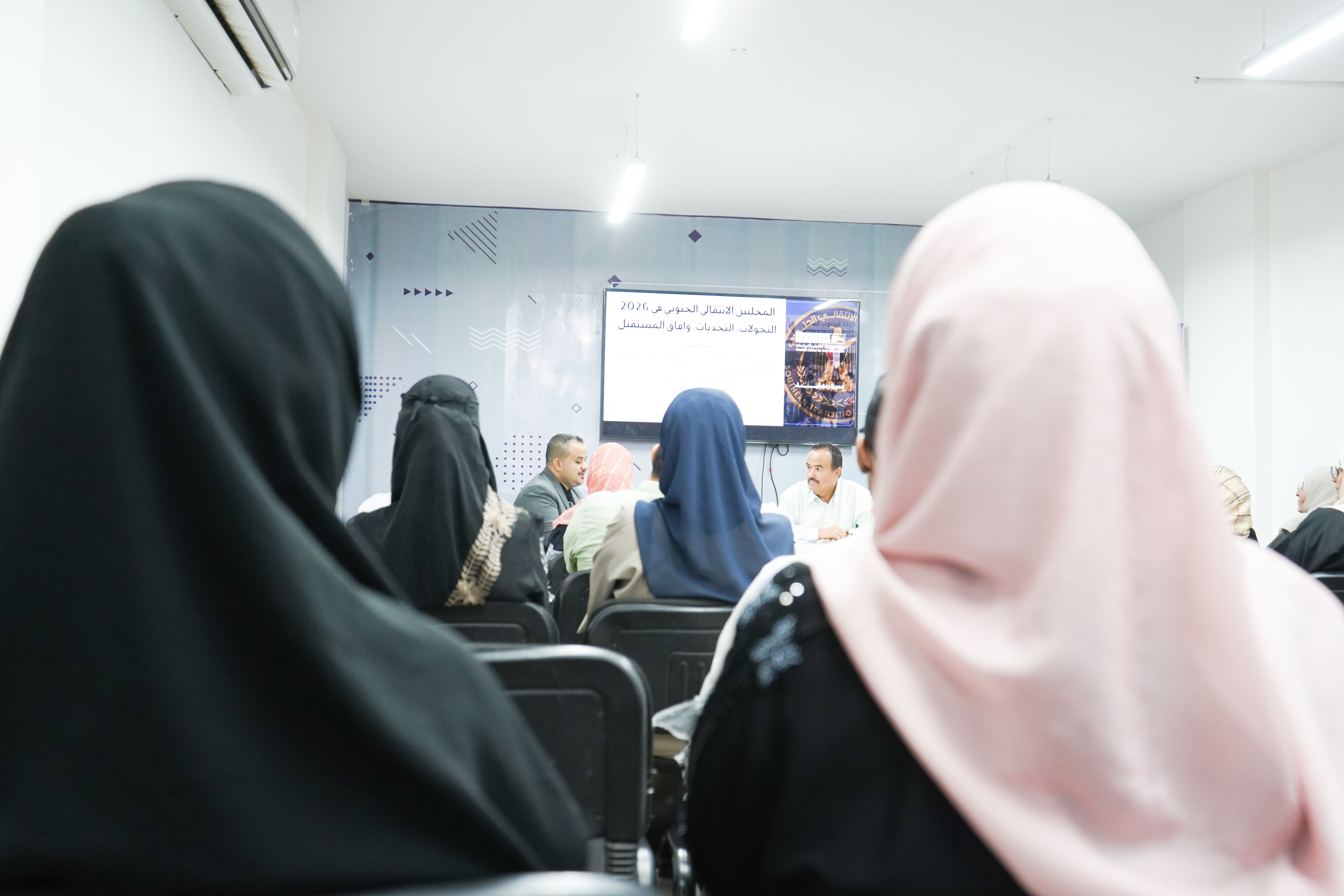
The Panel discussion (AI-generated image)
Last updated on: 27-05-2026 at 2 AM Aden Time

Panel Discussion | South24
A panel discussion organized by the South24 Center for News and Studies examined the prospects of designating the Muslim Brotherhood in Yemen — politically represented by the Yemeni Congregation for Reform, known as the Islah Party — as a U.S.-designated terrorist organization. The discussion came amid escalating international debate surrounding branches of the Muslim Brotherhood and growing scrutiny of the nature of transnational political networks and their implications for state security and stability.
The panel was held in the context of recent U.S. measures targeting several Muslim Brotherhood branches across the region. On January 13, 2026, the U.S. Department of State designated the Lebanese branch of the group as a Foreign Terrorist Organization and listed its Egyptian and Jordanian branches as Specially Designated Global Terrorist entities. On March 9, the Sudanese branch was also added to the list, reflecting an increasingly hardline U.S. approach toward the Muslim Brotherhood and its regional affiliates.
However, these measures did not include Yemen’s Islah Party, despite ongoing debate over its historical and organizational ties to the Muslim Brotherhood. The panel explored the reasons behind this exception and whether it reflects Yemen’s internal complexities, Saudi-American strategic calculations, or a preference for targeted sanctions against specific individuals and entities rather than designating the party as a whole.
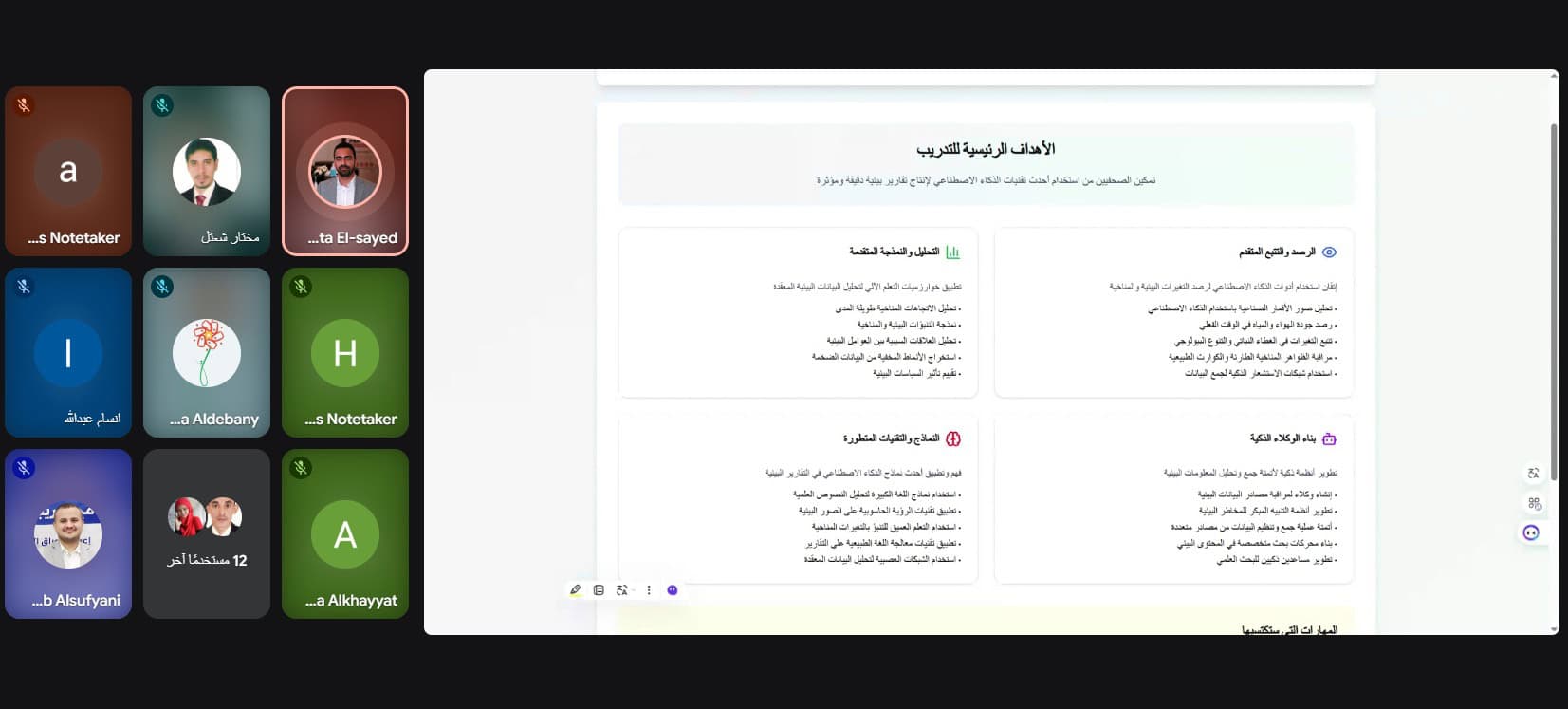
The discussion, organized by the South24 Center for News and Studies via Zoom on Saturday, May 23, was titled:
“Prospects for Designating the Muslim Brotherhood in Yemen as a Terrorist Organization”
The panel featured:
• Fernando Carvajal, American researcher and political analyst, and former member of the UN Panel of Experts on Yemen and the UN Security Council sanctions committee.
• Hani Mashour, political writer, researcher, and journalist at Sky News Arabia.
• Abd Al-Sattar Al-Shamiri, researcher and political analyst.
• Mohamed Fawzi, Egyptian researcher specializing in regional security, non-state armed actors, extremism, and terrorism.
The session was moderated by Farida Ahmed, Executive Director of the South24 Center, with simultaneous interpretation provided in both Arabic and English.
In her opening remarks, Farida Ahmed stated that the issue of the Muslim Brotherhood has witnessed growing international scrutiny and debate in recent years amid broader transformations linked to counterterrorism concepts, state security, and transnational political networks. She noted that discussions surrounding the group are no longer limited to its ideological or political dimensions, but now extend to its organizational structures, the role of its local branches, and its impact on stability in several countries.
She explained that the international approach toward the group remains inconsistent, as the latest U.S. designation did not include all branches, including Yemen’s Islah Party, which is widely regarded as one of the most influential political and military actors in the Yemeni landscape, despite ongoing controversy over its relationship with the parent organization.
The panel addressed three main themes: the renewed debate over designation, its causes and developments; the nature of the Islah Party and its relationship with the Muslim Brotherhood since its establishment; and the possible scenarios and implications of any designation for the local and regional landscape.
The U.S. Approach and Saudi Calculations
At the outset of his remarks, Fernando Carvajal said, “The U.S. is using the listing of terrorist organizations as part of its foreign policy in the wider region, not just in relation to the conflict involving Israel in the region.” However, he argued that “Yemen has always been seen as a priority for Saudi Arabia, and because of the relationship between Crown Prince Mohammed bin Salman and President Trump, we can see how Saudi Arabia may be asking for a slower pace against Al-Islah because it directly impacts Saudi security.”
Carvajal explained that the difference between the Barack Obama administration and the Donald Trump administration lies in their respective approaches. “President Obama, who was in office during the Arab Spring, focused on diplomacy and on reaching out to every political actor — in Egypt, for example — in order to stabilize the country in 2011 through the Arab Spring.” In contrast, “with this particular president — Trump — and his domestic need to maintain a facade against radical political Islam, Trump’s advisers are very anti-Muslim Brotherhood. They believe that if the diplomatic approach did not work in 2011 under the Democratic administrations, then perhaps it is time to take this hawkish approach.”
Carvajal also linked this shift to domestic developments in the United States, stating, “There are two components to this hawkish approach to topics like the Muslim Brotherhood. One is domestic, directed at their domestic audience and their base. Let’s admit it, let’s be honest: a very racist, xenophobic base here in the United States that supports the MAGA crowd within the GOP. Domestically, we can see that even before Trump moved against international entities of the Muslim Brotherhood, Texas and Florida moved against so-called Muslim Brotherhood entities in their respective states. We have also seen the MAGA base going after Muslim political figures, whether it is in Minnesota with Ilhan Omar from Somalia, or going against Somalis under a wider umbrella, expanding the criticism of Muslim Americans under the umbrella of the Muslim Brotherhood. Particularly in Texas and Florida, we see these governments going after an organization called CAIR, the Council on American-Islamic Relations. So, from a domestic point of view, this is very much about the MAGA base for this particular president.”
Nevertheless, Carvajal argued that targeting Yemen’s Islah Party may take longer because Yemen has traditionally been viewed as a priority sphere for Saudi Arabia. He added that the relationship between Saudi Crown Prince Mohammed bin Salman and President Trump makes it likely that Riyadh would seek to slow any U.S. move against the party because it would “directly affect” the Kingdom’s security.
Responding to a question about the possibility of expanding U.S. designations to include Yemen, Carvajal said: “In May, right before President Trump visited Riyadh, the U.S. signed an agreement with the Houthis. So, it has basically just been kicking the can down the road. Since the war with Iran started, we know that Saudi Arabia and the Houthis have created an agreement to keep the Houthis out of this war, whether in Bab al-Mandab or by striking Israel.” He added: “We can see these events give us a precedent to think that the U.S. is being asked to slow down until after the war with Iran ends, because Saudi Arabia has literally placed the Islah Party as the face of the new regime in South Yemen across the liberated areas since January 2026. Saudi Arabia has placed Islah to go after the Southern Transitional Council. Islah is encircling the Presidential Leadership Council, even though it has only one seat in the PLC. We know that Islah is basically encircling and is now in charge of the southern provinces, and Saudi Arabia cannot afford for the U.S. to be very hawkish against Islah in any shape or form until the war with Iran is over and until Saudi Arabia is able to stabilize South Yemen and deal with the Houthis directly.”
Carvajal suggested that Washington may ultimately face two options: “Either expand sanctions and targeted measures against specific individuals within or around the party, or designate the group or the party in its entirety,” a step he described as “difficult to implement.” He noted that pursuing specific individuals, including party leaders or businessmen, may prove more practical than a comprehensive designation of the party itself.
He also pointed out that part of the difficulty in dealing with the Islah Party stems from its complex composition. He said, “Islah consists of many components that make up this political party; it is called a congregation, not a political party, for a reason.” Carvajal added, “In Islah, you have tribal elements, merchants, Islamists who could be Muslim Brotherhood, and Salafis.” He asked, “How do we list the Muslim Brotherhood in Yemen when the one party that is an umbrella for the Muslim Brotherhood is really an umbrella for four or five different groups? Which of these groups is the Muslim Brotherhood?”
In this context, Carvajal explained that the Islah Party cannot be reduced solely to the Muslim Brotherhood, although it undeniably contains an influential Brotherhood component. He argued that this hybrid structure helps explain the hesitation among U.S. diplomats toward pushing for a blanket designation and instead encourages more gradual or selective approaches.
Removing the File from Regional Guardianship
For his part, Hani Mashour offered a broader political reading of the developments surrounding the potential designation of Yemen’s Muslim Brotherhood affiliates, rejecting attempts to reduce the issue to Saudi-Emirati competition or frame it merely as an extension of a regional rivalry between the two states. He stated that the idea of designating the Muslim Brotherhood in Yemen “has a history,” but that recent developments have pushed it to the forefront of American and international debate.
Mashour linked developments in the war in Sudan to a shift in the American perception of the Muslim Brotherhood across the region. He argued that the conflict revealed to decision-makers in Washington how the group can play what he described as a “covert role” within national legitimacy structures and operate from within state institutions, the military, or official political frameworks.
He said the events in Sudan provided the American political establishment, including Congress, with a clearer picture of the nature of the Brotherhood’s role inside states. According to Mashour, the reflection of this understanding on Yemen may have allowed American policymakers, for the first time, to view the Yemeni issue “through non-Saudi eyes.”
Mashour stressed that the key issue is not whether there is Saudi-Emirati competition that can be leveraged, but rather whether Yemenis, both in the south and north, are capable of presenting their case to the international community as a national issue. He said the objective should be to remove the issue from the “cloak of regional guardianship,” arguing that Yemenis have long been unable to present their cause outside the regional calculations imposed upon them.
In this context, Mashour argued that the issue of designating the Muslim Brotherhood in Yemen could become an important political card if presented as a Yemeni issue rather than part of a Saudi-Emirati or Saudi-Iranian conflict. He added that advancing the file through a unified southern and northern national framework could provide an opportunity to “lift guardianship over Yemen” and restructure the political landscape on different foundations.
Mashour also addressed developments in South Yemen, particularly in Hadramout, arguing that events there since January 2026, especially following the Hadramout liberation operation in December, gave the people of the South an additional opportunity to demonstrate what he described as their victimization by political Islam, whether Sunni or Shiite. He stressed that this dimension should not be reduced merely to the relationship between the south and north, but should also encompass the South’s relationship with political Islamist projects that have shaped its political and security trajectory.
Assessing the position of the Islah Party within the Yemeni government, Mashour said recent pressure has pushed some activists associated with the party to promote a new narrative aimed at downplaying Islah’s relationship with the Muslim Brotherhood and portraying it as a national political party independent of the organization. However, he argued that this narrative contradicts historical documents and evidence related to the party’s establishment.
Mashour referenced the memoirs of Sheikh Abdullah bin Hussein Al-Ahmar, one of the founders of the Islah Party, describing them as a key document for understanding the party’s origins. According to his reading, the memoirs reveal a political arrangement between former President Ali Abdullah Saleh, representing the General People’s Congress, and Abdullah bin Hussein Al-Ahmar to establish Islah as a political front and arm of the Muslim Brotherhood in Yemen.
He argued that limiting measures to the designation of individuals associated with the Islah Party or the Muslim Brotherhood could become a means of avoiding the designation of the party itself. He added that designating the Islah Party in its entirety, if it were to occur, would impact “the entire Yemeni political structure,” given the party’s position within internationally recognized government institutions and its extensive political and military influence.
An Organizational Structure Beyond a Political Party
Abd Al-Sattar Al-Shamiri shifted the discussion toward the historical and organizational background of the relationship between the Islah Party and the Muslim Brotherhood in Yemen. He said that “decoding” the group within a single discussion session is a difficult task because the issue concerns not only a political party operating publicly, but also a broader structure involving questions about the nature of the organization, its methodology, organizational framework, and the relationship between its overt and covert wings.
Al-Shamiri explained that the central question does not begin with the Islah Party alone, but with the nature of the Muslim Brotherhood in Yemen itself: Is it a political group or an ideological movement? Does it function solely as a public structure, or does it also maintain a hidden organization? And how was coordination achieved between the covert organization and its visible arms, foremost among them the Islah Party?
According to Al-Shamiri, the Muslim Brotherhood in Yemen emerged as an organizational structure beginning with a small cell in the 1950s, following earlier ideological influence from the Brotherhood during the 1930s and 1940s. He said that the initial cell adopted both the organizational model and ideological framework from Egypt before later expanding within Yemen.
Al-Shamiri argued that the relationship between the Islah Party and the Muslim Brotherhood “is not open to denial,” maintaining that historical evidence, documents, and memoirs confirm the existence of an ideological and organizational connection between the two. He stated that debates over whether Islah emerged from the Brotherhood or vice versa do not alter the historical reality of their relationship.
He pointed out that Yemen served at certain stages as an important space for the Muslim Brotherhood, particularly after crackdowns against the group in Egypt, noting that Egyptian Brotherhood leaders found in Yemen “a station, a refuge, and a safe haven.” He added that the Islah Party later emerged as one of the political wings pushed by the organization into the public sphere following Yemen’s political opening in the 1990s.
Discussing the party’s internal structure, Al-Shamiri said that Islah cannot be treated as a single homogeneous bloc. He argued that the party contains multiple wings, including a leadership wing representing the organization’s hard core and composed of Brotherhood members who had pledged allegiance to the organization, alongside political, tribal, popular, and financial wings.
He added that this internal diversity helps explain some of the ambiguity in dealing with the Islah Party. Not everyone affiliated with the party, according to his remarks, belongs to the organizational core, as the party also includes grassroots supporters, sympathizers, and broader social components that cannot necessarily be equated with the organized Brotherhood leadership.
Nevertheless, Al-Shamiri maintained that the leadership core within the organization remains the most influential in decision-making. He said that this core continues to determine appointments and decisions from lower to higher levels, and argued that claims of a genuine generational split within the organization between older and younger members remain exaggerated, with existing differences amounting more to limited variations in opinion.
Al-Shamiri also addressed what he described as a transformation in the group’s tools within Yemen, stating that it previously maintained a “special wing,” but now possesses large forces operating under different labels in governorates such as Marib and Taiz. He presented this issue as one of the factors that would make any potential designation of the Islah Party or the Muslim Brotherhood in Yemen carry direct political and security consequences.
On the economic front, Al-Shamiri pointed out that the group maintains a commercial and financial wing through educational and business institutions inside and outside Yemen, including in Britain and Turkey, before the moderator interrupted to postpone discussion of this issue to the scenarios and implications segment.
.
The Challenges of Designation and Potential Scenarios
Egyptian researcher Mohamed Fawzi, meanwhile, presented a regional and legal perspective on the issue of designating branches of the Muslim Brotherhood. He explained that the file faces significant complications, both in Western countries, particularly the United States, and in Arab states, where positions toward the group vary according to domestic political and security contexts.
Fawzi said that discussions about the Muslim Brotherhood cannot be separated from the original concept established by Hassan Al-Banna at the organization’s founding in Egypt in 1928, particularly the idea of expansion across Arab and Islamic countries. He noted that, from its early beginnings, the group established what became known as the Arab and International Section, reflecting that the transnational dimension was not a later development but an integral part of the organization’s original vision.
He explained that key Arab states, including Egypt, Saudi Arabia, and the United Arab Emirates, treat the Muslim Brotherhood as a terrorist organization or a clear political and security threat. However, the picture is more complex in other countries, where branches or parties associated with the Brotherhood maintain political or social influence within the system, as seen in some North African and Gulf experiences.
According to Fawzi, this complexity is even more evident in the Yemeni case because the Islah Party is not outside the official framework but remains embedded within the camp of the internationally recognized government, with political, tribal, military, and social influence. Therefore, any designation targeting the party cannot be viewed merely as an isolated measure against an ideological group, but rather as a move affecting the structure of authority within Yemen’s legitimacy camp.
In assessing Washington’s possible options, Fawzi distinguished between two primary tracks. The first would involve imposing sanctions or restrictions on specific individuals or entities linked to the Muslim Brotherhood or the Islah Party, an approach that may reduce political pressure without fundamentally altering the group’s presence within Yemen. The second would involve a broader designation or outright ban, a far more complicated option that could carry major political and security repercussions.
Fawzi argued that limiting measures to partial or selective sanctions may amount to “containing the problem” rather than resolving it, because such steps would fail to address the structural issue linked to the group’s presence within political and institutional spheres. At the same time, however, he warned that a full designation could trigger unintended consequences, particularly if it pushes certain factions toward clandestine or armed activity or causes further instability within the camp of Yemen’s internationally recognized government.
He noted that previous regional experiences have shown that banning the Muslim Brotherhood or restricting its public space does not necessarily lead to the organization’s disappearance, but may instead encourage some of its wings or networks to reposition themselves in different forms. For this reason, he argued that any American or international approach toward Yemen’s Brotherhood affiliates would need to balance security considerations with the requirements of political stability.
In this context, Fawzi stated that the central question is not simply whether Washington will designate the Islah Party, but rather how the consequences of such a move would be managed within Yemen itself. From this perspective, the party remains part of a deeply interconnected landscape shaped by the war against the Houthis, the structure of the internationally recognized government, Saudi calculations, and the concerns of local anti-Brotherhood forces.