SOUTH24 CENTER FOR NEWS & STUDIES
SOUTH24 CENTER FOR NEWS & STUDIES


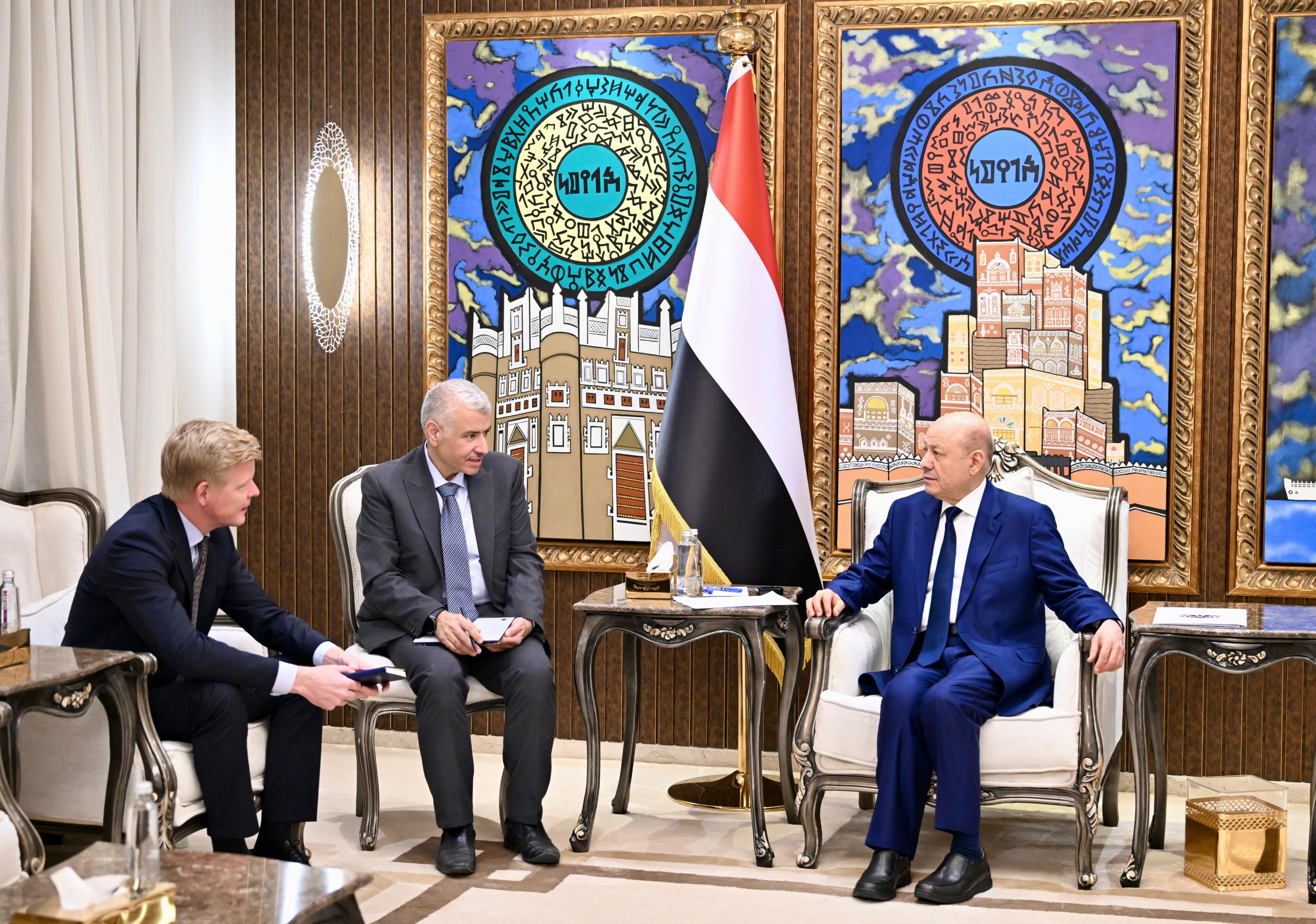
UN Special Envoy for Yemen Hans Grundberg meets Presidential Leadership Council Chairman Rashad Al-Alimi in Riyadh, July 19, 2026 (Office of the UN Special Envoy for Yemen)
19-07-2026 at 6 PM Aden Time
Aden (South24 Center)
UN Special Envoy for Yemen Hans Grundberg stepped up his regional efforts on Sunday, July 19, to contain the escalating dispute over flights to airports under Houthi control, as Yemen’s internationally recognized government announced that it had prevented another Iranian aircraft from reaching Sanaa.
Grundberg concluded a visit to Riyadh, where he met Presidential Leadership Council Chairman Rashad Al-Alimi, Saudi Ambassador to Yemen Mohammed Al Jaber, and representatives of the five permanent members of the UN Security Council, according to the envoy’s office.
The discussions focused on the need for immediate de-escalation and agreement on a way forward that would preserve the relative calm and other gains achieved since the 2022 UN-brokered truce, according to a statement issued by his office.
Grundberg also stressed the importance of shielding Yemen from the consequences of any wider regional escalation and preserving the space needed for an inclusive, Yemeni-led political process capable of bringing the conflict to an end. His office said he would continue his consultations in Muscat.
The upcoming talks follow meetings Grundberg held in the Omani capital on July 14 with senior Omani officials and Houthi representatives, during which he also urged the parties to avoid any steps that could trigger a new cycle of violence.
During his meeting with Grundberg in Riyadh, Al-Alimi said the dispute was not primarily about flights or what the Houthis describe as a blockade of Sanaa Airport, but rather about attempts to operate Iranian aircraft outside the authority of the internationally recognized government.
Al-Alimi accused the Houthis of exploiting humanitarian issues as political leverage and said any sustainable settlement must restore the state’s exclusive sovereign powers, including control over security and military decisions and the country’s airspace.
Nevertheless, the PLC chairman reiterated the government’s support for UN mediation and humanitarian initiatives aimed at alleviating the suffering of Yemenis.
The diplomatic efforts came as Yemeni Transport Minister Mohsen Al-Omari said that, on July 18, the authorities had prevented another aircraft operated by Iran’s Mahan Air from continuing its flight toward Sanaa because it had not completed the required authorization procedures.
Al-Omari said the aircraft was ordered to turn back after failing to coordinate through the officially approved channels governing entry into Yemeni airspace.
Flight-tracking data showed that the aircraft changed course after approaching Oman’s Dhofar Governorate and returned toward Iran. Neither Iranian authorities nor the Houthi group immediately commented on the minister’s remarks.
The incident marked Mahan Air’s third known attempt to reach Houthi-controlled areas of Yemen during July.
A Mahan Air aircraft landed at Sanaa Airport on July 3, marking the first direct Iranian flight to the Houthi-held capital in more than a decade. Another aircraft attempted to land in Sanaa on July 13 but was diverted to Hodeidah Airport after the Sanaa airport runway was struck in air raids claimed by the Yemeni government.
The Houthis accused Saudi Arabia of carrying out the strike on the airport and later announced that they had targeted Abha International Airport in southern Saudi Arabia with ballistic missiles and drones. Saudi air defenses intercepted the threats, and no casualties were reported.
The exchange marked the most serious cross-border escalation between the Houthis and Saudi Arabia since the 2022 truce.
Following the latest incidents, the General Authority of Civil Aviation and Meteorology in Aden issued a circular requiring airlines, international organizations, and flight operators to obtain prior authorization before entering Yemeni airspace.
The authority said flight-clearance requests must be submitted through officially approved channels, stressing that it is the country’s legitimate civil aviation body and the sole authority empowered to issue such permits. The new procedures took effect on July 18.