SOUTH24 CENTER FOR NEWS & STUDIES
SOUTH24 CENTER FOR NEWS & STUDIES


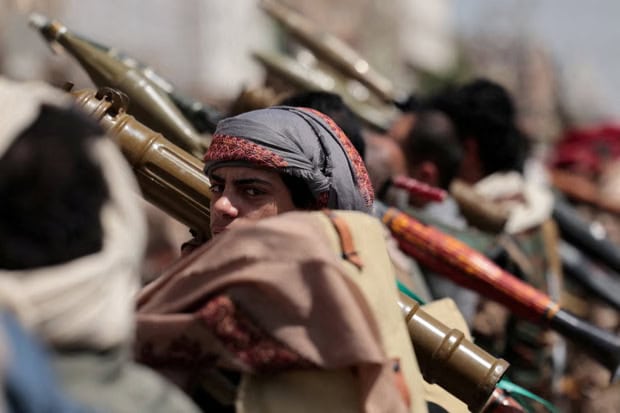
A young Houthi fighter carries a rocket-propelled grenade launcher alongside other armed members of the group in Yemen. (Khaled Abdullah/Reuters)
15-09-2026 at 11 AM Aden Time
Aden (South24 Center)
Saudi military spokesman Turki Al-Maliki said on Tuesday (September 15) that 13 civilians were wounded in ballistic missile and drone attacks launched by the Iran-backed Houthi militia against three Saudi cities.
Al-Maliki said Monday’s attacks targeted civilian sites in Khamis Mushait, Abha and Taif, leaving the civilians with minor to moderate injuries and damaging seven homes and two vehicles.
Saudi Arabia continues to officially present Al-Maliki as the spokesman for the “Coalition to Support Legitimacy in Yemen,” despite the coalition’s effective dissolution following the withdrawal of the UAE, its last active member, from Yemen in late December 2025. Riyadh continues to use the coalition’s name in its statements and military operations.
Al-Maliki described the attacks as “deliberate and repeated,” saying they reflected the Houthi militia’s continued policy of escalation and targeting civilians and civilian objects.
He added that the Joint Forces Command would respond to the attacks “responsibly and firmly” to protect the Kingdom’s sovereignty, civilians and civilian objects. He said the necessary operational measures were being taken to deter further attacks in accordance with Article 51 of the United Nations Charter, the principle of self-defence and customary international humanitarian law.
Saudi civil defense authorities issued emergency alerts on Tuesday in Jeddah, Abha, Jazan, Al-Ula, Taif and Yanbu, the Kingdom’s main oil port on the Red Sea, before later announcing that the danger had passed in all six cities, according to Reuters.
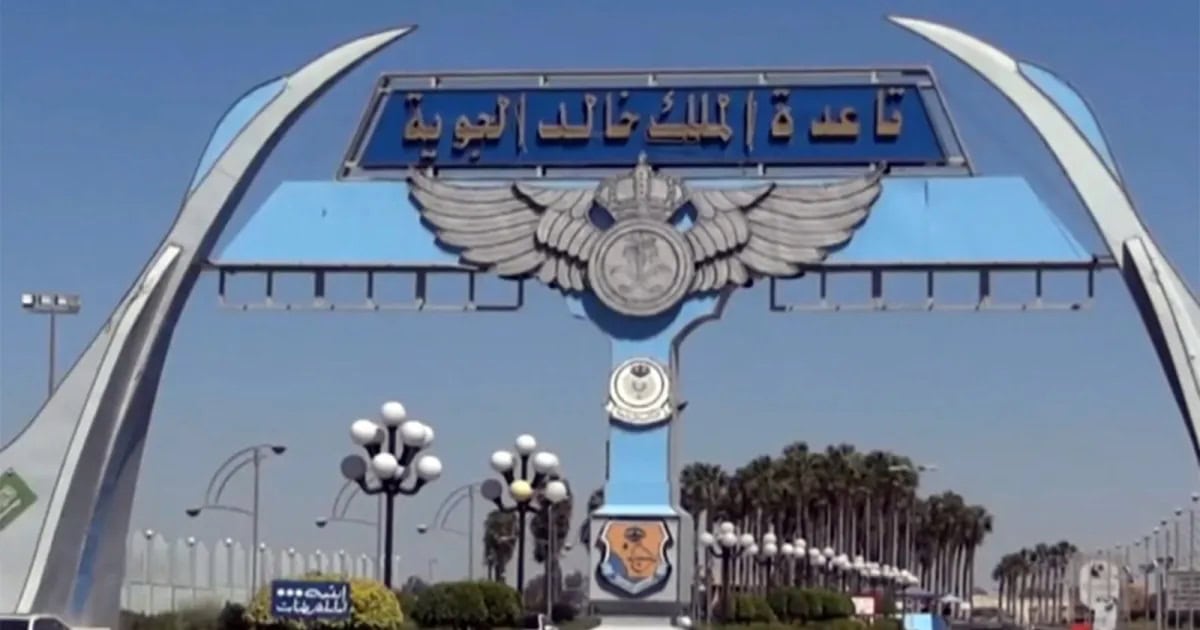
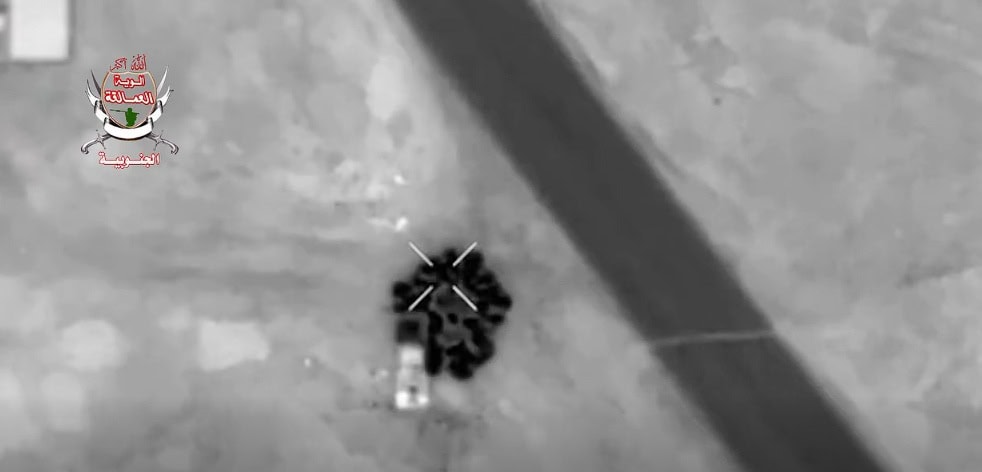
The Houthis said on Monday that they had carried out a large-scale military operation involving dozens of missiles and drones against King Khalid Air Base in Khamis Mushait, claiming to have targeted aircraft hangars, radar systems, runways and ammunition depots.
Houthi military spokesman Yahya Saree said the operation caused “significant losses” and was launched in response to more than 300 Saudi airstrikes in Yemen over the previous five days.
South24 Center could not independently verify the Houthi claims regarding the extent of the damage inside the base or the number of strikes they said Saudi Arabia had carried out.
The cross-border escalation comes as the Houthis consolidate their gains along Yemen’s Western Coast following their seizure of Al-Mokha, Dhubab and the strategic Mayun Island near the Bab Al-Mandab Strait.
Yemeni government officials told Reuters that Saudi and Yemeni aircraft had intensified strikes on Houthi positions, including areas around Al-Mokha, although the group retained effective control over most of the Red Sea-facing Western Coast.
In a separate report, the Associated Press said the Houthis had also seized the Greater and Lesser Hanish islands, expanding their military presence in the southern Red Sea.
The developments have heightened concerns over energy supplies after an attack that Riyadh attributed to Iran-backed Iraqi militias forced the shutdown of Saudi Arabia’s East-West oil pipeline. The 1,200-kilometre pipeline carries crude oil from the Gulf coast to the Red Sea, bypassing the Strait of Hormuz.
In Yemen, Defence Ministry spokesman Majed Al-Nuzaili said airstrikes targeted Houthi equipment and fighters, as well as facilities occupied by the group in Dhubab and Al-Mokha in Taiz Governorate.
The National Resistance said the Houthis launched 130 ballistic missiles, 145 drones and 15 explosive-laden boats during the Western Coast battles between August 9 and September 9.
It added that more than 2,000 of its personnel had been killed or wounded. Its spokesman, Sadiq Dowaid, said the Houthi offensive had been planned for months and carried out with the participation of Iranian and Lebanese experts. South24 Center could not independently verify these claims or figures.
On the humanitarian front, the International Organization for Migration said nearly 94,000 people had been displaced since fighting escalated in September, including 48,000 in Taiz and Lahj, while more than 2,000 people had crossed the Gulf of Aden to Djibouti.
Fighting also spread to other southern fronts. A local source told South24 Center that an explosive device wounded a National Shield Forces soldier near the Al-Saeed junction in Shabwa.
Southern forces, backed by tribal fighters, also clashed with the Houthis near Al-Mudaribah District in Lahj, while the Murais fronts in northern Al-Dhalea witnessed exchanges of mortar fire and medium-weapons fire.
Previous article