SOUTH24 CENTER FOR NEWS & STUDIES
SOUTH24 CENTER FOR NEWS & STUDIES


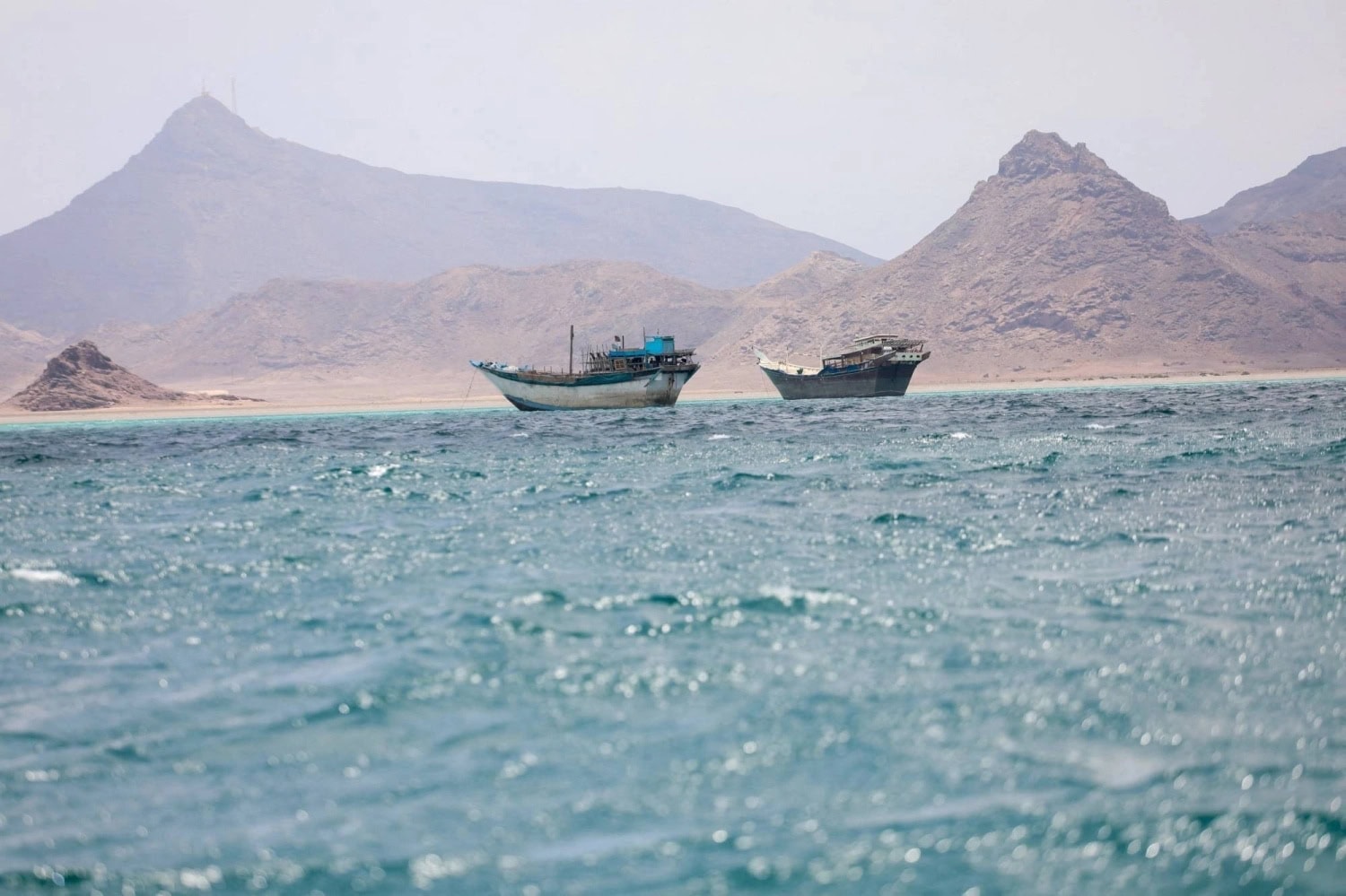
Boats off the coast of Bab Al Mandeb in Yemen, April 2, 2026. (Reuters)
19-09-2026 at 2 PM Aden Time

Abdullah Al-Shadli (South24 Center)
The Houthis’ rapid advance along the western coast in September has changed the threat landscape at Bab Al Mandeb, after the group moved from southern Hodeidah and western Taiz to the city of Al-Mokha, then Dhubab and the southern island of Mayyun, located at the heart of the strait.
The significance of this shift lies not only in the territorial gains, but also in the Houthis’ direct proximity to one of the world’s most important maritime routes. For years, the group has relied on missiles, drones, and boats to target vessels from positions farther away. The new control also comes at a time when the Red Sea has grown more important for energy exports, with oil and petroleum product flows through Bab Al Mandeb rising to about 8.1 million barrels per day in the second quarter of 2026.
Control of the areas surrounding the strait does not mean that the Houthis are capable of closing it or fully controlling maritime traffic. However, it gives them broader options for surveillance and targeting, and places the security of Lahj and Aden, as well as ports and southern supply lines, under a different level of pressure.
These new developments raise several key questions: How will Houthis’ ability to threaten vessels change? What does this mean for the security of South Yemen? Could it create greater scope for smuggling and communication with networks in the Horn of Africa? And how could these gains affect the group’s position in any upcoming political negotiations?
A Closer Maritime Threat
The significance of the Houthis’ latest advance lies less in adding new weapons to the group’s arsenal than in reducing the distance between those weapons and vessels. In recent years, the Houthis have relied on missiles, drones, and explosive-laden boats to attack maritime targets from more distant positions, requiring greater levels of surveillance, tracking, and guidance.
U.S. researcher specializing in Yemen Nick Brumfield told South24 Center that control of areas adjacent to Bab Al Mandeb represents a qualitative shift in the Houthis’ ability to threaten maritime navigation, as artillery and drones become more effective in this narrow geography.
According to Brumfield, the proximity of Houthi positions to shipping lanes allows vessels to be monitored using simpler means, including visual observation, and increases the chances of hitting targets because of the shorter distance. Explosive-laden boats also become more dangerous, as operating them in a narrow passage is easier than using them across the open waters of the Red Sea.
This does not mean that the Houthis are capable of closing the strait or imposing full maritime control. International naval forces remain present in the Red Sea and Gulf of Aden and can intervene to protect shipping. However, the continued risk of attacks may be enough to increase the cost of insurance and protection and push some shipping companies to avoid the route.
U.S. expert and former member of the UN Security Council’s Yemen Panel of Experts Fernando Carvajal believes that the Houthis’ priority in controlling areas surrounding the strait is primarily linked to increasing pressure on vessels, particularly Saudi vessels, rather than to smuggling gains.
Carvajal told South24 Center that the absence of coast guard patrols operated by Tariq Saleh’s forces changes the security environment around the strait. However, he noted that the presence of an international maritime task force throughout the Red Sea and Gulf of Aden remains a limiting factor for any Houthi attempt to impose full control over vessel traffic.
This takes on added significance on Mayyun Island, which is administratively part of Aden, where southern forces had been stationed and participated in securing Bab Al Mandeb. In a June 9 statement, the Southern Transitional Council said that southern forces had for years formed a “protective barrier” against the Houthis and smuggling in the strait, arguing that their capabilities had declined after being targeted by Saudi airstrikes and what it described as “systematic dismantling.”
Following the Houthis’ takeover of Mayyun, STC leader Amr Al Bidh held Saudi Arabia responsible for weakening the southern forces and sidelining the council, saying that these forces had been one of the main deterrent forces confronting the Houthis since 2015.
Bab Al Mandeb and South Yemen’s Security
The impact of the Houthi advance at Bab Al Mandeb goes beyond the issue of maritime navigation to changing the line of contact with South Yemen, after the confrontation moved into areas directly connected to Lahj Governorate. This comes after years in which the western coast served as a barrier separating the group’s areas of control from this geography.
Political and media researcher Awsan Bin Saddah said that what happened on Mayyun and around Bab Al Mandeb goes beyond the fall of military positions. It means that the Houthis have moved into direct contact with the geography of South Yemen and with one of the key factors in the security of Aden and Lahj.
Bin Saddah told South24 Center that the group’s presence on Mayyun and around the strait expands its ability to use missiles, drones, and boats, increasing risks to southern ports and supply lines.
He believes that the Houthis’ arrival at Bab Al Mandeb gives their presence a different geopolitical value, as their influence becomes more closely connected to the security of the southern coast, the Red Sea, trade, and energy. In his assessment, this requires reordering the priorities of southern forces’ deployment toward protecting Lahj, Aden, the coast, ports, and supply lines.
Journalist Salman Al Maqrarmi agrees that the shift goes beyond the coast itself. He believes that the Houthis’ control of Dhubab and positions overlooking the strait put Aden, as the seat of the government and one of the main political and military centers opposed to the group, under increasing pressure.
Al Maqrami told South24 Center that the Houthis may seek to capitalize on their gains to bypass fronts that have withstood them for years, such as Al Dhale’e, Taiz, and Marib, by taking control of areas that would allow them to expand military pressure later.
In this context, Bin Saddah criticizes the continued sidelining of southern military leaders who have accumulated extensive experience confronting the Houthis and calls for restoring military and operational coordination with the UAE, which, he says, has accumulated experience since 2015 in command, intelligence, air support, and logistical support in South Yemen and along the western coast.
He believes that the fall of Al-Mokha and Mayyun exposed shortcomings in the management of the battle, and that possessing aircraft and information is not enough without a system that links intelligence to military decision-making and support to forces on the ground.
Smuggling and the Horn of Africa
Control over wider stretches of the coast gives the Houthis greater room to establish contact with the African shore, but it does not create smuggling networks from scratch. UN reports over the past several years have documented routes for smuggling weapons, individuals, and military components between Yemen and the Horn of Africa, particularly Somalia.
Fernando Carvajal believes that control of additional coastal areas naturally expands the scope for smuggling. The southern part of Tihama could provide the Houthis with easier lines of contact with allies and networks in Somalia and Djibouti, and possibly Sudan.
However, Carvajal does not expect Bab Al Mandeb to automatically become the main route for Iranian arms shipments. In his view, even if the Houthis and Iran attempt to expand smuggling operations and test the capabilities of international naval forces, most supplies are likely to continue moving through routes closer to Hodeidah and Sana’a.
As for Al-Mokha Port, he believes it could acquire a different logistical function by supporting and supplying Houthi forces deployed around Taiz and along the coast.
The risks are not limited to arms smuggling to the Houthis. Maritime links with the Horn of Africa could expand networks for the movement of weapons, technical components, or military expertise in both directions, amid previously documented ties between Yemeni networks and those in Somalia.
However, Carvajal places these uses in a secondary position at the current stage, after the more immediate objective of putting pressure on maritime traffic and Saudi vessels.
A New Political Bargaining Chip
The significance of the Houthi advance at Bab Al Mandeb is not limited to military gains. Retaining control of Al-Mokha, Dhubab, and Mayyun gives the group an additional bargaining chip in any upcoming negotiations, given that these areas are directly linked to the security of an international maritime corridor and regional and international interests.
Journalist Salman Al Maqrami believes that the latest advance has created a significant shift in the balance of power, after years during which the Houthis were unable to achieve a similar breakthrough on several key fronts. In his assessment, the group will view these gains as evidence that it can impose additional demands by force.
Al Maqrami points out that the Houthis’ demands were already high and included issues related to the Saudi presence. He believes the new gains could push them to raise their demands further in any upcoming negotiations.
The weight of this bargaining chip will increase if the Houthis are able to retain Al-Mokha, Dhubab, and Mayyun for an extended period. In that case, the internationally recognized government would face a more difficult negotiating position, while Saudi Arabia would find itself facing a dilemma that combines restoring military deterrence with avoiding a regional expansion of the war.
Al Maqrami does not expect the current control to lead to lasting stability, citing the experience of the Yemeni conflict and the return of hostilities following repeated rounds of war and de-escalation.
At the same time, the connection between these areas and maritime security could prompt international powers to treat Bab Al Mandeb differently from other fronts, making Houthi control of the strait a bargaining chip that extends beyond the internal conflict to calculations involving trade, energy, and regional security.
As an indication of the overlap between battlefield gains and the political track, U.S. officials met with Houthi representatives in Muscat days after the group advanced along the western coast, according to five sources cited by Reuters. During the meeting, the Houthis reaffirmed their commitment to a ceasefire understanding with Washington and pledged not to target U.S. vessels, while the U.S. State Department declined to confirm the meeting.
The continuation of this type of understanding gives the Houthis additional political weight. Washington, despite continuing to deal with the group as an Iran-backed movement and designating it as a Foreign Terrorist Organization, maintains a separate understanding with the Houthis regarding maritime security, at a time when it is engaged in a direct war with Tehran. With the Houthis reaching Bab Al Mandeb, their ability to position themselves as a direct party in any negotiations concerning Red Sea security is strengthened, turning part of their military gains into political and negotiating leverage.
Recent U.S. positions further reinforce this trajectory. Trump said that the Houthis had contacted his administration and informed it that they did not want direct U.S. involvement in the war, while his vice president, JD Vance, confirmed that direct talks with the group were taking place alongside contacts with Saudi Arabia and the UAE. Meanwhile, Axios reported that Saudi Crown Prince Mohammed bin Salman asked Trump, during two calls, for U.S. military involvement against the Houthis, but the U.S. president rejected direct intervention.