SOUTH24 CENTER FOR NEWS & STUDIES
SOUTH24 CENTER FOR NEWS & STUDIES


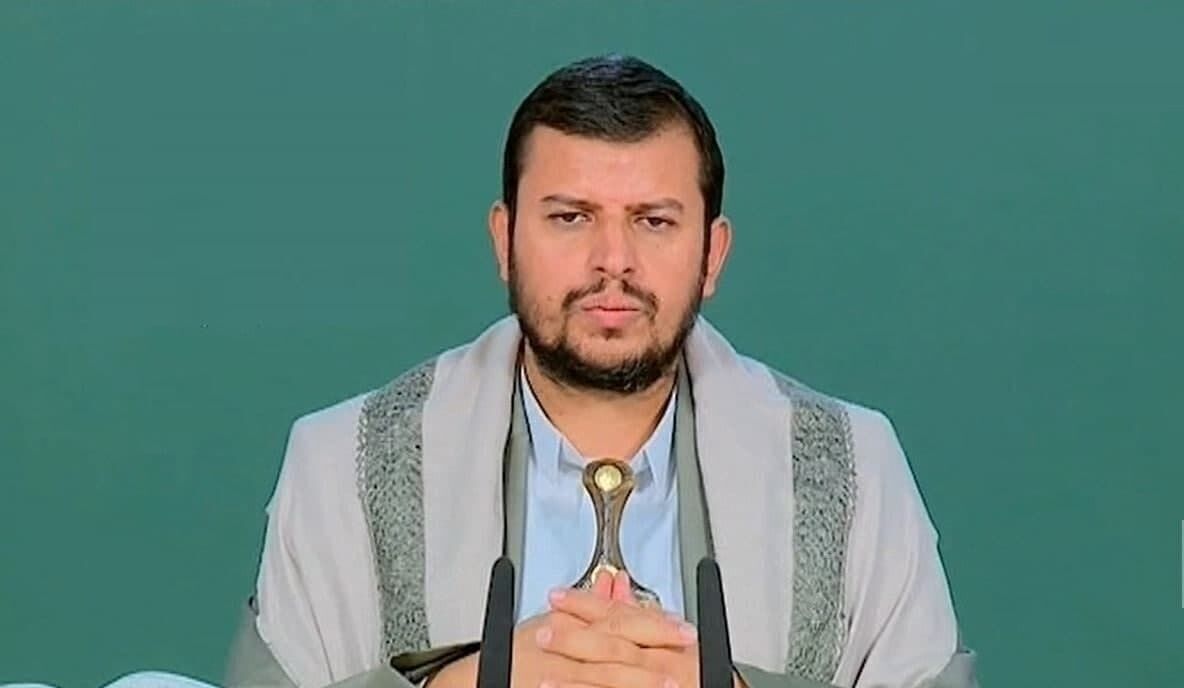
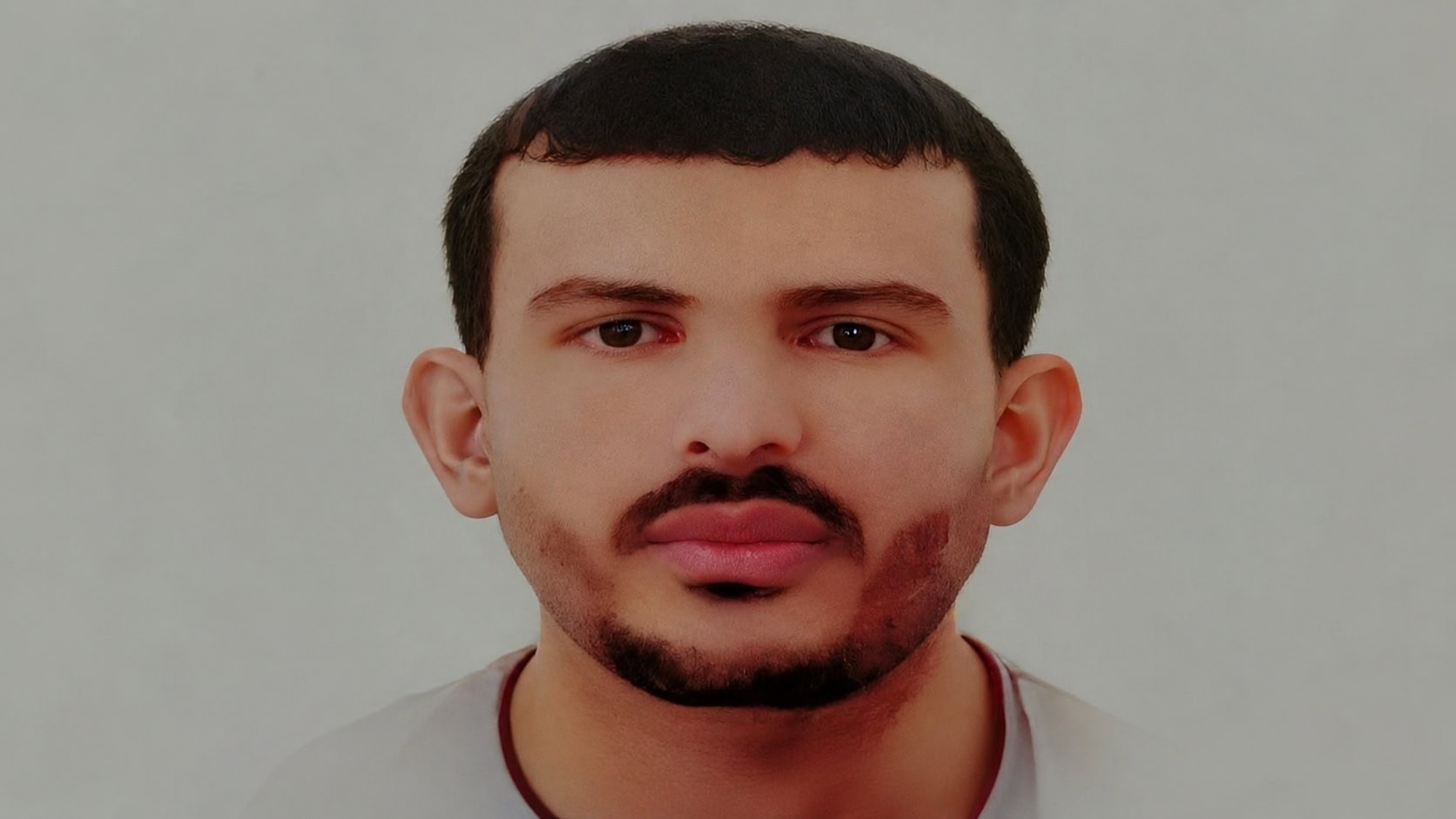
Houthi leader Abdulmalik Al-Houthi (Houthi media)
03-11-2026 at 4 PM Aden Time

Jacob Al-Sufyani (South24 Center)
From “mercenaries” to “Saudi military buildup,” the evolution the military rhetoric of the Iran-backed Houthi group reveals an attempt to redefine the identity of its adversaries and assign responsibility for the latest escalation, which began in August and peaked in September and October this year.
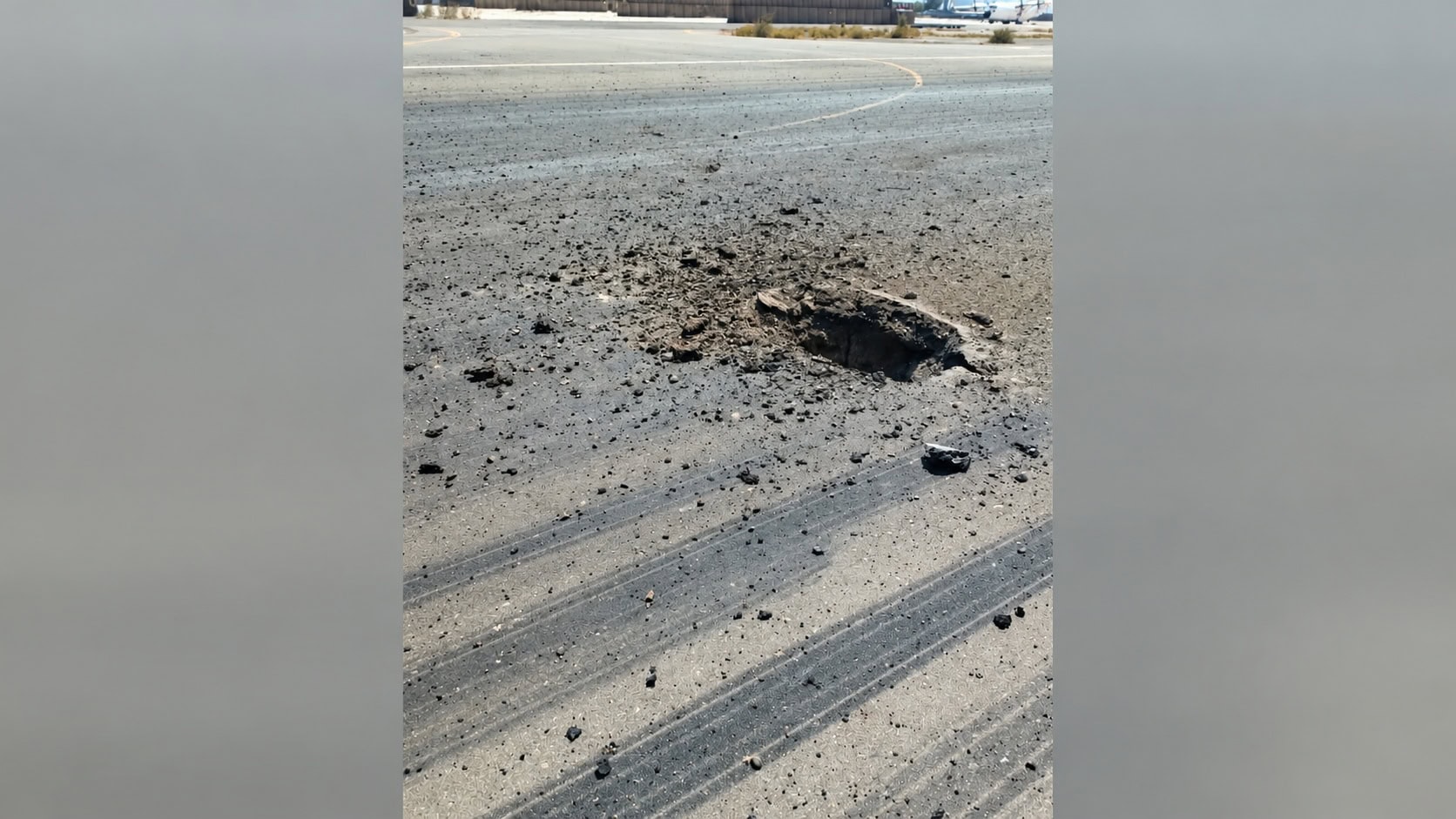
The targeting of Aden International Airport with missiles approximately six times this October was not merely another military escalation in a war that reignited after a lull that had lasted since 2022. It came amid a series of Houthi attacks on the South, including Hadramout, Lahj, and Shabwa, accompanied by repeated Houthi rhetoric portraying the declared targets as part of what the group calls the “Saudi military buildup.”
While Houthi military spokesperson Yahya Saree claimed that a Saudi cargo aircraft carrying weapons had arrived at Aden Airport, Aden authorities reported casualties and material damage, prompting a temporary suspension of air traffic. These developments coincided with the airport’s continued use for civilian and humanitarian purposes, including transporting passengers, many of whom come from areas under Houthi control in northern Yemen, as well as aid organization workers.
These events raise a question that goes beyond the nature of the military targets: How did the phrase “Saudi military buildup” become a central part of Houthi rhetoric in explaining its military operations, which have recently been marked by excessive brutality, such as the October 19 attack on a camp housing newly recruited soldiers in Shabwa, which killed around 79 soldiers and wounded dozens? And why is this description being used to justify attacks primarily targeting areas inside the South, as well as parts of Taiz and Marib in northern Yemen that are outside Houthi control, rather than identifying the local forces concerned by their actual names and organizational affiliations?
The significance of this question lies in the fact that such terminology is not necessarily neutral. The words used in wars do not merely describe the parties to a conflict. They can also shape how the public understands responsibility, legitimacy, and the nature of the threat, as well as determine which actors are recognized as independent political parties.
From “Mercenaries” to “Saudi Military Buildup”
Since the early years of the war, the Houthis have used the term “mercenaries” to refer to a broad range of forces opposing them in Yemen. The term has served a clear political purpose in the group’s rhetoric by portraying its local adversaries as instruments serving foreign powers, rather than acknowledging the diversity of their motives and political and military projects.
In recent months, however, another term has become increasingly prominent: “Saudi military buildup,” which has gained growing prominence in military statements and political remarks related to the latest escalation.
On August 16, Abdulaziz bin Habtoor, a member of the group’s Supreme Political Council, spoke of a Saudi military buildup and described the local forces involved as mercenaries. On September 6, the Foreign Ministry in Sana’a went further, declaring that targeting what it called the “Saudi military buildup” was a legitimate right. This indicates that the new rhetoric does not represent a complete break from the old terminology. Both descriptions have continued to be used, but the phrase “Saudi military buildup” gives the group’s narrative a framework more closely tied to direct regional confrontation. While the term “mercenaries” questions the motives and loyalty of local fighters, “Saudi military buildup” shifts the focus to the state that the group claims support these fighters and directs their operations.
This shift is significant because it allows the war itself to be redefined. Instead of a confrontation between an armed group and local forces, the conflict is portrayed as one between the Houthis and Saudi Arabia, even when operations take place inside South Yemen and other Yemeni territories and involve people from those areas. This does not mean denying Saudi Arabia’s role in supporting these military formations, a role that has been documented and publicly acknowledged for years. The problem arises, however, when ties to an external backer become an all-encompassing definition that erases distinctions between local forces or suggests that receiving support alone is sufficient to prove the absence of independent local decision-making and political interests.
The most striking contradiction is that the Houthis use this broad framing to strip their adversaries of their local identity, reducing them to mere Saudi proxies, despite the fact that these adversaries' relations with Riyadh are not necessarily free of differences and disagreements. At the same time, this rhetoric overlooks the nature of the group's ties to Iran, one of the few countries to have dealt with the Houthi authorities as an official governing authority, going so far as to appoint an ambassador in Sana’a. This relationship goes beyond political recognition. Reports by the UN Security Council's Panel of Experts have documented the Houthis' receipt of weapons, financial support, training, and technical assistance from Iran, Hezbollah, and Iraqi armed groups. The Panel's 2024 report also pointed to Hezbollah's involvement in aspects of the group's decision-making structure, the provision of military training and technical assistance in assembling weapons systems, and contributions to managing its media propaganda.
Even more striking is that the Houthis openly declare their affiliation with what is known as the “Axis of Resistance” led by Iran, while Yemeni parties opposing them, particularly the Southern forces and the internationally recognized government, reject being portrayed as political or military extensions of Saudi Arabia or any other external backer. This raises a fundamental question: If receiving military support and maintaining ties with a regional power are sufficient, according to Houthi logic, to strip Yemeni formations of their local identity and label them a “Saudi military buildup,” could Houthi forces not be described, by the same logic, as an “Iranian military buildup” in Yemen? Although terms such as “Iranian proxies,” “Iranian arms,” and “Iran-backed group” are common in the rhetoric of the Houthis' opponents, the phrase “Iranian military buildup” has not taken root as a corresponding official designation in the rhetoric of Southerners or the Houthis' opponents more broadly.
The South Is Geographically Present but Absent from the Naming of the Adversary
This mechanism is particularly evident in developments during October. On October 15, Yahya Saree announced that the bombing of what he described as the Saudi military operations headquarters in Aden was part of a policy of targeting the “Saudi military buildup” wherever it was located. The announcement was linked to the attack on Maasheeq Palace, the seat of the Yemeni government in Aden, which government authorities said killed and wounded members of the guards and staff.
On October 26, the Houthis announced ballistic missile attacks on sites in the Salah Al-Din area of Aden and Al-Wahat in Lahj, once again presenting the targets as Saudi-affiliated military buildups. What stands out in these statements is that the declared attack locations are in the South, while the identity of the adversary is defined primarily through its alleged affiliation with another state.
One possible function of this terminology is to shift the discussion from the targeting of forces and formations present in the South to a confrontation with Saudi influence. This shift may offer a different political interpretation of the attacks to audiences receiving the group's narrative. However, the Southern forces fighting the Houthis do not necessarily constitute a single bloc. They include the Southern Giants Brigades, Nation's Shield Forces, and other formations whose institutional backgrounds differ and whose political orientations sometimes diverge, but which share a common position on defending the South and its borders. Some of these forces participated in operations along the western coast and in Bab Al-Mandeb during October, alongside Saudi military support.
Reducing all these forces to a “Saudi” label obscures the fact that those involved in the fighting come from Southern governorates and hold local political views concerning the South's security and future, despite differences in their positions towards relations with Riyadh or the Yemeni government itself.
Why Does Abdulmalik Al Houthi Insist That Southerners Are Not Being Targeted?
This question becomes more significant when examining statements by the group's leader, Abdulmalik Al-Houthi.
On September 17, Al-Houthi stressed that the military operations were not targeting people in the Southern and Eastern governorates. The latter is a term used by Northern elites to refer to the Southern governorates of Hadramout and Al Mahra, in an apparent attempt to create a dividing line that splits the South into two halves. Instead, he said, the operations targeted what he described as the Saudi military buildup. On October 29, he returned to essentially the same argument, stressing that the operations were focused on military formations that he claimed were operating under the command of Saudi officers.
The repetition of this message indicates an effort by the Houthis to redefine the identity of local military formations and portray them as direct extensions of Saudi power. It is important to place this rhetorical shift in the context of developments in the South in early 2026, particularly the sharp deterioration in relations between the Southern Transitional Council (STC) and Saudi Arabia following Saudi airstrikes targeting Southern forces in Hadramout and Al Mahra, and the subsequent announcement by the UAE that it would withdraw its remaining military officers from the South, at the request of the Yemeni government based in Riyadh. These developments may have encouraged the Houthis to intensify their military operations and reshape their rhetoric, taking advantage of shifts in regional and local balances of power and alliances in the South.
A Multi-Functional Narrative
The use of the term “Saudi military buildup” can be understood through three interconnected functions.
First, redistributing political responsibility. When all anti-Houthi movements are presented as extensions of a Saudi decision, Saudi Arabia becomes the primary party responsible for the continuation of the war in the group's narrative, while local actors and their motives recede into the background.
Second, reshaping the image of the adversary. This overarching label reduces different formations to a single identity, despite differences in their institutional relationships and local backgrounds. It allows the war to be presented as a confrontation with an external power rather than a complex internal conflict involving competing Yemeni projects.
Third, building a political justification for military escalation. The more military operations are presented as responses to the actions of an external state, the easier it becomes for the group to explain an expansion in the scope of its attacks within the framework of a regional confrontation, rather than solely through local military developments.
This analysis takes on particular significance amid the escalation along the western coast and around Bab Al-Mandeb during September and October. Southern forces conducted operations to retake strategic areas considered part of the historical territory of the former state of South Yemen, including Mayyun Island, which remains under Houthi control to this day, according to military sources. Meanwhile, the group expanded its attacks on sites inside the South and targets in Saudi Arabia.
The implications of this rhetoric extend beyond the battlefield to the question of political representation in the South. On October 14, Aden, Hadramout, and other Southern cities witnessed gatherings called for by the Southern Transitional Council, linked to political demands concerning the South's future. A statement issued by participants affirmed their rejection of drawing Southerners into wars that go beyond defending their territory and national project, according to documentation by South24 Center.
These positions reflect the existence of local political agendas that cannot be fully explained as mere extensions of Saudi decision-making.
Conclusion
Tracking Houthi rhetoric since August 2026 reveals that the phrase “Saudi military buildup” has become a prominent tool in the group's explanation of its military escalation, particularly as attacks have extended to sites inside Aden and the South more broadly, and confrontations around Bab Al-Mandeb have expanded.
The Houthi narrative highlights the importance of language as part of the management of war. It does not merely explain military operations; it also seeks to shape how the public should understand them. In the case of the South, the war cannot be understood solely through the labels the Houthis assign to their adversaries. Behind the phrase “Saudi military buildup” are Southern formations that continue to bear the brunt of the fighting in defense of the South's borders, particularly in the Al-Subaiha areas of Lahj and on other fronts. Even their offensive operations in Bab Al-Mandeb take place within a strategic area of vital importance to the South's security and strategic depth, including the strategically located Mayyun Island, which lies at the center of the Bab Al-Mandeb Strait, one of the world's most important natural waterways.