SOUTH24 CENTER FOR NEWS & STUDIES
SOUTH24 CENTER FOR NEWS & STUDIES


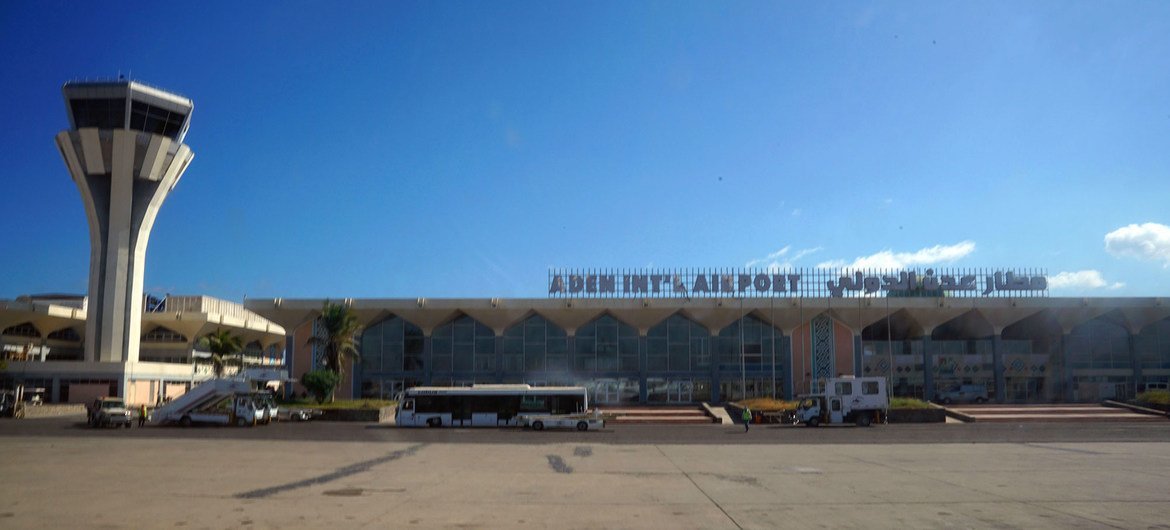
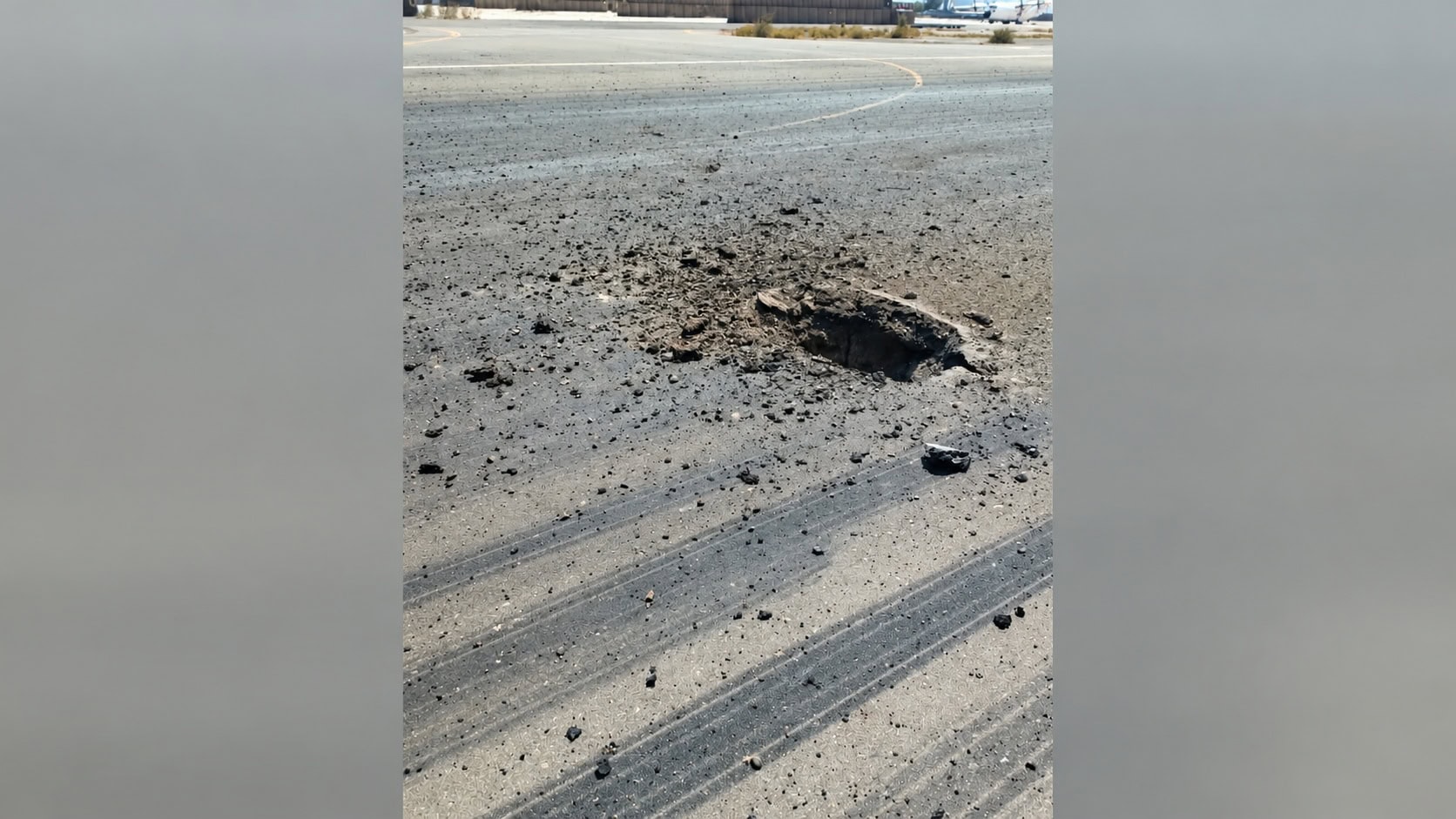
Aden International Airport in South Yemen, which was subjected to a series of Houthi missile attacks in October 2026 that affected civil aviation traffic. (Archive photo)
Last updated on: 05-11-2026 at 1 PM Aden Time

Jacob Al-Sufyani (South24 Center)
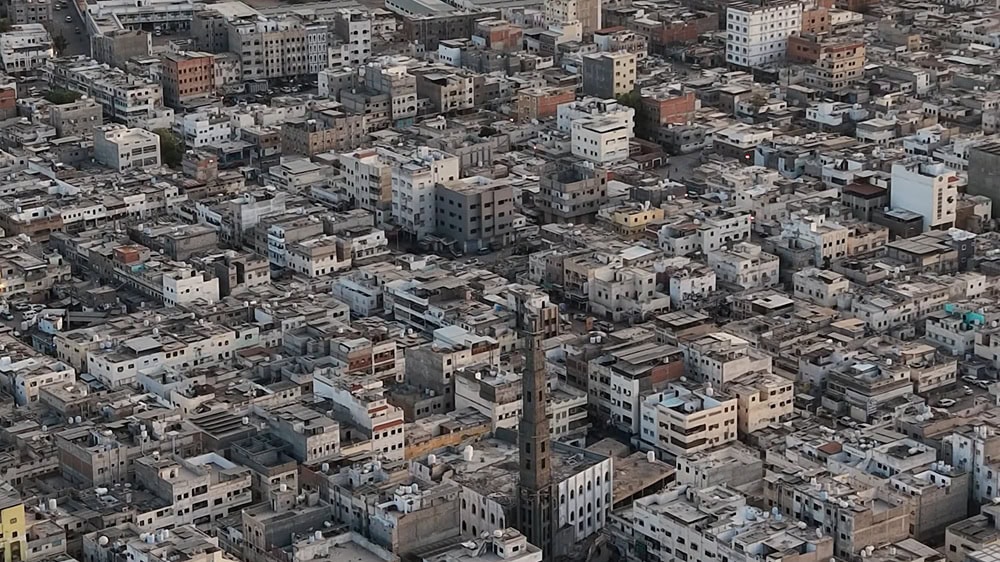
From desert military camps in Hadramout and Shabwa to Aden and Al-Rayyan airports, through active fronts in Lahj and Dhalea, South Yemen over the past three months has witnessed a broad escalation in Houthi attacks utilizing ballistic missiles, drones, and artillery. The strikes targeted military and security positions, vital infrastructure, and residential areas. By the end of October, the attacks had expanded beyond lines of contact to include airports and government headquarters situated far from the frontlines.
The most prominent attack targeted a security training center in Shabwa, taking the lives of 81 recruits and leaving approximately 200 injured, according to the latest figures compiled by the South24 Center. Furthermore, Aden International Airport was subjected to seven attacks during October, while shelling struck Maasheeq Palace, Coast Guard facilities, and residential neighborhoods. Al-Rayyan Airport in Hadramout was also targeted following earlier strikes on Al-Abr and Al-Wadiah military camps.
This escalation comes after years of relative calm since the UN truce in April 2022, coinciding with renewed clashes between the Houthis and Southern Forces, expanded battles in Taiz, the West Coast, and the Bab el-Mandeb strait, as well as an exchange of strikes between the group and Saudi Arabia.
The diversity of targets and frequency of attacks raise questions as to whether these operations are merely an extension of the cycle of military escalation, or if they reflect a broader pattern that extends beyond direct frontline engagements.
This report monitors the most prominent Houthi attacks between August and October 2026, relying on official data, military statements, and field monitoring, while reviewing the evolution of the targets, means, and geographical scope of the operations.
Three Months of Houthi Attacks
August: Strikes on Desert Camps and Lines of Contact
August witnessed an escalation between the Houthis and Southern Forces, Yemeni government-aligned troops, and Saudi Arabia. On August 6, the Houthis announced ballistic missile and drone strikes on camps and gatherings of Yemeni Emergency Forces in Al-Wadiah, Al-Abr, Al-Rawayk, and Al-Thaniyah—located between Hadramout and Marib—claiming to have inflicted heavy casualties.
On August 13, a drone attack targeted a camp of the 3rd Brigade of the Nation’s Shield Forces in Al-Abr district, Hadramout, killing two soldiers and wounding approximately 15 others, according to military sources. On August 24, the Houthis claimed two attacks on positions in Al-Abr, Al-Wadiah, and Al-Kanayis, alleging the destruction of more than ten trucks carrying weapons.
In Shabwa, the Shabwa Defense Forces announced on August 11 that they had thwarted a three-drone attack on their position in the Al-Quwaym front in Wadi Khir, Beihan district, using air defense and jamming systems. On the same day, the Al-Sadiyat area suffered mortar shelling that damaged livestock shelters and water tanks, coinciding with the repulse of a Houthi infiltration attempt Merkhah Al-Ulya.
Attacks extended to Aden, where Southern Forces announced the interception of Houthi drones west of the city on August 24, following a similar incident in Al-Buraiqeh.
In Lahj, shelling and clashes continued across the Al-Musaymir, Karash, and Yafa fronts. On August 31, two drones targeted the Al-Sur checkpoint in Yafa with seven projectiles, killing one member of the National Security Forces and wounding seven others.
Dhalea witnessed drone and artillery attacks in Murays, Al-Fakhir, and Hajar. On August 23, two civilians were injured when a vehicle was targeted on the Murays–Damt road, alongside other casualties among soldiers and civilians caused by mortar shells. On August 25, the Al-Fakhir fronts, surrounding villages, and farmland were subjected to heavy bombardment.
Along the Western Coast, missile and drone attacks targeted the city and port of Mokha on August 9, resulting in deaths, injuries, and damage to military positions and civilian objects, according to government statements. This escalation was linked to clashes around Bab el-Mandeb, where Southern Forces are deployed alongside the National Resistance and Tihamah Resistance.
September: Expanding Attacks on Lahj and Bab el-Mandeb
Clashes expanded during September across Lahj fronts connected to Taiz and the West Coast, particularly Ras Al-Arah, Al-Modaribah, Khor Umayrah, Kahbub, and Yafa.
On September 5, clashes broke out on the Al-Hadd front in Yafa following Houthi Katyusha rocket shelling, followed on September 7 by the bombardment of the Qareen Al-Musaymir front with four mortar shells. On September 11, the Houthis targeted Southern Forces positions in Ras Al-Arah and Khor Umayrah with ballistic missiles and drones, resulting in injuries without an official casualty count.
Attack attempts and drone usage continued in Al-Hadd, Yafa, with clashes widening along the border between Lahj and Taiz, notably in the Al-Aghabirah, Al-Khazam, Al-Mushabbak, and Al-Mansoura sectors.
On September 16, military positions in Ras Al-Arah were targeted by approximately eight ballistic missiles, killing five members of the Southern Forces and National Resistance and wounding 17 others, including a civilian and a child, according to South24 tracking. The following day, two soldiers from the Nation’s Shield Forces were killed and a third was wounded in a drone attack on the Al-Modaribah fronts.
Attacks also struck civilian sites. On September 21, two ballistic missiles landed an hour apart near a local market in front of the Bab el-Mandeb Commercial Complex in the Al-Hajaf area (Al-Modaribah and Ras Al-Arah), causing civilian casualties and damaging shops and vehicles, according to the Yemeni Ministry of Human Rights.
In Shabwa, the Shabwa Defense Forces announced the downing of an FPV attack drone on September 21, as well as the frustration of Houthi attack attempts in Harib, Ayn, Beihan, and Merkhah Al-Ulya late in the month. Shelling and drone strikes also continued across the Murays, Batar, Al-Fakhir, and Bab Ghalaq fronts in Dhalea, with reported damage to homes and farms.
October: Missile Escalation on Aden, Shabwa, and Hadramout
October marked a major shift in the geographic scope of attacks, characterized by repeated targeting of Aden International Airport, Maasheeq Palace, and Coast Guard facilities, alongside a security training center in Shabwa and Al-Rayyan Airport in Hadramout.
On October 7, Aden Airport was attacked with two ballistic missiles and loitering munitions, according to a government letter to the UN and Security Council dated October 10. The attack coincided with a civilian aircraft preparing to land while passengers and personnel were inside the facility.
Another attack was recorded on October 11, before the Aden Security Directorate announced on October 16 that two missiles had fallen inside the airport perimeter, with no initial reports of human casualties.
On October 15, a missile and drone attack targeted the Maasheeq Presidential Palace and its surroundings in Aden, killing five security personnel and staff and injuring 16 others, in addition to damaging buildings within the complex. This coincided with missile strikes on Ras Al-Arah and Al-Modaribah in Lahj amid intensifying operations in Bab el-Mandeb and the Western Coast.
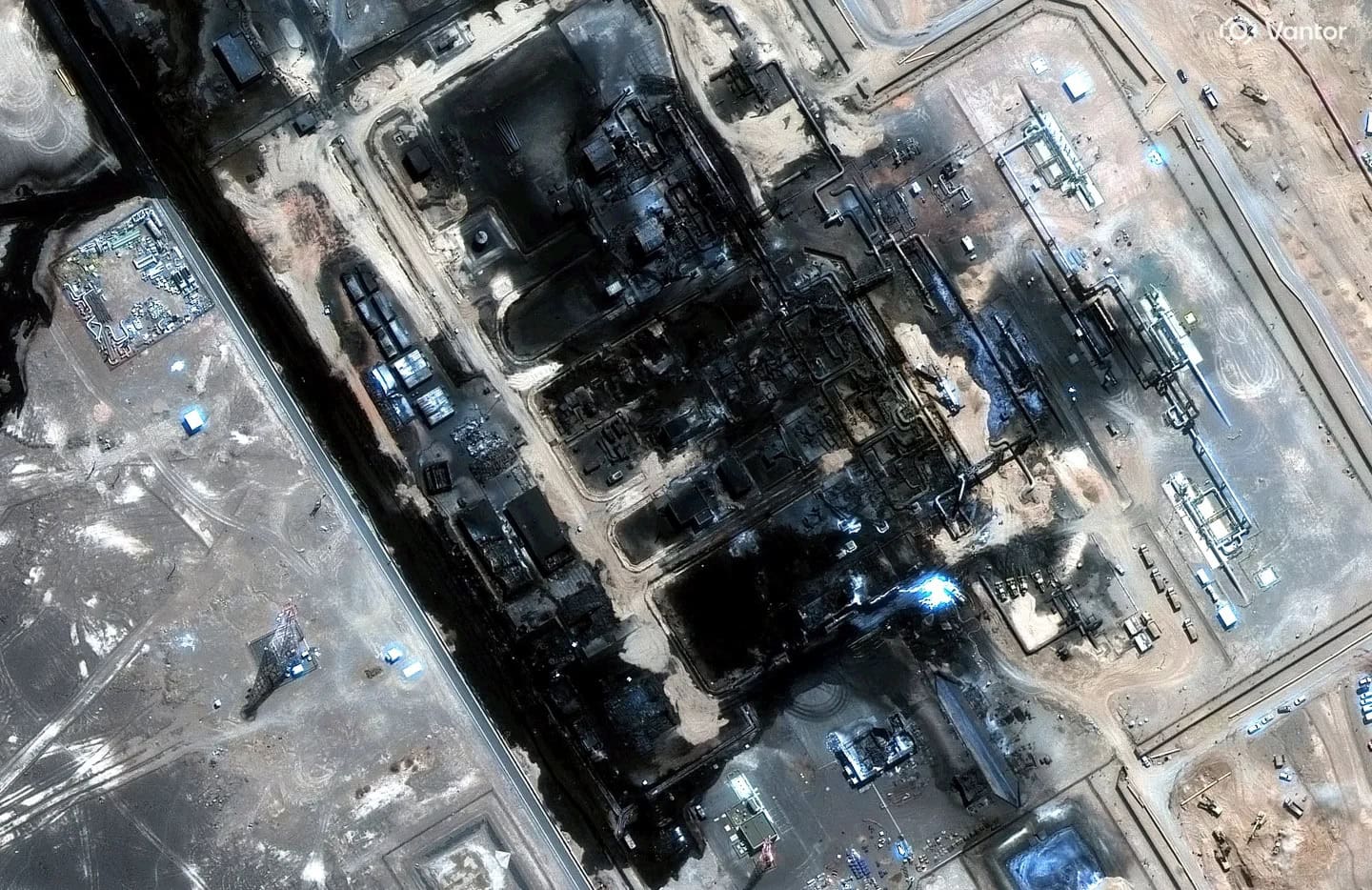
On October 19, the deadliest attack occurred when three ballistic missiles struck the Shaheed Ahmad Al-Sulaimani Training Center (known as Al-Alam Camp) near Ataq in Shabwa governorate, where approximately 700 recruits were undergoing training as part of a new security formation.
Local authorities initially announced 53 recruits killed and more than 200 injured, a figure that rose on October 20 to 73 dead with 14 missing. On October 31, the South24 Center published an updated tally citing local authorities of 81 dead and roughly 200 wounded. The Houthis claimed responsibility for the strike.
On October 21, Aden and Al-Rayyan airports came under fresh attacks. The Ministry of Transport stated that a missile strike targeted Aden Airport shortly after two flights departed for Amman and Cairo, and following the landing of an aircraft affiliated with the ICRC and MSF. The attack led to the postponement of two flights to Addis Ababa and Cairo and the evacuation of the airport.
In Mukalla, Al-Rayyan Airport was targeted by drones that fell near the runway, while field reports indicated a ballistic missile strike that hit the runway. Initial reports recorded no human casualties.
On October 24, the Ministry of Interior announced that two Coast Guard facilities in Aden were struck by three ballistic missiles: two targeted the ministry headquarters area in Khormaksar, and the third hit the Coast Guard building in Tawahi. South24 documented two missiles falling in residential areas in the Old Al-Nasr neighborhood.
On October 25 and 26, missile bombardment was recorded in Salah Al-Din in Aden and Al-Wahat in Lahj. The Houthis claimed to have targeted Saudi troop concentrations and arms depots, while the government reported that missiles fell near displacement camps in Salah Al-Din.
On October 28, Aden Airport was targeted by two ballistic missiles following Houthi warnings to evacuate it, alleging the presence of a Saudi military cargo plane loaded with weapons. The government announced civilian injuries and material damage, and flights were temporarily suspended before resuming on October 29 after emergency runway repairs.
On October 30, the government headquarters at Maasheeq Palace was subjected to a new ballistic missile attack.
According to data tracked by the South24 Center, the total number of announced attacks on Aden Airport during October reached seven incidents.
The Houthi escalation continued into early November. On November 1, a ballistic missile struck the Al-Suqya Health Center in Al-Modaribah and Ras Al-Arah District, Lahj Governorate, killing five people and injuring 15 others, according to the Yemeni Ministry of Health. The casualties included medical personnel, while an ambulance was also damaged in the attack.
On November 4, Houthi ballistic missiles targeted the vicinity of Al-Allalah military camp in Qatabah District, northern Dhalea Governorate, killing at least 12 people and injuring approximately 50 others, according to the latest update reported by South24 Center. On the same day, a separate missile strike reportedly hit a detention facility near the iron factory in Lahj Governorate, killing two people, according to a military source.
Together, the three attacks left at least 19 people dead and approximately 65 wounded, according to the reported figures, underscoring the continuation of missile strikes against military and civilian facilities in South Yemen beyond October.
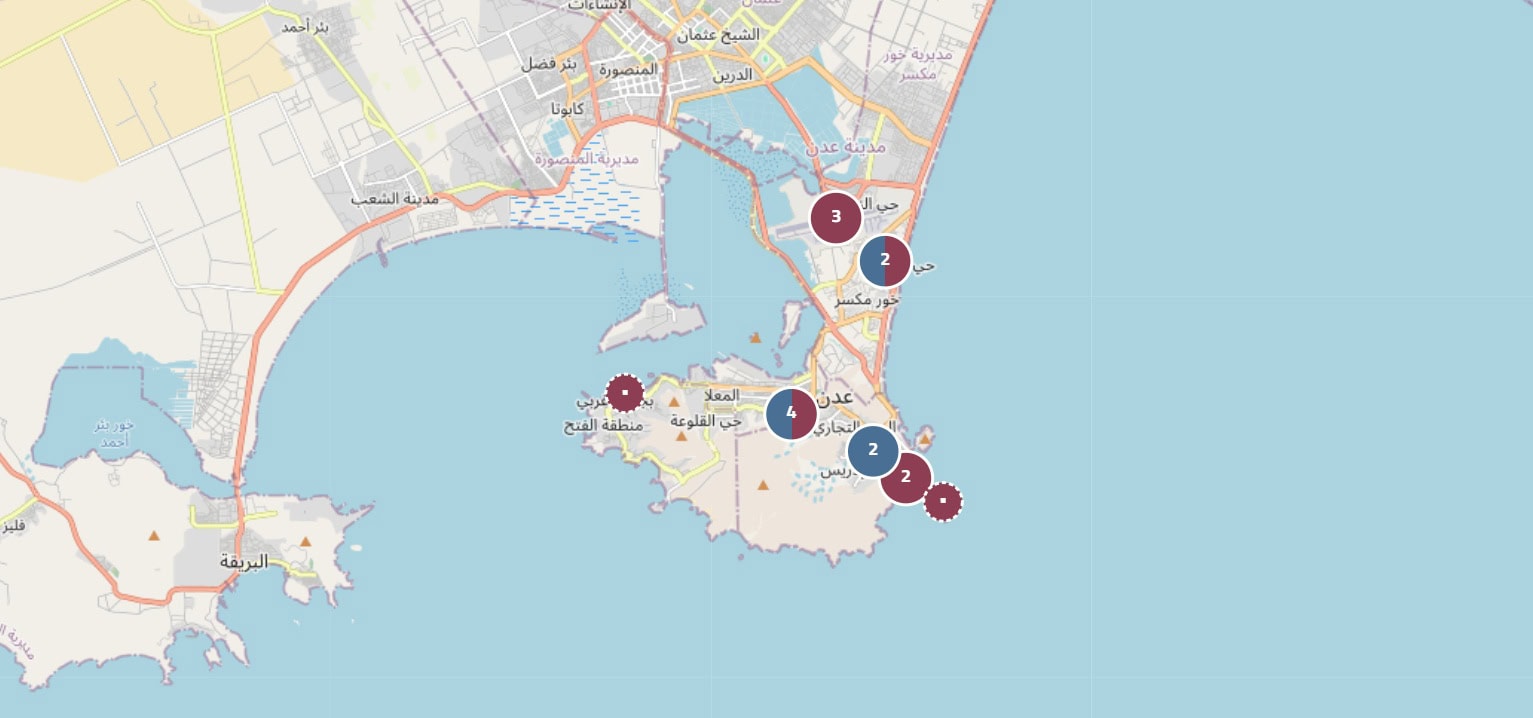
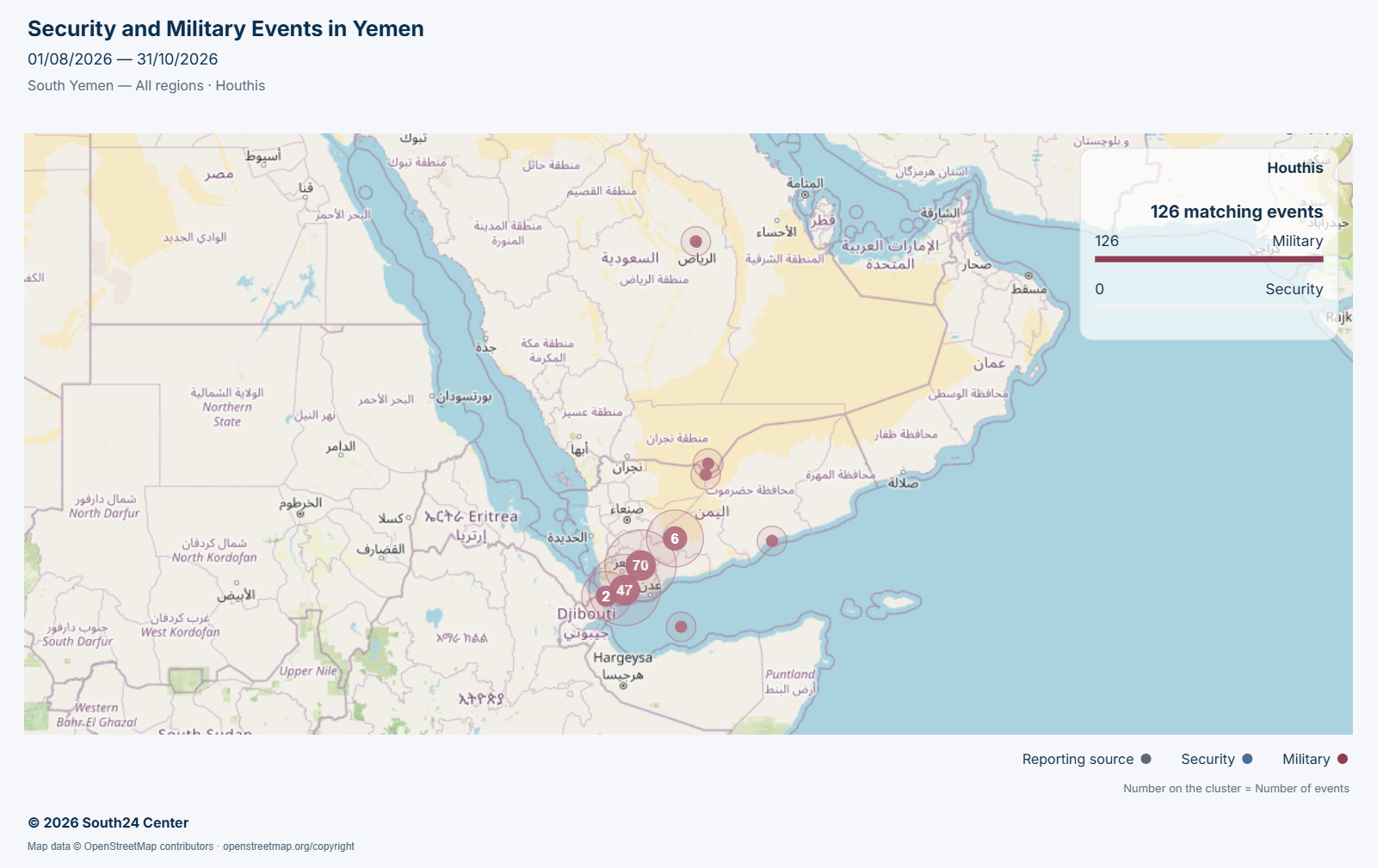
The incidents mentioned do not constitute an exhaustive account of all attacks and clashes over the three-month period. According to data from the South24 Center’s interactive map, 126 Houthi-related military incidents were recorded in South Yemen between the beginning of August and the end of October 2026.
Houthi attacks on South Yemen alone resulted in approximately 172 Southern fatalities and 334 injuries, according to the South24 Center.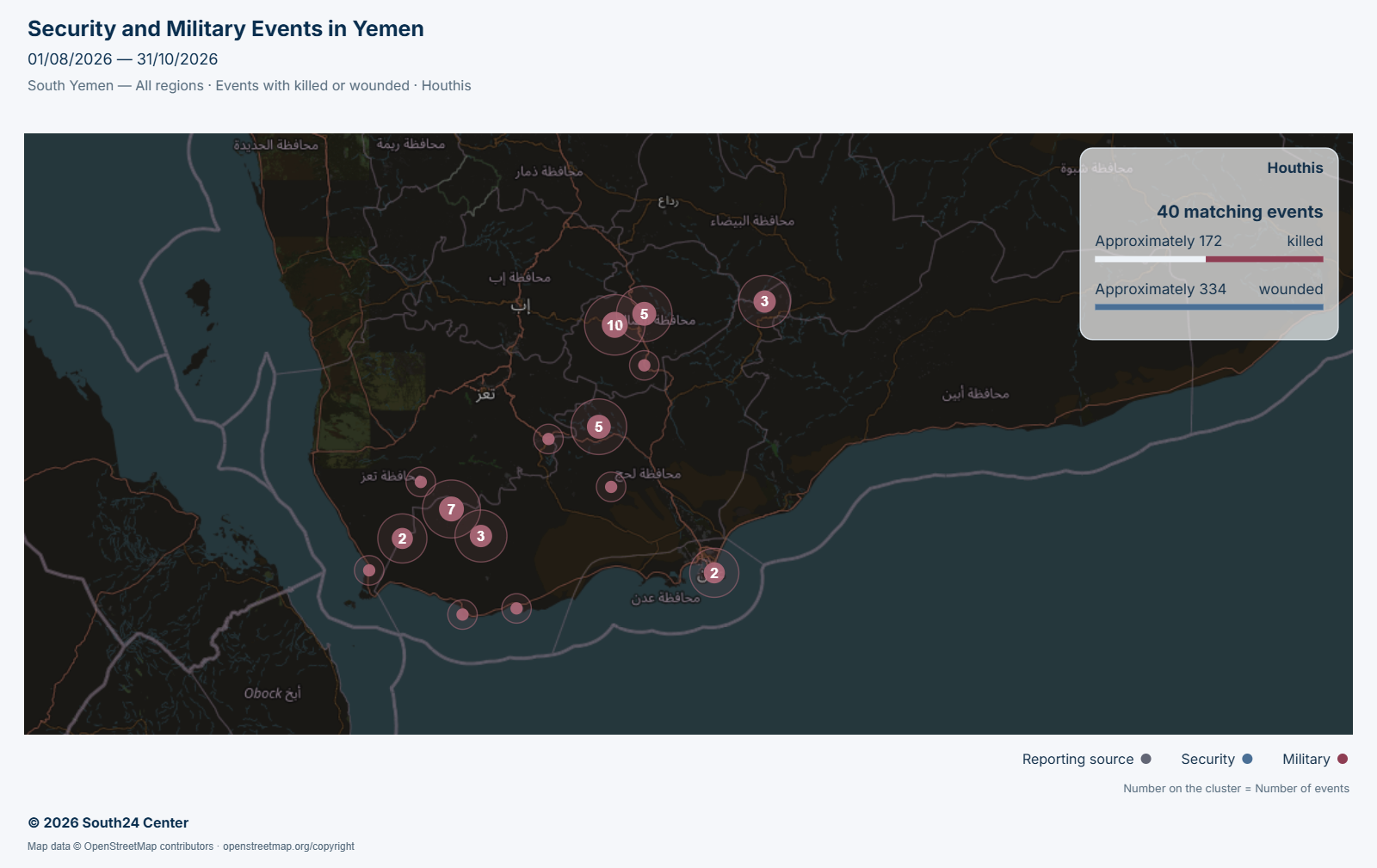
Patterns and Strategic Objectives Revealed by the Attacks
An analysis of Houthi attacks between August and October 2026 in Southern Yemen reveals a shift in operational scope and the nature of targets. While military context varies for each strike, the repetition of specific targets and the synchronization of long-range strikes with ground operations highlight five primary patterns:
1. Expansion of Attacks into the Southern Rear
While August and September operations focused heavily on frontline contact points in Shabwa and Lahj, October saw an escalation in strikes targeting positions far behind the frontlines. Most notable among these were Aden Airport, Maasheeq Palace, Coast Guard headquarters in Aden, and an inland training camp in Shabwa.
Although drones were spotted near Aden in August, the frequent missile strikes in October reflected a broader range of targeting to encompass vital civilian and government infrastructure. This suggests a Houthi effort to exert pressure on administrative, command, and service centers in tandem with frontline military operations.
2. Striking Camps, Troop Concentrations, and Supply Lines
Attacks targeted camps and military positions in Al-Abr, Al-Wadiah, Beihan, Shabwa, Ras Al-Arah, and Khor Umayrah in Lahj, culminating in the strike on Al-Alam Camp in Ataq, which hosted nearly 700 recruits.
These targets differ from forward positions that experience routine skirmishes; they are directly linked to troop training, force aggregation, and reinforcement movements. This points to a potential Houthi effort to degrade the mobilization and redeployment capabilities of opposing forces while disrupting logistics and supply lines.
3. Targeting Aviation and Transport Infrastructure
The repeated strikes on Aden and Al-Rayyan airports emerged as a defining feature of the October escalation. While the Houthis claimed to target Saudi military usage and weapons transfers, the Yemeni Ministry of Transport emphasized the civilian nature of both facilities, warning of threats to civilian and humanitarian travel.
Direct operational disruptions were immediately observed at Aden Airport: two flights were delayed on October 21, and air traffic was temporarily halted following the October 28 attacks, necessitating urgent repairs to the runway. In Hadramout, the shelling of Al-Rayyan Airport coincided with efforts to resume air traffic, shortly before Yemenia Airways operated its first flight from Cairo on October 27 following a disruption that lasted over four years.
The impact of these strikes extends beyond stated military objectives, threatening the movement of medical patients, students, expatriates, and humanitarian aid workers, while driving up operational and insurance costs.
4. Striking Politically and Institutionally High-Value Sites
October strikes reached Maasheeq Palace—a key political and governmental seat—and Coast Guard facilities critical to coastal, port, and territorial water security, alongside major civil airports.
This selection of targets suggests an intent to generate effects beyond direct military losses, including disrupting government institutions, security operations, and maritime enforcement activities.
The attacks on Coast Guard facilities in Aden stand out given their role in anti-smuggling efforts and severing illicit Houthi supply lines. Speaking to Okaz newspaper on October 24, the head of the Coast Guard Authority, Major General Khaled Al-Qamli, stated that the strike on Coast Guard headquarters followed successful operations—in coordination with other authorities—that tightened restrictions on smuggling routes and intercepted vessels used in illicit transfers. Al-Qamli noted that the attack caused infrastructure damage and wounded one service member.
Prior to the attacks, Al-Qamli had reaffirmed Coast Guard involvement in securing coastal areas, islands, and maritime corridors in coordination with the Giants Brigades, the Nation's Shield Forces, and the National Resistance to interdict illegal supply flows to the Houthis.
5. Synchronization of Long-Range Strikes with Ground Pressure
Missile and drone strikes deep inside Southern governorates coincided with the widening of ground clashes in Taiz, Lahj, and Bab el-Mandeb. In September, fighting escalated on the Taiz–Lahj border alongside repeated strikes on Ras Al-Arah, Al-Modaribah, Khor Umayrah, and Kahbub. In October, ground operations continued along Bab el-Mandeb and the West Coast while strikes intensified against Aden, Shabwa, and Hadramout.
This timing indicates the potential Houthi utilization of long-range strikes to disrupt the movement of reinforcements and military capabilities of opposing forces, creating operational confusion alongside ongoing ground battles.
Overall, these five patterns indicate a broadening scope and diversification of targets by Houthi forces beyond traditional frontline skirmishes. They raise questions regarding whether the group is shifting toward leveraging long-range strikes to apply continuous pressure on military capabilities and vital institutions across Southern Yemen under a unified operational strategy.
In addition to these patterns, evidence suggests the Houthis may be utilizing external intelligence support to select target locations. An investigation published by The Associated Press on October 27, based on analysis by satellite intelligence firm Aurora, identified Russian reconnaissance satellite activity linked to 40 attacks on Saudi Arabia between July and October. Similar patterns were observed surrounding the strikes on Maasheeq Palace in Aden on October 15 and Al-Alam Camp in Shabwa on October 19. The AP quoted a Houthi official stating that Iranian advisors provided the group with targeting information derived from Russian surveillance satellites.