SOUTH24 CENTER FOR NEWS & STUDIES
SOUTH24 CENTER FOR NEWS & STUDIES


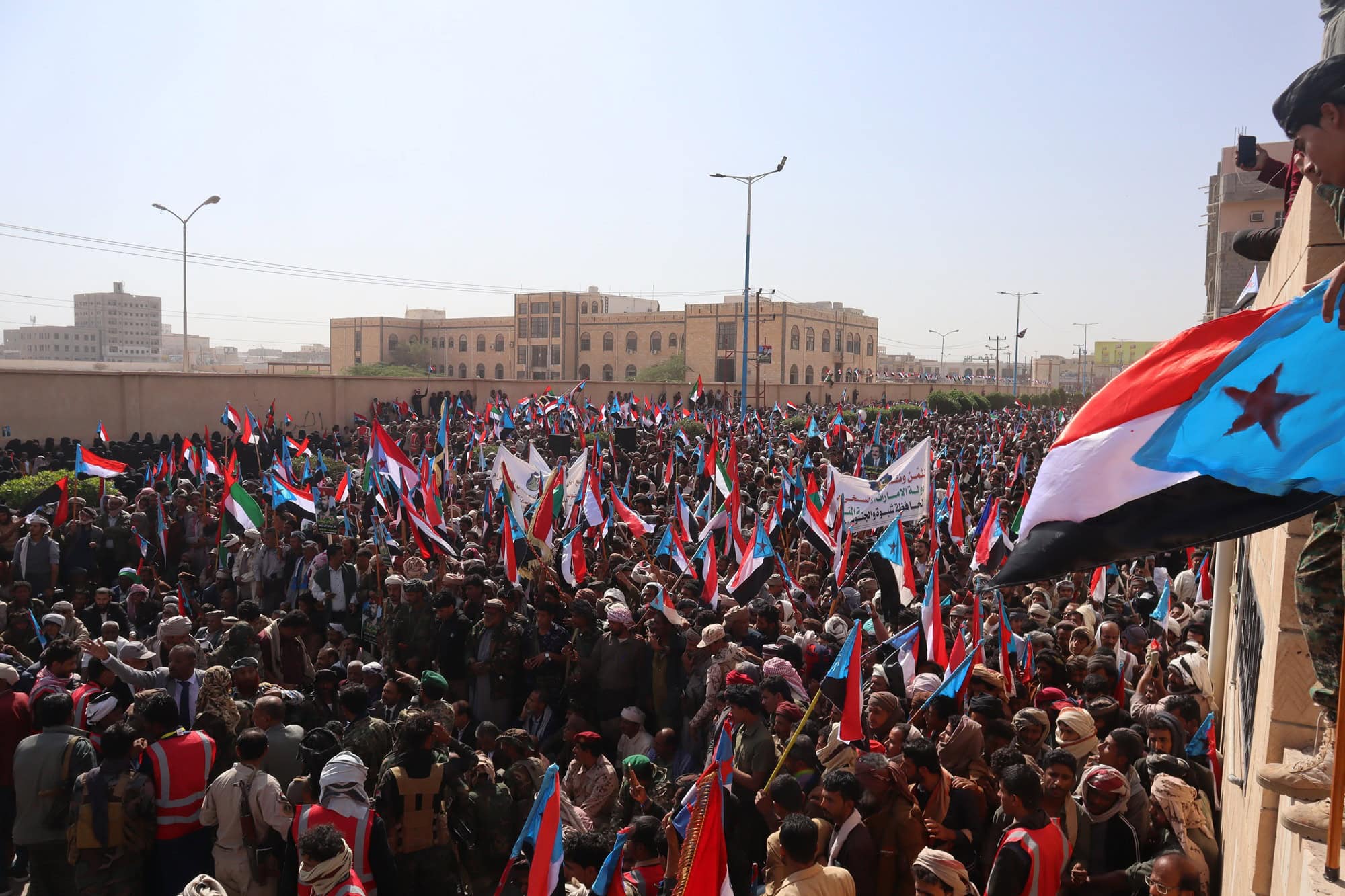
A mass rally in support of the Southern Transitional Council (STC) in Ataq, Shabwa Governorate, South Yemen, December 31, 2026. (Photo: South24 Center)
Last updated on: 12-11-2026 at 4 PM Aden Time
Aden (South24 Center)
A senior Southern Transitional Council (STC) official has presented the establishment of an independent Southern state as the only viable solution to prevent further Houthi expansion, urging the United States to support a negotiated settlement involving a transitional period of at least one year, followed by a referendum on South Yemen's independence, rather than continuing a military strategy he considers to have failed.
Amr Al-Bidh, Special Representative of the STC President for Foreign Affairs, told the American newspaper Washington Examiner in an interview published on Wednesday (November 11) that recapturing Sanaa was no longer realistic under current circumstances, calling on Washington to support a negotiated path toward an independent Southern state outside Houthi control.
"Given the circumstances, it's the only solution, to have a state in South Arabia," Al-Bidh said, arguing that the alternative would allow the Houthis to expand further.
He explained that the STC was not seeking an immediate declaration of independence but a transitional period of "at least one year" to consolidate power, strengthen Southern defenses, establish a defensive line against the Houthis, and create a balance of power.
According to the newspaper, the STC's current roadmap identifies 2028 as its preferred year for holding an independence referendum.
Al-Bidh argued that the latest military campaign against the Houthis had effectively failed and that retaking Sanaa was no longer a realistic objective under the current circumstances.
He attributed the military setbacks partly to what he described as the unwillingness of political parties in North Yemen to continue fighting the Houthis, warning that further offensives would only deepen losses among anti-Houthi forces.
Al-Bidh presented the creation of a Southern state as the only workable option under the current circumstances to prevent further Houthi advances.
He warned that the group's continued expansion toward Aden, Socotra, and Yemen's borders with Saudi Arabia and Oman could fundamentally alter the regional security balance, potentially transforming Houthi-controlled territory into what he described as "another Iran."
Proposed US Role
Al-Bidh said the STC had maintained contacts with Washington, reporting a positive response from some members of Congress and US officials to the council's proposals concerning Yemen's future.
He urged the United States to bring together Yemeni stakeholders and concerned regional powers to agree on a new strategy, rather than becoming directly involved in fighting or conducting further airstrikes against the Houthis.
Al-Bidh argued that Washington could play a central diplomatic role by convening the relevant parties and applying pressure to secure a political agreement.
He maintained that the proposed settlement would not depend on Houthi goodwill but on sustained international pressure, particularly from the United States, to ensure compliance.
The immediate objective, he explained, was to limit further losses among anti-Houthi forces "for now," while leaving open the possibility of renewed military confrontation in the future.
Al-Bidh also said the STC had urged the Southern Giants Brigades not to participate in the recent counteroffensive against the Houthis, considering the operation futile and arguing that it had undermined the brigades' military capabilities.
His remarks come amid continued fighting in Taiz and areas bordering Lahj Governorate, where Southern Forces and government-aligned formations have engaged in repeated clashes with the Houthis.
On Thursday (November 12), a military source told South24 Center that Southern Forces and tribal fighters had targeted Houthi positions along the Al-Mudharaba fronts in Lahj, inflicting casualties among the group's fighters, according to the source.
STC's Political Framework
Al-Bidh's proposal closely aligns with the political framework announced by the STC on January 2, 2026, when its president, Aidrous Al-Zubaidi, issued a Political Declaration establishing a two-year transitional period and calling for internationally sponsored dialogue between the concerned parties in South and North Yemen.
The declaration proposed a popular referendum on the Southern people's right to self-determination, through peaceful and transparent mechanisms consistent with international standards and with the participation of international observers.
On the same day, the STC issued a Constitutional Declaration for the State of South Arabia, outlining an independent state within the former borders of the People's Democratic Republic of Yemen, with Aden as its capital, and establishing a two-year transitional period that could be extended.
The accompanying Political Declaration stipulated that the Constitutional Declaration would take effect on January 2, 2028, but could enter into force earlier if calls for dialogue were rejected or if the Southern people, their territory, or forces came under military attack.
In a televised address on October 13, Al-Zubaidi reaffirmed the STC's commitment to the Political Declaration, Constitutional Declaration, and Southern National Charter, calling on Saudi Arabia and the regional and international communities to recognize these political frameworks.
He also reiterated the council's commitment to pursuing political and diplomatic efforts to secure the Southern people's right to self-determination and restore an independent Southern state.
On October 18, STC spokesperson Anwar Al-Tamimi told Sky News Arabia that the council remained committed to the timetable outlined in the January Constitutional Declaration, stressing that Southern statehood could be restored through dialogue without another war.
Previous article