SOUTH24 CENTER FOR NEWS & STUDIES
SOUTH24 CENTER FOR NEWS & STUDIES


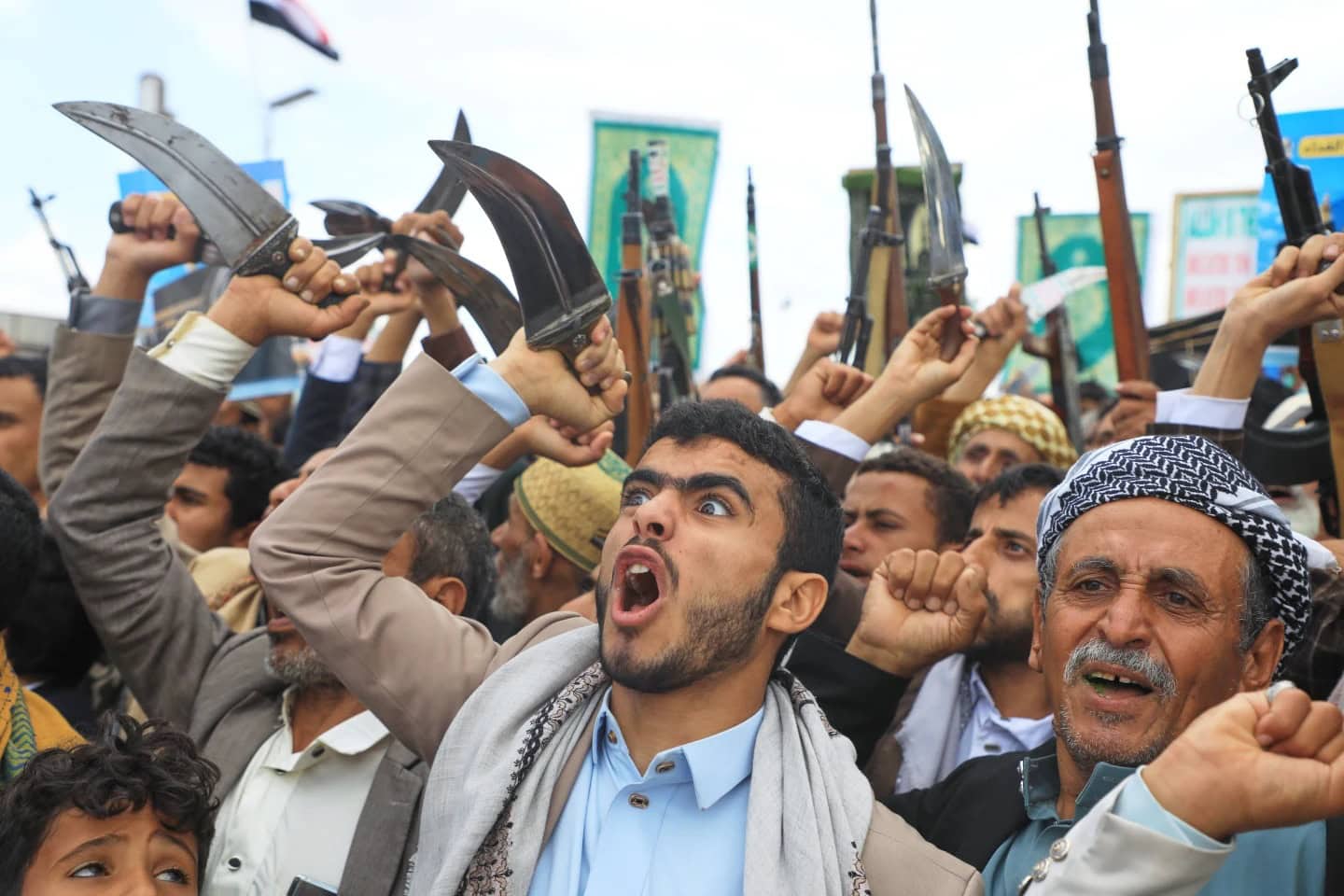
Houthi supporters during a rally in Sanaa, Yemen, September 18, 2026. (AP Photo/Osamah Abdulrahman)
19-11-2026 at 12 AM Aden Time
Aden (South24 Center)
Yemen's internationally recognized government on Wednesday (November 18, 2026) enacted a law formally designating the Houthi group a terrorist organization and criminalizing its activities, membership, financing, and military support. The legislation introduces penalties of up to 30 years in prison or death for specified offenses, alongside measures to freeze assets and pursue suspects domestically and internationally.
Law No. 1 of 2026 was issued by Presidential Leadership Council (PLC) Chairman Rashad Al-Alimi following approval by the Cabinet and Parliament. Comprising 55 articles across nine chapters, it establishes a legislative framework for prosecuting individuals and entities linked to the group, which calls itself Ansar Allah.
Under Article 4, the designation covers the Houthis' political, military, security, administrative, and civilian structures, as well as affiliated media, cultural, social, and economic entities whose organizational ties to the group are established. It also extends to those working on the group's behalf, supporting it through words or actions, or providing material or moral assistance.
The law prescribes the death penalty or imprisonment of 20 to 30 years for offenses including the armed seizure of state institutions, besieging cities and starving populations, targeting civilians and civilian facilities, planting landmines, and attacking international shipping.
Article 11 makes membership in the group punishable by 10 to 15 years in prison, while prescribing the death penalty for individuals proven to exercise actual leadership authority within its structures, regardless of their formal titles.
Financing the group carries a penalty of death or 15 to 25 years in prison. The legislation also prescribes the death penalty for supplying or smuggling weapons, military equipment, or dual-use materials, providing prohibited intelligence or logistical support, and recruiting or training people for the group's armed formations. It establishes aggravated provisions concerning the recruitment and exploitation of children.
On financial enforcement, the law provides for a permanent technical unit within the Attorney General's Office to prepare designation files, examine evidence of organizational links, and coordinate the identification of individuals and entities for inclusion on terrorism lists.
It authorizes the tracing, seizure, and freezing of assets linked to designated individuals and relevant offenses. However, permanent confiscation requires a final judicial ruling, while affected parties retain the right to challenge listing and freezing decisions through legal procedures.
The legislation also declares certain rulings, legislative amendments, appointments, and confiscation orders issued by Houthi-controlled institutions legally void, including measures targeting political opponents, journalists, businesses, and private property.
Safeguards for civilians and humanitarian operations
The law states that designation does not automatically establish an individual's criminal guilt or extend to residents, businesses, and others solely because they live or conduct legitimate commercial activities in Houthi-controlled areas.
It explicitly protects neutral humanitarian, medical, and relief operations, and requires the government and the Central Bank of Yemen to ensure the continued movement of food, medicine, fuel, and other essential supplies.
The legislation also prohibits criminal immunity through future political settlements for Houthi members implicated in serious crimes and violations. However, it allows negotiations and official communications concerning peace, ceasefires, detainee exchanges, and humanitarian issues.
Provisions on international cooperation permit Yemeni authorities to seek the arrest and extradition of suspects abroad, pursue assets through established legal channels, and cooperate with Interpol and foreign judicial authorities, subject to applicable laws and international agreements.
Parliamentary approval and reactions
The law follows the Cabinet's approval of the draft on October 11 and its unanimous passage by Parliament on November 16, during a virtual session chaired by Speaker Sultan Al-Barakani.
In a letter to Al-Alimi on November 17, Al-Barakani described the legislation as a declaration of the state's position against armed coercion and urged its implementation, alongside efforts to mobilize regional and international support.
On November 18, the Arab Parliament welcomed the law, describing it as an important step toward restricting the Houthis' activities and financing networks. It said the move was consistent with its broader initiative to encourage international and regional action against the group.
The measures follow earlier financial restrictions. On October 20, the Central Bank of Yemen in Aden ordered financial institutions to freeze accounts and assets associated with 135 individuals, entities, and maritime vessels linked to the Houthis, pursuant to an Attorney General's decision. A further directive on October 28 targeted six financial entities and electronic wallet services.
No direct official response from the Houthis to the newly enacted law had been identified as of publication.
Under its concluding provisions, the law takes effect from its issuance on November 18, with implementing regulations to be issued within 60 days. Its practical enforcement, particularly against individuals and assets outside government-controlled areas, will depend on the relevant legal procedures and cooperation between authorities.
Previous article