SOUTH24 CENTER FOR NEWS & STUDIES
SOUTH24 CENTER FOR NEWS & STUDIES


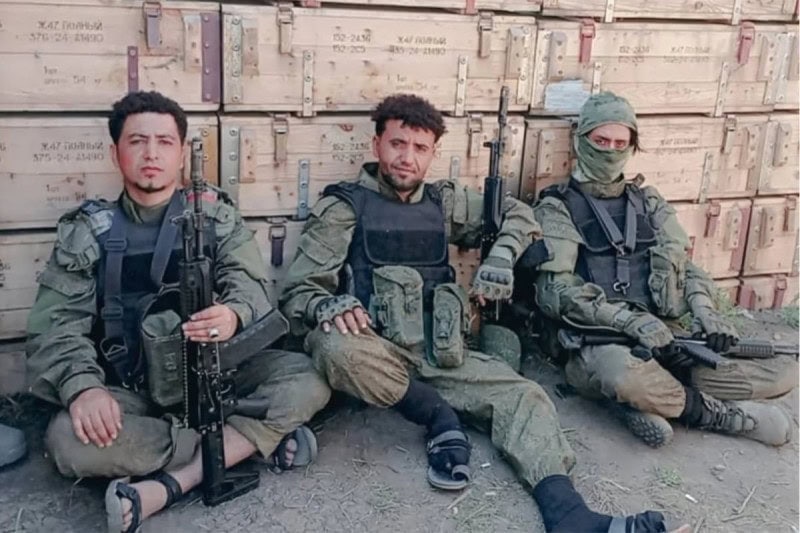
Yemeni fighters serving in the Russian army, in an undated photo published by the Organized Crime and Corruption Reporting Project (OCCRP) in October 2024. (Photo: OCCRP)
26-11-2026 at 7 PM Aden Time

Abdullah Al-Shadli (South24 Center)
From Halmin in Lahj Governorate, two brothers left South Yemen in search of income to support their families. They were killed while fighting alongside Russian forces in Ukraine last August, according to documentation by South24 Center. On November 14, a Yemeni recruit informed the center of the death of a young man from Shabwa and the loss of contact with another. In his remarks to the center, he warned young people considering traveling to Russia of the dangers awaiting them on the front lines. The center was unable to independently verify the identities or fate of the two young men he referred to.
What drives young men from Yemen to join a foreign army fighting a war thousands of kilometers from their homeland? In testimonies collected by South24 Center, recruits spoke of limited employment opportunities in Yemen and of Yemeni and Arab intermediaries who offered them enlistment in the Russian armed forces and arranged their travel. Some knew from the outset that they were going to Russia to serve in the military. Alongside the income they had been promised, they were also drawn by the hope that joining the army would allow them to obtain Russian citizenship.
After enlisting, some recruits accused intermediaries of manipulating the bonuses they had been promised before traveling, saying they had received only part of the promised amounts. The terms one recruit agreed to are set out in three pages of a Russian-language military service contract obtained by the center. The contract specifies a one-year service period, requires him to carry out military orders, and details some of the rights granted to him and his family. The available pages contain none of the amounts mentioned by the intermediaries, and the one-year term specified in the contract alone is insufficient to determine when he will be discharged.
Drawing on recruits' testimonies and documents obtained by South24 Center, this report examines how fighting in the Russian ranks was presented to young Yemenis, what they knew about military service before accepting it, and which promises were backed by the contract. These questions also concern families in South Yemen who may know when their sons left, but not when they will return.
From Intermediaries to the Military Contract
In testimonies collected by South24 Center, Yemeni recruits distinguished between what they knew about the nature of the work and what they knew about its terms. Some had agreed before traveling to join the Russian armed forces and understood that they were entering military service. However, their expectations regarding income and bonuses, as well as their hopes of obtaining Russian citizenship, were based on what they had heard from the intermediaries who arranged their travel.
Three pages of a single contract reviewed by the center, titled in Russian "Military Service Contract," show who assumes the obligations set out in writing. On the first page, the recruit signs with the Russian Ministry of Defense, represented by an official responsible for selecting contract servicemen. The intermediary does not appear as a party to the contract, and the available pages contain no commitment to grant the contract holder Russian citizenship or specify when he might obtain it.
The first page stipulates a one-year service period, during which the contract serviceman is required to perform general military duties and those associated with the position to which he is assigned, comply with orders from his commanders, and meet qualification requirements. One clause provides for participation in counterterrorism operations that may be conducted outside Russian territory. It does not name Ukraine, nor do the available pages specify which front the contract holder will be deployed to or what mission he will carry out there.
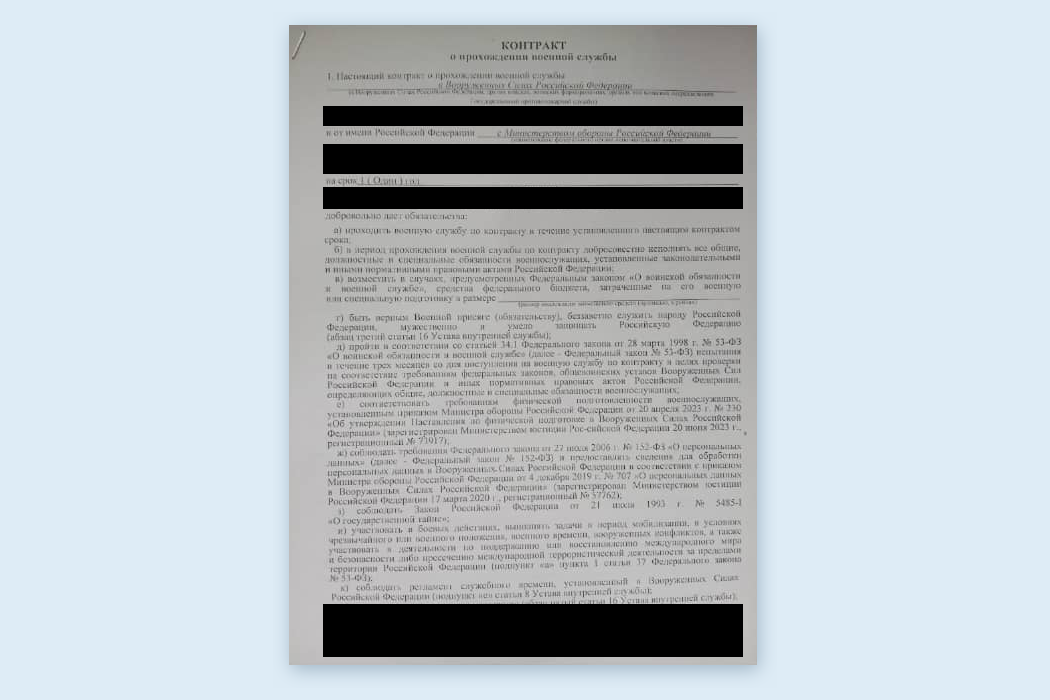
The first page of a military service contract between the Russian Ministry of Defense and a Yemeni recruit, stipulating a one-year service period and outlining the recruit’s duties. Identifying information has been redacted to protect the document holder’s safety. (Source: Yemeni recruits interviewed by South24 Center)
Among the documents obtained by the center is a separate Russian receipt covering six applications for single-entry visas. The receipt records the date the applications were accepted and an expected date of completion, assigning each application a reference number. The name of the contract holder appears among those listed, but the applications were accepted after he signed the contract. The center could not determine why his application was submitted at that time. The receipt also does not indicate whether the visas were issued or whether the six applicants traveled together. The center has redacted the names, signatures, and reference numbers to protect the safety of those whose documents were obtained.
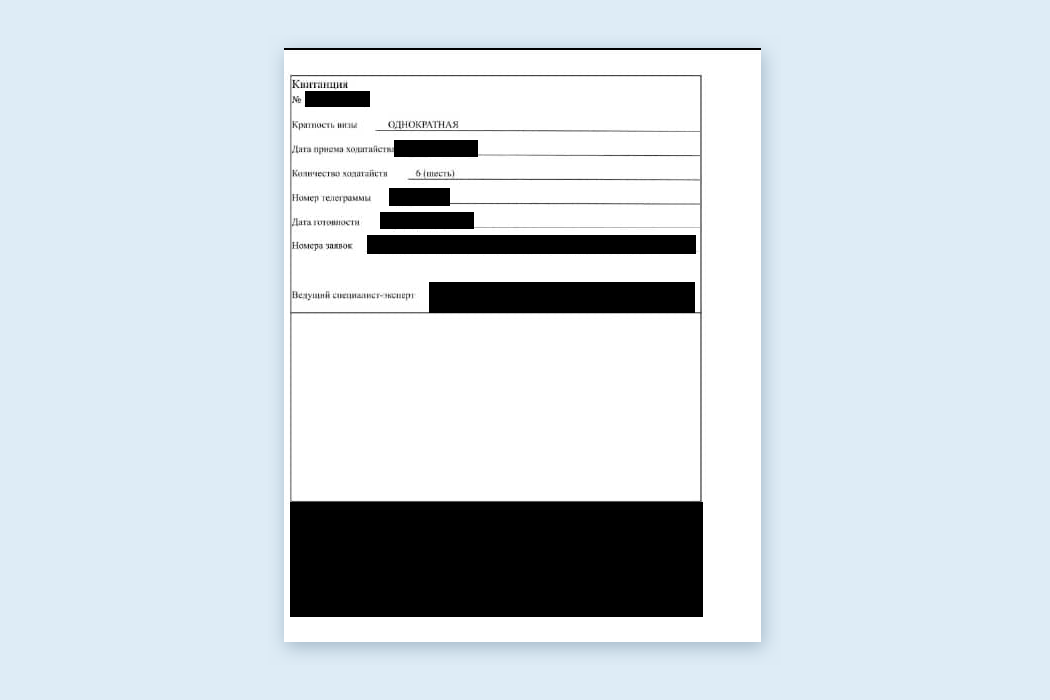
Russian receipt documenting the submission of six applications for single-entry visas. Names, dates, and reference numbers have been redacted. (Source: Yemeni recruits interviewed by South24 Center)
Other Yemenis have described experiences that differed from those of recruits who knew the nature of military service before traveling. In November 2024, the Financial Times reported on Yemenis who said they had traveled to Russia based on promises of high-paying civilian jobs, only to find themselves in its military ranks. A separate investigation by the ARIJ Network traced the role of Al-Jabri General Trading and Investment Company in recruiting Yemenis and transporting them to Russia. None of the recruits interviewed by South24 mentioned the company or accused it of wrongdoing.
Recruitment Bonuses
Recruits spoke of two forms of payment offered by intermediaries before traveling. The first was a monthly salary ranging in some offers from $4,000 to $5,000, and the second was a one-time enlistment bonus. The highest promised bonus mentioned in the testimonies was $50,000, while the offers varied from one person to another.
Some recruits said they had already received monthly salaries that they described as high. Others focused their complaints specifically on the enlistment bonus, reporting that they had received only a few thousand dollars despite being promised larger amounts by intermediaries. The center was unable to determine the bonus owed to each recruit or the shortfall in each case.
On the page detailing the Russian Ministry of Defense's obligations, the contract includes a provision that helps explain how monthly income is calculated. It stipulates an additional payment linked to the time a serviceman actually spends performing specific duties. Under Russian Federal Law No. 306, a contract serviceman's basic pay consists of two components, one based on military rank and the other on the position held, with additional allowances and payments added to them. As a result, the income of two recruits who enlisted during the same period may differ depending on their positions, duties, and the time spent performing them.
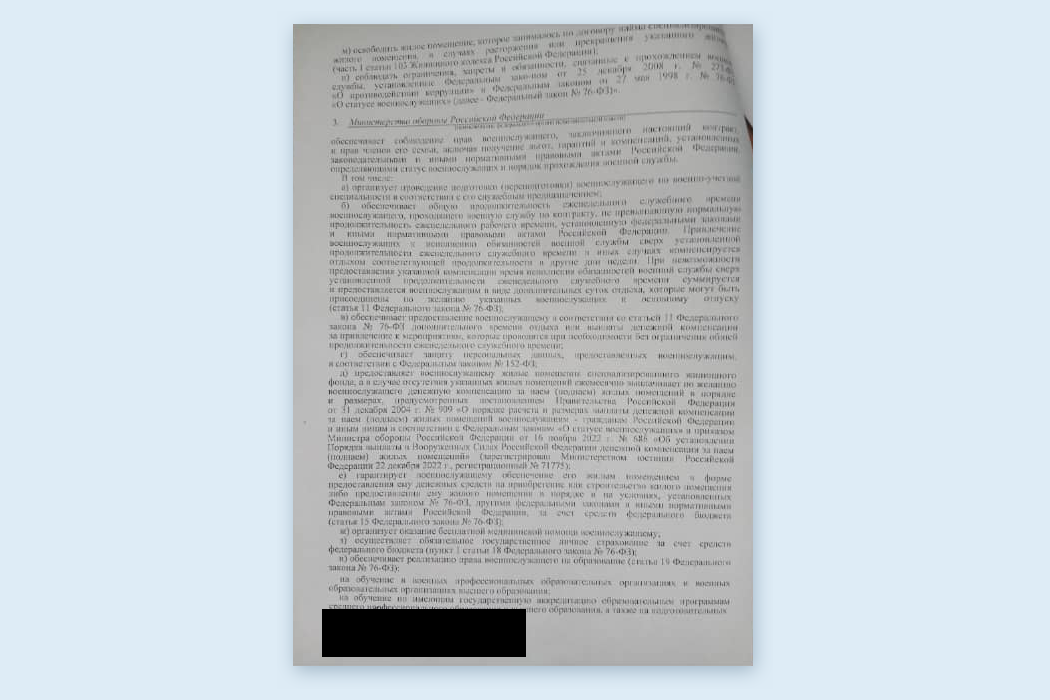
A page from the contract outlining the Russian Ministry of Defense's obligations toward the contract serviceman, including an additional monthly payment calculated based on the time spent performing specific duties. Signature details have been redacted. (Source: Yemeni recruits interviewed by South24 Center)
As for the signing bonus at the center of the complaints, the available pages do not specify its amount. The center did not obtain a payment record showing the amount approved by the Russian authorities for each recruit or how much was deposited into his account. The reason for the discrepancy therefore remains unclear. The intermediary may have promised the young man more than he was entitled to receive in the first place, or part of an amount that was actually paid may not have reached him. The available documents are insufficient to determine which explanation is more likely.
Some recruits also reported being required to purchase weapons, ammunition, and military supplies at their own expense, and to spend part of their bonuses on these purchases. The center found no provision in the readable clauses of the contract requiring the contract serviceman to bear these expenses. It was also unable to independently verify who issued these demands.
The recruits who spoke to South24 limited their allegations of financial manipulation to the Yemeni and Arab intermediaries who arranged their travel and enlistment. They described their dealings with official Russian authorities as professional and organized, and said they had no complaints about them.
When Does Military Service End?
The final page contains a detail of particular importance to families calculating their sons' expected return dates from the day they signed their contracts. The page bears the signatures of both parties and the stamp of the contracting authority, and states that the contract was drawn up in two copies. However, its commencement date is recorded in a separate clause referring to an administrative order issued the day after the signing. At the bottom of the page, another field designated for recording the contract's expiration date and the reason for its termination remains blank in the copy reviewed by the center.
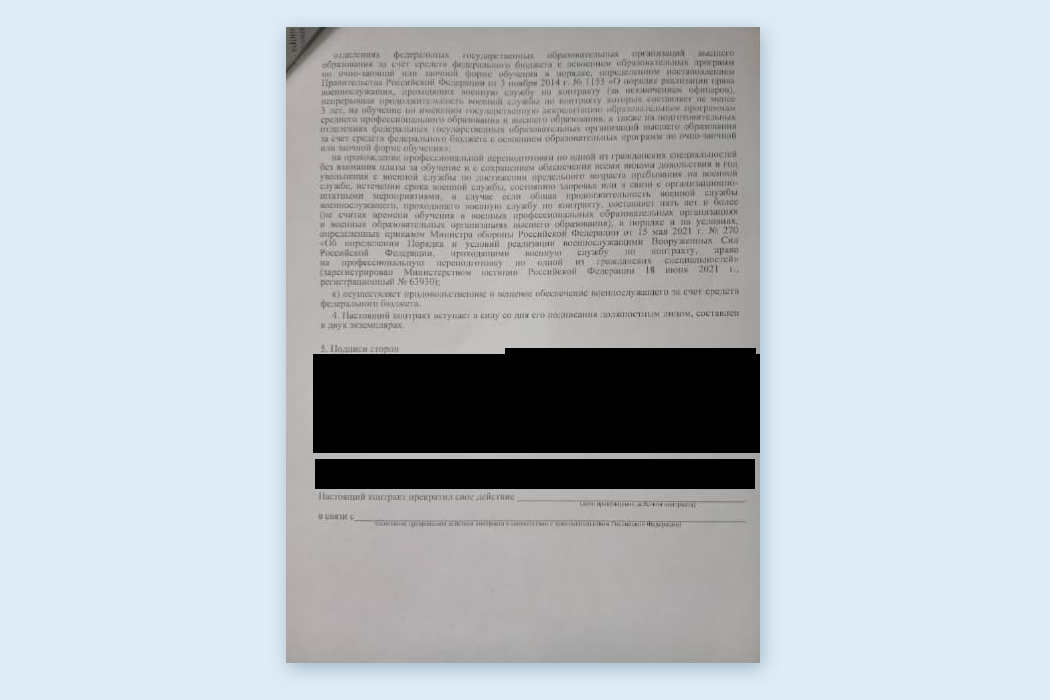
The final page of the contract, showing a blank field at the bottom designated for recording the date and reason for termination of service. Signatures, the stamp, and details of the service commencement order have been redacted. (Source: Yemeni recruits interviewed by South24 Center)
Throughout the service period, the contract stipulates obligations that go beyond paying wages. Its clauses cover medical care, certain forms of insurance and social security for the serviceman, as well as some rights extended to his family. The text refers to Russian legislation governing eligibility for these benefits, without specifying what benefits the contract holder or his family members actually received.
Discharge at the end of the one-year period is also linked to the provisions governing military mobilization. Article 4 of Russia's partial mobilization decree, issued in September 2022, stipulated that military service contracts would remain in force until the end of the mobilization period, except in specific cases of discharge. The documents obtained by the center contain no decision clarifying how these provisions were applied to the contract holder. What could be documented in his case was the date he began service and the duration specified when he signed. His actual discharge date, however, does not appear in the document.
For families who have lost contact with their sons, the question of a recruit's whereabouts and fate comes before any inquiry into his discharge date or his family's rights. The contract identifies the authority with which he signed the contract and specifies its obligations toward him, but it does not record where he served after signing or what happened to him there. To date, no reliable figures are available on the number of South Yemenis who joined the Russian armed forces or how many were killed or went missing in the war.
What Is the Yemeni Government's Responsibility?
The participation of Yemenis in the Russian-Ukrainian war places the issue of recruitment for paid combat before the Yemeni government. Addressing the issue in Yemen begins with establishing a safe channel through which returning recruits and the families of those killed or missing can submit their testimonies and investigating complaints of fraud and withheld payments, ultimately holding those found responsible accountable. The Yemeni Foreign Ministry and Yemen's embassy in Moscow have a direct role in contacting Russian authorities to verify the fate of those with whom contact has been lost, obtain death certificates, and help families recover their sons' remains. Local authorities in the governorates from which recruits have departed can also warn young people about documented recruitment methods and inform them of an official channel through which to report their concerns when they receive a suspicious travel offer.
In a country already suffering from a protracted war, young men leaving to fight in another war reveal another dimension of the cost Yemen is paying as employment opportunities and stable incomes dwindle. Addressing these conditions remains part of prevention, alongside monitoring intermediaries' activities. The clearest measure of a serious response today is whether a Yemeni family knows whom to contact when it loses contact with its son, and whether someone follows up on its report until it receives an answer.
Previous article