مركز سوث24 للأخبار والدراسات
مركز سوث24 للأخبار والدراسات


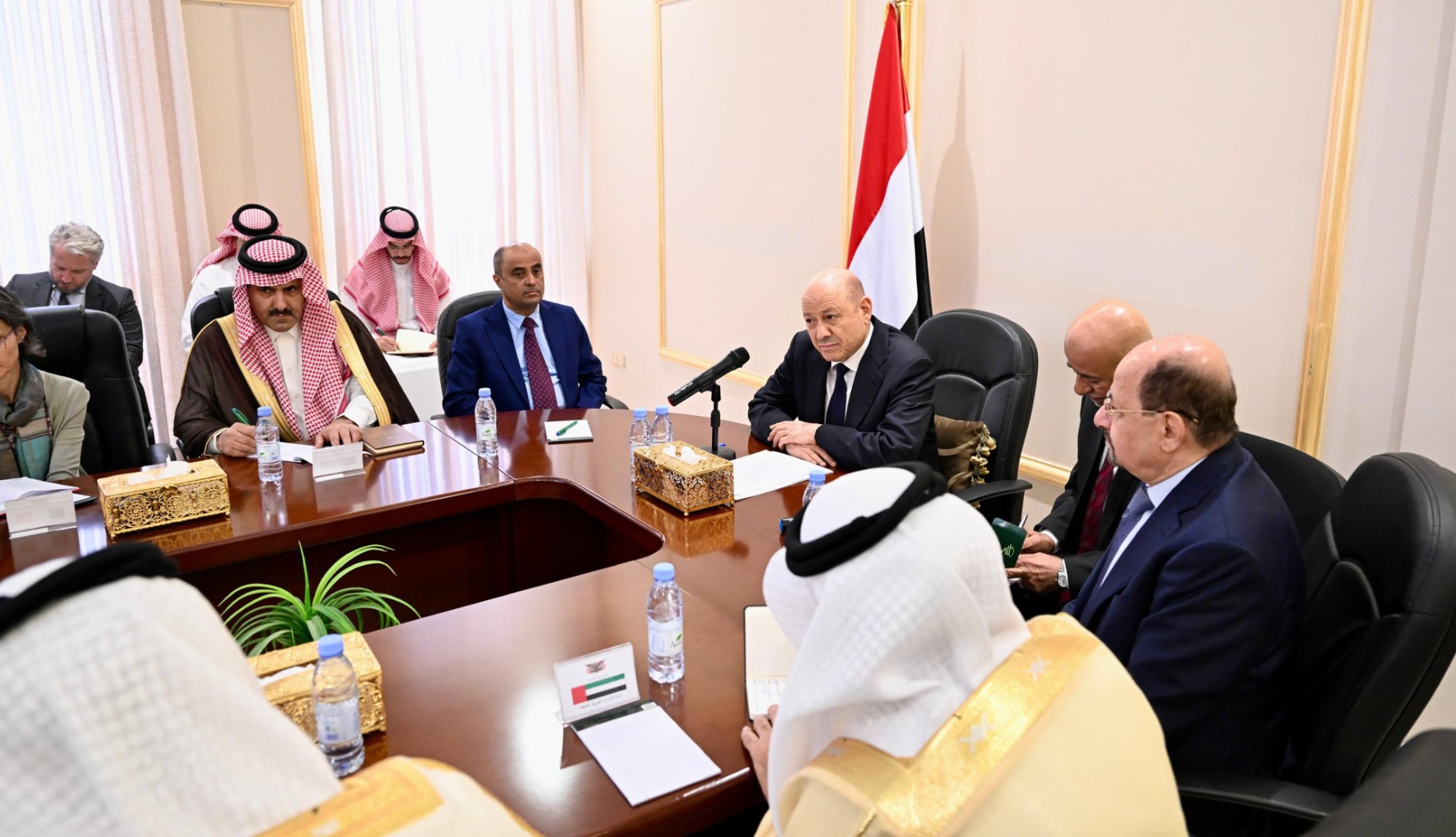
Rashad Al-Alimi during his meeting with the Quartet ambassadors in Riyadh, December 8 (Saba)
آخر تحديث في: 08-12-2025 الساعة 10 مساءً بتوقيت عدن
|
|
Riyadh (South24)
During a meeting on Monday (December 8) with ambassadors of the states sponsoring the political process in Yemen, Presidential Leadership Council (PLC) chief Rashad Al-Alimi issued statements described as unprecedented threats against civilians in South Yemen.
Al-Alimi linked recent developments in Hadramout and Al-Mahra to the potential suspension of salaries, fuel shortages, electricity cuts, and a worsening humanitarian situation, remarks observers told South24 Center amounted to a veiled threat of economic penalties targeting the civilian population.
The meeting, attended by Prime Minister Salem Saleh Bin Brik, saw Al-Alimi characterize the actions of the Southern Transitional Council (STC) and Southern Forces as “a serious threat to stability and a undermining of the legitimate government,” accusing them of violating agreed frameworks.
Responding to his remarks, an STC official told South24 that these frameworks “were never implemented in the North and never offered any protection for the South over the past years.”
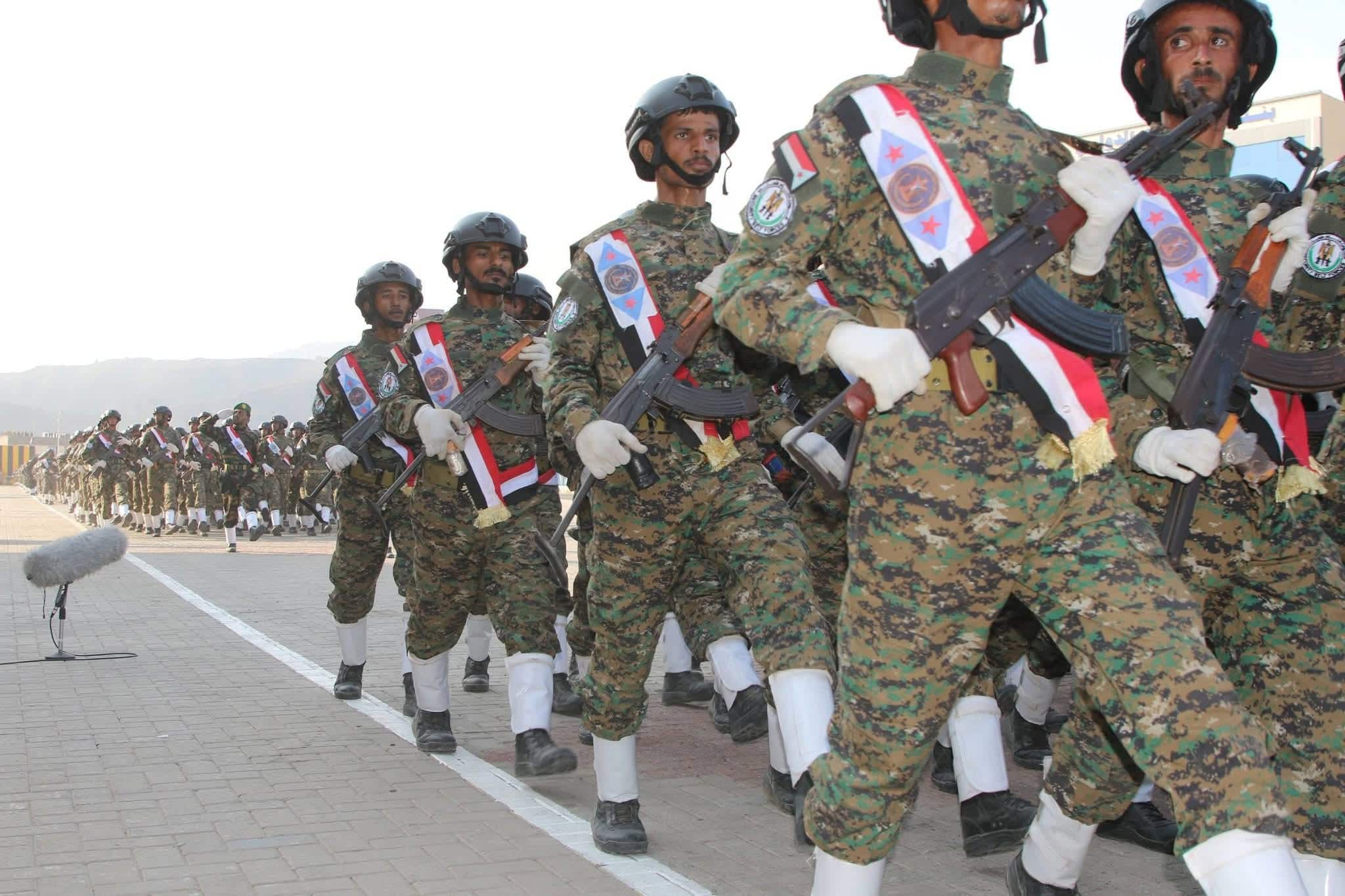
Al-Alimi also called for the “withdrawal of forces that arrived from outside the eastern governorates,” in reference to Southern units that constitute a core component of local security in Hadramout and Al-Mahra, including the Second Military District and the Hadrami Elite Forces.
Despite Al-Alimi’s attempt to imply international backing for his position, diplomatic sources suggest that the Quartet nations are unlikely to support any approach that involves punishing civilians economically, given that such actions violate fundamental humanitarian principles and international law prohibiting collective punishment.
Observers say Al-Alimi’s attempt to link essential services to political developments represents an effort to pressure the South by weaponizing people’s basic needs.
Al-Alimi went on to accuse Southern forces of operating “outside the institutional framework” and of “threatening stability.”
Southern Armed Forces spokesperson Mohammed Al-Naqeeb told South24 Center in a text message that the South has built its own official institutions, including its military and security establishments, at a time when the central state had collapsed.
Earlier, senior STC official Amr Al-Bidh told Reuters that the PLC chairman had left Aden, adding that the STC had not ordered him to do so.
In a separate statements for Sky News, Al-Bidh denied that the STC intends to form a new government in the South, stressing instead that the group is currently focused on securing the operational theater.
He added that “the coming phase is about restoring security and stability to Yemen’s regions and reestablishing security balance across the geography of the South. Beyond that, we have not discussed any future steps.”
Al-Alimi’s rhetoric, particularly his warning about the “collapse of the logic of the state”, is expected to raise significant concerns in South Yemen, where communities have endured three decades of marginalization and discrimination. His remarks are widely interpreted as threats aimed at the population rather than a mere political disagreement.
The ambassadors of the United States, the United Kingdom, Saudi Arabia, and the UAE did not comment on Al-Alimi’s statements or the latest developments in South Yemen.
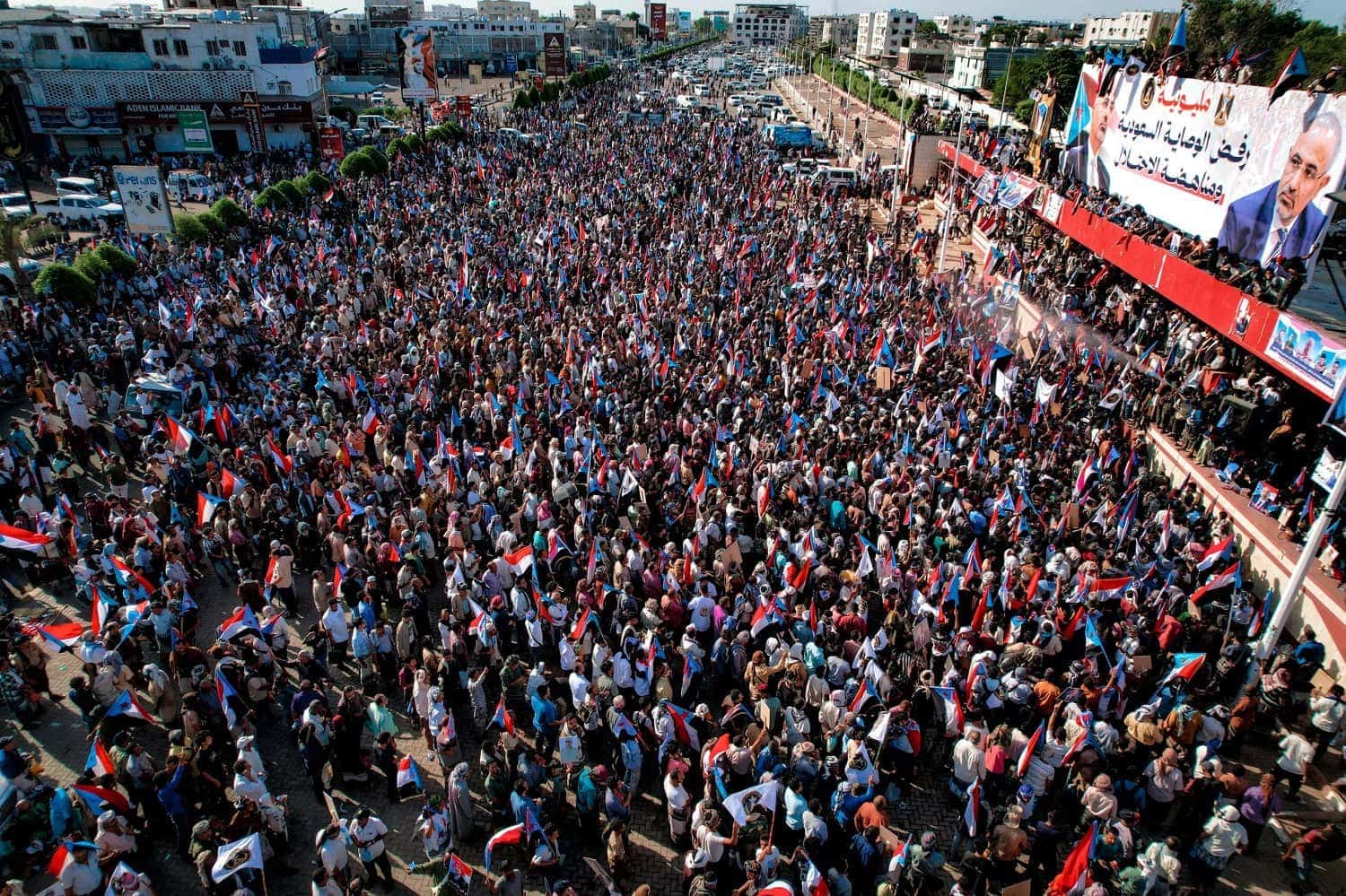
Meanwhile, the eight Southern governorates have seen widespread popular sit-ins since Sunday, calling on the STC leadership to declare what protesters described as the "State of South Arabia”, a name historically used for much of the Southern territory during British rule in the 1950s.