مركز سوث24 للأخبار والدراسات
مركز سوث24 للأخبار والدراسات


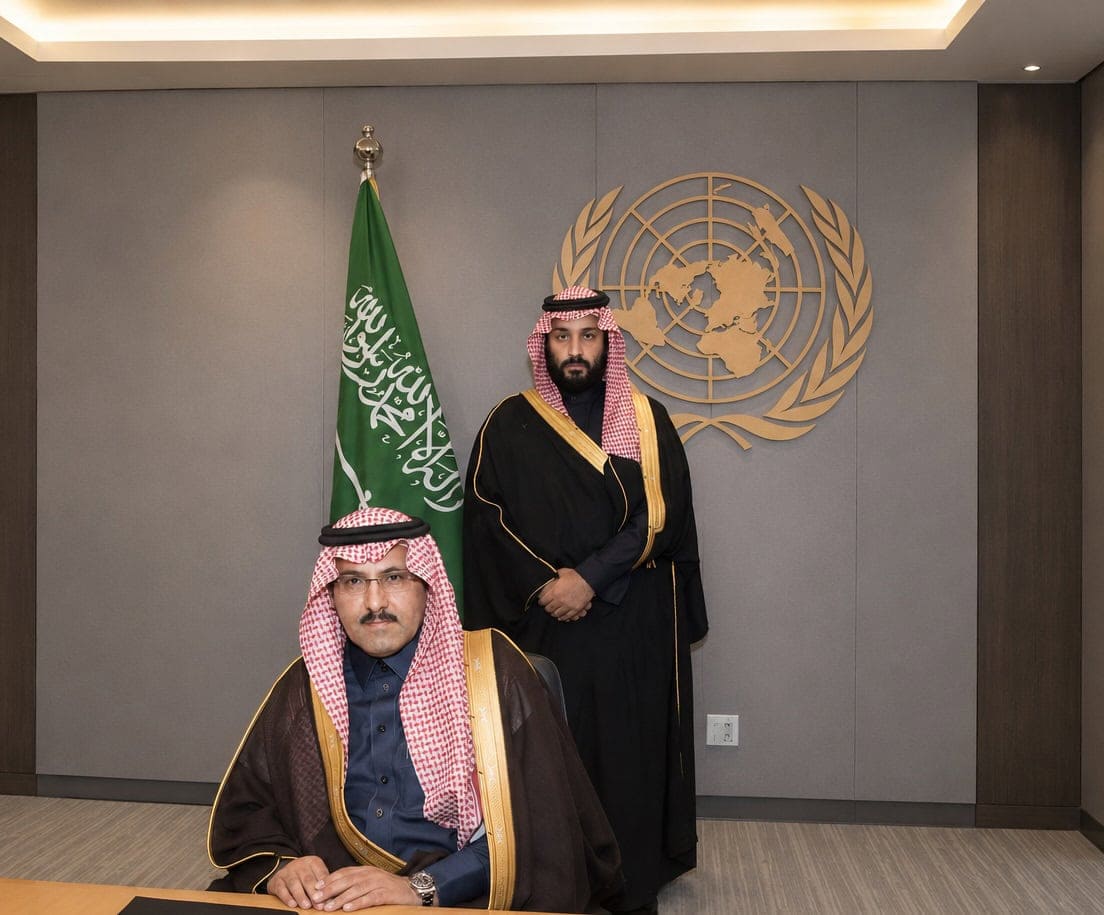
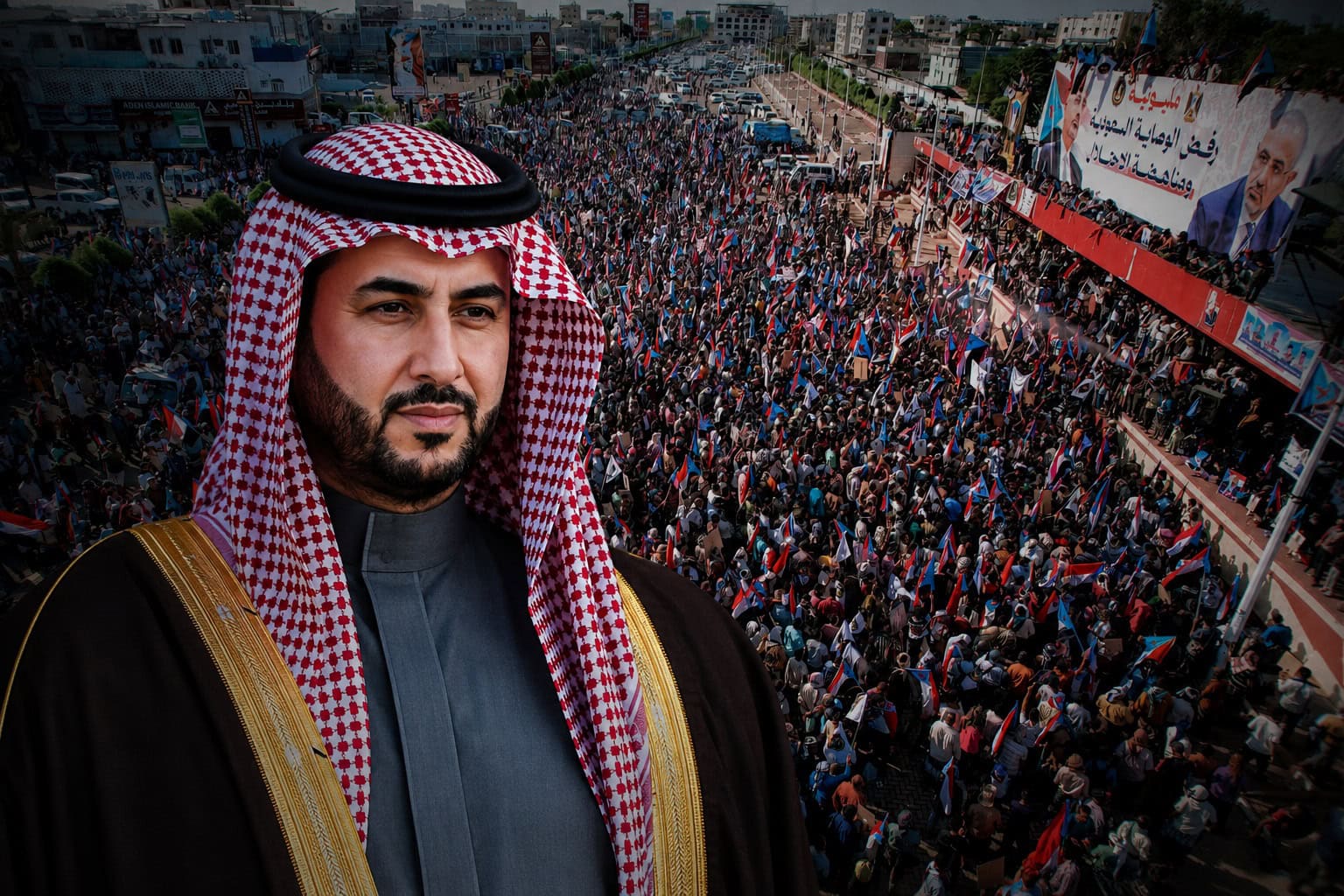
Saudi Crown Prince Mohammed bin Salman, with Saudi Ambassador to Yemen Mohammed Al Jaber seated at a table before him (Photo: SPA, edited using AI)
آخر تحديث في: 22-06-2026 الساعة 6 مساءً بتوقيت عدن
Abdullah Al Shadli (South24 Center)
As South Yemen’s governorates, particularly Aden and Hadramout, endure another summer marked by prolonged electricity outages, fuel shortages, and collapsing basic services, the crisis is no longer viewed merely as the result of infrastructural failure or isolated government shortcomings.
The crippling blackouts, disruptions to water supplies, flight delays due to fuel shortages, coupled with stalled salary payments, rising prices, and mounting public protests point to a deeper crisis -- that transcends local institutions and raises the question about who truly wields authority in areas controlled by Yemen’s internationally recognized government.
At the center of this debate sits Saudi Arabia, the most influential architect in shaping the political, military, and financial decisions in these areas. Since the Saudi-led Arab Coalition intervention in 2015, Riyadh’s role in Yemen has evolved far beyond providing external support in the fight against the Houthi rebels. Over time, Saudi influence has steadily penetrated into key institutions of the Yemeni state, including the presidency and central government, as well as security, economic, financial, and service-related affairs.
With the decline of direct Emirati involvement in some areas, Saudi Arabia has emerged as the dominant external power in government-controlled Yemen since early 2026, making Riyadh’s role in South Yemen increasingly visible. So too has the level of responsibility that comes with such extensive influence.
Riyadh’s growing influence introduces an uncomfortable question: if Saudi Arabia holds the power to dictate Yemen’s political outcomes, why has that influence not translated into bettering people’s daily lives? If Saudi Arabia can reshape political and military balances, restructure the landscape according to its priorities, and confront powerful local players like the Southern Transitional Council, to what extent can it continue to present itself as merely an external supporter, rather than the party directly responsible for the socioeconomic consequences of its institutional control?
To be clear, these questions do not absolve the Yemeni government, local authorities, forces on the ground from accountability for the administrative and financial failures and worsening services. Nor do they ignore the broader structural crises stifling public services and livelihoods, most notably the impact of the protracted war with the Houthis, the suspension of oil exports since 2022, and depletion of state revenues.
However, these factors must be viewed within a wider framework, where Saudi Arabia is the dominant external decision-maker shaping these issues – a position that carries unquestionable political responsibility.
Saudi Arabia’s Expanding Role
In the early stage of the war, Saudi Arabia entered at the helm of the Arab Coalition, an alliance formed to protect Yemen’s internationally recognized government and push back the Houthis. As the other participating Arab nations quietly withdrew over the years, the coalition became a two-nation partnership run by Riyadh and Abu Dhabi.
Over time, influence in areas liberated from Houthi control became divided between Saudi Arabia and the UAE, principally across South Yemen, alongside parts of Marib, Taiz, and other northern areas.
The UAE carved out a distinct presence in Aden, the neighboring governorates, and the Hadramout coast, areas where its close ally, the Southern Transitional Council, gained influence, especially following the 2019 Riyadh Agreement between the STC and the Yemeni government, in which the Islah Party holds significant influence.
In contrast, Saudi Arabia maintained broader influence over the Yemeni government, its foreign relations, the Presidential Leadership Council formed in 2022, and the overall political landscape, while keeping a firm grip on northern military operations and political files, including in Marib and along the Saudi-Yemeni border.
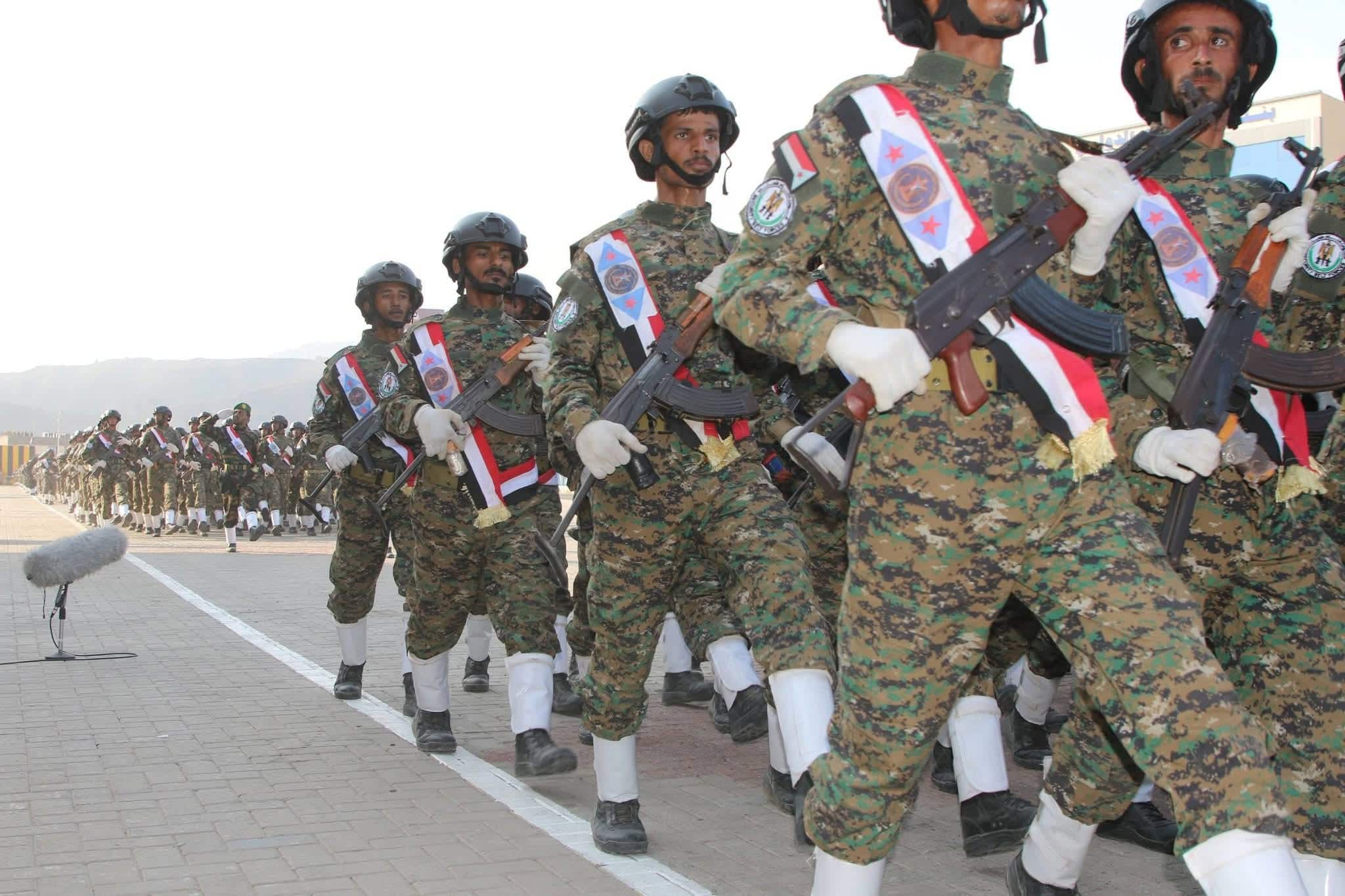
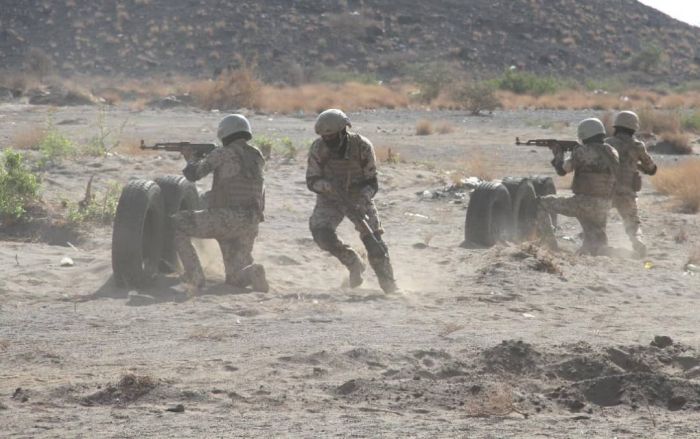
This uneasy alliance, marked from the start by growing competition, changed as Emirati engagement wound down. In January 2026, following sharp escalation in tensions with Saudi Arabia and Yemeni authorities, Abu Dhabi withdrew its remaining officers from South Yemen, amid Saudi Arabia launching targeted air strikes and deploying northern forces to crush STC-linked southern military units, driving them out from Hadramout and Al Mahra after a month-long military operation aimed at re-establishing control over the two governorates.
Saudi measures later extended to Aden and other governorates, reshaping the existing political and military structure through decrees issued by the Riyadh-based head of the Presidential Leadership Council. These included stripping two prominent council members -- the STC president and vice president—of their positions, and forming a new government minus the STC.
This consolidated unprecedented authority in Saudi hands, leading to public expectations that it would translate to tangible improvements in living conditions and public services, especially since political polarization and divided authority had long been blamed for the deterioration.
However, the continued decline, and even worsening, of conditions, six months after Riyadh’s intervention has raised new questions among communities in South Yemen.
Political analyst Salem Al Morshedi told South24 Center that public sentiment in South Yemen views Saudi Arabia’s role with increasing concern and skepticism, as Riyadh has transitioned from a supportive ally to that of an assertive regional actor seeking to impose arrangements that serve its own interests, even when it comes at the cost of economic, security, and social stability in the South.
Political analyst Salah Al Saqladi contends that Saudi Arabia’s agenda in Yemen, particularly in the South, has become clearer than ever. Speaking to South24 Center, he argues that Saudi Arabia’s intervention was never truly about supporting the legitimate government, but rather calculated to expand influence and securing Saudi interests under the stated goal of restoring legitimacy.
Those Who Hold Influence Bear Responsibility
Salem Al Morshedi clarified that placing greater responsibility on Saudi Arabia for the collapsing living conditions and public services does not exonerate the Yemeni government or local authorities. However, he underscored that the government operates within severely curtailed space due to its political and financial dependence on external support and decision-making, particularly Saudi Arabia.
According to Al Morshedi, there is a widespread perception in the South that the Yemeni government has effectively forfeited substantial sovereign authority and operates within boundaries strictly shaped by external powers, particularly Riyadh. From this perspective, the government’s chronic inability to address economic and service-related failures cannot be separated from the nature of the external influence, and also that Saudi Arabia’s recent offensive against the Southern Transitional Council in Hadramout derailed a potential path for improving local conditions after years of hardship, including managing southern oil resources and other assets for public benefit.
Echoing the assessment, Salah Al Saqladi contends that Saudi Arabia has emerged as the main political actor responsible for the deterioration of services and living conditions in South Yemen. He said Riyadh now possesses extensive power to direct local forces, influence their decisions, and dictate the trajectory of major political discussions with the Houthis, independently of other Yemeni actors.
He posits: “Saudi Arabia wields so much leverage that, if it chooses to, it has the ability to pressure local officials to fulfill their mandates and resolve critical operational challenges, including in the power sector and other public utility service failures.”
He pointed to Aden’s chronic electricity fuel crisis as an example, noting that part of the problem is linked fuel supplies expected from Hadramout that have been disrupted due to local disputes and competing centers of power. In this case, the issue is not that Saudi Arabia lacks the capacity to intervene, but rather how Riyadh chooses to use its influence and where its priorities lie.
Saudi Arabia’s Commitments and the Reality
Saudi financial and economic commitments to Yemen remain central to the geopolitical discourse. Since early 2026, Riyadh has announced several packages and agreements to bolster fuel supplies, electricity, and public finances. Ironically, the continuation of these pledges comes even as the South continues to suffer prolonged electricity cuts and worsening services, shifting public focus from tracking the scale of Saudi funding to assessing their actual impact on daily life.
For instance, on 18 January, Riyadh announced a development package worth 1.9 billion Saudi riyals covering dozens of projects in Yemeni provinces, along with a fuel derivatives grant. Three days later, on 21 January, the Saudi Development and Reconstruction Program for Yemen (SDRPY) announced an agreement to purchase fuel derivatives from PetroMasila to supply more than 70 power stations across Yemen.
On 25 February, Saudi Arabia announced 1.3 billion Saudi riyals, approximately $347 million, in support for Yemen’s government to cover employee salaries and budget shortages, which helped resume salary payments after a severe government funding crisis. On 27 May, Riyadh announced an additional urgent fuel support package worth $150 million to cover operational needs for diesel and fuel oil power plants.
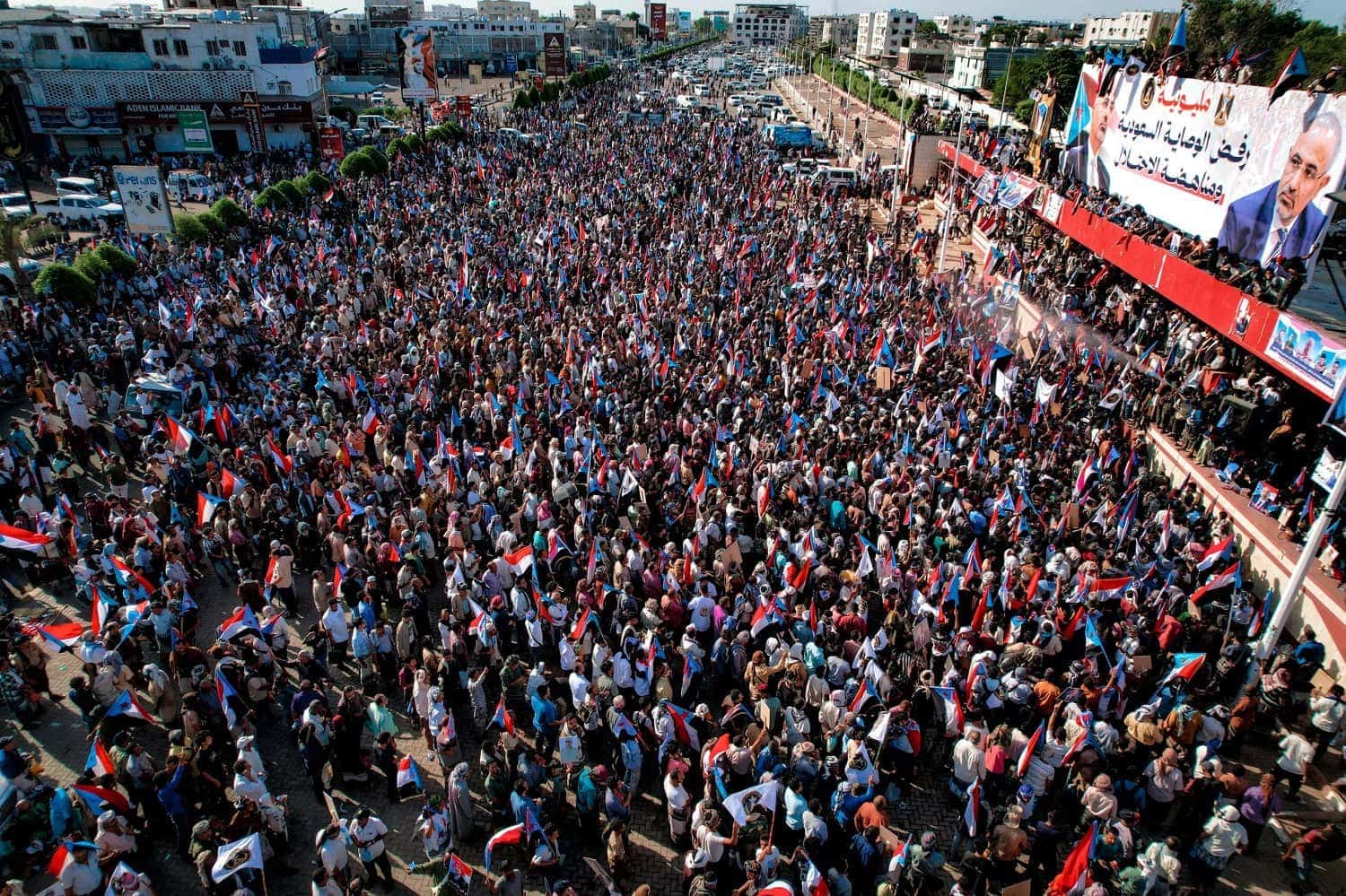
Notwithstanding these extensive financial commitments, citizens across South Yemen have seen little improvement. People vented their frustration on the streets of Aden and Hadramout in June, with demonstrators taking aim at both the Yemeni government and Saudi Arabia.
Questions have also been raised regarding the Emirati development projects in South Yemen that were halted, including renewable energy initiatives that could have helped address the electricity shortages.
According to energy expert Ahmed Bahakim, although Saudi Arabia has provided continued support through fuel grants, emergency projects, and temporary power generation solutions, most of the interventions have focused on managing the immediate crisis rather than addressing its roots.
He noted that transmission and distribution networks remain weak, financial and administrative problems persist within electricity institutions, and additional fuel or generation support has produced only temporary improvements.
On whether Saudi Arabia has been able to fill the vacuum left by the UAE, Bahakim told South24 Center that it is difficult to say that Riyadh has fully done so. He pointed out that while the UAE had introduced important solar energy projects in several southern governorates, Saudi Arabia’s recent interventions have focused more on emergency power solutions, operational support, and fuel supplies.
In conclusion, the collapse of services in South Yemen cannot be separated from the political forces controlling the Yemeni government. When critical decisions, like government formation and political restructuring, are shaped by external actors, the collapse in services and the economy become a reflection of that external oversight.
This is the reality now facing residents across South Yemen, and it remains a central concern for observers monitoring developments in the region.


قبل شهرين
قبل 3 أشهر