مركز سوث24 للأخبار والدراسات
مركز سوث24 للأخبار والدراسات



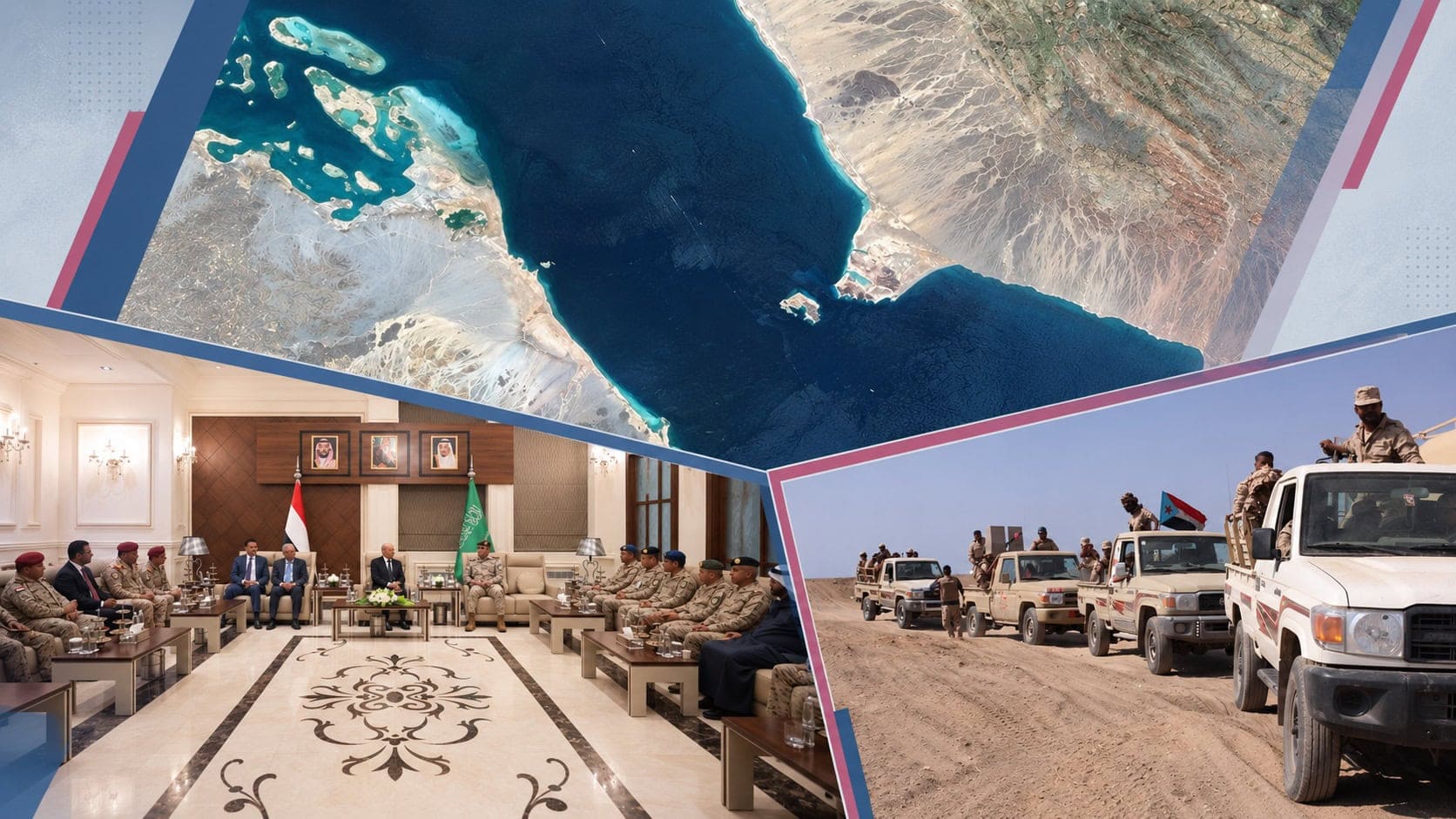
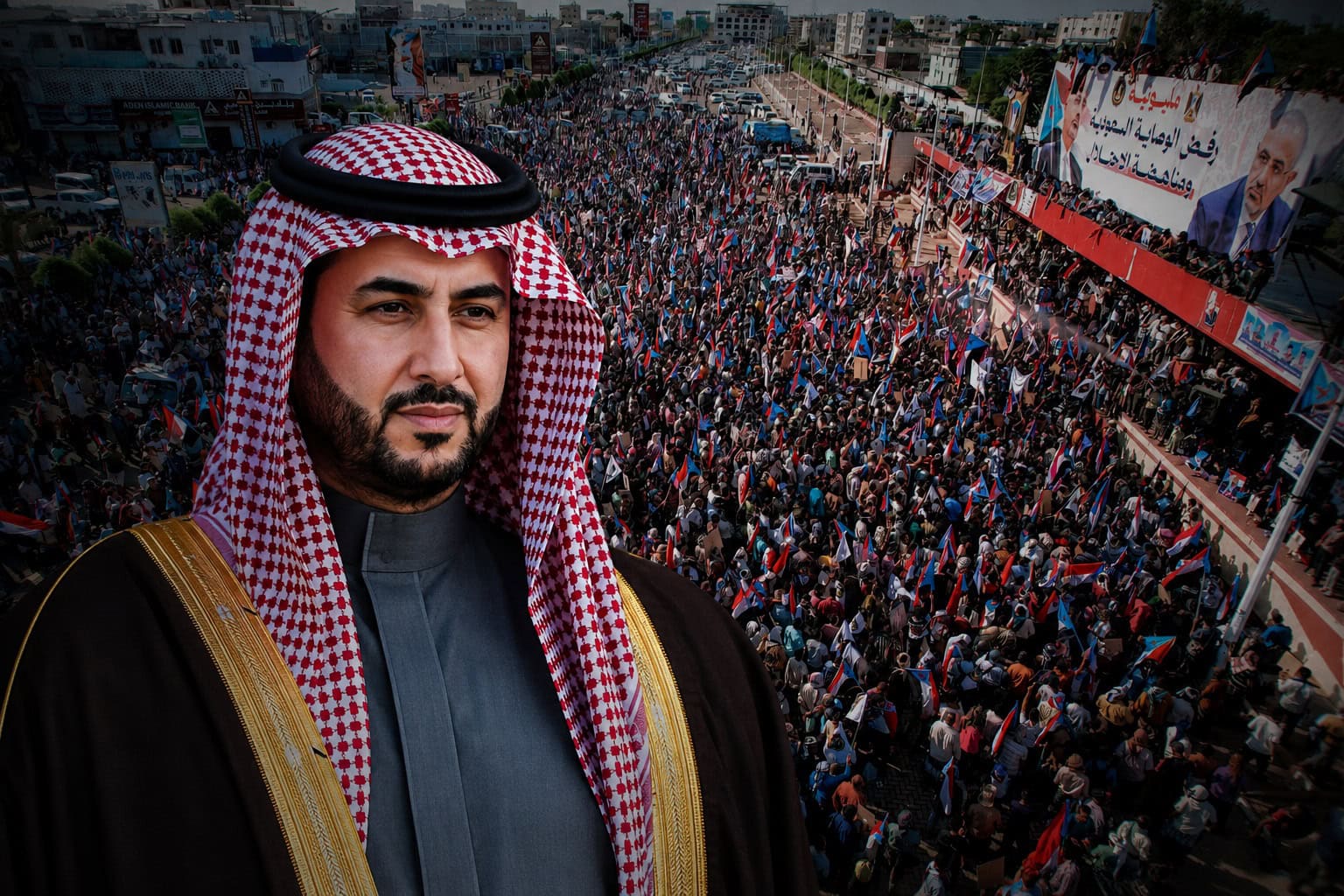
Composite image (South24 Center, AI-generated)
02-08-2026 الساعة 9 مساءً بتوقيت عدن
Farida Ahmed (South24 Center)
Yemen has witnessed a notable military escalation in recent days, bringing an end to nearly four years of relative calm that began with the UN-brokered truce between the internationally recognized Yemeni government and the Houthi group, backed by Saudi Arabia, which took effect on April 2, 2022. The truce called for an end to hostilities and sought to create conditions conducive to advancing the political process. However, this trajectory faced a new test after the Houthi group insisted on receiving an Iranian Mahan Air aircraft at Sanaa International Airport without the approval of the Yemeni government. This prompted a strike on the airport's runway to prevent the aircraft from landing, followed by a Houthi attack on Abha International Airport. These developments have reopened the cycle of military escalation, with implications for the security of the Red Sea and Bab Al-Mandab Strait, de-escalation efforts, and prospects for reviving Yemen's political process.
This paper seeks to analyze the dimensions of the latest escalation in Yemen, amid Saudi Arabia's rejection of attempts by the Iran-backed Houthi group to impose a new reality that goes beyond existing understandings. It examines the positions and strategic implications of the Houthis' announcement of a ban on Saudi maritime shipping, which represents a shift in the group's tools of pressure, as well as the repercussions for maritime security and energy supplies. The paper also explores possible scenarios for what comes next by assessing the limits of the military and political options available to both sides and their direct implications for the future of the de-escalation process and the political track in Yemen and the region.
Background to the Latest Escalation
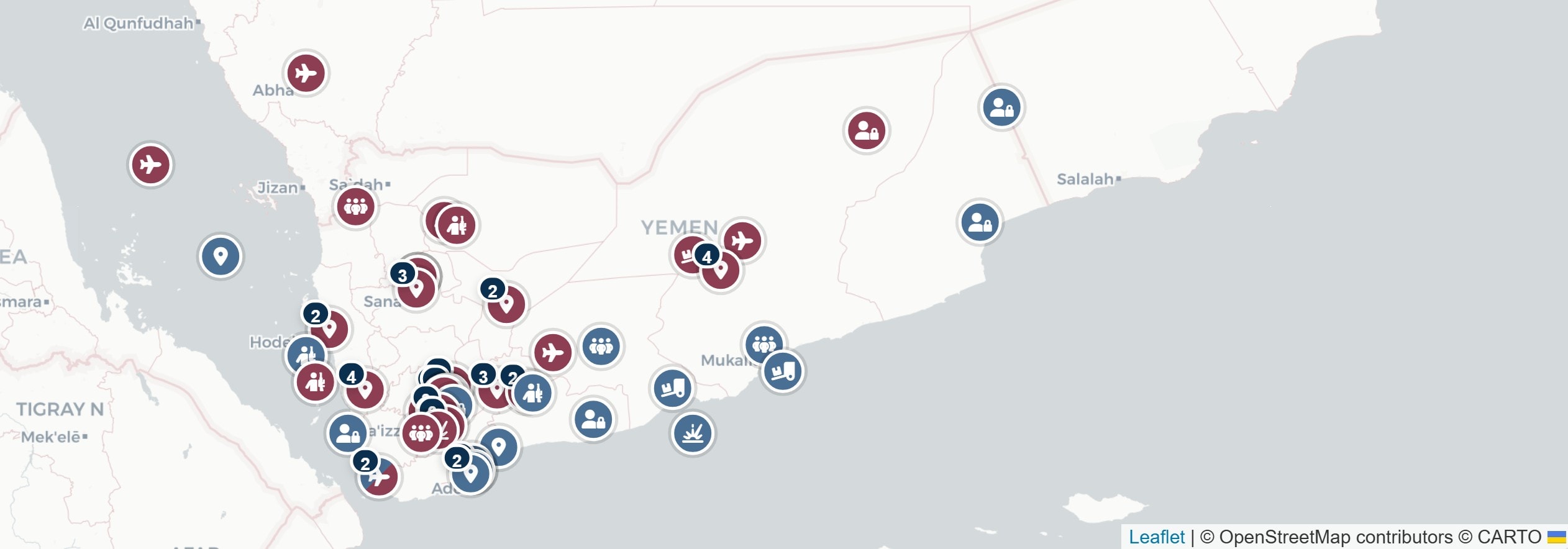
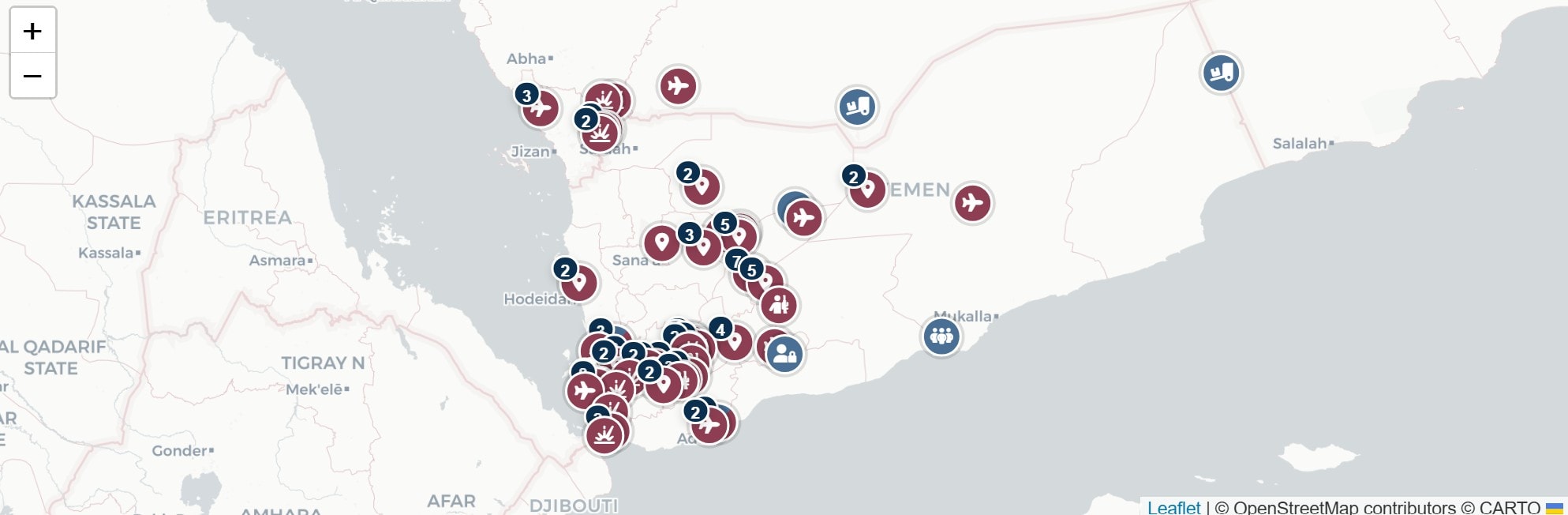
On July 13, an Iranian Mahan Air aircraft returned to Yemen from Tehran carrying a Houthi delegation. It was the same aircraft that had departed Sanaa on July 3, ostensibly to transport around 200 patients to Iran for medical treatment. However, according to multiple sources, the flight was carrying a senior Houthi delegation that had attended the funeral ceremony for Ali Khamenei before returning to Yemen. The aircraft's return route sparked widespread controversy after it proceeded with the flight despite warnings from Saudi Arabia and the internationally recognized Yemeni government against landing in Houthi-controlled areas. Instead of heading to Sanaa International Airport, which had been subjected to airstrikes attributed to Saudi Arabia and adopted by the Yemeni government, the aircraft landed at Hodeidah Airport.
Information obtained by South24 Center from a private source indicates that the aircraft was carrying a shipment of weapons and components used to assemble explosive-laden boats, and that Houthi personnel had been waiting for its arrival since the early morning hours to unload its cargo in Hodeidah rather than Sanaa. According to the source, the shipment was transported to a weapons storage facility in Hodeidah, which was later targeted by Saudi airstrikes. Saudi Arabia, however, did not provide detailed information about the nature of the military targets it struck in Hodeidah. Saudi military spokesman Brigadier General Turki Al-Maliki, meanwhile, confirmed that the operations did not target Hodeidah Port.
It is important to note that the flight's route reinforces the possibility that the landing at Hodeidah Airport was part of a prearranged plan, while the announced destination of Sanaa served as cover or a diversionary measure. The nature of the cargo, which is believed to have included components used in the manufacture and assembly of explosive-laden boats, makes Hodeidah a more operationally logical location for unloading it, given that the coastal city serves as a major hub for Houthi maritime activities in the Red Sea. Transporting such equipment overland from Sanaa to the coast would also have increased the risk of detection or targeting. This suggests that the choice of Hodeidah was not an improvised decision dictated by circumstances, but rather part of the operation's advance planning.
With these tactical arrangements in place, the escalation took a more dangerous turn when the Houthis targeted Abha Airport on July 13, putting it out of service for several days, before expanding their attacks to include facilities belonging to Saudi Aramco in both Jazan and Yanbu, for which the group claimed responsibility. As the scope of operations widened, the group shifted from targeting specific facilities to attempting to establish a new deterrence equation in the maritime domain. On July 20, it announced what it described as a "maritime navigation ban" on Saudi Arabia and all vessels linked to it. Just two days after the announcement, it targeted the two Saudi oil tankers, Nissilia and Laila, in a move that reflected the shift in the threat from land-based infrastructure to maritime shipping routes. The escalation did not stop there. The group also expanded its operations to target the East-West Pipeline, which transports Saudi oil exports to the Red Sea port of Yanbu. Amid the Iran-US war and the closure of the Strait of Hormuz, the pipeline has become one of the most important alternative routes for exporting Saudi oil, gas, and strategic commodities. Targeting the pipeline reflects an attempt to undermine one of the Kingdom's key logistical alternatives for securing its exports away from the Strait of Hormuz, particularly oil shipments bound for East Asia, and specifically China.
Shifts in Saudi Arabia's Position
It is clear that Saudi Arabia's position toward the Houthis has undergone a significant shift compared with the period following the announcement of the de-escalation in 2022. In recent years, Riyadh focused on containing escalation and prioritizing the political track alongside Oman, while also pursuing separate understandings with the group. Today, however, it appears more willing to respond to any direct threats targeting its security or critical infrastructure. This was reflected in the strikes targeting sites in Sanaa and Hodeidah, as well as strikes against drone launch sites in Iraq, signaling that Saudi Arabia is no longer pursuing the same policy of restraint that characterized the de-escalation period. This approach is further reinforced by remarks from Saudi Ministry of Defense spokesman Major General Turki Al-Maliki, who said that the Kingdom would respond to any attack against it.
At the same time, the Houthis' continued escalation could push both sides into a cycle of reciprocal attacks, increasing the risk of sliding into a full-scale military confrontation. The group's continued use of direct threats against Saudi Arabia as a pressure tactic could also exhaust this leverage and diminish its effectiveness if the escalation develops into a full-scale war inside Yemen, particularly amid Iranian pressure on the Houthis to maintain the pace of escalation. The group could find itself facing a heavy military, political, and economic cost, reducing the prospects of returning to a de-escalation track and ultimately losing one of the most important pressure tools it has used against Riyadh in recent years.
Saudi Arabia now appears to be adopting a strategy of "reciprocity" toward the Houthis. It is keeping the door open to signing the roadmap while maintaining full readiness to respond to any escalation. This approach undermines the Houthis' reliance on coercive pressure tactics and places the group in a difficult position where the calculations may exceed its expectations, particularly as Riyadh has the capacity to sustain a prolonged confrontation. The Houthi position is also not unfolding within a purely domestic context. Iran appears determined to use the group, alongside Iraq's Popular Mobilization Forces, as proxy pressure tools to impose a form of siege on Saudi Arabia. As Riyadh shifted toward exporting its oil westward through the Red Sea port of Yanbu to mitigate the impact of the closure of the Strait of Hormuz to the east, Tehran's message was clear: "No one will sell oil in a region where we cannot sell oil," according to Iranian Parliament Speaker Mohammad Bagher Ghalibaf. From this perspective, Iran's objective is no longer simply to disrupt maritime navigation in the Bab Al-Mandab in general, but to redirect pressure specifically toward Saudi interests in an effort to inflict direct harm. This was reflected in the Houthis' explicit announcement of a maritime blockade limited to vessels linked to Saudi Arabia, rather than vessels associated with other countries.
So far, Riyadh has absorbed the Houthi attacks because they have not caused structural damage capable of disrupting the supply chain or bringing strategic interests to a complete halt. However, Saudi patience could run out at any moment. A major, high-impact strike that completely halts exports could eliminate the Houthis' remaining options and potentially trigger a full-scale war. This possibility was recently reflected in statements by the internationally recognized Yemeni government about raising its level of readiness and preparing for a decisive battle, alongside local military movements and redeployments. In addition, Saudi Arabia appears intent on forming an international maritime coalition involving dozens of countries to protect navigation in the Red Sea from Houthi attacks. Faced with this possibility, Tehran continues to shelter behind its proxies to avoid direct responsibility, attempting to reduce the crisis to a "Saudi-Houthi dispute," even though the mechanisms of the blockade and pressure being applied point clearly to a decision driven fully by Iran.
The Dilemma of Houthi Calculations
The Houthis do not appear to be seeking a full-scale war scenario. Their leaders understand that prolonged attrition and continued threats against Saudi interests will gradually diminish the strategic value of their leverage and could ultimately result in the complete loss of their gains. However, the group finds itself constrained by intense Iranian pressure to keep this pressure card active, pushing the domestic scene toward an escalating struggle between rival factions.
This dilemma has exposed a clear divide between two currents within the group. The first consists of hardliners and those directly aligned with the Tehran axis, who carry out orders without regard for their domestic consequences. The second is a faction that believes it is necessary to preserve the political and economic gains achieved over years of conflict. The recent public appearance of Iranian Ambassador to Sanaa Ali Rezaei alongside the head of the Houthi government was a clear indication that the operational and political landscape is being formally and directly managed from within Sanaa under Iranian orders. The Iranian ambassador's role goes beyond conveying instructions. Like his predecessor, Hassan Irloo, he also plays a role in managing deep divisions among the group's factions and ensuring that it remains aligned with Tehran's strategic direction.
Ultimately, Iran seeks to reach a point where the war can be brought to an end, but it recognizes that such a moment would leave it facing heavy losses without achieving its desired interests, particularly amid the strict pressures and conditions being put forward by Trump, which reportedly include deducting compensation for damages resulting from attacks on ships in the Gulf from Iranian assets frozen in the United States. This raises the most difficult question: How far might Tehran go in inflicting damage on the region? And to what extent can its influence continue to shape Houthi decision-making and narrow the group's room for maneuver in negotiations if Iran's desire for revenge comes into conflict with the Houthis' own calculations of survival?
Possible Scenarios
In light of the developments outlined above, the trajectory of the Houthi-Saudi escalation appears to be heading toward one of two main paths. Which of these scenarios ultimately prevails will depend on the conduct of the parties in the coming phase and the extent to which regional efforts can contain the escalation. These scenarios can be summarized as follows:
Scenario One: A Return to De-escalation
This scenario rests on containing the latest escalation and the success of regional efforts, particularly Omani mediation, in bringing the parties back to the negotiating table. This would require the Houthis to refrain from targeting Saudi interests, while Riyadh continues to exercise restraint in its military response and remains committed to the roadmap. In this case, the latest escalation could be viewed as an attempt to improve negotiating terms rather than as a prelude to a renewed war, allowing the political process to resume and reducing the likelihood of military confrontation.
Scenario Two: A Slide into Full-Scale War
This scenario assumes the failure of efforts to contain the escalation, with the Houthis continuing to target critical infrastructure and maritime shipping linked to Saudi Arabia, or carrying out a major attack that causes significant strategic damage. In response, Riyadh could expand its military operations inside Yemen, moving beyond limited retaliation to a broader campaign with its local partners aimed at undermining the Houthis' military capabilities. Such a course would effectively bring an end to the period of de-escalation that began in 2022 and return Yemen to full-scale war, with repercussions for Red Sea security, energy supplies, and prospects for a political settlement.
Overall, the future of the crisis will remain contingent on the parties' ability to contain the escalation and return to the roadmap, or their descent into a broader confrontation that would push Yemen back into a cycle of war. The consequences of such a development would extend beyond Yemen's borders, affecting Red Sea security, energy supplies, and regional stability.


قبل شهرين
قبل 3 أشهر