مركز سوث24 للأخبار والدراسات
مركز سوث24 للأخبار والدراسات


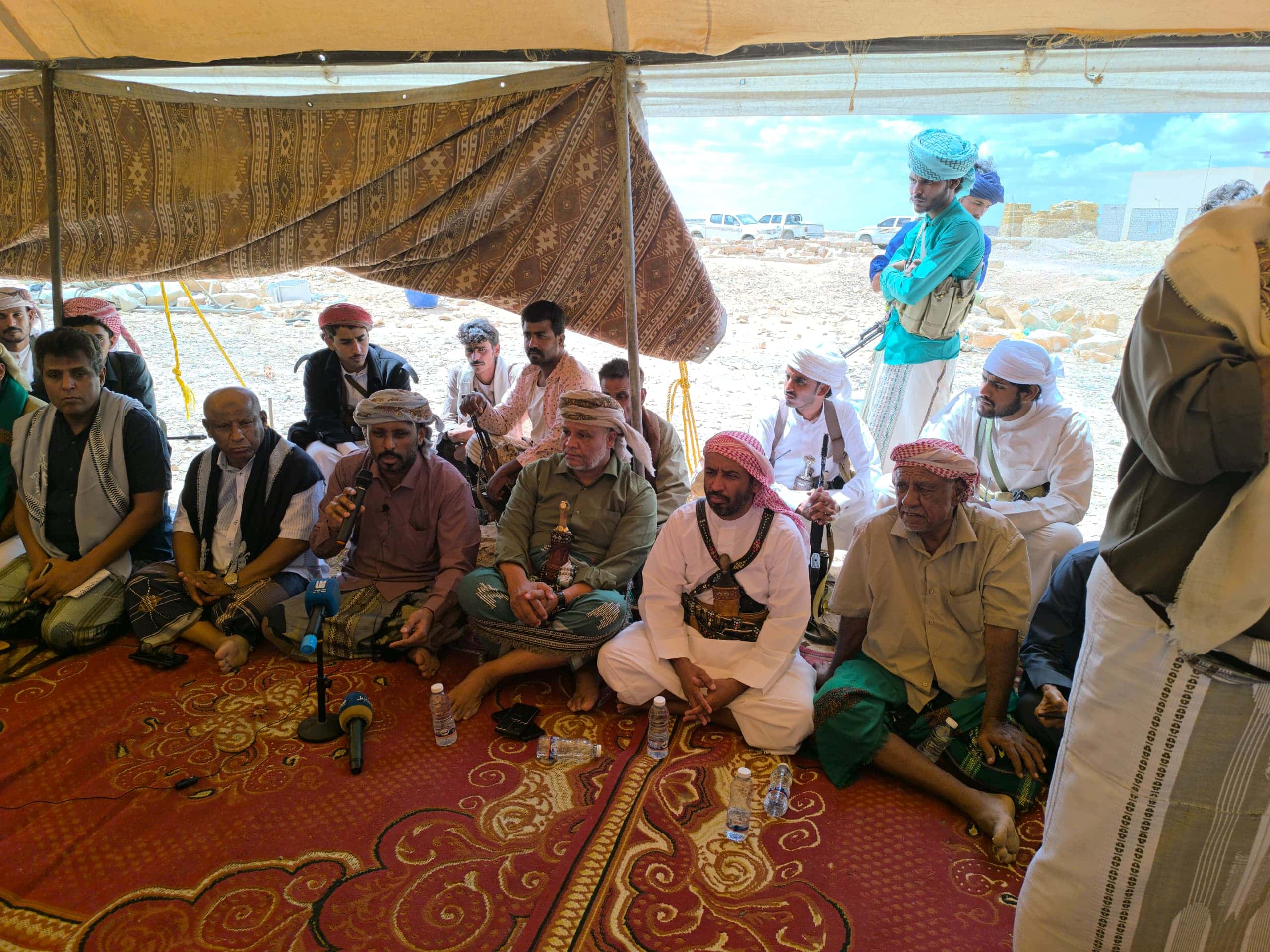
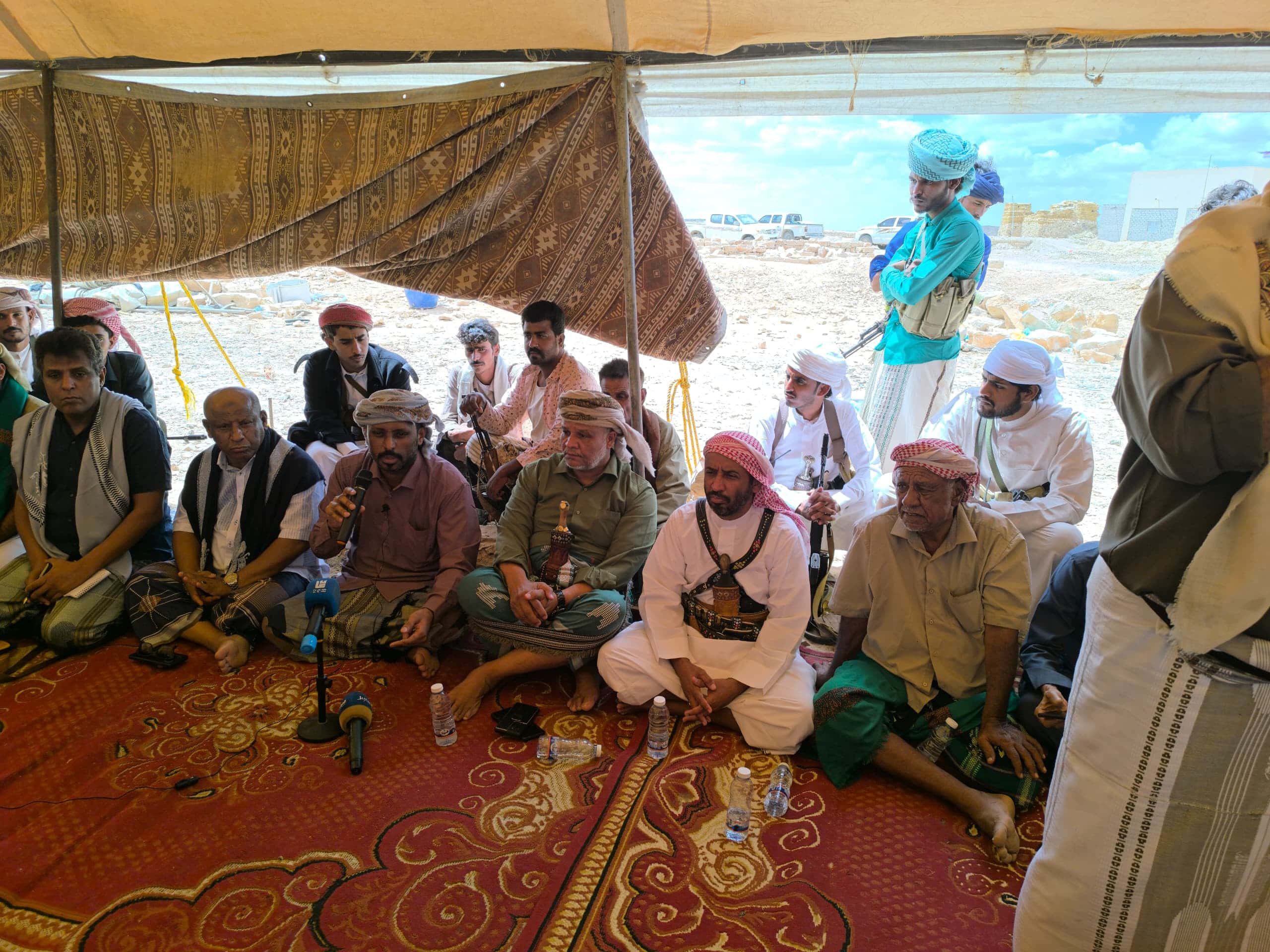
A large meeting of the Hadramout Tribal Alliance in the Hadramout Plateau, October 5, 2024. (South24 Center
آخر تحديث في: 31-08-2026 الساعة 8 مساءً بتوقيت عدن
Abdullah Al-Shadli (South24 Center)
Relations between Saudi Arabia and the Hadramout Tribal Alliance, led by Sheikh Amr bin Habish, have entered one of their most tense and uncertain phases after the alliance said its leader was prevented on July 23, 2026, from returning to Hadramout through the Saudi side of the Wadiah border crossing. As of August 27, neither Riyadh, the Presidential Leadership Council, nor local authorities had publicly explained the reasons for the delay in his return, leaving room for competing interpretations.
Bin Habrish had traveled to Riyadh on January 25 at the invitation of Saudi Arabia, according to the alliance, following several turbulent weeks marked by clashes and military shifts in Hadramout during December 2025 and January 2026.
The return crisis followed signs of a reshaping of influence networks within Hadramout. On July 2, Hadramout Governor and Presidential Leadership Council member Salem Al-Khanbashi issued a decision to form a 36-member preparatory committee to establish the “Supreme Coordinating Council for Hadramout’s Political and Social Forces.” Bin Habrish was among its members. Days later, he declined to participate, citing “personal circumstances and a personal conviction,” while reaffirming his support for the governor.
Subsequent developments, however, placed Bin Habrish and the alliance outside the rapidly evolving political arrangements in the governorate. While the local authorities proceeded with preparations for the council’s founding conference on August 31, Bin Habrish continued issuing organizational decisions from outside Hadramout. The most notable was the formation, on August 25, of the “Supreme Coordinating Committee for the Hadramout Self-Governance Project,” tasked with completing the project and preparing for steps toward its declaration.
At the same time, tribal calls for Bin Habrish’s return intensified. On August 23, the Hamoum tribes issued a statement demanding that he and his companions be allowed to return and gave the relevant authorities one week to act before resorting to what they described as “available options.” On August 25, a youth and tribal group in the Al-Ulayb area also announced that it had begun restricting the passage of fuel tankers, while allowing limited quantities for electricity generation in coastal Hadramout.
Oil remains at the heart of the dispute. On July 20, Presidential Leadership Council Chairman Rashad Al-Alimi, who is based in Riyadh, announced plans to resume oil exports from Hadramout after exports had been halted for years amid Houthi attacks on export terminals. The local authorities, meanwhile, have insisted that Hadramout receive a 20 percent share of the revenues and that the plan announced on January 7, known as the (Hadramout Measures Matrix), be implemented.
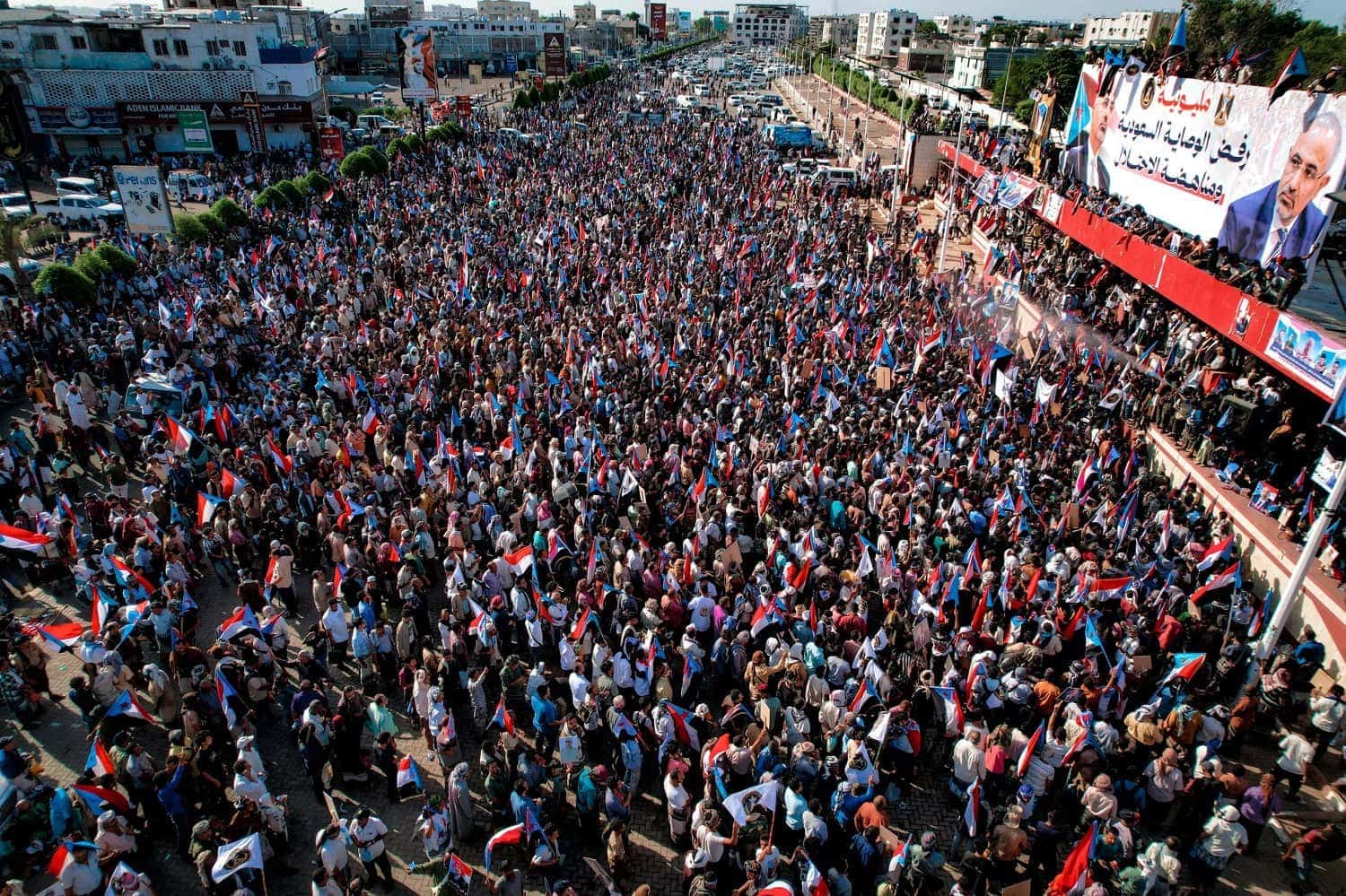
The crisis comes amid competition among three projects seeking to represent Hadramout and define its political position: a coordinating council led by the local authorities as an institutional umbrella for Hadramout’s political and social forces; a self-governance project promoted by Bin Habrish and the tribal alliance; and the Southern Transitional Council’s project, which views Hadramout as part of broader political arrangements encompassing South Yemen as a whole. The Southern Transitional Council is preparing to hold a mass rally in Mukalla on September 1, one day after the scheduled founding conference of the coordinating council. The council’s headquarters in Mukalla were raided by security authorities on August 25.
In the absence of an official explanation for Bin Habrish’s detention, a central question emerges: Has Saudi Arabia decided to reduce the role of the Hadramout Tribal Alliance after previously leveraging its tribal influence against the Southern Transitional Council, or is the current situation part of a broader effort to redistribute influence and contain competing forces ahead of the resumption of oil exports and decisions over Hadramout’s political future?
This report examines the trajectory of relations between the alliance and Riyadh, the role of oil in the dispute, the limits of the competing projects, and who will have the right to speak for Hadramout in the next phase.
Growing Tensions
According to some assessments, the current dispute is not solely about Sheikh Amr bin Habrish being prevented from returning to Hadramout. It also concerns the nature of the understanding that brought the Hadramout Tribal Alliance and Saudi Arabia together, and whether it was based on a long-term political partnership or a temporary security need that ended as circumstances on the ground changed.
Political analyst Dr. Omar Abdullah Baabbad links the beginning of the rift to a dispute over the financial demands of the forces formed by Bin Habrish, known as the Hadramout Protection Forces. In his assessment, these forces were established to confront Southern forces and introduce other formations into Hadramout, including Saudi emergency forces and Northern forces.
This interpretation places the crisis within the framework of a security arrangement that stalled over funding and the distribution of influence. Baabbad told South24 Center that “reducing the response to Bin Habrish’s demands and failing to fulfill all of his requests led some of the forces, as well as political and media figures, to break away from him, before the crisis deepened with his withdrawal from the Hadramout Coordinating Council.”
According to Baabbad, some of the figures who distanced themselves from Bin Habrish continued working within the new council, while Bin Habrish sought to oppose its establishment. Baabbad describes the obstruction of his return as having come on Saudi orders amid the dispute.
Dr. Omar Bajardana, head of the Knowledge Center for Studies, offers a different assessment. He does not believe that the relationship between Saudi Arabia and the Hadramout Tribal Alliance has fundamentally changed. Instead, he attributes the current divergence to the lack of a clear Saudi vision for managing the Hadramout and Yemen files, as well as the vacuum that emerged in Hadramout following the January events and the decline of the Southern Transitional Council’s role in the governorate’s power arrangements.
According to Bajardana, this vacuum allowed forces whose influence had declined in recent years to seek to restore their position, contain local forces, and gain control over the political scene. Speaking to South24 Center, Bajardana said that Bin Habrish’s continued emergence as a growing force and prominent Hadramout voice had become an obstacle to efforts by the Muslim Brotherhood to retain control of the local authorities and dominate the Hadramout Coordinating Council.
South24 Center attempted to contact a spokesperson for the Hadramout Tribal Alliance to obtain answers regarding these developments, but had not received a response as of publication.
Reshaping the Political Landscape in Hadramout
The significance of the Hadramout Coordinating Council goes beyond adding another entity to the list of local actors. Its establishment opens the door to shifting the center of political representation away from the frameworks led by the Southern Transitional Council, the Hadramout Tribal Alliance, and the Hadramout Inclusive Conference toward a broader umbrella led by the Saudi-backed local authorities.
Abdullah Bawazir, Director of the Southern Transitional Council’s Media and Culture Department in Hadramout, believes that Saudi Arabia used Bin Habrish at a certain stage to advance its objectives, supporting him and promoting his role before its interests changed.
Bawazir told South24 Center that the Southern Transitional Council had previously sought to reach understandings with the Hadramout Tribal Alliance, but Bin Habrish rejected rapprochement efforts and mediation initiatives. He also rejected, according to Bawazir, attempts to build closer ties with the local authorities under former Governor Mabkhout bin Madi, attributing his position to Saudi directives.
Bawazir added that the alliance had received promises that Bin Habrish would be given a broader role in governing Hadramout, alongside self-governance and reforms to the electricity sector. This strengthened his position and drew him into the local struggle for influence before he found himself facing a different political reality.
Bawazir’s account reflects the position of a political actor that has been in conflict with Bin Habrish and therefore cannot be separated from the rivalry between the Southern Transitional Council and the alliance.
Political analyst Omar Abdullah Baabbad agrees with part of this assessment, arguing that the establishment of the coordinating council is aimed at weakening the Hadramout Tribal Alliance, the Hadramout Inclusive Conference, and the Southern Transitional Council, and replacing them with a new political framework.
He said, “Saudi Arabia is managing this process through Hadramout figures within the local authorities, as well as some ministers and politicians, including figures who were previously close to Bin Habrish.”
Bajardana, head of the Knowledge Center for Studies, does not view the formation of the coordinating council as an exclusively Saudi initiative. Instead, he describes it as a Muslim Brotherhood-driven process linked to decision-making circles within the Saudi Special Committee overseeing the Yemen file, aimed at reshaping Hadramout’s political reference framework in line with the group’s agenda. He expects the next phase to bring further changes that will reshape the balance of power in the governorate.
Oil at the Heart of the Dispute
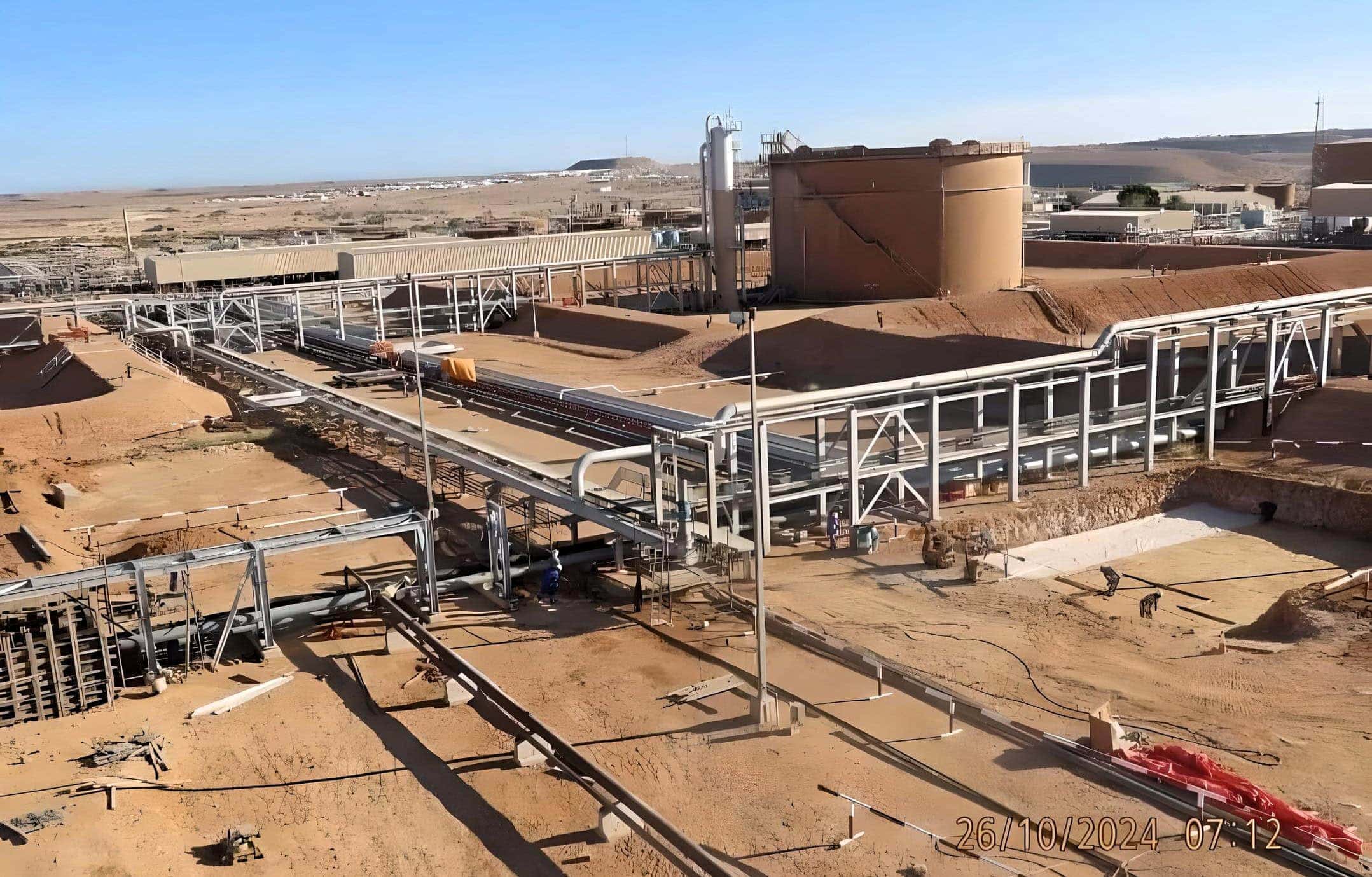
For the Hadramout Tribal Alliance, oil is not merely an economic resource, but one of its most important tools for political pressure. Since 2024, the alliance has used sit-ins, tribal checkpoints, and mobilization near production areas and fuel transportation routes to link the continuation of oil activity to demands for a greater share of political influence and resources, as well as improvements in electricity and public services.
This approach has enabled the alliance to turn its tribal weight into direct influence over an issue managed by state institutions and PetroMasila.
The importance of this leverage increased after Yemen’s oil exports were halted following Houthi attacks on export ports in late 2022. During the suspension, part of the conflict shifted toward how local production and petroleum products should be managed, which side determines the quantities allocated for electricity generation and the local market, and the extent to which Hadramout benefits from the resources extracted from its territory.
As the resumption of oil exports has returned to the forefront, along with Presidential Leadership Council Chairman Rashad Al-Alimi’s statements that the revenues would be used to pay the salaries of public-sector employees across Yemen, including those living in Houthi-controlled areas, while the Southern Transitional Council has rejected the plan, the dispute has expanded beyond Hadramout’s share of the revenues. The conflict now also involves which side is capable of securing oil fields, facilities, and transportation routes, and which party has the authority to negotiate with the government and regional powers over resource management and revenue distribution.
In this equation, the presence of the Hadramout Tribal Alliance in production areas gives Bin Habrish a leverage that could conflict with any arrangements seeking to place the oil file under more centralized management. Indeed, a media official with the Hadramout Tribal Alliance had hinted at this leverage as part of the escalation expected if the ban on Bin Habrish’s return to Hadramout continued.
Regarding the connection between efforts to curb Bin Habrish’s influence and the oil file, Bajardana said the timing is linked to a reshaping of influence between the Muslim Brotherhood and the Houthis, as well as the struggle over Hadramout’s resources and the resumption of oil exports. He considers these issues to be at the heart of the ongoing conflict in the governorate.
Abdullah Bawazir, meanwhile, believes that Saudi Arabia decided to curb Bin Habrish’s influence because of his attempts to return to Hadramout and control the oil file. He said the current phase is witnessing a reshaping of influence that would allow control over the governorate’s resources and management of the oil file away from the alliance.
Who Has the Right to Represent Hadramout?
Recent developments in Hadramout reveal that the conflict is not only about the future of the tribal alliance led by Bin Habrish, the Hadramout Coordinating Council, or the Southern Transitional Council. It is also about which political reference will speak on behalf of Hadramout in any negotiations concerning power, resources, security, and the next political settlement.
Each side draws its legitimacy from a different source. The Hadramout Tribal Alliance relies on its tribal weight, the outcomes of the Hadramout Inclusive Conference, and its presence in oil-producing areas. The Hadramout Coordinating Council, meanwhile, derives its legitimacy from the local authorities and the diversity of figures and components participating in it. The Southern Transitional Council relies on its organizational and popular presence, as well as a political project that views Hadramout as part of an independent federal South Yemen state.
Saudi Arabia is likely to avoid granting this position to any single party. The experience of Bin Habrish’s rise has shown that supporting a local power and giving it broad room to maneuver can eventually turn it into an independent center of influence with its own demands and tools of pressure.
It can be argued that Saudi Arabia has reduced the political space available to Bin Habrish as much as possible, but the available evidence is insufficient to conclude that it has made a final decision to exclude him or dismantle the alliance.
Disputes over funding, the limits of his role, and oil may partly explain the shift, but the deeper issue concerns Bin Habrish’s growing independence and his refusal to settle for the role assigned to him by the previous balance of power.
However, Bin Habrish’s declining position does not mean that the Hadramout Coordinating Council will automatically become the governorate’s new political reference. The alliance still has tribal reach and the ability to exert pressure, while the Southern Transitional Council retains the strongest political and organizational presence in the governorate. The new council, meanwhile, still needs to establish its legitimacy beyond the circles of local authorities.