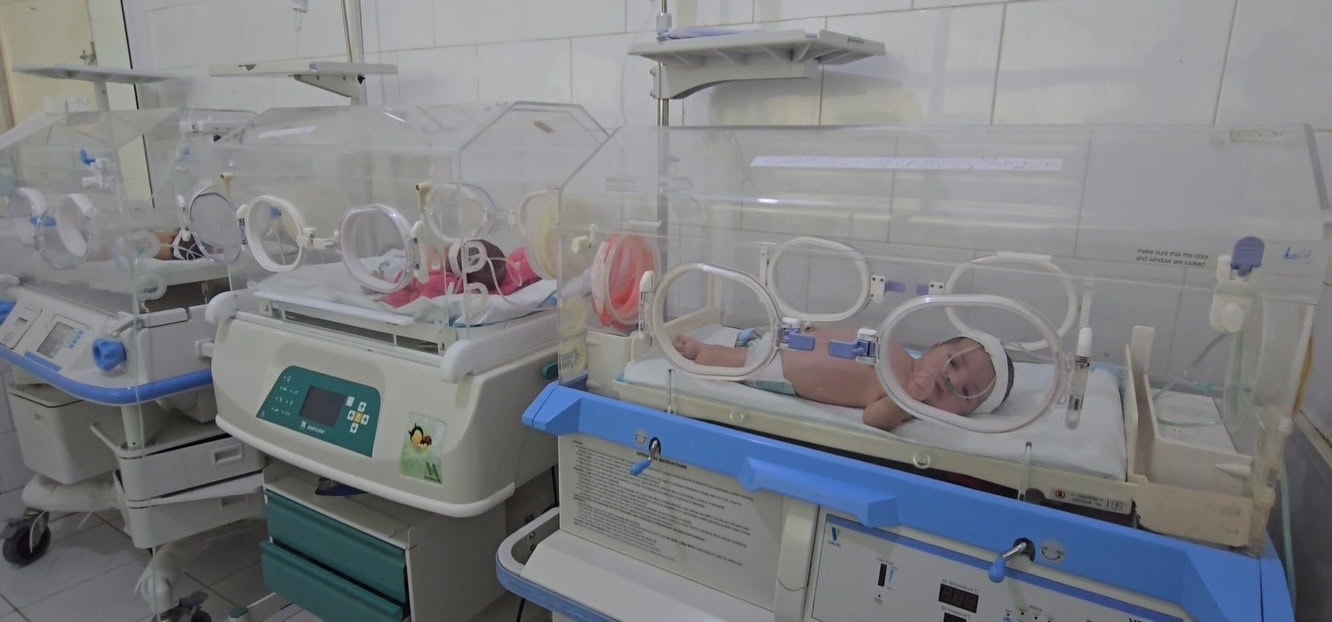
مركز سوث24 للأخبار والدراسات
مركز سوث24 للأخبار والدراسات


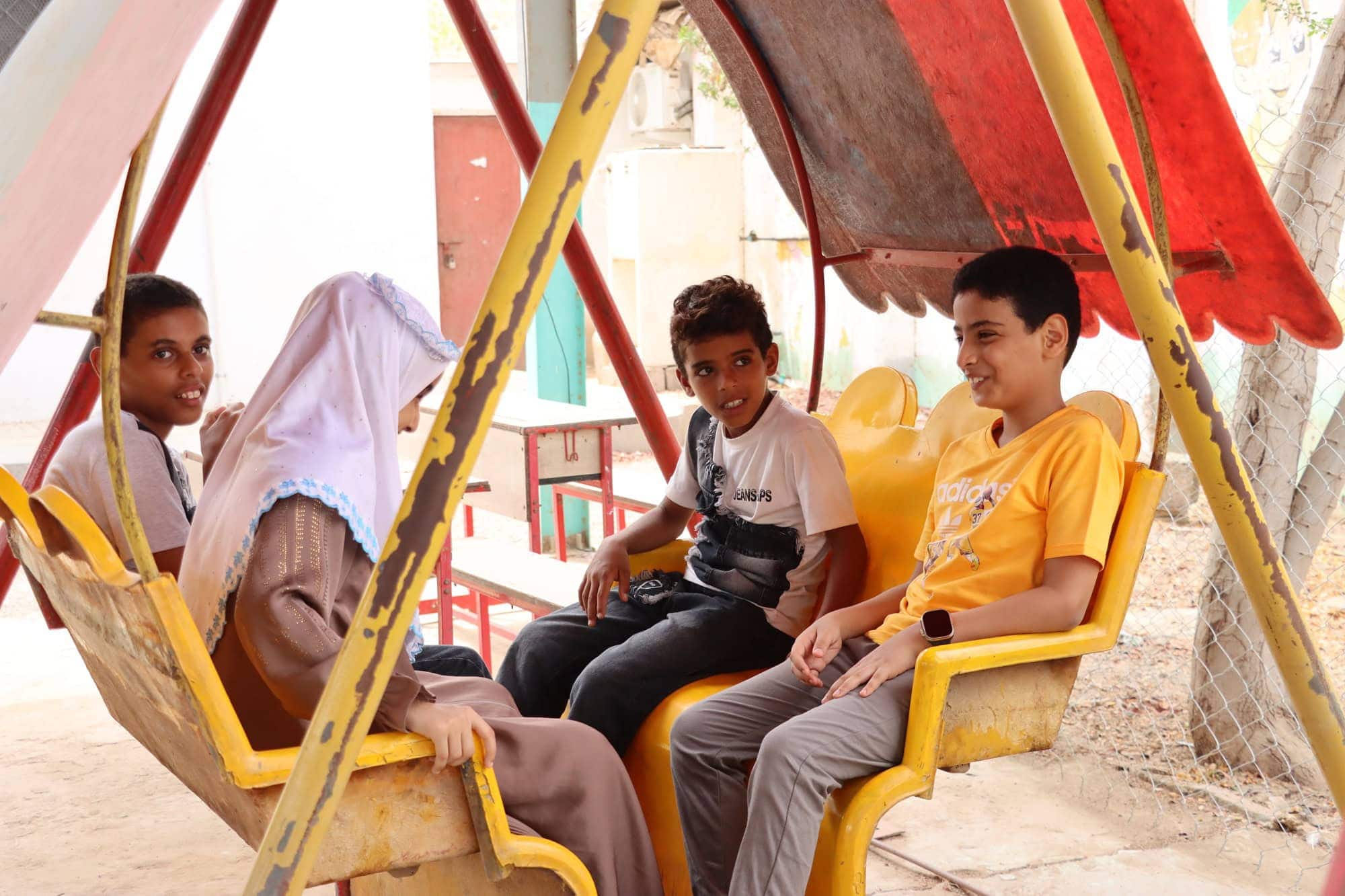
Children play at the Inclusive Education School in Al-Houta, Lahj, which provides education and rehabilitation services for children with special educational needs, including children with autism spectrum disorder, July 19, 2026. (South24 Center)
آخر تحديث في: 26-08-2026 الساعة 2 صباحاً بتوقيت عدن
Ansam Abdullah (South24 Center)
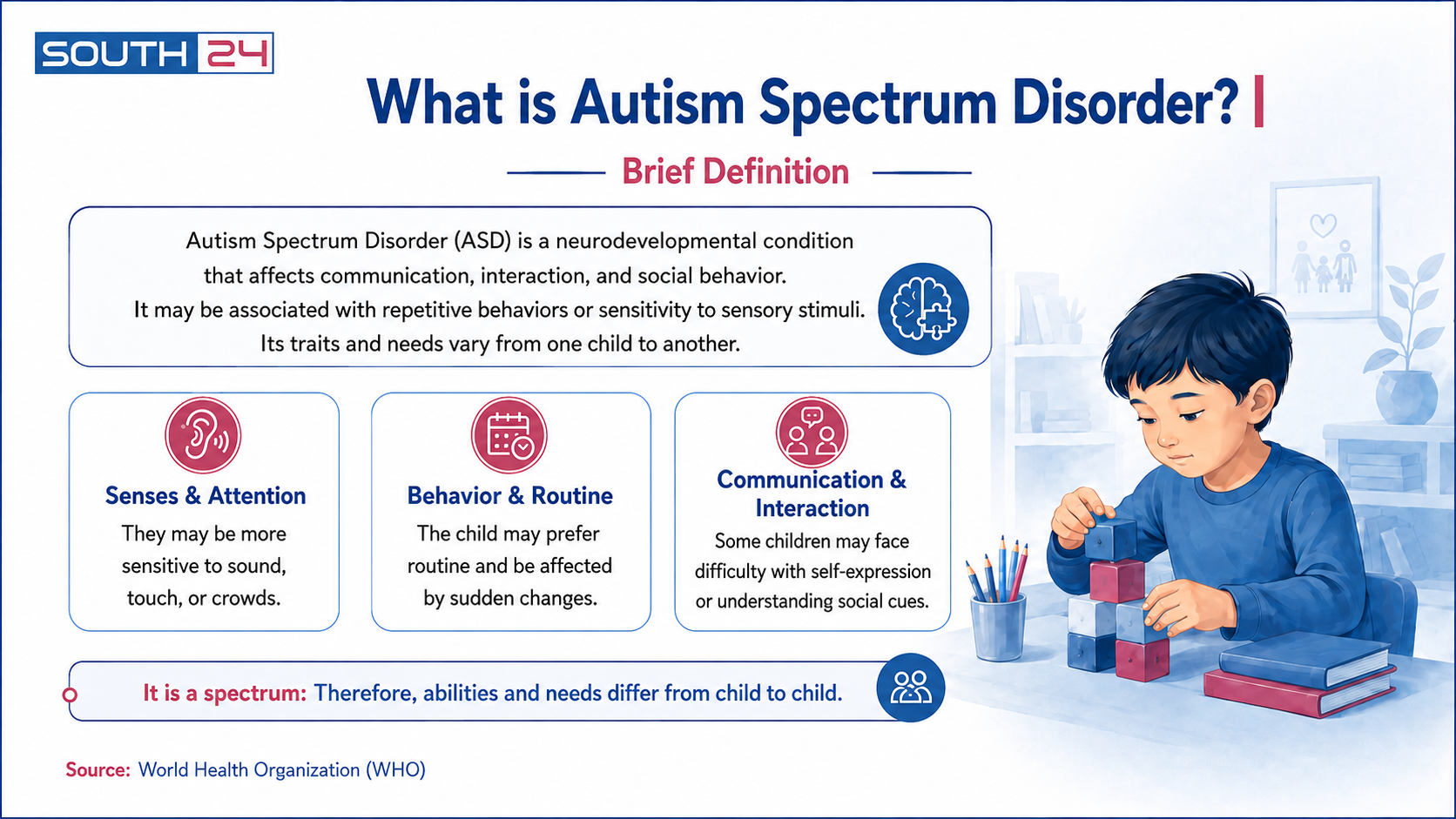
At specialized schools such as the Inclusive Education School in Al-Houta, the capital of Lahj Governorate in South Yemen, a child’s educational journey does not always begin with a textbook or a blackboard. For some children with autism spectrum disorder, the first step can be both simpler and more challenging: learning to sit quietly at their desks, hold a pencil, respond when their teacher calls their name, or share a game with a classmate without becoming overwhelmed by the noise and movement around them. Visual cards, sensory activities, and structured daily routines help create an environment that accommodates these children’s needs before they progress to more advanced stages of education.
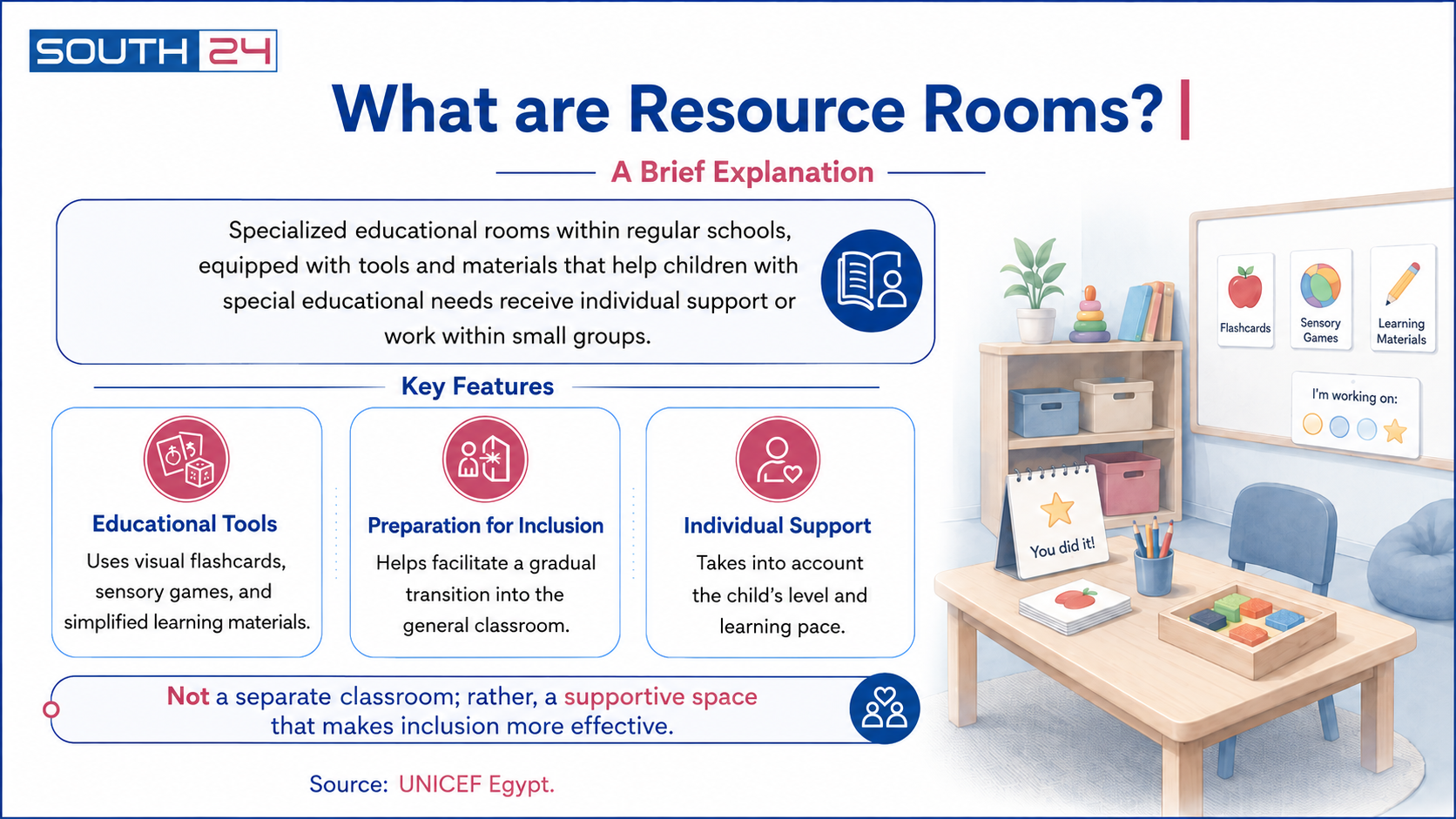
However, outside this adapted environment, the experience of inclusion becomes far more complicated. In other public schools, children with special needs find themselves in overcrowded classrooms with limited infrastructure, while resource rooms, which are supposed to provide them with space for rehabilitation and individualized education before they gradually transition into mainstream classrooms, are often absent. While the Inclusive Education School in Al-Houta provides education only through the eighth grade, transitioning to mainstream education becomes a test of the ability to continue the educational journey for the child, the school, and the family at the same time.
The experiences documented in this report, along with testimonies from educators, specialists, and families, reveal a gap between the concept of inclusion as it is intended and the resources available to implement it. Years of war have affected not only school buildings and infrastructure but have also weakened some inclusive education programs, resource rooms, and the availability of qualified staff. At the same time, families and teachers continue to work to keep children within the education system using varying levels of resources and support.
Through field examples from Lahj and Aden, the report examines a broader question concerning the inclusion of children with autism spectrum disorder in Yemen’s education system: What do these children need for their presence in schools to constitute genuine educational inclusion, rather than simply occupying a seat in a classroom?
The State of Inclusive Education in Yemen
Before the war, Lahj Governorate had a more extensive inclusive education system than what remains today. According to Waleed Al-Harouni, Director of the Inclusive Education Department at the governorate’s Education Office, there were 20 inclusive schools across the districts of Al-Houta, Tuban, and Al-Musaymir. All of them had resource rooms and trained staff, with support from Dubai Cares and the Social Fund for Development.
However, the system lost much of its capacity during the years of war. Al-Harouni told South24 Center that the specialized education rooms, known as resource rooms, at Al-Thawra School in Al-Houta and Aqaan School in Al-Musaymir were completely destroyed, while equipment at other schools was looted. At schools where the rooms themselves were not directly damaged, overcrowding forced administrators to convert spaces designated for inclusive education into regular classrooms, as happened at Al-Saeed, Abbas Al-Husseini, and Al-Durra Al-Haseki school complexes, as well as Khadija School. In addition, some staff members who had received specialized training were transferred to other schools, depriving existing programs of one of the key elements needed for their continuity.
According to Al-Harouni, the Education Office in Lahj submitted several requests calling for the rehabilitation of resource rooms, but those appeals have yet to receive a response that would restore the system to its previous capacity. He says that only one resource room currently remains in the governorate, at Samia Mabrouk School in the Sabir area.
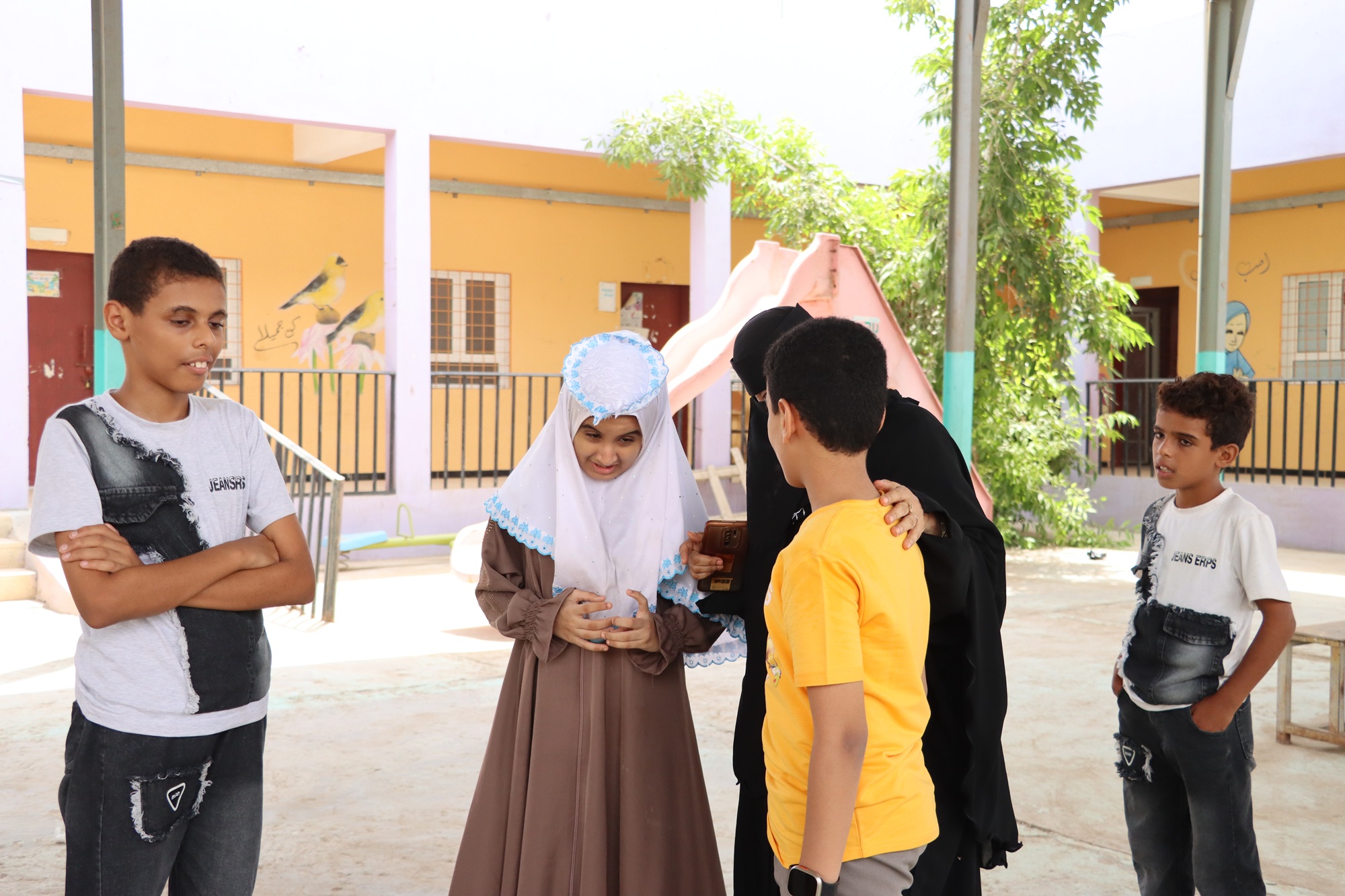
Children interact with one of the teachers in the courtyard of the Comprehensive Education School in Al-Houta, Lahj, which provides education and rehabilitation services for children with special educational needs, including children with autism spectrum disorder, July 19, 2026. (South24 Center)
The education official does not consider the presence of children with disabilities in mainstream schools, in itself, evidence that inclusion has been achieved. He explains that in some schools, the current practice has become closer to assigning separate classrooms for children with certain disabilities within regular school buildings. According to him, this differs from the philosophy of inclusive education, which is based on gradually preparing children to transition into the mainstream school environment.
In Aden, specialized services appear to be more widely available in terms of the number of institutions and programs, although not all of them are specifically designed for children with autism spectrum disorder. Al-Harouni points to Awsan School in Al-Mualla District, which has programs for deaf students, as well as a nearby association for people with intellectual disabilities. He also cites Al-Hayah Association for Early Intervention, which provides rehabilitation services for children at early stages of development. Services for deaf students are also available through several educational institutions, including Al-Gharbani and Nashwan schools, Khadija Secondary School, and Al-Manara Kindergarten.
These institutions reflect ongoing activity in the field of special education. However, according to Al-Harouni, they do not necessarily indicate the availability of a comprehensive model for integrating children with autism spectrum disorder into public schools. Such a model requires properly equipped resource rooms, specialized staff, individualized education plans, and a school environment capable of addressing each child’s needs. He says these elements still need to be strengthened in both Aden and Lahj.
Inclusion Is More Than a Seat
The challenge of integrating children with autism spectrum disorder into public schools is not limited to the number of schools or the availability of resource rooms. It also depends on the nature of the educational environment into which a child enters. Psychologist and behavioral specialist Dr. Mona Fadhil explains that the difficulty may begin when a child finds themselves in a classroom crowded with noise, movement, and sensory stimuli, while needing a greater degree of calm and structure to feel safe and interact with those around them.
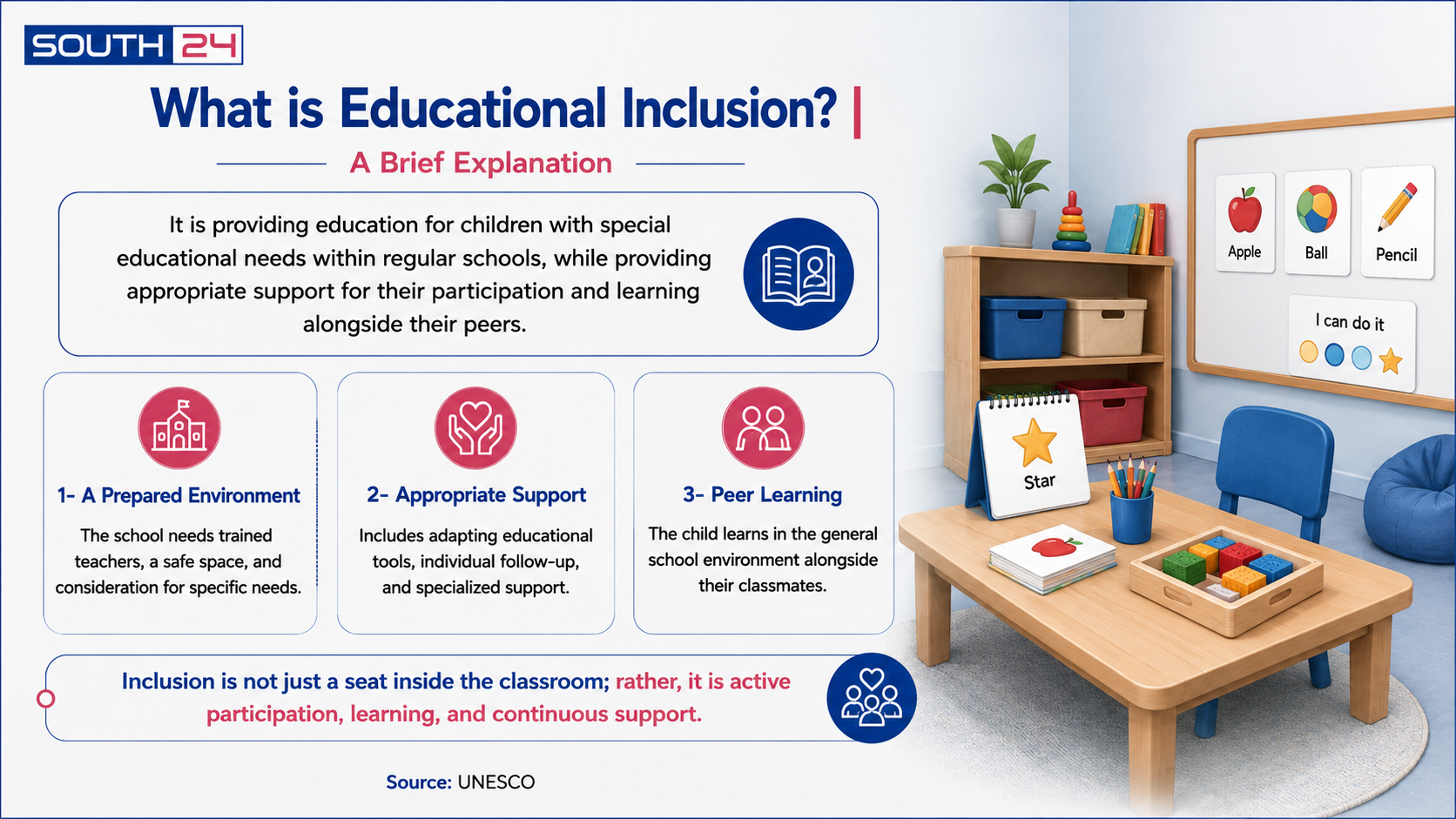
Fadhil told South24 Center that some behaviors children may display in such environments are sometimes interpreted as disciplinary problems, when they may actually be responses to the psychological and sensory pressure they are experiencing. She therefore believes that successful inclusion cannot be achieved simply by having a child attend school. It requires an environment that accommodates the child’s needs, teachers who understand the characteristics of autism spectrum disorder and know how to respond using appropriate methods, and sustained cooperation among the school, family, and specialists.
According to Fadhil, these requirements continue to face a shortage of qualified personnel and limited resources. This makes teacher training, the availability of psychological and behavioral specialists, and greater awareness of the concept of inclusion essential to turning it into an effective educational practice.
This view is echoed by inclusive education teacher Abeer Ali, who says children with autism initially need a consistent daily routine to reduce anxiety, an environment with fewer sensory stimuli, and continuous training in social communication skills in coordination with their families.
Academically, Abeer told South24 Center that having a child in the classroom is not enough if teaching methods and materials are not adapted to the child’s abilities. She highlights the importance of using tailored educational materials, simplifying curricula, and relying on clear, concise language appropriate to the child’s cognitive level. This gives children an opportunity to participate in the learning process rather than simply being present in the classroom.
Three Children, Three Different Experiences of Inclusion
The experiences of the children interviewed for this report show that the outcomes of inclusion vary depending on the level of rehabilitation and follow-up support, as well as the school environment. Some children have made clear progress, others have remained in education largely because of family support, while a third group has ultimately returned to specialized rehabilitation.
At the Inclusive Education School in Al-Houta, Karem’s journey began at the age of four. His mother told South24 Center that he experienced irritability, delayed speech, and involuntary movements before being diagnosed with attention-deficit/hyperactivity disorder (ADHD) alongside autism spectrum disorder. His rehabilitation began there with learning to sit calmly, follow instructions, and gradually manage his daily behaviors. He later transitioned to Al-Aqsa mainstream school in Al-Fayoush.
Karem also received continuous follow-up from his teacher, Abeer Al-Zaidi, to prepare him for inclusion. His mother says his new school accommodates his needs during exams by providing a quiet place and allowing sufficient time. At age 10, he became one of the top students in his class. Since 2023, Karem has also participated in mental arithmetic competitions. According to his family, he won first place in the sixth World Mental Arithmetic Championship at Umm Al-Qura University in Saudi Arabia in 2025, in addition to winning gold and silver medals at different levels.
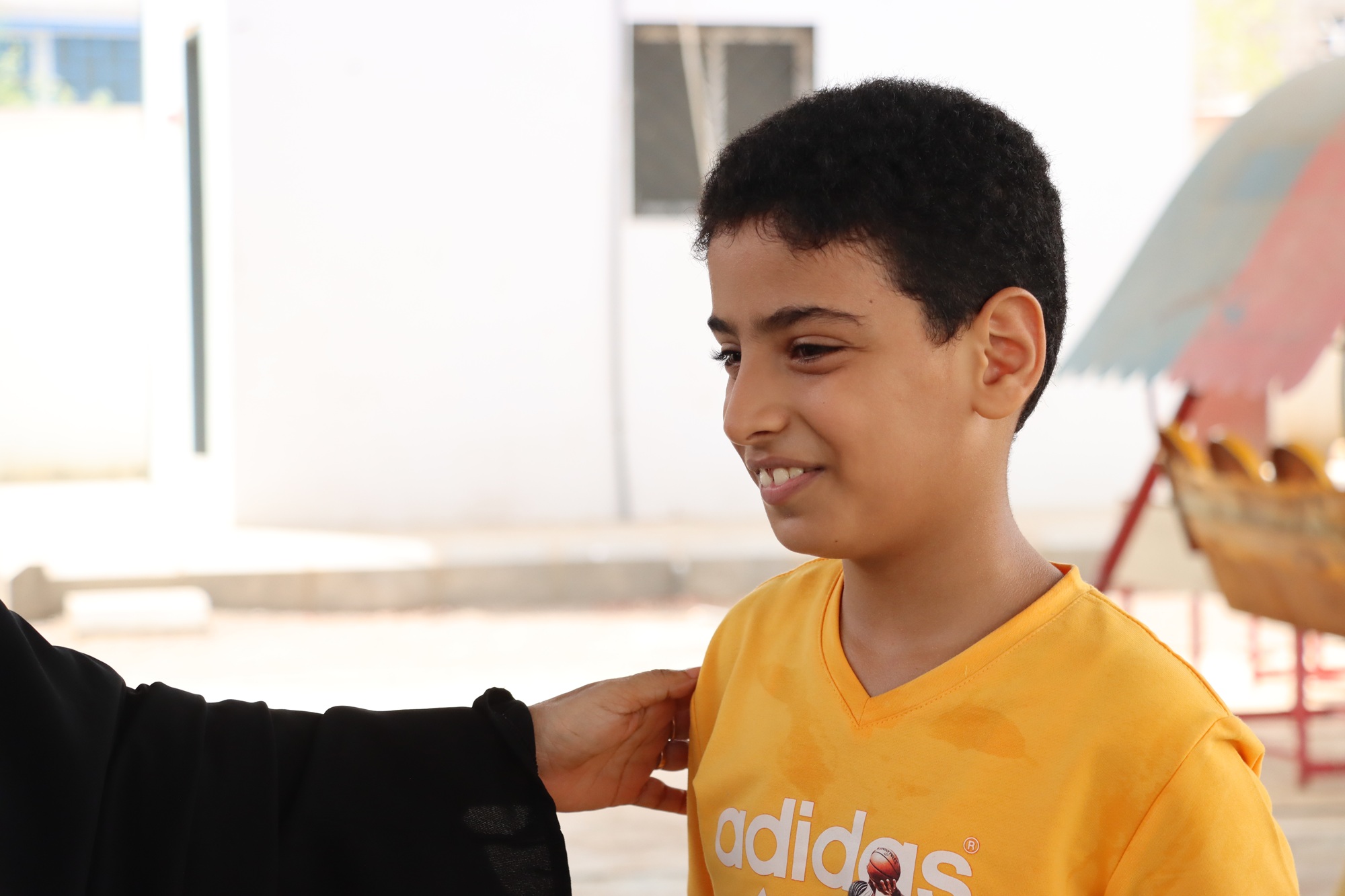
Karem, 10, at the Inclusive Education School in Al-Houta, Lahj Governorate, July 19, 2026. (South24 Center)
Saeed, a pseudonym for a child attending Al-Muhsiniyah School in Al-Houta, has had a different experience. The school lacks a resource room, a specialized teacher, and educational materials tailored to children with autism, while some classrooms have more than 50 students. During the report’s visit, Saeed appeared engaged with his classmates, but there was no individualized education plan or specialized monitoring of his sensory and behavioral responses.
His mother follows his daily activities closely and remains in regular contact with his teachers in an effort to compensate for some of the services that are unavailable. Nisreen Al-Hubaishi, Director of the Inclusive Education School in Al-Houta, says Saeed’s experience highlights the importance of the family’s role. However, she stresses that families cannot replace a resource room, specialized teachers, or rehabilitation programs.
By contrast, the experience of Abdulmalik did not succeed, according to Al-Hubaishi, after he transferred to Al-Majhafa School in Tuban District. He did not find an environment suited to his needs and eventually returned to the Inclusive Education School after experiencing a setback despite years of rehabilitation.
Nisreen Al-Hubaishi explains that inclusion does not necessarily mean keeping a child in a mainstream classroom throughout the entire school day. Instead, it can take place gradually, beginning with participation in morning assemblies, breaks, and extracurricular activities while the child continues receiving instruction in specialized classes or resource rooms supervised by specialized teachers. This approach allows the child to gradually build the skills needed for a broader transition into the mainstream school environment.
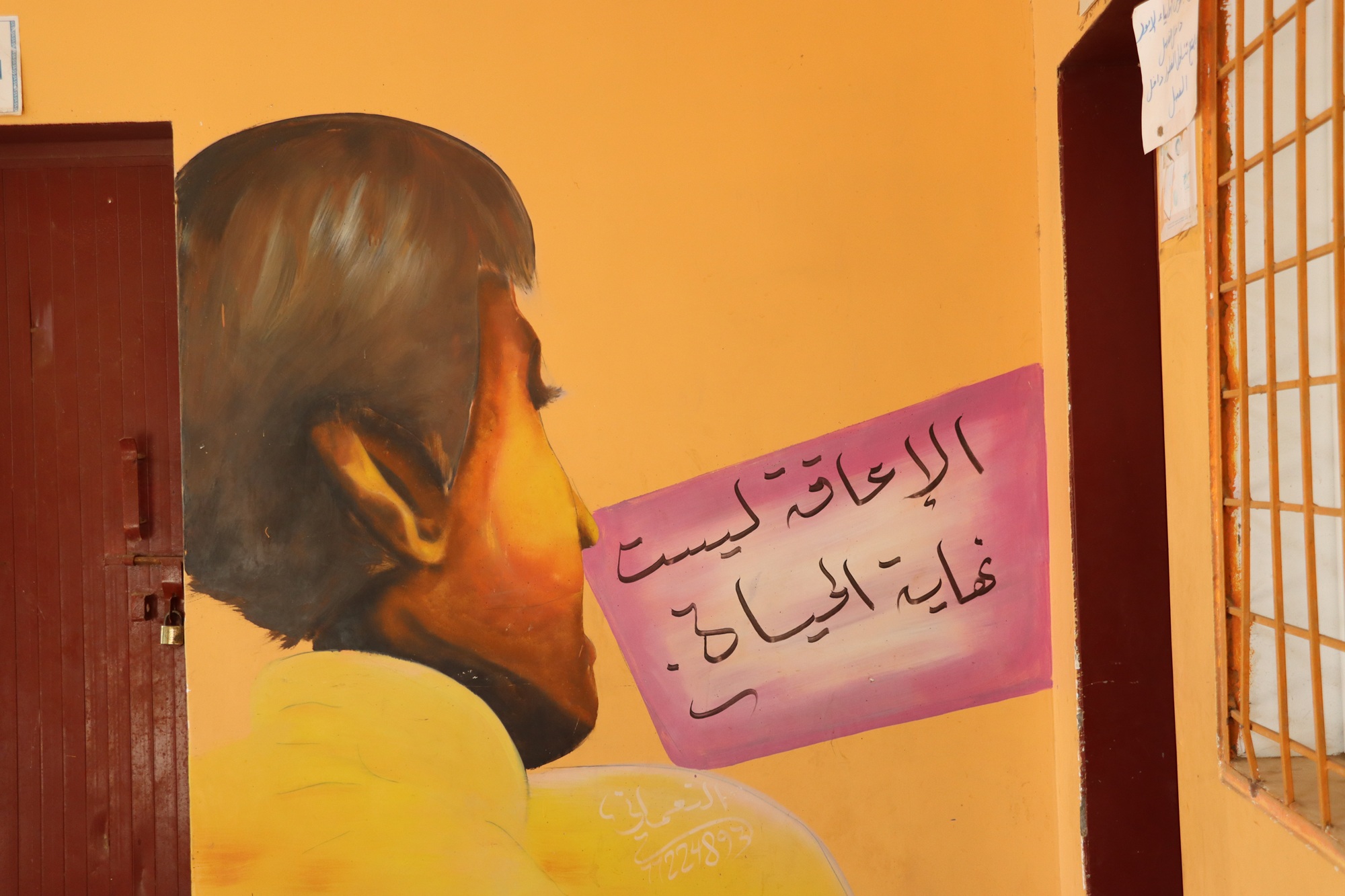
A mural bearing the phrase “Disability Is Not the End of Life” on a wall at the Inclusive Education School in Al-Houta, Lahj Governorate, July 19, 2026. (South24 Center)
What Is Missing from the Inclusion System?
The challenges of integrating children with autism spectrum disorder extend beyond the school environment and a child’s readiness. They also involve the resources and policies needed to ensure the continuity of inclusive education programs.
Nisreen Al-Hubaishi, Director of the Inclusive Education School, says a number of public schools in Lahj could serve as a foundation for more successful inclusion programs if they were rehabilitated and properly equipped. However, limited funding, low teacher salaries, the remoteness of some villages, and the depletion of specialized staff continue to limit the expansion and sustainability of such programs.
The need to develop these programs is not new. In 2018, Aden hosted its first conference on autism spectrum disorders, which produced a set of recommendations including rehabilitating resource rooms, training educational staff, adapting curricula, and establishing sustainable budgets for inclusive education programs. Yet eight years later, the schools visited by the report continue to reflect a gap between those recommendations and what is available on the ground.
To understand the Ministry of Education’s position on the state of inclusion, South24 Center contacted Anisa Abdullah, Director of the Ministry’s Inclusion Department. She said the ministry has succeeded in integrating a number of children with autism spectrum disorder and that final examination results showed significant progress among many of them. She identified infrastructure and adapting school curricula to meet children’s needs as the main challenges facing the process.
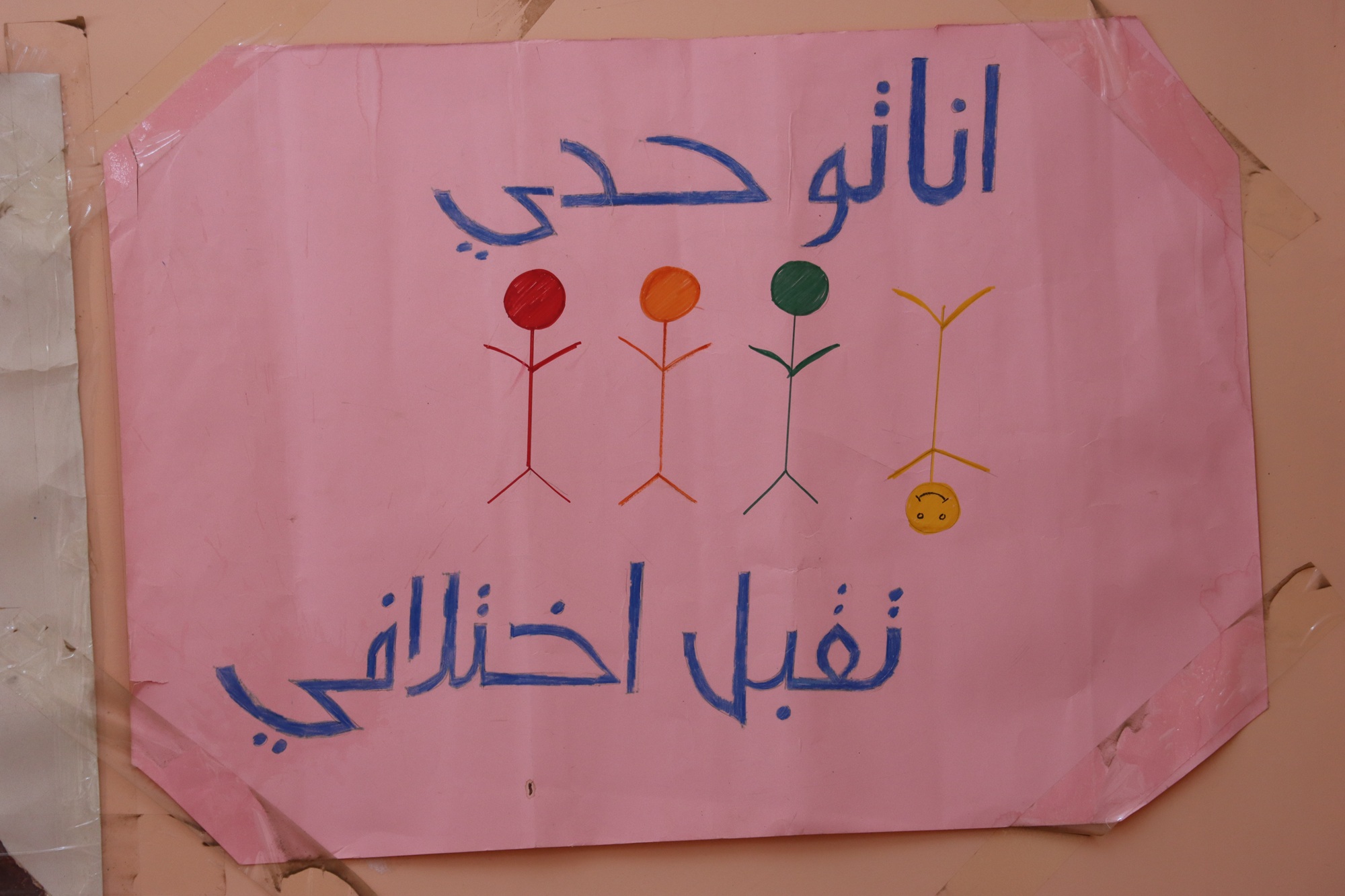
An awareness poster bearing the phrase “I Have Autism. Accept My Difference” inside the Inclusive Education School in Al-Houta, Lahj Governorate, July 19, 2026. (South24 Center)
However, the broader picture of inclusive education programs across Yemen remains unclear. South24 Center asked the ministry about the current number of inclusive schools, the total number of children benefiting from these programs, the size of budgets allocated to inclusive education, plans to rehabilitate resource rooms damaged during the war, and the reasons behind the failure to implement the recommendations of the 2018 conference. The ministry did not respond to these questions.
The absence of such figures makes it difficult to develop an accurate picture of the scale and reach of inclusive education services across Yemen. As a result, strengthening the inclusion system remains dependent on several elements identified by the sources themselves: rehabilitating resource rooms, retaining and training specialized staff, adapting curricula, securing sustainable funding, and improving public schools’ capacity to accommodate and individually support children. Ultimately, these requirements will determine whether inclusion remains limited to isolated initiatives or evolves into a more structured and sustainable educational pathway.