SOUTH24 CENTER FOR NEWS & STUDIES
SOUTH24 CENTER FOR NEWS & STUDIES


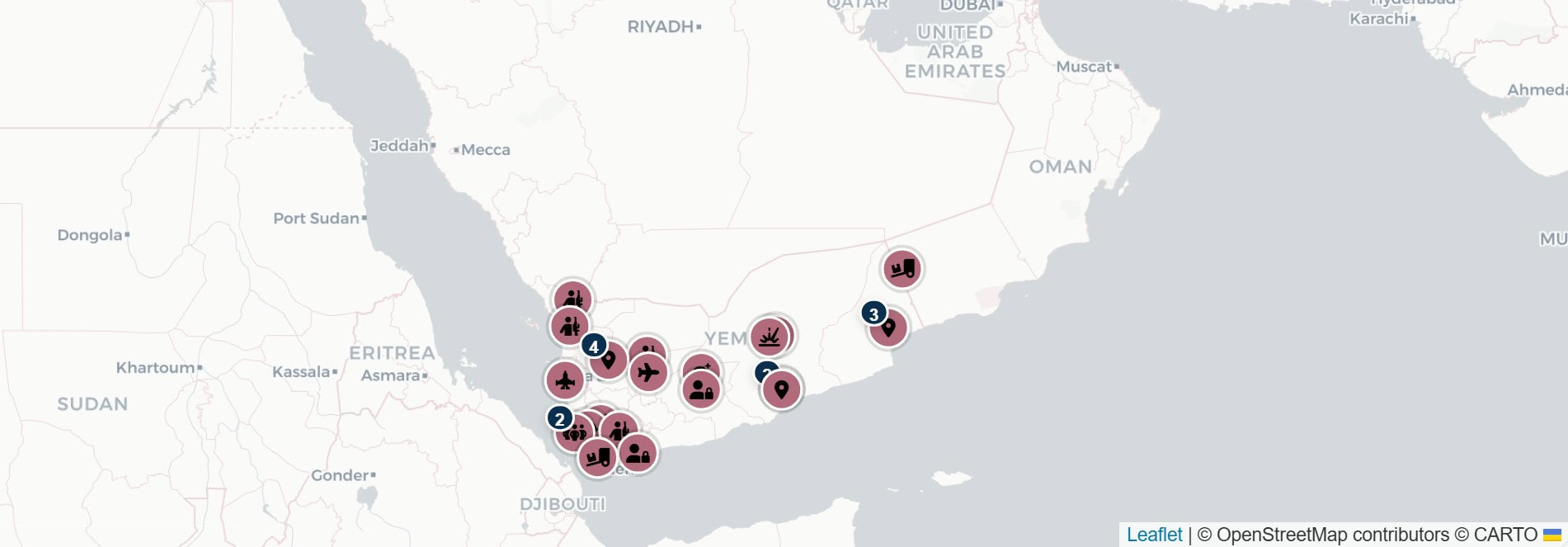
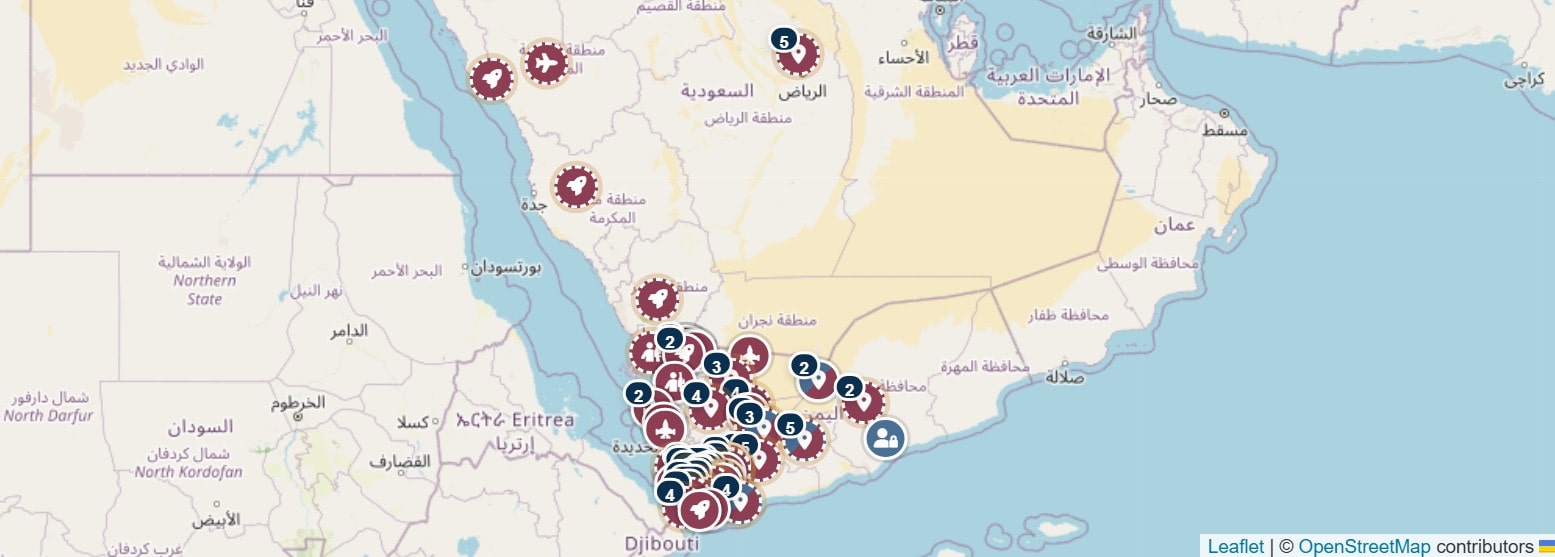
Interactive Map – By South24 Center © OpenStreetMap
20-03-2026 at 6 PM Aden Time

Aden (South24)
Several governorates across South Yemen and Norh Yemen witnessed a notable escalation in security and military developments between March 6 and 20, reflecting an increasingly complex landscape where local threats intersect with broader regional dynamics, particularly amid ongoing confrontations with the Iran-backed Houthi group and the growing activity of smuggling networks and armed cells.
According to field data monitored by the South24 Center, the most significant developments were concentrated in Hadramout, Shabwa, Al-Mahra, Marib, and Lahj, ranging from direct military attacks and preemptive security operations to movements carrying strategic implications.
On the military front, four members of the Southern Armed Forces were killed and five others injured in a Houthi attack on the Karsh front, north of Lahj governorate. Two soldiers from the Shabwa Defense Forces were also injured in a Houthi drone strike targeting a military position in the Harib front, north of the governorate of Shabwa. Meanwhile, forces affiliated with Yemen’s internationally recognized government repelled a Houthi attack in the Razeh front in Saada, while a Houthi field commander was killed during clashes in Taiz. In a separate incident, a Houthi shelling attack killed eight civilians, including children, and wounded others in Hajjah governorate.
In parallel, indicators of a broader strategic escalation emerged. The Houthi leader described U.S. and Israeli strikes in the region as a turning point in the conflict, pointing to the linkage between the Yemeni front and rising regional tensions. Mohammed al-Bukhaiti, a member of the group’s political bureau, warned that the group could close the Bab al-Mandab Strait, stating that “all options are open.” The group also called on what it described as the “Saudi regime” not to “add fuel to the fire” amid ongoing developments.
On the security level, authorities in Hadramout and Al-Mahra intensified preemptive operations, seizing shipments of drugs, weapons, and explosive devices, and dismantling criminal and smuggling networks. This included the interception of a shipment of cryptocurrency mining equipment at the Shahan border crossing. The Giants Brigades also announced the seizure of a large drug shipment in Ras al-Ara in Lahj, highlighting the continued activity of smuggling networks across coastal and land routes.
In Wadi Hadramout, explosions caused by remnants of war were reported in Seiyun, underscoring the ongoing risks posed by landmines and unexploded ordnance, particularly following widespread looting of military camps and security sites after Saudi-backed forces took control of the area in January.
Meanwhile, Saudi-backed Nation Shield Forces, accompanied by other units, raided the residence of former Al-Ghaydah military axis commander Mohsen Mursaa in Al-Mahra, a move that drew condemnation from the Southern Transitional Council (STC), Bakazem tribes, and local figures.
Southern governorates also witnessed security measures linked to protests, including arrest orders issued by Yemen’s Interior Minister Ibrahim Haidan against the head of the STC in Shabwa. At the same time, authorities in Aden released detainees affiliated with the STC after two weeks of detention over the events at the Maashiq Presidential Palace gate on February 20.
In Marib, Adel al-Rouhani, head of the Technical Department of the Islah Party, was injured in an assassination attempt that killed three of his escorts. No party has claimed responsibility for the attack, while the Islah Party held local authorities in Marib accountable.
Taken together, these developments indicate that the situation in Yemen is becoming increasingly complex, with internal security pressures coinciding with military escalation along frontlines, alongside the growing impact of regional tensions—including the Iran–U.S.–Israel confrontation—on the behavior of local actors.
Browse all incidents from the past two weeks on the interactive map below: