SOUTH24 CENTER FOR NEWS & STUDIES
SOUTH24 CENTER FOR NEWS & STUDIES


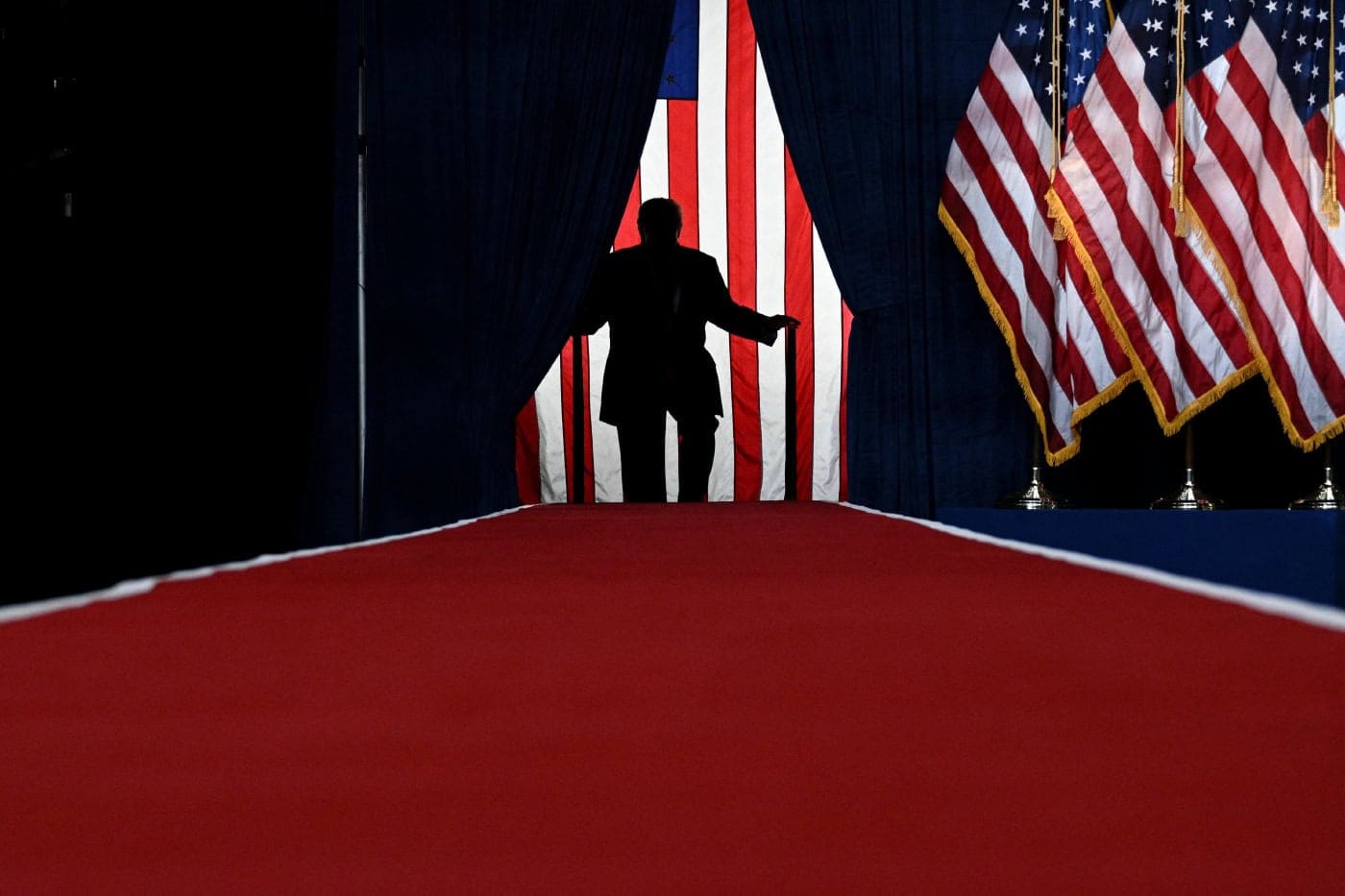
US President Donald Trump arrives to deliver remarks at a midterm election rally at the Ocean Center in Daytona Beach, Florida, October 30, 2026. (Brendan Smialowski/AFP)
Last updated on: 11-11-2026 at 4 PM Aden Time
Radwa Al-Sharif (South24 Center)
The results of the US congressional midterm elections, held on November 3, 2026, have revealed the extent of the political pressure facing President Donald Trump, after the Republican Party lost control of both the House of Representatives and the Senate to the Democrats. The outcome came amid growing public dissatisfaction over rising energy prices and the cost of living, as well as the continuation of the US-Israeli war on Iran with no settlement reached to end the confrontation. These factors contributed to the Republicans’ losses, as Trump acknowledged following the announcement of the results. Although the new Democratic majorities will not assume their powers until January 3, the election results are placing increasing pressure on the administration over its military policy and opening the door to renewed efforts to restrict foreign operations and review defense spending.
Against the backdrop of this shift, Yemen is among the issues likely to be affected by the changing balance of power in Congress, amid continued US support for Saudi Arabia in its confrontation with the Houthis, renewed fighting along the western coast, and escalating threats to navigation in the Red Sea. These developments are particularly significant given the continued US escalation against Iran, alongside Qatari mediation efforts and renewed Houthi attacks on Saudi Arabia. Accordingly, this report examines the extent to which the new Democratic majority could influence Trump's policy toward Iran, the future of US military support for Saudi Arabia, and the implications for the calculations of Yemeni parties and the security of Bab Al-Mandab.
Election Results and the Dilemma of Trump's Policy Toward Iran
The Democrats secured a sweeping victory in the congressional elections, winning at least 54 seats in the Senate, alongside major gains in the House of Representatives, according to preliminary results announced on November 4. The party's gains included traditionally Republican-leaning states, among them Texas, Kansas, and South Carolina, reflecting declining support for the administration's policies among electoral constituencies that had previously backed Trump's return to the presidency in 2024, particularly amid the continuing economic repercussions of the war with Iran.
The political impact of the war appears to have extended beyond opposition to the military operations themselves to encompass the administration's ability to justify their continuation to voters. Following the US-Israeli strikes that began on February 28, 2026, efforts to de-escalate stalled, while disagreements over Iran's nuclear program and freedom of navigation in the Strait of Hormuz persisted. The financial pressure is evident in the direct cost of military operations, which reached approximately $47.1 billion by October 16. This included around $29 billion to replenish depleted munitions, in addition to the costs of deploying forces and replacing lost equipment. These burdens are expected to become one of the main issues Democrats will use to pressure the administration, particularly as additional appropriations remain necessary to fund foreign operations.
In light of these developments, two main directions can be identified regarding the impact of the elections on Trump's military policy:
- Growing legislative pressure to end the war with Iran: Before the elections, moves were already underway in Congress to limit the continuation of military operations. On September 15, the House of Representatives passed the concurrent resolution H.Con.Res.93 by 220 votes to 204, after seven Republicans joined the Democrats. Although the resolution did not lead to a halt in operations, it exposed opposition within the Republican Party to continuing the war without clear authorization. The Democratic victory could prompt renewed efforts in this direction, particularly if Democrats link approval of military appropriations to defining the war's objectives and duration or impose conditions on operations extending beyond the defense of US forces and interests.
- Trump's continued ability to block legislative restrictions: Despite the Democrats' victory in securing majorities in both chambers, imposing comprehensive restrictions on presidential powers will face significant obstacles, given Trump's veto power and the need for a two-thirds majority to override it. A Senate majority also does not guarantee the passage of all legislation, given procedural mechanisms that allow the minority to block certain bills. As a result, the Democrats' ability to change the course of the war will depend on the nature of the proposed restrictions and the willingness of some Republicans to support them.
Developments following the elections point to the continued combination of military pressure and diplomatic efforts in US policy toward Iran. On November 6, Trump confirmed that limited strikes had been carried out against an Iranian air defense system on Qeshm Island near the Strait of Hormuz, despite his remarks about progress in negotiations with Tehran. On November 7, Qatari Prime Minister Mohammed bin Abdulrahman Al Thani reaffirmed the continuation of mediation between Washington and Tehran, noting progress in the talks and the US administration's continued desire to reach an agreement following the elections.
The coincidence of these moves reveals that the Trump administration continues to rely on military pressure in managing negotiations with Iran, despite growing domestic objections to the cost and continuation of the war. This approach places the new Congress before a challenge concerning the extent of its ability to influence the administration's military decisions, given their connection to the course of negotiations and security developments in the region.
Yemen in the Calculations of the New Congress
The issue of US military involvement in Yemen gained increasing importance in the period leading up to the elections, as military developments along the western coast and Houthi attacks on Saudi Arabia revived debate over the nature of Washington’s support for Riyadh. On October 9, 2026, Democratic Representative Ro Khanna and Republican Representative Thomas Massie introduced concurrent resolution H.Con.Res.124, which calls for the withdrawal of US forces from hostilities against the Houthis conducted without congressional authorization. According to its official text, the resolution covers direct airstrikes, intelligence sharing, assistance with target identification, aerial refueling, and other forms of operational involvement in Saudi operations.
The resolution is particularly significant because it came at a time when the Trump administration was moving toward expanding military and intelligence support for Saudi Arabia while avoiding direct involvement in a new war against the Houthis. This policy reflects an American attempt to combine support for Saudi capabilities with efforts to limit the burdens of opening an additional military front, amid the ongoing confrontation with Iran. However, expanding intelligence and operational assistance has sparked disagreement within Congress over the point at which the United States can be considered a party to the fighting.
Two main issues may determine the future of US military support for Saudi Arabia:
- Disagreement over the nature of US involvement: One of the most significant aspects of the resolution is its broader definition of hostilities to include indirect support activities. This could affect intelligence sharing, target identification, and logistical support for Saudi forces. On September 10, a CNN investigation revealed that more than 100 US military advisers were in Saudi Arabia providing intelligence support and assistance with target identification, without directly participating in strikes or refueling operations at the time. However, on October 7, Al-Monitor, citing informed sources, reported that US military advisers were assisting Saudi commanders in analyzing intelligence on Houthi positions, alongside conducting aerial refueling operations for Saudi fighter jets.
The Democrats' assumption of the majority in January could lead to increased scrutiny of these activities and calls for the Department of Defense to disclose the extent of US involvement. If restrictions are imposed on intelligence support, Riyadh could face additional burdens in managing its military operations, particularly in monitoring missile and drone launch sites, although it would retain the ability to rely on its own military capabilities and regional partners.
- The difficulty of halting military support entirely: Congress previously attempted to restrict US involvement in the war in Yemen during Trump's first term. In 2019, both the House of Representatives and the Senate passed joint resolution S.J.Res.7, calling for the withdrawal of US forces from unauthorized hostilities in Yemen. However, Trump vetoed the resolution on April 16, 2019, before the Senate failed to override the veto on May 2. The resolution received 53 votes in favor and 45 against, falling short of the required two-thirds majority.
This precedent indicates that a legislative majority alone is insufficient to impose a comprehensive change in US policy toward Yemen. Moreover, the October 2026 resolution did not advance beyond referral to the House Foreign Affairs Committee and will need to be reintroduced in the new legislative session for work on it to continue. The current measure, as a concurrent resolution, differs from the 2019 joint resolution in its legal process, limiting its ability to impose binding obligations on the administration. Future disagreements are more likely to focus on support related to carrying out strikes inside Yemen, while defensive cooperation and the protection of US forces and international shipping continue.
Implications of the Midterm Elections for the Yemen Crisis and Red Sea Security
The US election results coincide with an escalation in military confrontations in Yemen, following Houthi advances along the western coast and around Bab Al-Mandab, followed by counteroperations by government and southern forces during October. The fighting extended to the fronts in Taiz and Lahj, alongside continued Houthi attacks on Saudi facilities and areas under the control of the Yemeni government. Between October 3 and 15, a total of 186 security and military incidents were recorded in Yemen and Saudi Arabia, including ground clashes, airstrikes, and missile and drone attacks, reflecting the widening scope of the escalation and the growing number of affected fronts.
The political shift in Washington could prompt Saudi Arabia to reassess its military options in anticipation of possible restrictions on certain forms of US support after January 2027, while its need for defensive assistance against Houthi attacks continues. On November 6, the coalition announced that it had intercepted two ballistic missiles heading toward Najran, as well as a drone in the Riyadh region. Attempts to strike targets continued on November 7 and 8, one of which targeted the financial center in Riyadh. This escalation underscores the importance of maintaining defense cooperation with Washington, even if support related to offensive operations faces legislative restrictions.
At the same time, Riyadh is moving to expand its military cooperation with regional partners. Saudi Arabia and Syria signed a defense cooperation agreement on November 4, covering training and the exchange of expertise. Reuters, citing Syrian military sources and a US official, reported that Syrian personnel had been sent to help train Saudi and Yemeni forces inside the Kingdom, while Damascus officially refrained from describing this as a military deployment. This move points to Saudi efforts to diversify its sources of military support and expertise, while US cooperation remains essential in technical, intelligence, and air defense fields.
Conversely, the Houthi group may view the Republicans' electoral defeat as an opportunity to increase military pressure and improve its negotiating position, based on its assessment that the Trump administration will face greater difficulties in expanding its military intervention. However, continued attacks on Saudi facilities or international shipping could prompt US lawmakers to support defensive military measures, limiting the group's ability to capitalize on political divisions in Washington.
Government and southern forces, meanwhile, could be indirectly affected by any change in the level of US support for Saudi Arabia, particularly in operations related to the western coast. Nevertheless, the impact of the elections on the balance of power on the ground will depend on the scale of regional support and military coordination among local forces.
These developments are becoming increasingly significant amid growing risks to Saudi oil exports through the Red Sea. The East-West Pipeline came under attack in September, temporarily halting crude exports from Yanbu before they resumed. Although the pipeline restored its operational capacity to approximately 5.8 million barrels per day on October 6, ongoing security threats pose challenges to securing ports and oil transportation routes, particularly amid disruptions to shipping through the Strait of Hormuz. Aramco's exports through Yanbu continued despite the attacks, according to data published on November 3, underscoring the importance of the western route in maintaining Saudi oil flows.
In this context, a broad reduction in the US naval presence is unlikely to result from the Democrats' victory, given its connection to protecting energy supplies and international trade. Washington may instead give greater priority to securing maritime routes while limiting the expansion of offensive operations inside Yemen. At the same time, legislative pressure could create room for supporting de-escalation efforts. However, the prospects for political progress will remain tied to the positions of the Yemeni parties and their willingness to reach understandings on halting military operations and establishing security arrangements.
Conclusion
The midterm election results and subsequent developments indicate that the Democrats' victory in Congress is placing growing political pressure on the Trump administration, without having yet brought about a fundamental shift in its military policy toward Iran and Yemen, particularly as escalation continues alongside Qatari mediation efforts. These pressures are likely to intensify after the Democratic majority assumes its powers next January, opening the door to efforts to restrict certain foreign operations and review military spending, although the ability to impose binding changes remains limited by presidential powers and divisions within Congress.
In this context, the elections are most likely to have their immediate impact on a reassessment of the scope and priorities of US military involvement. Any broader shift in policy toward Iran and Yemen, however, will remain dependent on the outcome of diplomatic efforts and developments in regional confrontations.