مركز سوث24 للأخبار والدراسات
مركز سوث24 للأخبار والدراسات


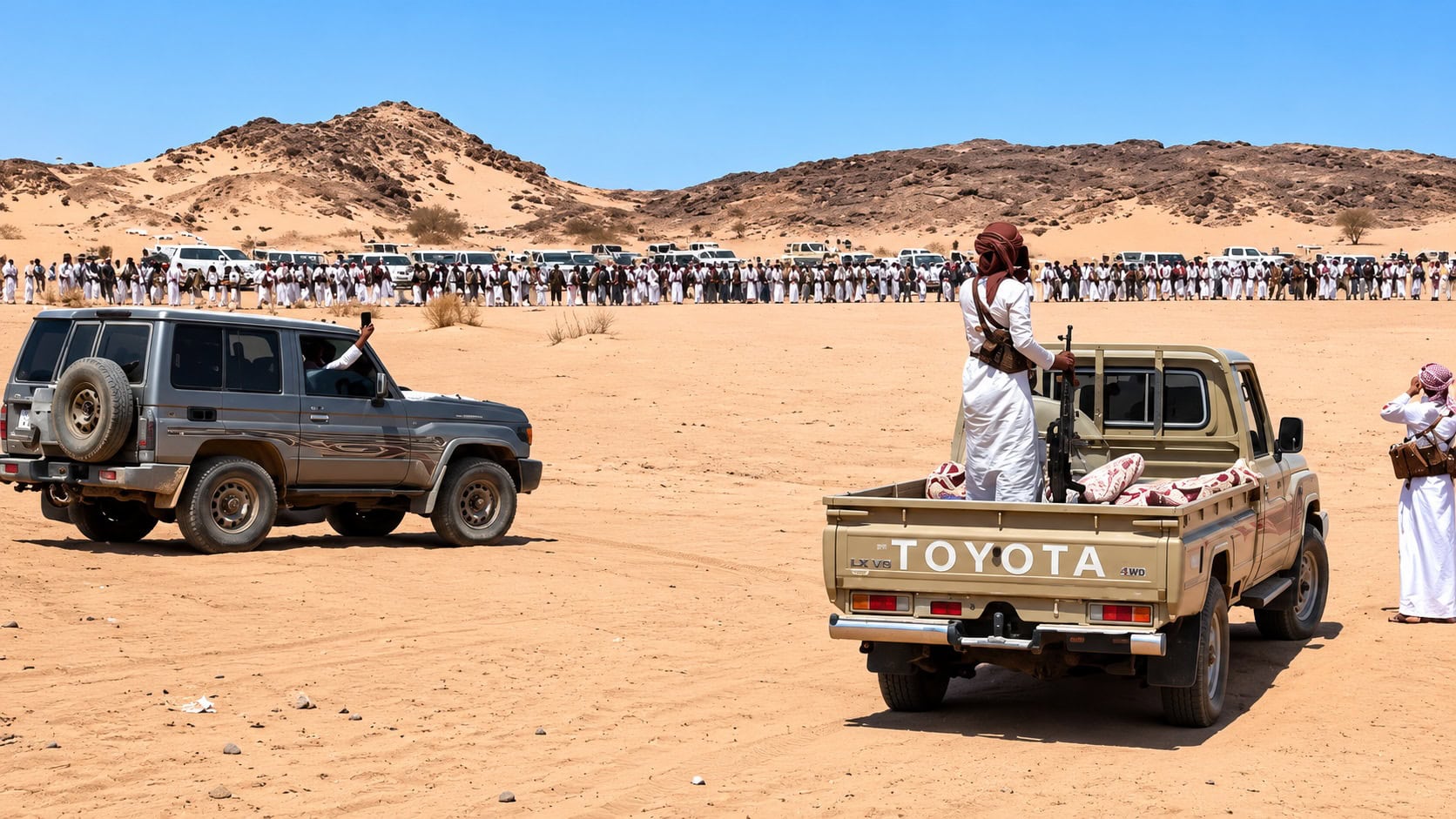
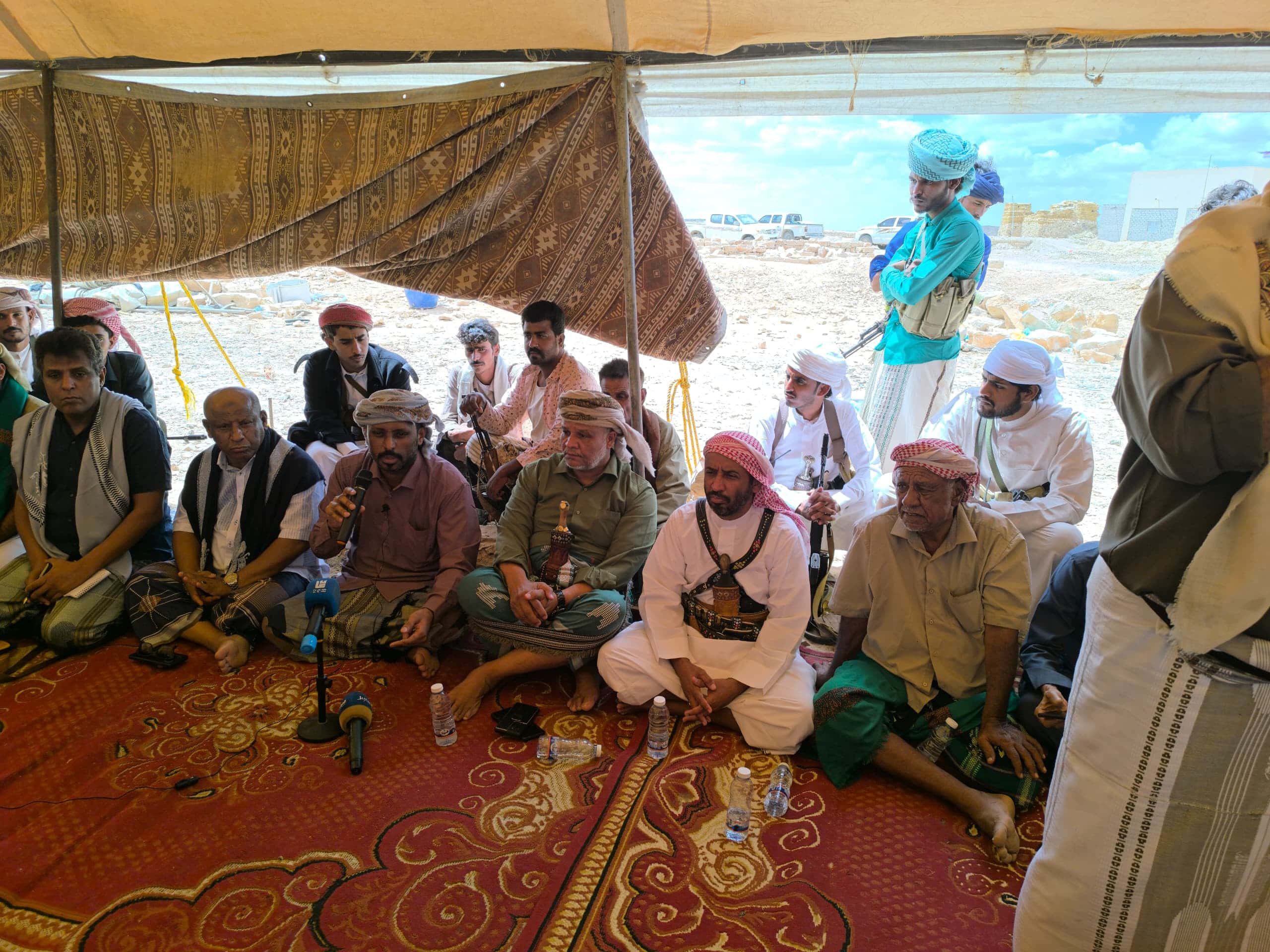
Tribal groups from Marib arrive in Al-Jawf in response to Sheikh Hamad Al-Hazmi’s call, June 26, 2026. (Activists)
27-06-2026 الساعة 6 مساءً بتوقيت عدن
Aden (South24 Center)
Tribal tensions are widening in Yemen’s northern Al-Jawf Governorate after Sheikh Hamad bin Rashid Fadgham Al-Hazmi, a prominent figure from the Dahm tribal confederation, declared a tribal Nakaf, or general mobilization for defense, against Houthi-linked arms dealer Fares Manaa over his detention in Sanaa and the unresolved case of a woman known as “Mira Saddam Hussein”.
The latest developments have turned what began as a disputed property and identity case in Sanaa into a broader tribal confrontation involving Al-Jawf’s tribal networks, Houthi authorities, and one of Yemen’s most controversial arms figures.
Tribal sources said on Saturday, June 27, that delegations from several areas of Al-Jawf continued to arrive at the Al-Rayyan gathering point east of the governorate, where Al-Hazmi has been staying since leaving Houthi-controlled territory. Earlier reports also said tribal groups from Marib, Hadramout, and Al-Mahrah had reached the area in response to his call.
In a video statement released after his arrival in Al-Rayyan, Al-Hazmi said he had been lured to Sanaa under the pretext of meeting tribal sheikhs and Houthi leaders, before being detained for more than two weeks. He said he was denied visits, subjected to pressure and torture, and forced to give statements that did not reflect his real position on the case.
Al-Hazmi said he would not abandon the woman who had sought his tribal protection, even after leaving behind property and farms in Houthi-controlled areas. He held Fares Manaa responsible for what he described as an “abduction”, and accused senior Houthi-linked figures, including Abu Ali Al-Hakim, of involvement in pressuring him.
Following a meeting of tribal sheikhs and notables, Al-Hazmi announced the start of tribal measures against Manaa. These included blocking routes linked to Manaa’s commercial interests and those of the Khawlan bin Amer tribes, to which Manaa belongs, while allowing ordinary travelers to pass. Tribal sources said some heavy transport trucks had been intercepted to verify their ownership.
The Bani Nouf tribe issued the first public tribal statement in support of Al-Hazmi, declaring that its ranks were united behind him and rejecting what it described as attempts by Manaa to divide the tribe through separate tribal initiatives.
The tribe demanded that Manaa produce the woman known as “Mira Saddam Hussein”, acknowledge her rights, and return her property. It said this was the essential entry point for any tribal settlement and rejected alternative solutions that do not restore rights to their owners.
The case centers on a woman who identifies herself as “Mira Saddam Hussein Al-Majid” and claims to be a daughter of late Iraqi President Saddam Hussein. She says she was brought to Yemen after the 2003 U.S.-led invasion of Iraq under the protection of former Yemeni President Ali Abdullah Saleh, who allegedly provided her with identity documents, property, and protection in Sanaa.
Her claims became widely circulated after she accused Houthi-linked figures, particularly Fares Manaa, of seizing a villa in the Hadda area of Sanaa, along with cars, jewelry, cash, and personal Iraqi documents. She says the dispute is not limited to her identity, but mainly concerns property she says was taken after the Houthis consolidated control over the capital and after Saleh was killed in late 2017.
Houthi authorities reject her account. On May 17, the Houthi-run Interior Ministry in Sanaa said the woman’s real name is Sumaya Ahmed Mohammed Issa Al-Zubayri, a Yemeni citizen from Sanaa whose family originates from Arhab district. The ministry said a DNA test conducted by its forensic team showed that Ahmed Al-Zubayri and Dawla Nasser Fareh Mazwad are her biological parents, with a claimed match of 99.99%.
However, the woman and her supporters have challenged the Houthi narrative, saying that a DNA process carried out under Houthi authority cannot independently resolve the dispute. Yemeni media outlets and rights voices have also questioned why the identity debate has overshadowed the central property claim, arguing that the issue of alleged seizure should be addressed regardless of whether her claimed lineage is proven.
The legal side of the case dates back to earlier proceedings in Sanaa. In 2023, a Houthi-affiliated court convicted the woman on forgery charges related to documents bearing the name “Mira Saddam Hussein”, sentenced her to time already served, and ordered the confiscation and destruction of the seized documents. In April 2025, the Court of Appeal upheld the ruling but did not make a final determination on her paternity claim.
The dispute later moved from the courts into Yemen’s tribal arena. According to local reports, the woman sought Al-Hazmi’s protection under tribal custom, reportedly cutting part of her hair as a symbolic plea for tribal support. Al-Hazmi and tribal figures from Dahm, Bakil, and Khawlan then attempted to mediate the dispute with Manaa, but the mediation failed after the mediators rejected an offer to provide the woman with another house instead of the villa she says belongs to her.
Al-Hazmi was later detained while leaving Sanaa, in an incident that triggered anger among Al-Jawf tribes. Tribal gatherings, known locally as “matarh”, were first set up in Al-Yatma area by members of Dahm and Bakil to demand his release and press for the restoration of the woman’s claimed property.
Manaa’s own background adds another layer to the confrontation. Fares Mohammed Manaa is not only a Houthi-aligned political and tribal figure from Saada; he is also one of Yemen’s most notorious arms dealers. The UN Security Council listed him in 2010 for supplying, selling, or transferring arms or related materiel to Somalia in violation of the arms embargo. The U.S. Treasury also lists him under its Somalia sanctions program.
This history has made the confrontation more politically sensitive. For Al-Hazmi’s supporters, the issue is no longer only about a disputed villa or a contested identity claim, but about tribal protection, alleged coercion in Houthi custody, and the influence of powerful Houthi-linked figures over property, courts, and security institutions in Sanaa.
For the Houthis and their supporters, the case has become a challenge to their authority in tribal areas they have long sought to control through a mixture of co-option, pressure, and mediation. Pro-Houthi voices have accused Al-Hazmi of betrayal after his departure to government-controlled territory, while his supporters say his public testimony exposed the pressure he faced in Sanaa.
The Al-Rayyan mobilization remains a developing situation. While tribal sources say the measures are aimed at Manaa’s interests and not ordinary travelers, the continued arrival of armed tribesmen has raised concerns that a dispute over one woman’s rights and identity could become a wider confrontation between northern tribes and the Houthi movement.


قبل شهرين
قبل 3 أشهر