SOUTH24 CENTER FOR NEWS & STUDIES
SOUTH24 CENTER FOR NEWS & STUDIES


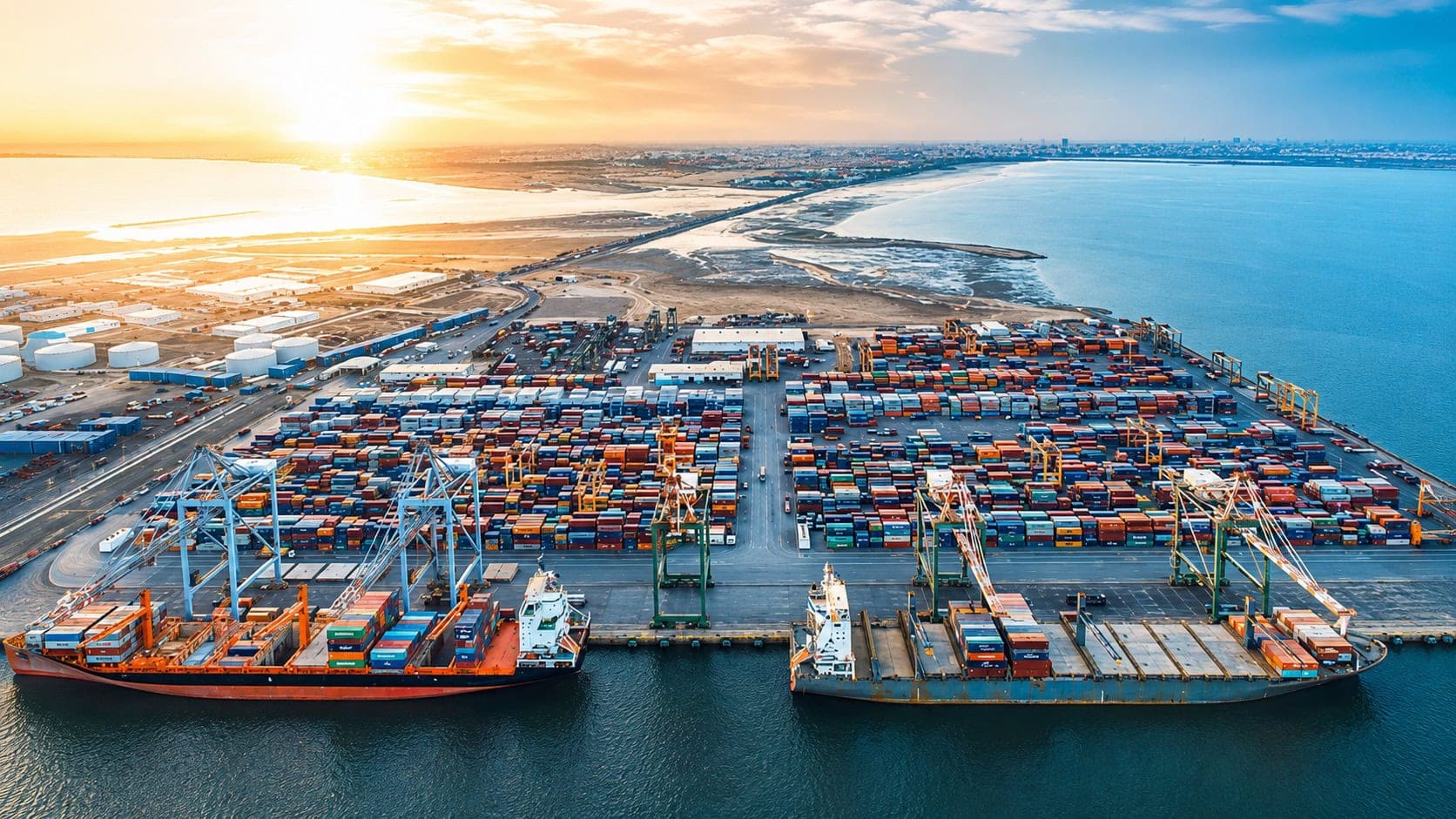
Port of Aden, South Yemen (internet photo)
13-06-2026 at 7 PM Aden Time

Abdullah Al-Shadli (South24 Center)
When Yemen’s internationally recognized government liberalized the customs dollar exchange rate on May 19, 2026, for ordinary citizens the consequences were felt immediately: customs duties on a wide range of imported goods roughly doubled overnight. The government framed the move as part of a broader package of economic and financial measures aimed at correcting price distortions, improving public revenue collection, and narrowing the gap between the official customs rate and the market exchange rate. However, the timing and sequencing of the move have raised a troubling question: whether this is a genuine economic reform or simply the fastest way for the cash-starved government to fill a widening revenue hole.
The government did not announce a new fixed rate for the customs dollar. In practice, liberalization entails abandoning the previous rate of 750 riyals to the dollar, and aligning it with the prevailing market exchange rate in government-controlled areas, which currently hovers at around 1,550 riyals to the dollar. This will effectively double the customs costs on dutiable goods, sparking intense debate about how hard it will impact prices in a market heavily dependent on imports. The central question this report examines is whether liberalizing the customs dollar is a necessary reform to correct customs collection distortions, or a short-term fiscal attempt to offset revenue shortfall by shifting the financial burden onto the market and consumers before addressing the root causes of the economic crisis.
The government insists that the exemptions for basic commodities will shield consumers, and the measure only targets luxury and non-essential items. However, the lack of a clear and detailed list of exempted goods, weak oversight mechanisms, and the experience of past customs rate increases has fueled anxiety among traders and consumers that the impact will spread to wider segments of the market, including semi-essential goods triggered by costs related to transportation, customs clearance, and distribution.
The policy decision stems from the financial crisis gripping the government since Houthi strikes halted oil exports in October 2022, a crisis that decimated state revenues and undermined its ability to pay salaries, secure fuel for power stations, and cover basic expenditures. The move also comes amid the backdrop of an ongoing dispute over the directive to transfer public revenues to the Central Bank in Aden, with some local entities and institutions either refusing or failing to route their resources into the central treasury in Aden, preventing the government from building a unified financial base.
The more fundamental problem, however, is not the liberalization of the customs dollar as a financial idea in isolation, but the timing of its implementation within the broader economic reform plan approved by the Presidential Leadership Council in late October 2025. That plan outlined an interconnected set of fiscal reform measures, mandating all provinces to transfer local revenues to the government's general account at the Central Bank in Aden, prohibiting off-budget collection or spending, consolidating the management of all tax and customs at border crossings, abolishing illegal local funds and fees, regulating newly-established crossings, and ultimately liberalizing the customs dollar rate.
In this context, liberalizing the customs dollar was meant to be part of a process implemented in parallel with tightening of revenue controls, consolidating customs posts, and ending illegal levies, and not as a standalone measure taken before those conditions were in place. In contrast, the government in May 2026 chose to begin with a decision to raise the customs dollar exchange rate by over 100% –aimed to generate quick revenue gains, as a standalone measure, before any clear results had appeared on revenue centralization, the abolition of illegal fees, the regulation of border crossings, or the guaranteed transfer of sovereign revenues to the Central Bank in Aden.
This raises the report's central question: is liberalization of the customs dollar a necessary structural reform, or simply a quick revenue fix that passes the financial burden on to consumers?
The Revenue and Liquidity Crisis
Professor Ali Ahmed Al-Saqqaf, an econometrics academic at the University of Aden, noted that raising the customs dollar rate "is not a new measure," explaining that governments have resorted to it in previous phases, with the rate rising gradually from 250 riyals to 500, then 700, before its recent liberalization and pegging it to the market rate. Al-Saqqaf told South24 Center that while the government is seeking through this decision to increase public revenues and narrow the fiscal deficit, the decision fundamentally has “put the cart before the horse”, by liberalizing the customs dollar before addressing the broader revenue file and consolidating public resources.
Al-Saqqaf pointed to “a significant dysfunction” caused by the failure of some provinces, including Marib, Taiz, and Hadramout, to transfer their revenues to the Central Bank in Aden, arguing that no economic reform can succeed without unifying the revenues and controlling public spending.
Economic expert Dr. Issa Abu Holika agreed that the decision aims to correct financial imbalances and expand public revenues, especially as the gap between the official customs rate and the actual market exchange rate has widened significantly. He told South24 Center that the decision “represents an attempt to strengthen state resources and unify revenue streams” in the context of the financial crisis after the halt in oil exports. He stressed that the policy’s success “depends entirely on genuine political will to enforce oversight, control revenues, and hold violators accountable.”
Dr. Mohammed Jamal Al-Shuaibi, professor of public finance at the University of Aden, described the transfer of revenues to the Central Bank and the liberalization of the customs dollar as “a pivotal moment,” but stressed that these measures would remain “a dead letter” unless accompanied by serious implementation steps and real financial authority exercised on the ground.
How Will the Decision Affect Prices?
Liberalizing the customs dollar means that customs duties on dutiable goods will now be calculated at the prevailing market exchange rate, and not the previous rate of 750 riyals to the dollar. Despite the government's assurances that basic goods exempt from duties will remain unaffected, the impact of the policy decision does not stop at directly taxed goods. It cascades to every layer: the cost of importing, transportation, customs clearance, storage, and distribution, all of which feed into the pricing of most goods within the market.
Historical data since 2017 suggests that any increase in the customs dollar rate has invariably cascaded into a wide spectrum of commodities: the prices of clothing, medicines, electronics, household goods, and even some foodstuffs -- whether directly or through costs linked to transportation and supply chains. This casts doubt on the government's reassurances about exempting basic goods -- in a market that suffers from weak regulatory oversight, multiple layers of unofficial levies, and high energy costs.
In an attempt to contain public concerns, the Customs Authority in an official note confirmed that the liberalization of the customs dollar "will not affect citizens' basic needs”, clarifying that the exempted goods include wheat, rice, and medicines on the national list, and that the decision primarily targets luxury and non-essential goods. It also stated that continuing to calculate customs duties at a low exchange rate had created “a significant revenue gap” that benefited a specific group of importers, and did not translate to lower prices for the public who were charged at actual market rates.
However, Jamal Mahfouz Balfaqih, a member of the Aden Chamber of Commerce and the Presidential Business Committee, believes the impact "will not in practice be limited to luxury goods alone." He told South24 Center that any increase in import costs "will be reflected directly or indirectly in the prices of goods," at a time when citizens' incomes have seen no parallel improvement to cushion these increases. He added that the impact may initially be most visible on imported goods with high margins but “will gradually extend to wider segments of the market.”
This concern is rooted in the nature of the Yemeni market, which relies heavily on import-dependent supply chains for domestic transportation, packaging, and manufacturing inputs. Even if some goods are exempt from customs duties, the underlying cost of transporting, storing, packaging, or distributing them may still be impacted by rising costs elsewhere in the supply chain. Balfaqih therefore believes the market may experience “gradual price increases even if the initial impact appears limited.”
Yemeni businessman Abd Al-Malik Al-Haddad, based in China, told South24 Center that liberalizing the customs dollar will inevitably elevate the cost of customs clearance and importing, which will directly inflate the prices of many goods imported from China, particularly in a country as heavily import-dependent as Yemen. He noted that the scale of the impact will vary from one product to another depending on the nature of the item, the level of demand, and the availability of local alternatives.
On the question of who will bear the additional cost of the measure, Al-Haddad explained that the market “distributes costs between traders and consumers based on the intensity of competition and the strength of demand,” noting that some traders may absorb a portion of the initial price increase, particularly those holding prior stock or operating with healthy profit margins. Over the medium term, however, he warned that “a significant proportion of these costs will be passed on to the end consumer,” since any increase in import costs moves gradually through the entire supply chain, from clearance and shipping to retail.
Al-Haddad estimates that non-essential imported goods are likely to see price hikes ranging from 5 to 20 percent depending on the type of product and the level of market competition, with these increases filtering down to the end consumer in a phased manner. Ultimately, the ordinary Yemenis continue to bear the cost of sustained political and economic instability.
These concerns are compounded by the reality that the improvement in the riyal's exchange rate over recent months has failed to translate into lower prices. Al-Haddad notes that “prices are not tied solely to the exchange rate,” since many goods currently in the market were imported when the dollar was at higher levels. Transportation, shipping, energy, and commercial risk costs also remain elevated, limiting the extent to which exchange rate improvements translate into relief for ordinary domestic consumers.
Al-Haddad noted that in unstable markets like Yemen, traders approach any improvement in the exchange rate with caution, and “do not move quickly to lower prices unless they sense genuine and sustained stability in the exchange rate and supply chains, alongside clarity in economic policies.” This means that the market tends to respond quickly to cost increases but not as quickly to currency appreciation, a dynamic that makes the customs dollar decision all the more detrimental for the public which is left with little room to absorb this additional pressure.
Al-Saqqaf agreed with this assessment, arguing that official claims of exempting basic goods from the impact is “not realistic in practice,” since most imports in Yemen are linked to daily essentials or to services connected to them, including transportation, spare parts, medicines, and food products. From this perspective, the indirect effect of the customs dollar hike could leave a wider imprint than the list of goods directly subjects to customs duties.
Dr. Abu Holika outlined two channels through which the price impact will be felt. The first is direct, through rising prices for non-essential goods such as vehicles, electronics, and construction materials. The second is indirect, through higher transportation and distribution costs following a 24.5 percent increase in the price of imported diesel. He warned that rising transport costs will affect even exempt basic goods, since they rely on diesel for shipping and movement from ports to markets, and cautioned that a new inflationary wave could further erode the purchasing power of citizens already stretched to their limits.
The impact of liberalizing the customs dollar therefore cannot be confined to the direct relationship between customs and luxury goods. The Yemeni market operates within a web of interconnected costs that begins with the exchange rate and customs clearance, runs through shipping, energy, and transportation, and ends with final prices on shop shelves. In an environment of weak oversight and declining purchasing power, the risk of this decision feeding through to consumers is greater than the government's administrative capacity to contain it within the bounds of non-essential goods. It is the Yemeni family at the end of that chain, not the importer or the policymaker, who will feel the difference most acutely.