SOUTH24 CENTER FOR NEWS & STUDIES
SOUTH24 CENTER FOR NEWS & STUDIES


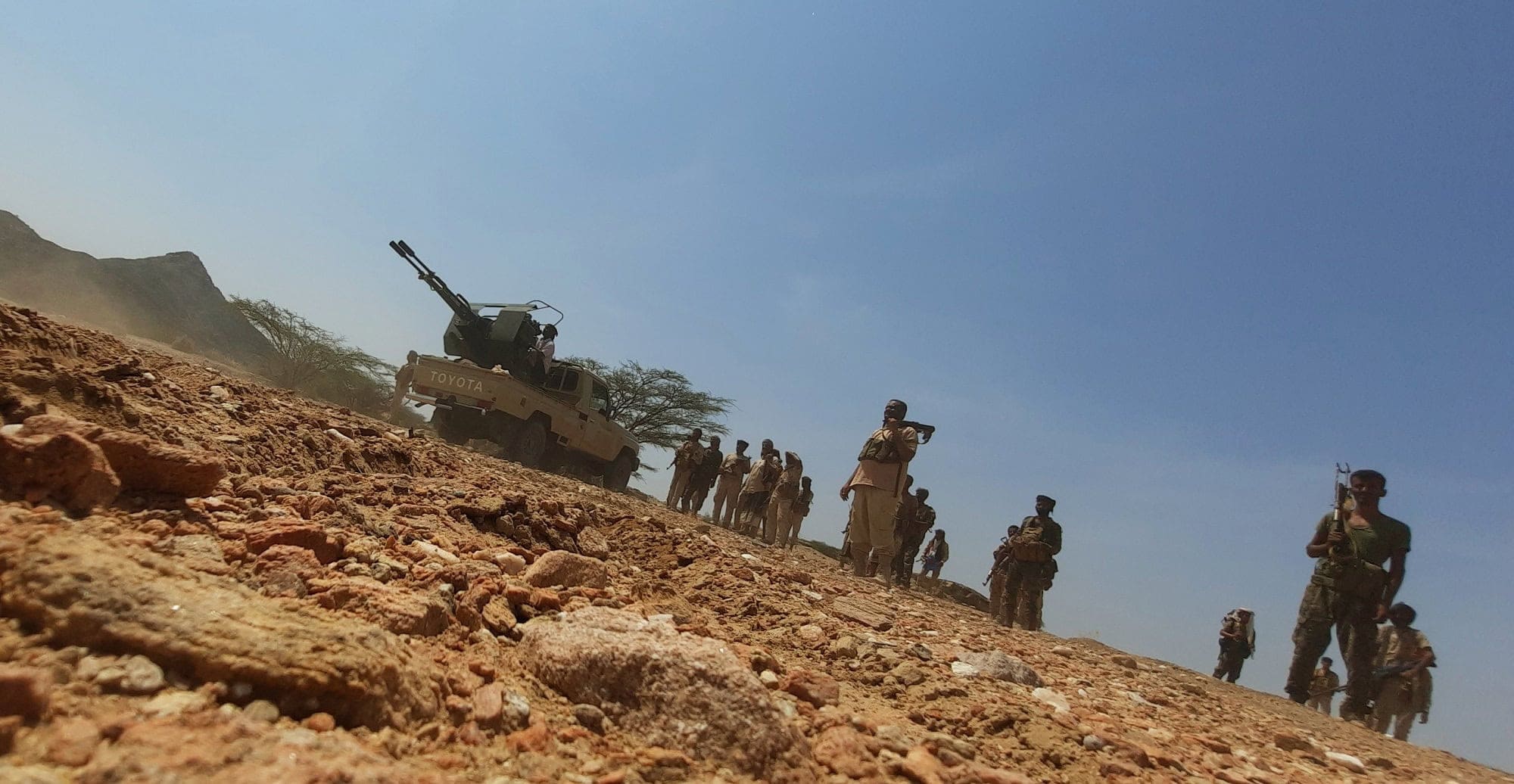
Southern forces participating in the “Arrows of the East” operation against AQAP in Abyan Governorate, October 2022 (South24 Center)
Last updated on: 28-01-2026 at 2 PM Aden Time

“Combining Saudi Arabia’s advanced intelligence capabilities with the long field experience of the Southern forces presents an unprecedented opportunity to recalibrate the security landscape in South Yemen”
*Ibrahim Ali (South24 Center)
The counterterrorism issue is one of the most complex and sensitive issues in the Yemeni landscape. It is not an issue that tolerates rushed decisions or improvisation, as the cost of such approaches is extremely high. With the suspension of the UAE’s role and support in this area, following the recent events witnessed in South Yemen, the Kingdom of Saudi Arabia now finds itself facing a real test.
This test is not limited to Yemen’s security alone, but extends to Saudi Arabia’s national security, its border regions, and its regional position in a long battle against extremist organizations.
The United Arab Emirates’ withdrawal from this challenge, and from the Yemeni arena more broadly, does not mean that the fight against terrorism has come to an end.
However, this withdrawal places Saudi Arabia before a new reality in which it becomes the sole party bearing responsibility, not merely as a former partner in Yemen’s conflict, but as the actor expected to manage the issue or contain its repercussions. This raises a critical question: how will Riyadh manage this difficult challenge in an environment as complex as Yemen?
There is no doubt that Saudi Arabia does not start from zero. It possesses experience and capabilities. Yet the challenge this time is greater, as any miscalculated step could result in serious political and security consequences. The coming battle is different in its methods, tools, and sensitivities. It requires calm management, strategic patience, and a deeper understanding of the Yemeni reality, rather than reliance on easy or shortcut solutions.
From Intelligence Work to the Challenge of the Field
It is well known that Saudi Arabia has long-standing experience in counterterrorism inside Yemen, but this experience has been primarily intelligence-driven. For years, Riyadh focused on penetrating extremist organizations from within, building intelligence networks, collecting data, and neutralizing leadership figures through covert operations.
This approach proved effective at certain stages, particularly when these organizations operated in a less complex environment. According to testimonies from many members of those networks, most of the espionage cells acknowledged by the organizations, cells that led to the killing of their most prominent leaders, were planted by Saudi intelligence.
Today, however, the situation has changed entirely. Extremist groups are no longer merely hidden cells; they have evolved into adaptive entities that exploit chaos, poverty, and prolonged wars to strengthen themselves. This shift renders intelligence alone insufficient and places Saudi Arabia before a difficult challenge: how it can establish effective ground control without being drawn into a prolonged war of attrition that drains its resources and those of its local allies?
The greater challenge lies in the fact that Saudi Arabia has not previously conducted a direct, organized ground campaign against terrorist organizations inside Yemen. Its military role was often indirect or carried out through supporting other parties with intelligence and logistical assistance. With the absence of the UAE, the need becomes urgent to build a new model that combines intelligence, military support, and local security work, a model that requires time, patience, and carefully calculated decisions rather than improvised actions.
Any mistake or miscalculation at this stage could grant extremist groups an opportunity to reposition themselves and regain the initiative, particularly in rugged areas that are difficult to secure. This is what makes the transition from intelligence operations to managing a comprehensive battle an extremely sensitive undertaking.
Possible Scenarios
Saudi Arabia faces three main scenarios in its handling of the counterterrorism issue following the UAE’s exit. The first is a conditional success, based on effective support for experienced local Southern forces and high-level intelligence coordination, leading to the reduction and containment of extremist influence without prolonged attrition.
The second scenario involves limiting intervention to partial measures that fall short of decisive action. This would allow extremist organizations to reposition and adapt to the new reality without achieving major expansion or direct control. The outcome would not be a total security collapse, but rather a silent war of attrition that keeps the threat alive and postponed instead of eliminated.
The third, and most dangerous scenario, is a security breakdown resulting from hasty decisions or misjudgments, potentially turning South Yemen into an open arena that exports the threat back to the entire region.
Who Will Saudi Arabia Rely On?
It is unrealistic for Saudi Arabia to rely on foreign forces or engage in broad, direct intervention in Yemen’s counterterrorism efforts. The most logical and least costly option in the long term is to rely on local forces in the South. However, despite its validity, this option carries serious challenges.
Not all local forces are qualified to fight a complex war against organizations with long experience in concealment, recruitment, and unconventional warfare. Some formations supported by Riyadh, such as the Nation’s Shield Forces, lack the specialized intelligence and field training required for such confrontations. This could turn the fight against terrorism into a chaotic conflict without decisive results.
In this context, available indicators suggest that Saudi Arabia will not dispense with Southern forces, particularly those that have accumulated extensive field experience in confronting extremist organizations over the past years. These forces have fought direct battles, paid heavy human costs, learned from their mistakes, and built precise knowledge of the enemy, its methods, and its areas of operation.
Relying on these forces is not driven by emotion or politics, but by the logic of performance and results. Counterterrorism is not an arena for experimentation; it requires accumulated experience, deep local knowledge, and the ability to move swiftly in a complex environment. These elements are present to varying degrees, within Southern forces compared to others.
That said, relying on these forces alone is not sufficient. Past lessons have shown that the absence of adequate support, logistical, intelligence, or political, limits the ability of any local force to achieve sustainable results. Had Southern forces previously received appropriate support, they could have achieved unprecedented outcomes in counterterrorism, and the security map of South Yemen might look very different today.
Moreover, the counterterrorism issue in Yemen cannot be separated from its international context. The United States and its Western partners possess intelligence presence and political influence that cannot be ignored. Any effective Saudi approach will require careful coordination with these actors, whether in intelligence sharing, alignment of positions, or securing external political backing. Ignoring this dimension could narrow Saudi Arabia’s options and expose it to political pressure at critical moments.
Unified Leadership
One of the key developments at this stage is that forces in South Yemen will now largely operate under the supervision of the Saudi-led Military Committee. This development represents a rare opportunity, perhaps one that may not be repeated, for Saudi Arabia to reorganize the counterterrorism challenge in a more effective manner.
Unified leadership reduces conflicting decisions, limits chaos on the ground, and helps distribute roles according to expertise and competence. In a sensitive issue such as counterterrorism, unity of command remains one of the primary conditions for success.
This does not mean sidelining other military and security formations. The fight against terrorism requires integration of roles, task distribution, and coordination of efforts. However, logical priority should be given to those with field experience and to forces that have proven their ability to endure and confront extremist threats over many years.
Saudi Arabia, for its part, has the capacity to provide political cover, necessary support to forces on the ground, and intelligence coordination. Success here will not be quick or theatrical, but it will be more sustainable and less costly in the long term.
Conclusion
In short, Saudi Arabia now faces a real test of its ability to deal intelligently and realistically with the terrorism challenge in Yemen following the UAE’s absence. Success does not require repeating old formulas, but rather a deep understanding of realities on the ground and genuine reliance on experienced forces that previously lacked sufficient support.
Combining Saudi Arabia’s advanced intelligence capabilities with the long field experience of the Southern forces presents an unprecedented opportunity to recalibrate the security landscape in South Yemen and transform this partnership into an effective force capable of preventing Al-Qaeda in the Arabian Peninsula (AQAP) from regaining the initiative.